







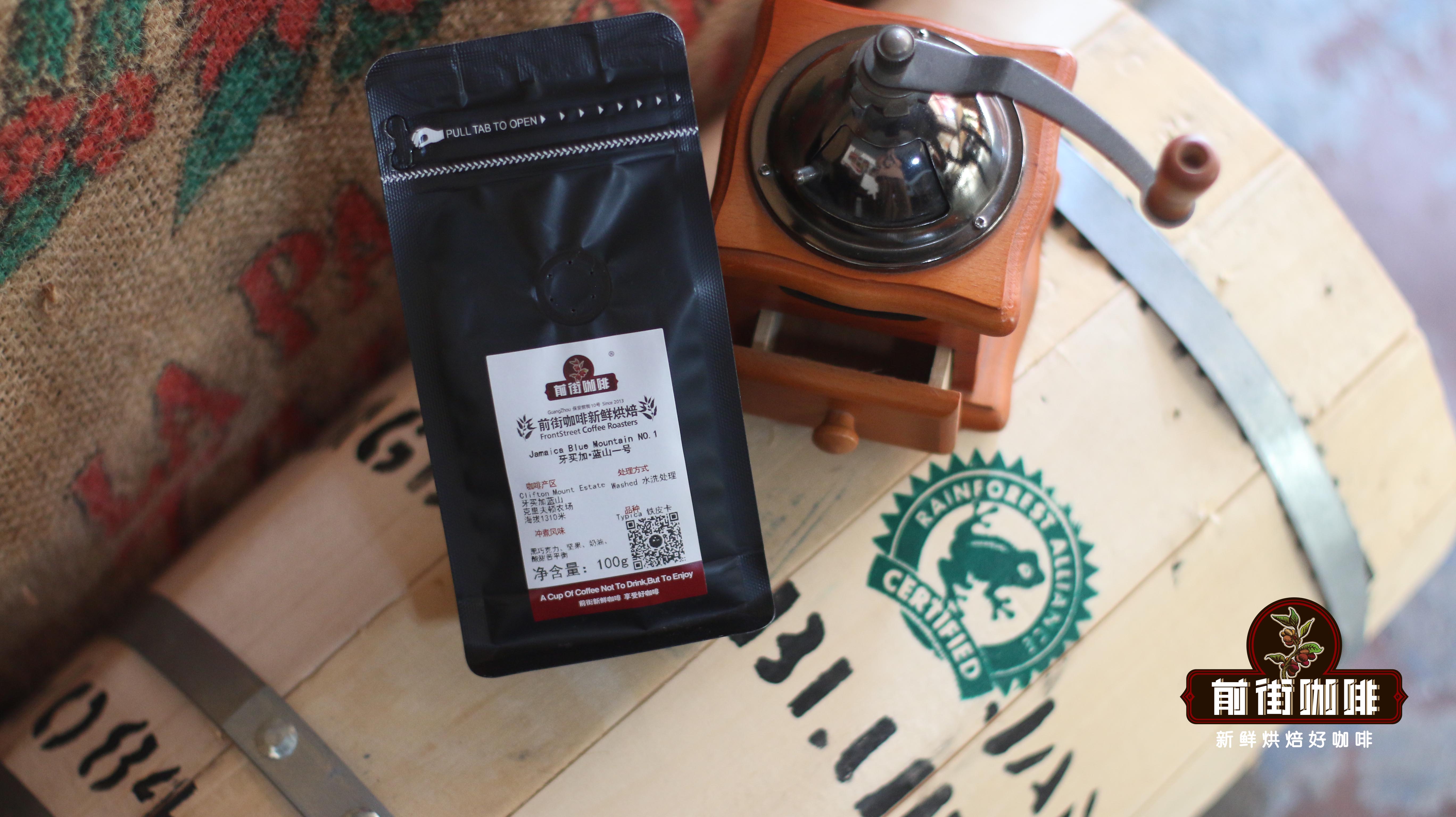
Blue Mountain coffee enjoys a global reputation in the coffee world for its balanced ratio of acidity, sweetness, and bitterness along with its elegant aroma, but products marketed under the "Blue Mountain" banner vary widely in quality, and the output of coffee that truly meets Jamaica's legal standards is extremely limited. This article will systematically cover the origin conditions, variety selection, historical evolution, legally defined production area, washed processing procedures, and the grading system established by the JCIB for Jamaican Blue Mountain coffee, and will also detail Front Street Coffee's roasting approach and pour-over brewing method for Blue Mountain No. 1, helping readers fully understand every key step of this legendary coffee from cultivation to cup.
Blue Mountain coffee is so famous that even people who don't drink coffee regularly have heard of it. Top-quality Blue Mountain coffee is widely praised internationally for its harmoniously balanced acidity, sweetness, and bitterness along with its elegant aromatic profile. In this article, Front Street takes you on a deep dive into the relevant knowledge about high-quality Blue Mountain coffee beans.
First, a reminder to everyone: the market is flooded with Blue Mountain coffee products, and their prices vary enormously. Those suspiciously cheap so-called "Blue Mountain flavor coffee," "Blue Mountain blend coffee," and "Blue Mountain mixed coffee" are not actually Blue Mountain coffee produced in Jamaica — some have no connection to Blue Mountain at all. The root cause of this confusion is that authentic Blue Mountain coffee has an extremely high reputation while its actual output is exceedingly scarce.
The Jamaica Blue Mountain range sits in the highest-altitude zone of the Caribbean region and has a tropical rainforest climate, with annual rainfall reaching 1,800 to 2,000 millimeters. The steep slopes provide excellent drainage, allowing local vegetation to receive ample moisture, and coffee trees are typically intercropped with banana and avocado trees. The Blue Mountain area has beautiful natural scenery and excellent air quality, and its mineral-rich volcanic soil provides abundant nutrients for the coffee fruit. The high-altitude areas are shrouded in mist and clouds year-round, creating an ideal natural shade environment for coffee trees.
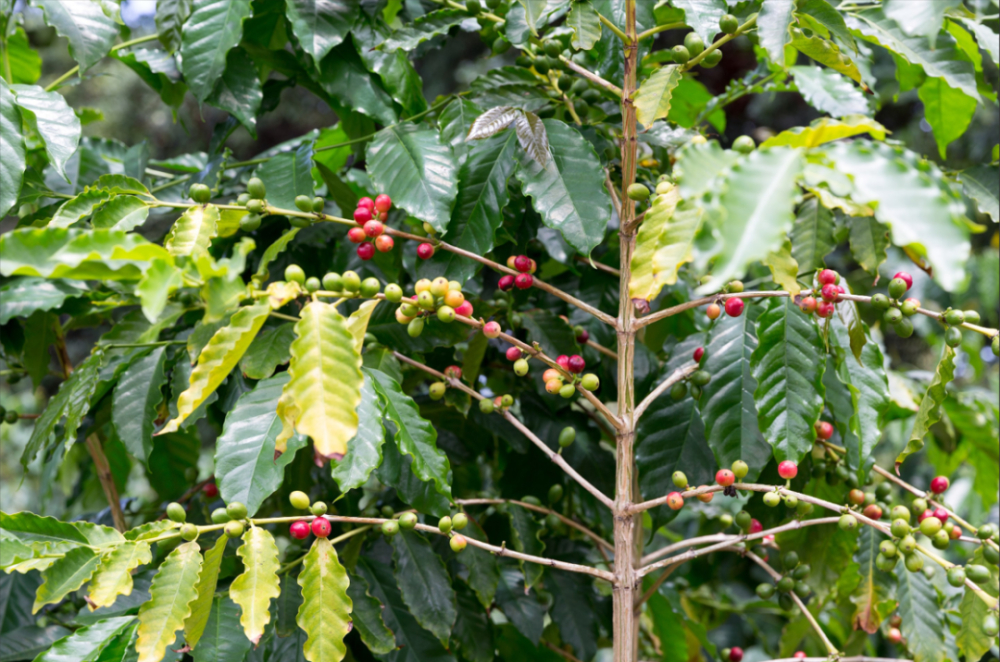
In 1728, Sir Nicholas Lawes brought coffee seeds to the island and began raising seedlings, and Jamaica's coffee-growing history now spans nearly three centuries. The first variety to take root in the Blue Mountains was Typica, and to this day Jamaica still predominantly cultivates Typica. Although Typica is an ancient variety, it is notoriously frail, and many producing regions have gradually switched to other higher-yielding varieties for this reason. However, Blue Mountain Typica, in adapting to the local island terroir, gradually developed stronger disease resistance, especially notably better resistance to coffee berry disease than ordinary Typica. Front Street believes that the refined, clean flavor of Blue Mountain coffee is inseparable from Jamaica's long-standing commitment to carefully cultivating the Typica variety.
Along with the substantial growth in coffee production, the Jamaican government sought to improve coffee quality through legislation and various other means. In 1950, the Jamaica Coffee Industry Board (JCIB) was established, empowered to improve, regulate, and maintain the quality and reputation of Jamaican coffee. In 2018, the agency merged with other Jamaican commodity statutory bodies to form JACRA (Jamaica Agricultural Commodities Regulatory Authority). Under the oversight of these institutions, the prestige of coffee from the Blue Mountain region continued to rise, and it was later recognized as one of the finest coffees in the world.
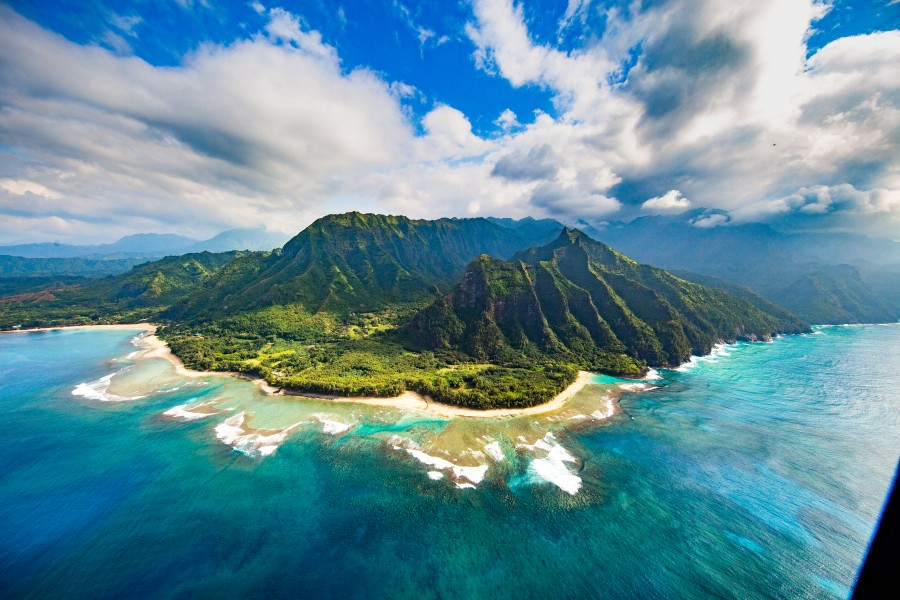
According to Jamaica's Coffee Industry Regulation Act, the legally designated growing area for Blue Mountain coffee is mainly concentrated in four administrative parishes: Saint Andrew, Saint Thomas, Portland, and Saint Mary — meaning only coffee produced in this area is eligible to bear the name "Blue Mountain." The law also explicitly stipulates that only Typica coffee grown within the specific altitude range of 910 to 1,700 meters can be named Jamaica Blue Mountain coffee. The total area of these four producing parishes accounts for about one-third of the entire Blue Mountain growing region, with the remaining two-thirds used for growing Jamaica High Mountain coffee and Jamaica Supreme coffee. In recent years, less than 15% of the coffee beans produced in Jamaica have been eligible for the Blue Mountain label.
Precisely because Blue Mountain coffee is so rare, Jamaica uses the washed processing method to reduce defect rates while enhancing the coffee's cleanliness. Freshly hand-picked coffee cherries are placed in water, where floating defective beans are first removed, then the skin and pulp are stripped away, and the beans are left to rest in fermentation tanks for 12 to 18 hours. After fermentation is complete, the beans are moved into channels and pushed back and forth, using the friction between the beans and the force of the water flow to wash the coffee beans until their surfaces are smooth and clean. They are then spread out under the sun for dehydration and drying, and once the moisture content drops to 12% to 14%, they can be bagged; before export, they must also be submitted for quality inspection.
In terms of green bean quality control, the JCIB has also established a more refined and stringent grading system. Coffee bean grading takes multiple factors into comprehensive consideration: bean size, color, moisture content, and cup performance after roasting. Jamaican Blue Mountain coffee is classified into NO.1, NO.2, NO.3, and Peaberry grades. The Jamaica Blue Mountain No. 1 on Front Street's bean rack belongs to the highest grade, NO.1, requiring green beans to reach 17 to 18 screen size, a defect rate below 3%, uniform bean size, plump beans, and a flavor profile presenting balanced body, aroma, sweetness, and acidity.
The Jamaica Coffee Industry Board recommends that the roast level should fully bring out Blue Mountain's traditional flavor, and Front Street's roasters follow this principle as well, using a medium-dark roast so that Blue Mountain No. 1 coffee retains both its rich body and a gentle fruity acidity. As the roast level deepens, the coffee beans become more porous, and once ground, they more easily absorb water and release more soluble substances, so over-extraction can occur if you're not careful. Therefore, Front Street Coffee's baristas recommend using a medium grind size and a relatively low water temperature — here, 87 to 88 degrees Celsius is chosen, with the coffee grounds controlled to a 75% passing rate on a standard No. 20 sieve.
To fully showcase the rich, rounded mouthfeel of Blue Mountain No. 1 coffee, Front Street chose the KONO coffee dripper for extraction. The ribs of the KONO dripper extend less than half the height of the cone, a design intended to let the filter paper cling tightly to the wall after wetting, thereby restricting airflow and extending the time for coffee grounds to absorb water, ultimately making the extracted coffee more uniform overall.
Brewing parameters: 15 grams of grounds, coffee-to-water ratio 1:15, grind size: EK43s setting 10.5 (75% passing rate on China's standard No. 20 sieve), water temperature 87 to 88 degrees Celsius, brewing method using staged extraction.
Place the filter paper into the KONO dripper, pouring water to wet the filter paper while also making it fit more closely against the wall. Add the coffee grounds and tap lightly to distribute the bed evenly. For the first stage, pour 30 grams of water in a soft, thin stream for blooming, with a bloom time of 30 seconds; for the second stage, pour until about 125 grams, maintaining a steady, even outward circular pour. When the coffee liquid level drops to halfway, pour the final stage of water up to 225 grams, and once all the coffee liquid has finished dripping, the total extraction time is about 2 minutes.
Flavor performance of pour-over Blue Mountain No. 1 coffee: at high temperatures, Blue Mountain No. 1 enters with a dark chocolate-like aroma, a very prominent body, and a clearly recognizable almond-like sweet finish. As the temperature gradually drops, the sweet, silky notes of roasted hazelnut and cream emerge, accompanied by a gentle acidity and a caramel-like sweetness, with the aroma lingering in the mouth for a long time.
For professional coffee knowledge exchange and more coffee bean information, please follow Coffee Workshop (WeChat public account: cafe_style)
For more specialty coffee beans, please add the private WeChat of Front Street Coffee (FrontStreet Coffee), WeChat ID: qjcoffeex
The above content is compiled by CoffeeHunters, a coffee news website.


