







Is Americano actually black coffee? And what is its relationship with espresso? Many people who make coffee at home with a coffee machine always feel that the taste differs noticeably from that of coffee shops outside. Behind this, there are actually issues involving bean selection, extraction methods, and ratio logic. From the perspective of Front Street, this article sorts out the historical origins of Americano, its connection with espresso, and the reasons why bitterness occurs. At the same time, it shares Front Street's specific parameters and blending ideas for hot Americano and iced Americano, helping coffee lovers more clearly understand this seemingly simple cup of black coffee.
What exactly is Americano? Can it really be equated with black coffee? Why does the taste made at home with a coffee machine always differ noticeably from that in coffee shops? And how should espresso be understood? Today Front Street will answer these questions one by one.
A clean, pure, and flavor-concentrated espresso is the core player of the second wave of the coffee movement.
It is said that coffee beans were introduced to Italy together with fruit, and the locals quickly fell in love with this beverage. In the early twentieth century, brewing equipment underwent major improvements, which not only gradually shaped the prototype of espresso, but also made drinking espresso part of Italians' daily lives. After that, espresso machines continued to be upgraded, and the craft of espresso spread from Italy to all of Europe, and further to the rest of the world. The es in espresso corresponds to ex in English, carrying the meaning of fast and convenient. The traditional way of drinking espresso was to finish it quickly within a few minutes to prevent the flavor from dissipating. At that time, a trend of drinking coffee while standing also became popular, and the price was also more affordable than takeaway coffee.
Americano did not originate in the United States. Americano first evolved from espresso—by adding hot water to dilute espresso, you get Americano. During World War II, American soldiers in Europe were not used to the pure, strong bitterness of espresso, so they added water to dilute the coffee, and the name Americano came from this.
In the espresso system, Americano is just one of many variations. Today, the familiar latte, cappuccino, flat white, and Dirty all belong to the large family of espresso drinks. They present different appearances because of different methods, and thanks to their popularity, they have become classic coffees on the table.
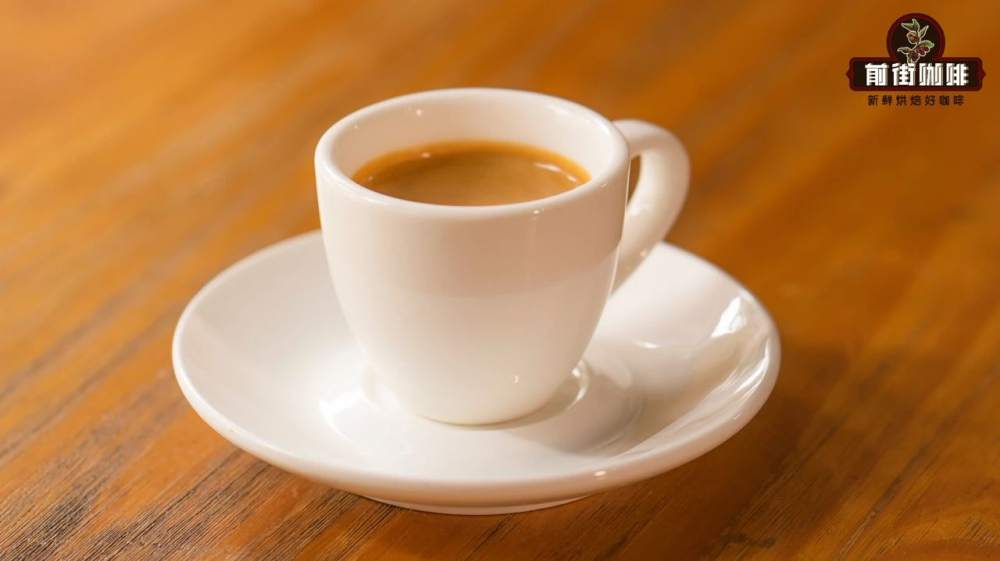
A cup of Americano is made up of water and espresso. Espresso has a high concentration and a strong intensity; water itself is colorless and tasteless, and only serves to dilute. Therefore, whether an Americano tastes good depends on whether the right coffee beans are chosen and whether the extraction is proper.
The Americano produced by Front Street Coffee uses its own roasted Front Street Sunflower·Warm Sun blend coffee beans. Under ideal extraction, it presents flavors of vanilla, cream, chocolate, berries, caramel, and fermented aroma.
In order to highlight these aromas, after many comparisons, Front Street finally settled on a ratio of 1:4.5, that is, using 20 grams of coffee powder to extract a double espresso of 40 g of coffee liquid within 30 seconds, and then adding 180 g of hot water at 80°C. The hot Americano made this way is full-bodied with vinous aroma, balanced, and has a sweet aftertaste;
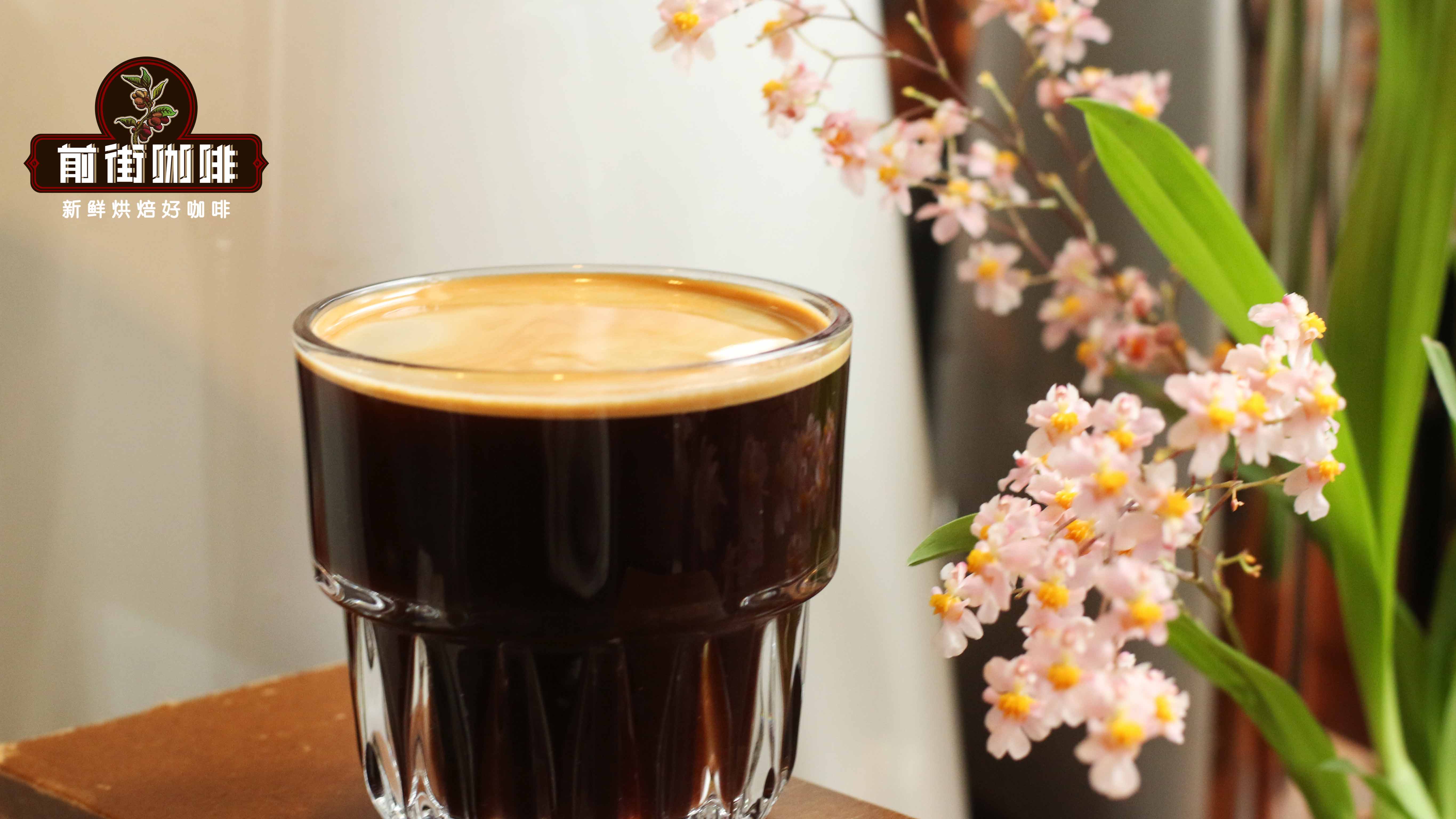
When producing iced Americano, the barista at Front Street Coffee will switch to 100 g of large ice cubes plus 120 g of water. The ratio of coffee, ice, and water falls at 1:2.5:3. This iced Americano has a moderate concentration, and when drunk directly it is sweet, sour, icy, and refreshing, with a full-bodied aroma, especially suitable for summer.
For people who cannot quite accept bitterness, some customers like to add a little milk to their Americano. This not only neutralizes the bitter note of the coffee, but the richness of the milk also gives the whole cup of Americano a thicker mouthfeel, enriching the caramel and chocolate aromas in it.
For friends who need to add milk separately, Front Street will adjust the ratio of coffee to hot water to 1:4. First add 160 ml of hot water to the cup, pour over 40 ml of espresso, and then add 15 ml of fresh milk for every 100 ml of black coffee, that is, 30 ml of fresh milk. In this way, whether in concentration, mouthfeel, or aroma, there is a good result.
Of course, we can also make Americano show a non-bitter taste by choosing medium-roast coffee beans. It is recommended to use Front Street Strawberry Candy espresso coffee beans. This is a blend known for honey processing, made from Front Street Costa Rica Tarrazú and Ethiopia, the birthplace of coffee, as the two major origins, and on this basis, paired with Colombian coffee beans. The espresso that can be blended in this way is not only not harsh, but under extraction by the coffee machine, it carries good crema and a dense texture, while also having a sweet-and-sour taste like strawberry gummy candy.
The above content is compiled by CoffeeHunters, a coffee news website.


