







Espresso, as the cornerstone of modern coffee shops, supports many popular drinks such as lattes and Americanos. This article will break down the core characteristics of Espresso in detail, including the formation principle of the golden Cream on the surface and the source of its highly concentrated flavor, and use the actual practice at Front Street Coffee stores as an example to explain standard extraction parameters and preparation procedures. At the same time, the article will also introduce the flavor performance of Front Street Sunflower Warm Sun Blend and three other high-cost-performance espresso blend beans, helping coffee enthusiasts understand more comprehensively the relationship and differences between espresso and latte.
For more specialty coffee knowledge, please follow the WeChat official account: Front Street Coffee (FrontStreet Coffee)
Coffee culture is becoming increasingly popular in China, and coffee shops can be seen on more and more street corners. Among them, espresso-based coffee, which focuses on efficiency and convenience, is especially favored. A rich cup of espresso can be said to be the foundation of many popular espresso drinks. Today, Front Street will guide everyone through this "soul role" in coffee shops—the characteristics of espresso.
Main characteristics of espresso
Espresso, also called Espresso, is a kind of coffee liquid obtained by Italians using a pressure-operated coffee machine to extract quickly at high temperature, with a layer of golden foam covering the surface. Different stores use different espresso beans and extraction plans, so the flavor performance also varies. However, a standard cup of espresso usually has the following two characteristics.
Cream
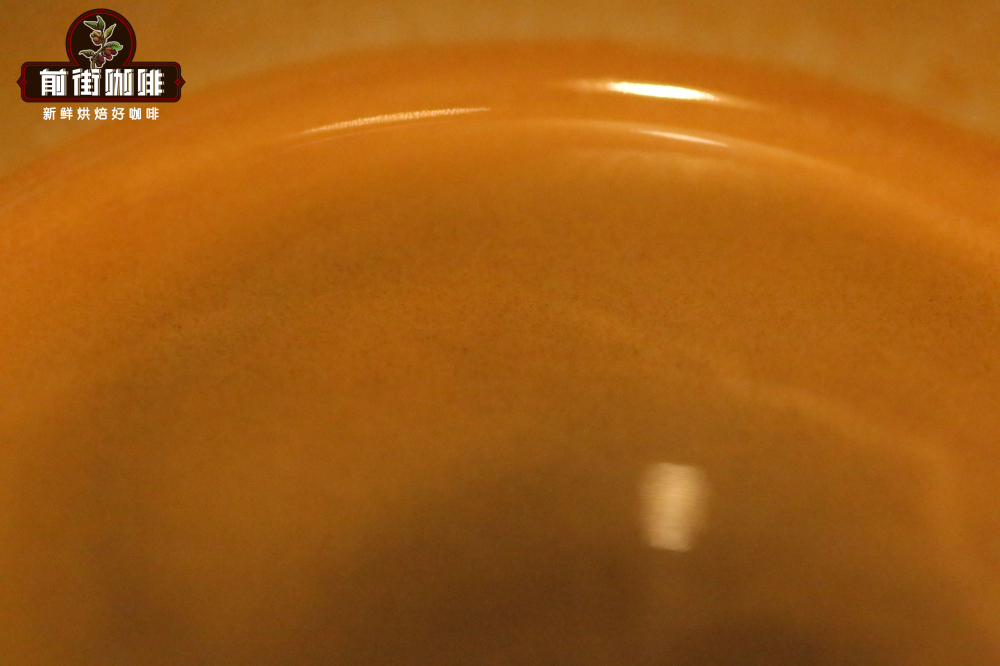
When you order an espresso in a coffee shop, the barista extracts it and immediately serves it to the table. You can see a thick layer of golden foam floating on top of the liquid. This is what we often call Cream.
Coffee beans generate a large amount of gas during the roasting process. The high-pressure water flow dissolves out the carbon dioxide within them, and after the brewed coffee liquid slowly returns to a normal atmospheric pressure environment, it can no longer retain all the gas, so countless tiny bubbles surge out from the liquid. These bubbles stay on the surface of the coffee liquid, looking like a stable layer of "bubbles." A rich and dense Cream shows that the coffee beans used for this cup of espresso were freshly roasted. This is because the gas inside coffee beans continues to be released over time. The farther from the roasting date, the less carbon dioxide remains, and the thinner the foam layer formed during extraction.
If there is no Cream on the surface of a cup of espresso, it is very likely that the coffee beans have been stored for too long, or that the espresso has not been drunk for a long time after being made and the foam has already dissipated. The darker the color of the Cream, the stronger the taste usually is. This is because the coffee beans undergo the Maillard reaction at high temperatures. The darker the roast level of the beans, the darker the color of the foam layer and the richer and fuller the mouthfeel.
High concentration
The extraction of a single espresso requires releasing a large amount of soluble substances in just a few dozen seconds, so the coffee grounds must be ground very finely and evenly. Through the action of near-boiling hot water and 9 atmospheres of high pressure, espresso has an extremely high concentration. All flavors are concentrated multiple times, presenting a strong impact on the palate. After swallowing, various aromas linger in the mouth for a long time, with a lasting finish. Therefore, many coffee shops serve a glass of water alongside a strong espresso.
How to make espresso
Many coffee enthusiasts have unknowingly acquired various coffee utensils at home, and friends who are obsessed with espresso have even bought espresso machines, preparing to extract it themselves. Here, Front Street uses store-made espresso as a reference to briefly explain how to make an Espresso.
The coffee machine used at Front Street stores is the commercial single-group "Lelit Bianca," which can adjust extraction by changing pressure, with a maximum pressure of up to 11 bar. A home coffee machine only needs to reach 9 bar pressure to meet the needs of extraction and milk frothing, and it can be paired with an espresso grinder.
Front Street uses the capacity of a double basket, with a dose of about 18–20 grams. For Front Street's output, 20 grams of coffee grounds are used. Usually the ratio of coffee grounds to coffee liquid is between 1:1.5 and 1:2.5. Front Street's extraction ratio is 1:2, that is, 20 grams of coffee grounds extract 40 grams of coffee liquid. Time is related to the flow rate of the coffee grounds. Generally, a single extraction time is controlled at 20–35 seconds, because within 20 seconds the coffee often tastes thin, while over 35 seconds it is prone to over-extraction and a burnt bitter taste. Front Street's espresso is mostly in the range of 28–30 seconds.
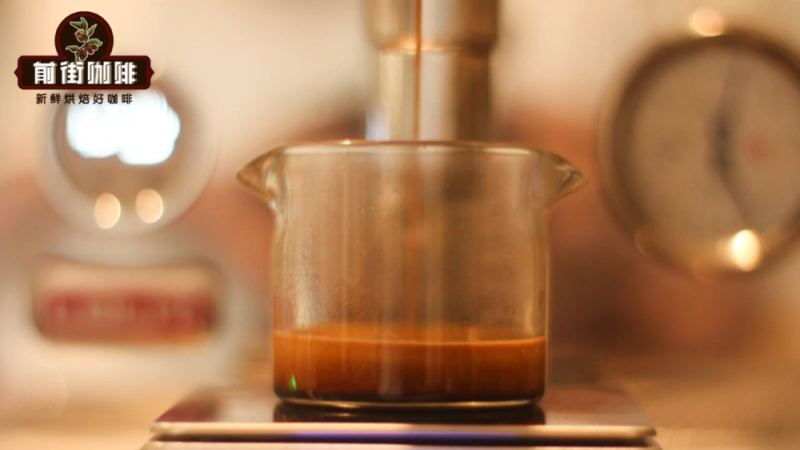
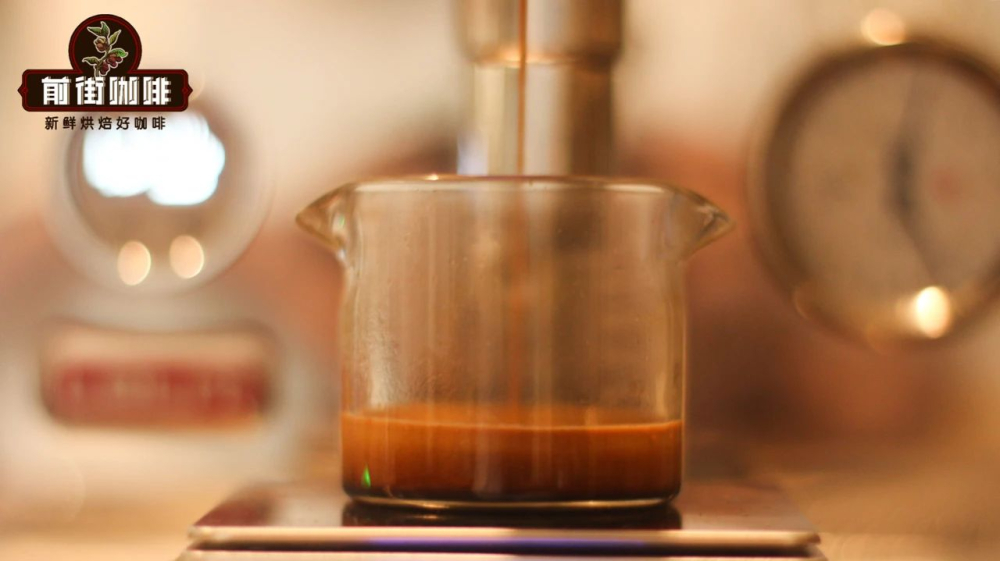
Front Street first wipes the basket dry, turns on the grinder, grinds the amount for a double shot, places it on an electronic scale, and adjusts it until it reaches 20 grams. Next, use a tool to distribute the grounds evenly, then tamp the coffee puck firmly to ensure more stable extraction. Then turn on the extraction switch to release water, moistening the group head while washing away the coffee grounds stuck to it. Gently and slowly lock the portafilter onto the group head, and begin by flipping down the extraction switch. When the electronic scale shows that 40 grams of coffee liquid has been extracted, at about 30 seconds, the extraction switch can be flipped down. Pour the coffee liquid into an Espresso cup and it is ready to enjoy.
The taste and mouthfeel of Espresso are related to the coffee beans used. The espresso served at Front Street stores uses Front Street Sunflower Warm Sun Blend. It is blended from Honduras Sherry coffee and Ethiopia natural Red Cherry at a ratio of 7:3. Made into Espresso, it has rich crema, a very obvious whiskey aroma, an acidity of vanilla biscuits and berries on the palate, a solid flavor, and after drinking, the whole mouth is filled with various aromas.
Espresso can also be diluted with water, which is the Americano commonly seen on menus, full of delicate fragrance; adding milk makes a latte, presenting the sweet deliciousness of chocolate and cream.
Espresso blend coffee bean recommendations
In addition to the Warm Sun Blend with a wine-aroma flavor profile, Front Street's bean list also has three relatively cost-effective espresso blend coffee beans for everyone to choose from. The extracted espresso mainly presents nutty notes. Because each blend uses a different ratio, each has subtle differences.
1. Classic full-bodied type—Front Street Commercial Blend Coffee Beans
Washed Robusta coffee beans (10%) + washed Colombian coffee beans (30%) + semi-washed Brazilian coffee (60%)
The espresso produced has rich golden crema and nutty aroma. When tasting, there is a roasted coffee bitterness, but it is accompanied more by a creamy, full mouthfeel, and after swallowing, the bitterness also dissipates, leaving fragrance on the lips and teeth.
The above content is compiled by CoffeeHunters, a coffee news website.


