







The core philosophy of specialty coffee lies in presenting the unique regional flavors of its origin. Ethiopia, as the birthplace of Arabica coffee, boasts numerous distinctive regions such as Yirgacheffe, Sidamo, Harar, and Limu, each exhibiting vastly different flavor profiles due to variations in altitude, processing methods, and varieties. This article systematically reviews the flavor characteristics, grading systems, and variety overviews of Ethiopia's major coffee regions, while also introducing the naming conventions and information labeling of specialty coffee beans, helping coffee enthusiasts gain a deeper understanding of this African coffee kingdom's rich heritage. Front Street Coffee also shares its brewing practice with Sidamo Huakui in this article for readers' reference.
In the past, the public's perception of coffee often remained stuck on the impression of "bitterness," which actually originated from the dark-roast-dominant style of the second wave of coffee. As coffee culture continues to evolve, the third wave has shifted to promoting medium-light roasts and gave rise to the concept of "specialty coffee." Specialty coffee can be simply understood as high-quality coffee that showcases the unique flavors of its origin. In the second wave's dark roast era, due to the high degree of carbonization, the coffee beans' inherent origin flavors were largely lost, making it difficult for consumers to judge quality or appreciate regional characteristics. Today's specialty coffee, centered on medium-light roasts, reduces the interference caused by carbonization, allowing origin flavors to be fully released and enabling us to truly appreciate coffee's fascinating and diverse nature. Front Street Coffee believes this is precisely why we should choose specialty coffee.
In the field of specialty coffee, variety, origin, and processing method are the three core elements. They not only determine the flavor direction of coffee beans but also directly influence roasting and brewing strategies. Therefore, coffee professionals typically include the following information when naming:
Country of origin: such as Ethiopia, Brazil, Indonesia, etc. This is basic information that must be labeled.
State/province/county/city/village of origin: depending on the specific situation, for example, Hambela or Yirgacheffe, it will be indicated if available.
Estate of specialty coffee beans: such as Hacienda La Esperanza or Hacienda La Esmeralda. However, not all coffee beans come from a single estate; sometimes they are collectively produced and sold by cooperatives or processing stations, so this item is not mandatory.
Processing method of specialty coffee beans: such as natural, washed, semi-washed, wet-hulled, honey process, anaerobic process, etc. Different processing methods alter the acidity, aroma, and bitterness of coffee through fermentation and chemical changes, making this extremely crucial and necessary information.
Variety of specialty coffee beans: Specialty coffee almost exclusively belongs to the Arabica species, while affordable or instant coffee mostly uses Robusta. Since Arabica is further divided into thousands of varieties, most of which have not been fully studied or cultivated, the specific variety is sometimes not listed (for example, Ethiopian coffee is typically collectively referred to as Ethiopian heirloom). Exceptions are particularly well-known varieties that require attention, such as Bourbon, Typica, and Geisha.
Grade of specialty coffee beans: For example, the G1 in "Ethiopia Natural Aricha G1" is Ethiopia's own grading method, with G1 standing for Grade 1, representing the highest grade. Grading standards vary by country, so the grade is not necessarily mandatory information either. Basically, specialty coffee is almost always the highest grade coffee from its country.
The Yirgacheffe region possesses a highly recognizable citric acidity, making it an ideal choice for entering the world of specialty coffee.
Ethiopia is the birthplace of Arabica coffee. In the forests of the Kaffa region of Ethiopia, wild Arabica coffee can still be found today. In the Ethiopian language, coffee is called "Bun" or "Buna," and the word "coffee bean" most likely originates from the translation of "Kaffa Bun." Arabica coffee was discovered in the Harar region very early on, and its source is very likely in the Kaffa forest.
Ethiopian coffee mainly uses two processing methods: natural and washed, and the flavor differences brought by different processing methods are quite significant. Generally speaking, washed Sidamo, Yirgacheffe, and Limmu coffees have slightly lower body and earthiness, while naturally processed coffees have a more exuberant mouthfeel. However, the cupping performance of Ethiopian coffee can fluctuate from batch to batch, so a large number of cuppings are needed to select truly high-quality coffee.
Regarding the grading of Ethiopian coffee: the highest grade for washed Ethiopian Yirgacheffe and Sidamo is typically Grade 2 or Grade 3 (G2 or G3), while naturally processed coffees from eastern Ethiopia are mostly Grade 4 or Grade 5 (G4, G5). In many cases, Grade 4 coffee is labeled as Grade 5 in order to reduce taxation. Currently, the grading system is not unified and is even somewhat chaotic, because there also exist naturally processed Grade 1 and Grade 2 (Grand G2) Yirga Cheffe coffees, yet the highest grade for Harar is only Grade 4 (G4) (Source: sweetmaria).
Introduction to the Regional Flavors of Ethiopian Coffee Origins
Yirgacheffe (Specialty Region): Altitude 1,800–2,000 meters
Yirgacheffe Coffee has an intense floral aroma. Washed Yirgacheffe is one of the finest highland coffees in the world, with soft acidity and rich body.
Yirgacheffe originally belonged to the Sidamo region but was separated due to its unique flavor. In addition to the town of Yirgacheffe, it also encompasses three sub-regions: Wenago, Kochere, Gelena, and Abaya. Therefore, in the new Yirgacheffe grading system, the prices of Yirgacheffe A, Wenago A, Kochere A, and Gelena/Abaya A are higher than their B-grade counterparts.
Sidamo (Specialty Region): Altitude 1,400–2,200 meters
Sidama Coffee beans are medium-sized and greenish-gray. Washed Sidama coffee is known for its balanced mouthfeel and flavor, hailed as "sweet coffee," with delicate acidity and good body. Produced in southern Ethiopia, it can be used for blending or as a specialty single origin. Its flavor is similar to Yirgacheffe; finely washed or natural Sidama also carries floral and orange notes, with a value comparable to Yirgacheffe. The varieties in these two regions are similar, with medium-sized beans, though there are also dwarf small-bean varieties that farmers often sell separately. The common Kurmie has poor disease resistance; Wolisho plants are tall and robust; Deiga has a medium tree shape. These three varieties are the mainstays of the Biloya and Aricha series in specialty natural coffees.
Limu (Specialty Region): Altitude 1,200–2,000 meters
Limu Coffee is known for its aromatic and wine-like flavors (spicy and Winnie flavor) and is popular in European and American markets. It has good acidity and body, and washed Limu coffee is also a favorite among specialty coffees. The beans are medium-sized, greenish-blue, and mostly round.
This region has relatively low production and is mainly exported to European and American markets. It is not easily available in Taiwan but is quite popular in Europe and the US. There are three processing methods: washed, natural, and semi-washed. Limu has noticeably lower body, and its floral and citrus notes are inferior to Yirgacheffe and Sidamo, but it has an added grassy and brown sugar aroma with bright fruit acidity.
Harar (Specialty Region): Altitude 1,500–2,400 meters
Harrar Coffee comes from the eastern highlands of Ethiopia. The beans are medium-sized, greenish-yellow, with medium acidity and full body, carrying a typical mocha flavor. It is one of the most famous coffees in the world. Due to annual rainfall of only about 1,000 mm, all processing is natural. In terms of flavor, Harrar coffee is renowned for its unique "wild complexity," a typical representative of ancient early flavors, and is known as one of the "Twin Stars" alongside Yirgacheffe.
Jimma (Commercial/Commodity Coffee Region): Altitude 1,350–1,850 meters
Jimma is the capital of the Kaffa forest or Kaffa Province. Its English spelling is quite chaotic—it is mostly written as Jimma on maps, but spelled as Djimmah on coffee burlap sacks. This is Ethiopia's largest coffee-producing region, accounting for one-third of export volume.
The Kaffa forest is known for its primitive wild varieties, and Jimma is the collection and distribution center for Kaffa in this region. Farmers habitually transport coffee picked from forest areas to Jimma, then mix hundreds of varieties together and sell them as commercial beans, causing the aromas of many delicious varieties to be masked.
Although washed specialty Jimma lacks the orange and floral notes of Yirgacheffe, its flavor profile is quite clean and translucent, similar to Central American specialty coffee. Commercial-grade specialty Jimma is very common in Taiwan; with luck, you can buy good-quality Jimma at a reasonable price, with a refreshing lemon peel note that is not inferior to Sidamo. Overall, Jimma has better flavor than Brazil's bulk commercial Santos and is a good mid-to-low-priced blend bean.
Illubabor (Commercial/Commodity Coffee Region): Altitude 1,350–1,850 meters
This region is located in western Ethiopia, bordering Sudan, and is the westernmost production area. Its coffee genetic complexity is second only to the Kaffa forest. The beans are noticeably larger than Yirgacheffe and Sidamo, with lower fruit acidity, good viscosity, and balanced flavor. Most coffee from here is transported to Jimma for blending and is rarely sold independently.
Gimbi, Lekempti (Commercial/Commodity Coffee Region): Altitude 1,500–1,800 meters
This region has both natural and washed beans. The beans resemble Harar's longberry, and a small amount of specialty-grade coffee is quite popular in Europe and the US. Most are hailed as "the poor man's Harar," with better fruit acidity and fruitiness than Illubabor, and a bright flavor.
Tepi, Bebeka (Commercial/Commodity Coffee Region): Altitude 500–1,900 meters
The two regions are located close to each other, with Tepi north of Bebeka, and there are corporately managed coffee plantations. In recent years, a garden system has been promoted to increase farmers' income, with annual production of about 3,000 tons. Both areas have wild coffee with low yields, and their flavors are completely different from Harar and Yirgacheffe. Low fruit acidity is the biggest characteristic, making them suitable for blend beans. There are two processing methods: natural and washed.
Lake Tana (Alternative Region): Altitude 1,840 meters
Monastery coffee, with surrounding forest coffee having extremely low annual production of less than 10 tons, can hardly be called a production region. The Eastern Orthodox monasteries, churches, religious murals, and myths scattered around the lake area have created the world's most "divine" coffee.
European monks established the local coffee planting industry, which was later taken over by coffee communities or cooperatives in villages around the town. There are no dedicated plantations here; coffee trees are naturally scattered in forests and fields. During harvest season, the Ethiopian Coffee Trading Company comes to town to purchase coffee beans collected by farmers.
Front Street Coffee Brewing
Sidamo coffee, as one of Ethiopia's famous specialty coffee regions, has a flavor loved and recognized by many coffee enthusiasts. As a major region in Ethiopia, Sidamo's sub-regions also have subtle flavor differences among them. Front Street Coffee has chosen the Huakui bean for this brewing session to see how its flavor performs.
Brewing Parameters
Dose: 15g
Coffee-to-water ratio: 1:15
Water temperature: 91°C
Grind size: Normal pour-over grind (78% passing through a No. 20 standard sieve)
Dripper: Hario V60#01 dripper
Brewing Process
1. First pour: 30g of water for a 30-second bloom.
2. After the bloom, pour the second stage of water, about 95g, bringing the scale reading to 125g. Wait for the water level to drop halfway.
3. When the coffee bed is about to be exposed, pour the third stage of water, about 100g, bringing the scale reading to 225g. Wait for the coffee to finish draining. Total brewing time is 2 minutes to 2 minutes 3 seconds.
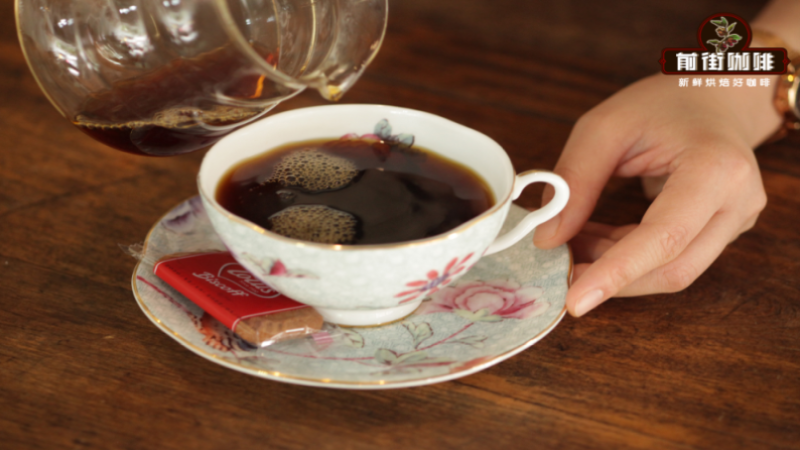
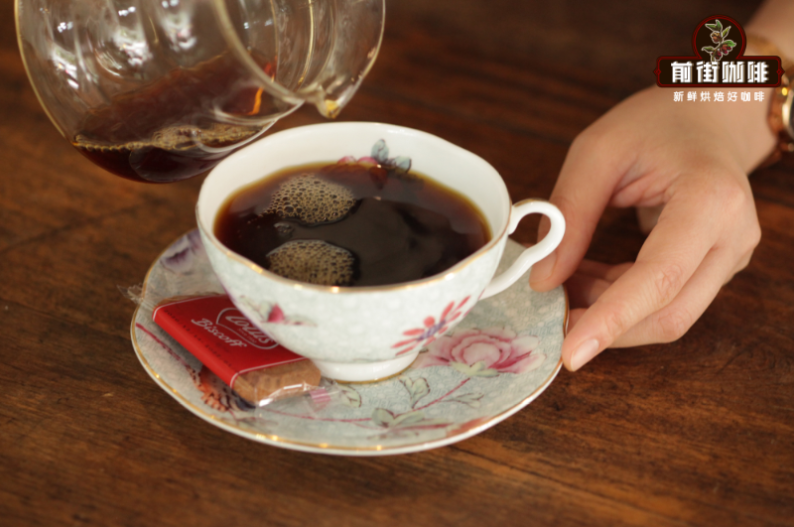
The Huakui brew leans toward tropical fruit flavors. The alternating contrast between sweetness and acidity is very surprising, with a strong fermented character.
For professional coffee knowledge exchange and more coffee bean information, please follow Coffee Workshop (WeChat public account: cafe_style)
For more specialty coffee beans, please add the private WeChat of Front Street Coffee: qjcoffeex
The above content is compiled by CoffeeHunters, a coffee news website.


