







Cold drip coffee, with its pure, smooth mouthfeel and unique fermented aroma, has become a highly favored coffee beverage in summer. Starting from Front Street Coffee's in-store practice, this article systematically sorts out the differences between cold drip and cold brew, the assembly structure of a cold drip brewer, and the methods for setting grind size and drip speed, and offers three coffee bean recommendations suitable for making cold drip. Finally, it explains the optimal refrigeration period and flavor change patterns of cold drip coffee, helping enthusiasts recreate a cup of richly layered cold drip coffee at home.
For more specialty coffee knowledge, please follow the WeChat public account: Front Street Coffee (FrontStreet Coffee)
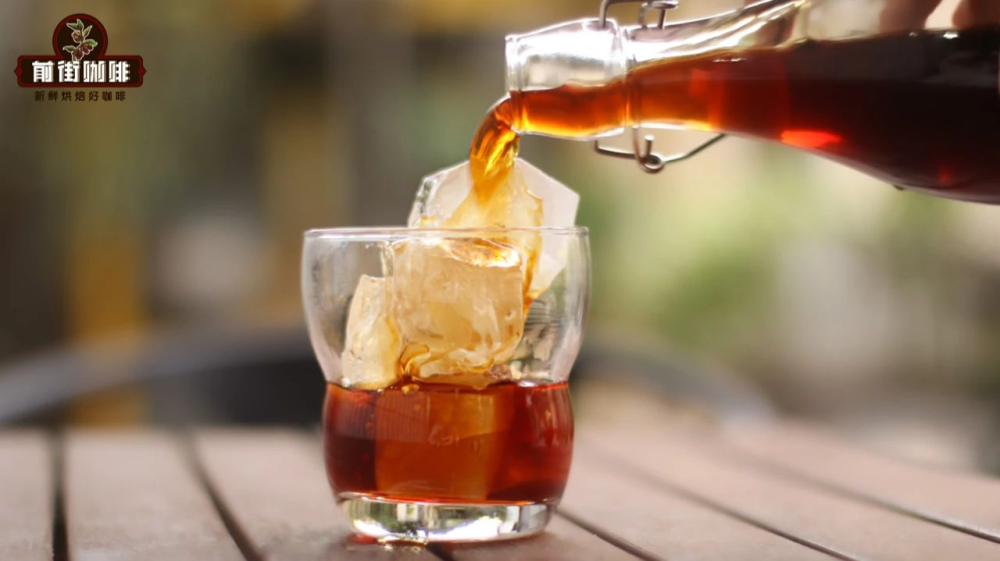
The method of making cold drip coffee is to let ice slowly melt into water droplets, which drip at an even pace onto freshly ground coffee powder to complete extraction. The resulting coffee liquid also needs eight hours of low-temperature refrigeration for natural fermentation. The coffee made this way has a pure taste, balanced acidity and sweetness, and a refreshing entry, making it a popular item that Front Street must promote every midsummer.
What is the principle of cold drip?
Before formally starting the topic of cold drip, Front Street will first briefly explain two common low-temperature coffee extraction methods: cold brew coffee and cold drip coffee.
Cold brew coffee, also called cold-water coffee, can be understood literally: coffee grounds are immersed in cold water or room-temperature water, then placed in a low-temperature environment such as a refrigerator to complete extraction. The barrier to operation is low, and a sealed container is enough. Cold drip coffee is different. It uses ice water dripping at a constant rate to let water droplets slowly pass through the coffee grounds layer to extract flavor. After dripping is finished, it still needs to be refrigerated and fermented overnight before drinking. Because the dripping process often lasts six to eight hours, if you want to drink cold drip made from a specified bean, you need to make an appointment with Front Street in advance so Front Street can arrange time to prepare it ahead.
After roasting, coffee beans generate certain high-molecular compounds, most of which carry bitterness. When brewing with hot water normally, the dissolution ratio of these high-molecular compounds increases, so the bitterness becomes more obvious. Low-temperature extraction, because the water temperature is low, dissolves fewer bitter components after contact with coffee grounds, while the remaining flavor substances are released slowly, so the finished drink tastes sweeter, and bitterness is not prominent.
How do you make cold drip coffee at home?
After being attracted by the flavor of cold drip coffee, many friends buy a cold drip brewer intending to make it themselves, only to encounter various problems. Below, Front Street uses in-store production as a reference to demonstrate the process of making cold drip coffee and answer these questions one by one.
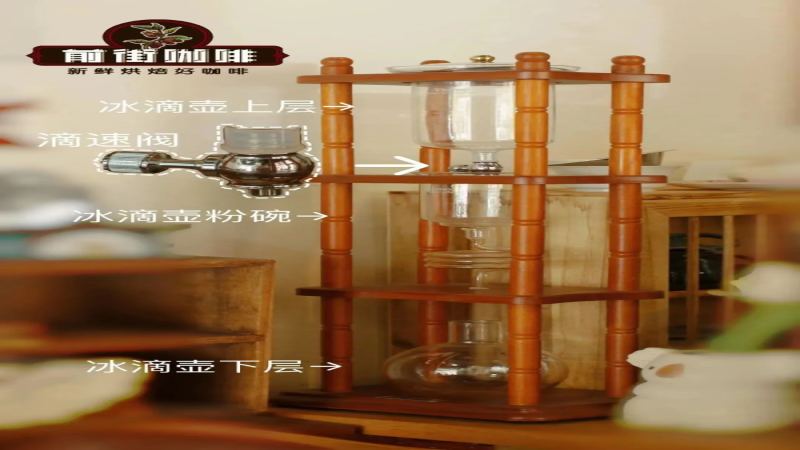
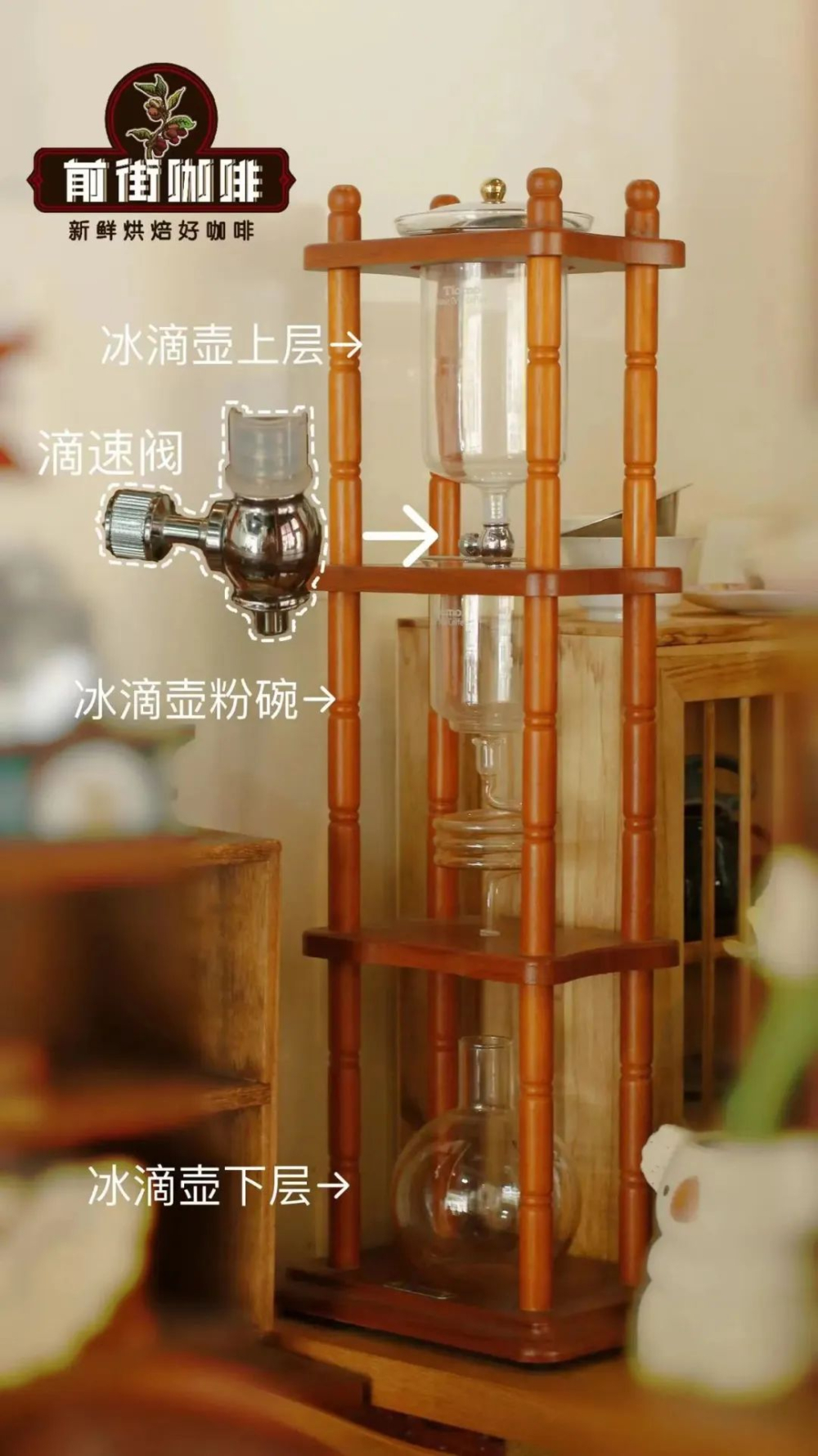
There are many types of coffee equipment on the market, but the structure of a cold drip brewer cannot do without three core parts: the upper pot holding ice water (with a valve that can adjust the water droplet speed), the filter cup holding coffee grounds, and the lower pot receiving the coffee liquid. What everyone sees in Front Street's store is the Tiamo HG2713, which additionally has a ring-shaped glass flow-guiding tube. Which one to buy specifically can be decided based on your own needs and budget.
When Front Street makes cold drip coffee, the grind size is controlled at a passing rate of 80% to 85% on the China No. 20 standard sieve, and the setting on the store's EK43s is 10. As is well known, if the coffee powder is ground too coarse, the finished coffee taste will be weaker; if ground too fine, it easily causes clogging and poor drainage, which in turn makes the coffee bitter. Therefore, choosing the grind size is very critical.
This time Front Street chose the refreshing Kenyan Asalia coffee beans for production. Extraction efficiency is lower in a low-temperature environment, so Front Street Coffee's baristas recommend using a slightly finer grind size than for pour-over. Here, a standard sieve passing rate of 85% is used.
Although the flow rate of cold drip is similar to the water flow size of pour-over, it is calculated by drops per second. The slower the flow rate, the longer the total time required, and the easier it is to over-extract. Front Street usually uses a rhythm of 7 drops every 10 seconds for extraction. You can adjust the flow rate according to personal preference. As for the coffee-to-water ratio, Front Street uses 1:10, because the finished drink is diluted with ice before drinking, so the extraction concentration is on the higher side; if making it at home, you can operate at 1:10 to 1:12.
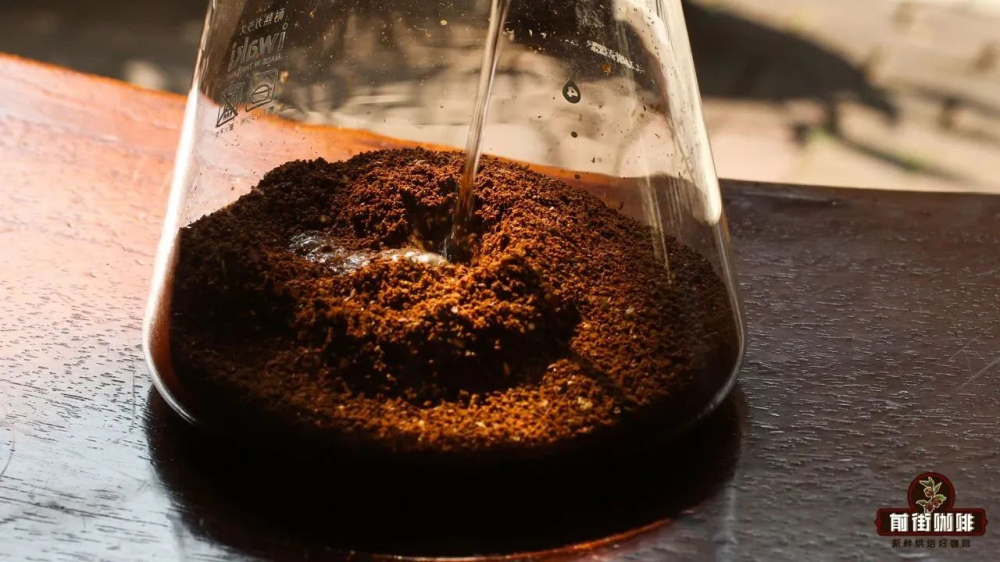
When Front Street makes cold drip, it takes 60 grams of coffee beans and grinds them into powder. First, place a round filter paper at the bottom of the powder cup, pour in the coffee powder, then cover the surface with another filter paper, and then wet the coffee powder with water. This can both shorten the dripping time and avoid uneven extraction. Then fill the upper pot with an ice-water mixture, with an ice-to-water ratio of 1:1, ultimately extracting 600 grams of coffee liquid. After dripping is completed, pour the coffee liquid into a sealed container and refrigerate it for 12 hours before drinking. Front Street generally performs dripping during daytime business hours, places it in the refrigerator in the evening, and the next day it can be enjoyed with ice cubes.
Recommended coffee beans suitable for making cold drip
Regarding bean selection, Front Street believes you can choose beans with different processing methods or roast levels according to personal taste to make it, provided the beans are within their optimal flavor period (two months). The extraction characteristics of cold drip coffee can amplify the wine aroma, fruit fermentation notes, and fruity aromas in coffee. If you are unsure which bean to choose, you may refer to the following beans listed by Front Street.
"Refreshing floral and fruity type — Front Street Elida Estate Catuai Coffee Beans"
This bean comes from the famous Elida Estate in Panama's Boquete producing region. The soil in this area is nutrient-rich black soil, and the coffee beans produced have a strong fruity aroma. The washed process highlights clear pink floral notes, a peach-like juicy feel, and citrus acidity. The cold drip coffee Front Street makes with this bean presents rich layers of peach, sweet orange, and grape.
"Fermented wine aroma type — Front Street Honduras Sherry Barrel Coffee Beans"
This Honduran Sherry coffee bean has undergone whisky barrel fermentation. The beans give off full vanilla, cream, and whisky aromas, and are very popular on Front Street's bean list. The Sherry cold drip coffee made with it has a rich fermented wine aroma and also carries a honey-like sweetness.
"Rich fruity tea type — Front Street Sun-Dried Huakui Coffee Beans"
The sun-dried Huakui coffee beans are selected from ripe fruit with a pulp sugar content as high as 30%. The fructose ferments in sunlight, allowing the beans to develop a full fruity sweetness internally. The cold drip made with this bean has lively berry and passion fruit sweet-and-sour notes, a prominent juicy feel, and a hint of black tea freshness in the finish.
How long can made cold drip coffee be kept in the refrigerator?
Freshly dripped coffee liquid has a weaker aroma and a thinner mouthfeel, so it needs to be sealed and fermented in a low-temperature environment to make the flavor substances cleaner, mellower, and fuller, thereby enhancing aroma, sweetness, and wine aroma. However, the longer it is stored, the higher the degree of fermentation. Cold drip stored for more than five days will instead move toward a negative mouthfeel, so longer is not always better. Front Street recommends storing it in the refrigerator and drinking it within five days.
In addition, when the lid is opened, external bacteria can easily enter the bottle and cause the coffee to spoil. For both flavor and health reasons, it should no longer be drunk. The cold drip coffee produced by Front Street's store has a flavor period of only three days.
The above content is compiled by CoffeeHunters, a coffee news website.


