







In the African coffee landscape, besides Ethiopia and Kenya, there is another landlocked country known as the "Heart of Africa"—Burundi. With high altitudes, fertile volcanic soil, and ample rainfall, it offers exceptional conditions for specialty coffee cultivation. Burundi coffee is primarily washed, and is especially famous for its double fermentation process, which creates a flavor profile that is both delicate and intense in acidity, with prominent sweetness. This article will systematically introduce Burundi's geography and climate, its five major coffee regions, processing methods, and variety flavor characteristics, and share Front Street Coffee's roasting and cupping experience with Burundian beans, helping coffee lovers gain a comprehensive understanding of this niche yet highly promising producing country.
In the eyes of coffee enthusiasts, Africa has always held an important place. This continent not only nurtured Ethiopia, the birthplace of coffee, but also boasts several producing countries whose strength cannot be overlooked. Among them, Burundi, known as the "Heart of Africa," is one worth paying attention to.
Burundi
The Republic of Burundi is located in east-central Africa, south of the equator. To its north is Rwanda, to its southeast is Tanzania, to its west lies the Democratic Republic of the Congo, and to its southwest it borders Lake Tanganyika. The country covers a total area of approximately 28,000 square kilometers.
The flag of Burundi is rectangular, with a white saltire dividing the field into four triangles—red at the top and bottom, green on the left and right. In the center, on a white disc, are three red six-pointed stars edged in green, arranged in a triangular formation. The red symbolizes the blood of the martyrs who gave their lives for freedom, the green represents the nation's pursuit of progress, the white stands for peace, and the three stars correspond to "unity, work, and progress," while also representing the harmonious coexistence and joint nation-building of the three major ethnic groups: the Hutu, Tutsi, and Twa.
Burundi's terrain is dominated by plateaus and mountains, with most of the country situated on the plateau east of the East African Rift. The average altitude reaches 1,600 meters. Geographically, it can be divided into three regions, with the western plains extending along the Ruzizi River and the Rift Albertine plain. In addition, the country's southwestern shore is home to Lake Tanganyika, the second-deepest lake in the world.
Burundi's climate is subtropical and tropical, with four distinct seasons throughout the year: the long rainy season from February to May, the long dry season from June to August, the short rainy season from September to November, and the short dry season from December to January. Average annual rainfall ranges between 1,000 and 1,600 millimeters. The country has numerous volcanoes and fertile soil, which, combined with high altitudes and abundant rainfall, provides an ideal growing environment for coffee and other crops.
Coffee Regions
Burundi has five main coffee regions: Kirundo, Kirimiro, Mumirwa, and Buyenz, with Kayanza and Ngozi within the Buyenz region being the most well-known. The coffee harvest season runs from April to July each year, and production is predominantly carried out by smallholder farmers.
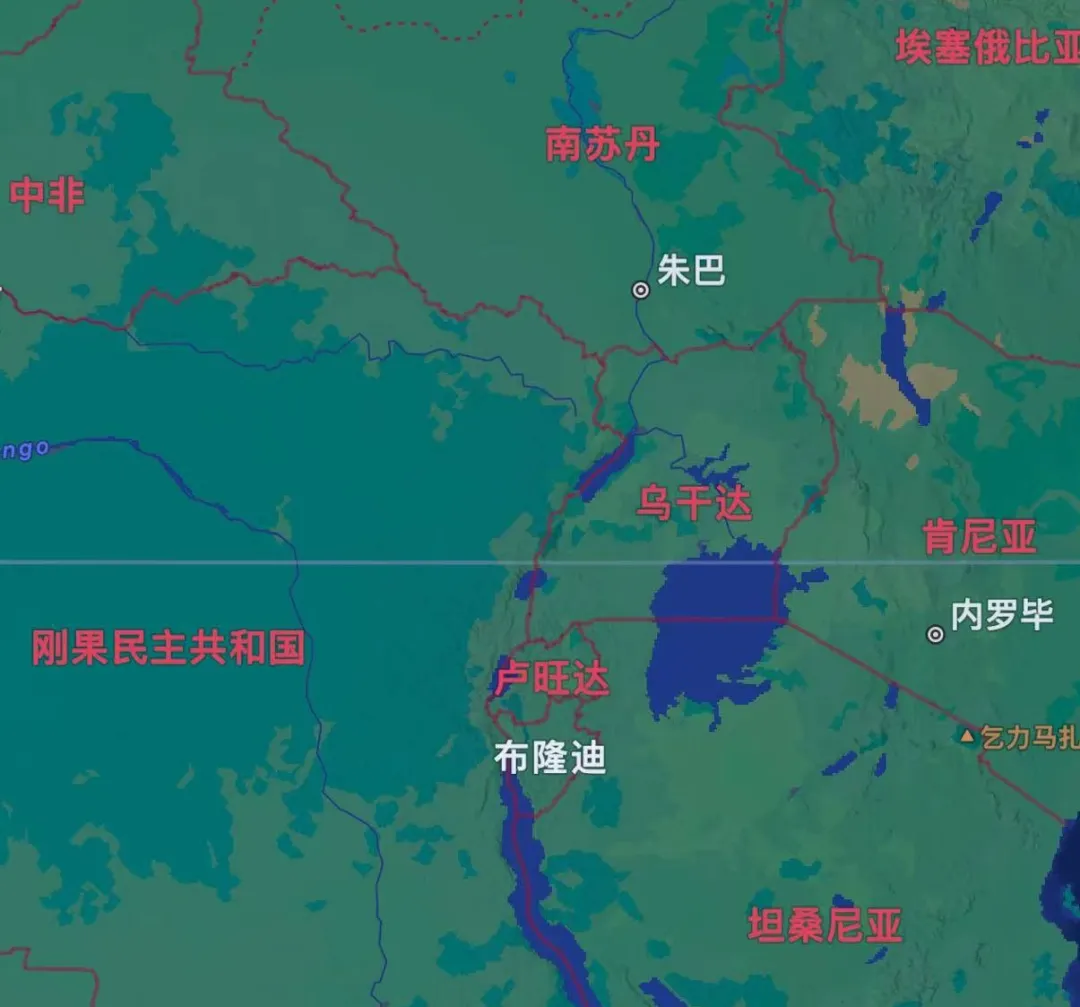
Buyenz: The largest coffee region in the country, bordering Rwanda, and internally divided into Kayanza and Ngozi. The Kayanza area has a very mild climate, with an average temperature of about 18°C. Most smallholder farms are located between 1,700 and 2,000 meters in altitude, and summer is the dry season. Ngozi is located in northeastern Burundi, at a similar altitude to Kayanza. Although its output is less than Kayanza's, its quality in recent years has shown considerable potential.
Kirundo: Located in northeastern Burundi, with relatively low production but good development prospects; altitude is approximately between 1,400 and 1,700 meters.
Kirimiro: Situated in the central mountainous area of Burundi, with an average temperature of 12 to 18°C. Annual rainfall is about 1,100 millimeters, lower than other regions. This region has a professional coffee laboratory dedicated to quality monitoring of exported coffee.
Mumirwa: Located in northern Burundi, adjacent to Rwanda and the Democratic Republic of the Congo, with an altitude of 1,100 to 2,000 meters, an average temperature of 12 to 18°C, and annual rainfall of about 1,100 millimeters.
Processing Methods
Currently, Burundi has approximately 283 processing stations and 8 hulling plants, mainly distributed in the northern and central provinces. Washed processing is the primary method, accounting for about 80%, with natural processing at about 15% and honey processing at about 5%.
Burundi's washed processing method is quite distinctive, similar to Kenya's, and is often called "double washed processing" or "double fermentation processing," meaning the coffee beans undergo two rounds of washing and two rounds of fermentation. The washing channels used in this process are divided into upper and lower levels, used for the first and second washing respectively.

In practice, the harvested coffee cherries are first sorted to remove defective fruit and depulped, then poured into the upper fermentation tank for fermentation or dry fermentation. After fermenting for a period, the coffee beans are rinsed with water to remove most of the surface mucilage. The beans are then moved to the lower fermentation tank for a second fermentation.
During fermentation, the circulating water needs to be changed every few hours to prevent the coffee beans from developing off-flavors or mold. After the second fermentation is complete, the beans are washed again with water to remove residual mucilage. The washed parchment beans are then placed in a tank to soak for more than twelve hours, and finally laid out to dry.
Burundi coffee washed process: Obtaining fresh cherries → floating selection → depulping → wet fermentation for 12 hours → washing off mucilage → parchment beans → re-grading (hand-sorting defective beans) → sun drying → hulling plant → green bean grading → packaging and storage.
Washed processing gives Burundi coffee a character that is both delicate and intense in acidity, with a body that is neither too heavy nor too light, and a sweetness accented with spice. Front Street once experienced this typical style in a Burundian coffee bean called "Heart of Africa." To preserve the rich floral aromas and fruity acidity, Front Street chose a medium-light roast to present this bean. In cupping, the entry first reveals quality flavors of passion fruit, pineapple, dried fruit, floral notes, and honey, with bright acidity and lemon notes leaving a lasting impression even after finishing the cup.
The above content is compiled by CoffeeHunters, a coffee news website.


