







As a classic home coffee brewing device, the moka pot is widely popular for its simple operation and affordable price. But do you know why it's called a "moka pot"? What makes its structure unique? And what are the fundamental differences between it and an espresso machine? This article, from the perspective of Front Street, will systematically introduce the three-part construction of the moka pot, the principle of pressurized extraction, the differences between single-valve and dual-valve models, and provide a detailed breakdown of the complete process from adding water, grinding, filling the basket, to heating and extraction. It will also objectively analyze the pros and cons of the moka pot to help you determine whether it suits your home coffee setup. Whether you're a complete beginner or an enthusiast looking to refine your skills, you'll find practical references here.
Those who are new to coffee may have many questions, just as Front Street did when first starting out, being curious about all types of coffee beans and coffee equipment. Today, Front Street will explain what a moka pot is and how to use it to brew coffee.
What does a moka pot look like?
The design of the moka pot is very simple, with the entire structure divided into just 3 parts: the upper chamber for holding the brewed coffee, the middle filter basket, and the lower chamber where water is heated.
When we heat the moka pot, the water in the lower chamber heats up first and turns into steam, creating pressure that pushes the water vapor from bottom to top. When the hot water rises and comes into contact with the coffee grounds, the continuously increasing pressure pushes the extracted coffee liquid up into the upper chamber, and that's how we get the rich, concentrated coffee we need.
The extraction method of the moka pot is similar to the pressure-based espresso we commonly see. Water boils in the lower chamber and produces steam; accumulating steam creates pressure that forces hot water through the coffee grounds, dissolving flavor compounds that flow with the coffee liquid and spray with force into the upper container. A moka pot brews coffee at approximately 1.2 to 3 atmospheres of pressure. The increased pressure concentrates the coffee flavors more, which is why coffee brewed with a moka pot has a full-bodied mouthfeel.
Common moka pots on the market come in two types: single-valve and dual-valve. When using a dual-valve moka pot to make coffee, a pressure-regulating valve is added on top of the original design. The increased pressure also raises the coffee's concentration and brings out more coffee oils. Although the moka pot can't compare to a standard espresso machine's 9+ atmospheres of pressure, if we just want to enjoy a cup of rich, full-bodied coffee during leisure time at home, Front Street believes the moka pot is also a very good choice.
Pros and cons of using a moka pot
The biggest advantage of the moka pot is its portability and simple operation—no繁琐 steps like espresso. Of course, the price is also very affordable. But the moka pot also has obvious drawbacks. While espresso machines typically extract at 90-94°C, the moka pot brings hot water to its boiling point of 100°C. The excessively high temperature extracts bitter large-molecule compounds, making the coffee taste easily burnt, bitter, harsh, and hard to swallow.
It should be noted here that although the coffee brewed by a moka pot is relatively strong, it still differs from the espresso we commonly encounter. What we now refer to as espresso is extracted through 9+ atmospheres of pressure, producing a rich, velvety, fine, and full-bodied coffee liquid. The moka pot's maximum pressure is only 2 atmospheres, far less than the pressure used by commercial espresso machines. The resulting coffee liquid is relatively thin, and its flavor and mouthfeel are not as rich and full-bodied as espresso. However, if we want to enjoy a cup of rich, full-bodied coffee more quickly at home, Front Street believes the moka pot is also a very good choice.
Let's brew a cup of coffee with a moka pot!
Front Street first removes the base of the moka pot and adds warm water to the lower chamber. This shortens the brewing time and prevents the coffee grounds from being heated too quickly, which could cause a burnt, bitter taste.
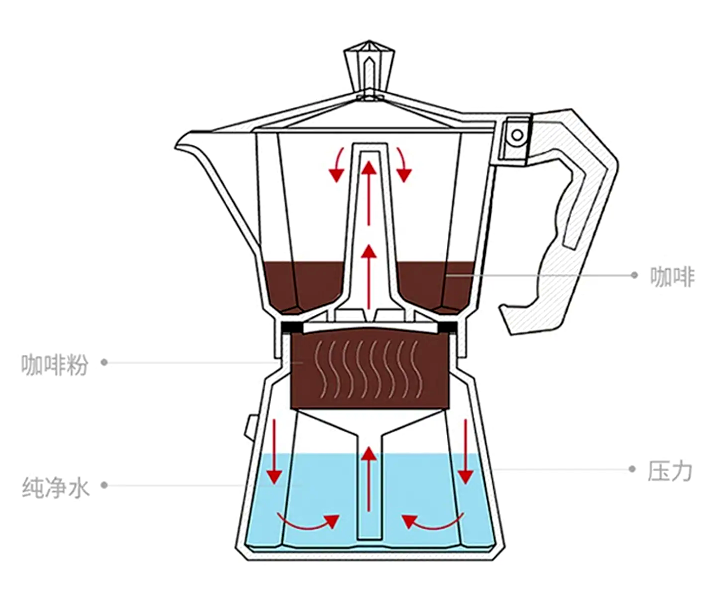
Keep the water level below the pressure relief valve line. The safety valve prevents the moka pot from exploding due to a blocked extraction channel caused by overly fine coffee grounds. If the safety valve is submerged in water and the extraction channel is blocked, the consequences of a high-temperature moka pot exploding are unimaginable.
To extract a rich black coffee, the grind size should be finer than regular pour-over but coarser than espresso. Here, Front Street is using its own roasted
"Sunflower Warm Sun Blend Coffee Beans." If the grind is too coarse, it will lead to insufficient extraction and sputtering. If too fine, it will cause over-extraction, resulting in a burnt, bitter taste that's hard to drink. Front Street's shop uses an EK-43s grinder at a setting of 0.5.
Pour the ground coffee into the filter basket, level it and fill it up, smooth it with your finger, and place it into the base. There's no need to tamp with force—an overly compacted layer can easily block the water flow from rising, thereby affecting extraction. If there isn't enough coffee, the water from the lower chamber, under steam pressure, won't be able to fully extract when it enters the middle coffee layer, which will cause significant sputtering from the upper chamber.
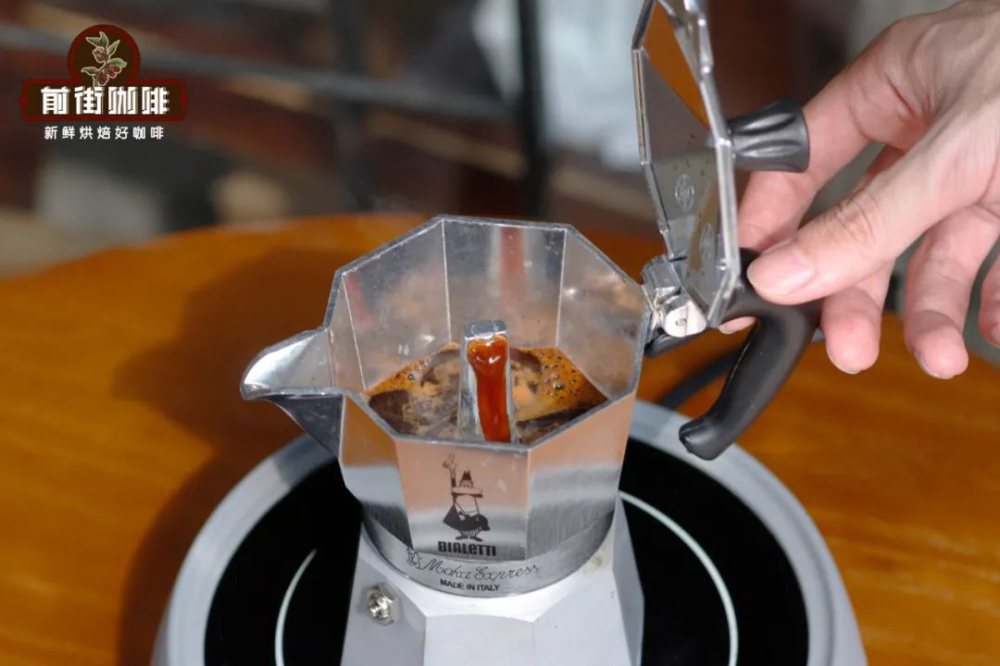
Next, screw the upper chamber tightly onto the lower chamber and place it on a gas stove or induction cooker to heat. When using an open flame, be careful to control the flame so it doesn't exceed the base of the moka pot. Actually, there's no precise time requirement for brewing. Wait for the moka pot to heat up. When you hear a hissing sound, turn the heat to low, and the coffee liquid and oils will slowly flow out.
When you see the coffee in the upper chamber is about half full, you can turn off the heat source and use a wet towel to move the pot to the table, letting the residual heat and pressure inside continue to extract the remaining coffee liquid. Finally, pour the extracted coffee into a cup and enjoy it directly. On the palate, there's a rich whisky aroma, vanilla, cream, and the sweet-tartness of berries, with the aroma of roasted nuts. Adding a certain proportion of hot water brings out a fresh fruity sweetness, and paired with milk, it has a chocolatey sweetness.
The above content is compiled by CoffeeHunters, a coffee news website.


