








Speaking of drip bag coffee, this makes Front Street think of the convenient and simple hanging ear coffee, but actually they are not the same thing.
If we look at the steps, drip bag coffee is even simpler than hanging ear coffee—just put it in a clean container and add liquid, such as hot water, cold water, or even milk. It's a coffee brewing method that has become popular in the last two years.
But if we look at the purpose, it's actually very similar to the familiar hanging ear bag coffee—both are for getting a cup of coffee more quickly, without needing any equipment or skill. You can brew it with just hot water, cold water, or milk. If you want to get more creative, you can also do what Front Street does—use pure coconut water, various fruit wines, blended spirits, or other liquids for soaking, so you can taste different flavors and experience the joy coffee brings.

The principle of extracting coffee with a tea bag is simple: because it's enclosed in a tea bag, the coffee grounds stay together. Over time, the fine particles inside won't "escape," because water can only slowly penetrate and extract from the outside in. The outer coffee grounds are inevitably the first to be saturated by water, allowing flavor compounds to come out. However, to make the coffee taste fuller, during the soaking process we need to properly stir the coffee bag to allow the coffee layer to extract more evenly.
Having talked about drip bag coffee, let's now talk about hanging ear coffee.
Front Street believes that hanging ear coffee is like a simplified pour-over, with certain requirements for brewing time, temperature, and water volume. The water temperature for hanging ear coffee is quite particular, determined by the flavor profile of different origins and the roast level. For dark roasts, Front Street's hanging ear coffee is best brewed at 88°C; for light roasts, 90°C to 92°C is best. But friends, don't worry if you can't identify the roast level—Front Street's official account has published relevant knowledge and brewing methods for hanging ear coffee, so feel free to buy with confidence.

Many customers often come to the FrontStreet Coffee shop asking whether hanging ear coffee can be brewed multiple times. Actually, a small bag of hanging ear coffee usually contains 10 grams of grounds, and 10 grams can generally only be brewed once. When you re-brew, you might find the coffee still tastes strong and think it's still drinkable. But that's not the case—because when you brew hanging ear coffee for a long time, the longer it soaks, the more caffeine is released. This is because the coffee has been over-extracted, and over-extraction releases the bitterness and astringency, meaning the coffee's best flavor is essentially gone. Even if the coffee is within its optimal tasting period, multiple brews will dilute the best flavor, so Front Street generally does not recommend customers re-brew the same hanging ear coffee.

If you buy hanging ear coffee and brew it at home, and you don't bring out the coffee's best flavor, then that bag of hanging ear coffee is wasted. So you must brew it during the coffee's optimal tasting period. To brew the best-tasting hanging ear coffee, you need to pay attention to the brewing parameters. Although the process of brewing hanging ear coffee is similar to pour-over, Front Street advises against simply copying it. Because compared to a V60, the hanging ear design is not good at retaining heat, so the actual temperature will be lower. Therefore, Front Street suggests raising the water temperature by 1°C during brewing, which helps bring out the coffee's best flavor.

If you come to Front Street's shop, you'll find that when our baristas make pour-over coffee for customers, they generally use 15 grams of coffee grounds to brew 225 milliliters of coffee, and they won't use the leftover grounds from the previous brew to make coffee for customers again—because Front Street wants to serve every customer a cup of coffee at its best flavor. This is the original intention of FrontStreet Coffee.
Additionally, Front Street would like to share a little tip on how to tell if the hanging ear coffee you bought is fresh. First, when buying hanging ear coffee, check the roast date on the packaging. The roast date indicates the date the coffee beans were marked when they came out of the roaster. When we talk about whether coffee beans are fresh, we generally look at the roast date rather than the expiration date. Because freshly roasted coffee undergoes a self-fermentation process within a week, bringing the flavor closer to perfection. After this stage, the coffee begins to oxidize and volatilize, and the coffee's characteristic aroma won't be as noticeable.

Generally speaking, if the coffee packaging doesn't show a date, it may be hanging ear coffee that has been sitting for a long time. Although the shelf life is usually much longer than the optimal tasting period, passing the optimal tasting period doesn't mean it's undrinkable—Front Street believes that past the optimal tasting period, the brewed coffee's flavor and mouthfeel won't be as good. Because if you brew coffee during its optimal tasting period, the brewed coffee will have very rich oils, with the coffee's characteristic sweetness and an aroma that is truly refreshing and delightful.

Then, when you brew hanging ear coffee, if it's fresh and within the optimal tasting period, when you add hot water, the middle of the coffee grounds layer will bulge—the fresher it is, the more obvious the bulge. This phenomenon is generally called &"hamburger brewing." Generally, light-roasted beans don't expand as noticeably as dark-roasted beans.
Also, Front Street suggests that when buying hanging ear coffee, try not to buy hanging ear coffee that was made more than five days ago, because once coffee beans are ground into powder, the coffee quickly loses its characteristic aroma, greatly reducing the flavor. Just like customers who come to FrontStreet Coffee to buy coffee beans—we suggest they best grind the beans right before drinking. But many customers don't have a grinder at home and will have it ground directly at Front Street's shop. Still, Front Street recommends drinking it within the optimal tasting period.

When you've decided you want to buy hanging ear coffee, the question that troubles you is how to choose the right hanging ear coffee brand for yourself. Front Street suggests buying seasonal hanging ear bags from specific origins. For example, Front Street's seasonal hanging ear bags mainly feature hanging ear coffee from seven origins that best represent the flavor of that origin—somewhat like Front Street's daily staple beans.
For example, if you like coffee with citrus fruit notes, Front Street would recommend buying Ethiopian Yirgacheffe hanging ear coffee; if you prefer sweeter coffee flavors like sweet orange or honey, you could try Front Street's Guatemala Huehuetenango hanging ear coffee; if you like the rich nutty and chocolate flavors of the Americas, then Front Street's Brazil Cerrado, Colombia Huila, and Costa Rica Tarrazu hanging ear coffees are perfect for you.

If your taste is on the stronger side, then feel free to boldly try Front Street's Indonesia Mandheling hanging ear coffee—the wild herbal and medicinal plant notes will be unforgettable! If you can't handle Mandheling's unique taste, why not try Front Street's Yunnan small-batch hanging ear coffee—with a light fruity and tea-like quality, somewhat like drinking tea. If you have trouble deciding, then take some time to visit the FrontStreet Coffee shop and let our baristas pick a hanging ear coffee brand that suits you.
Additionally, Front Street has included the brewing method for hanging ear coffee.
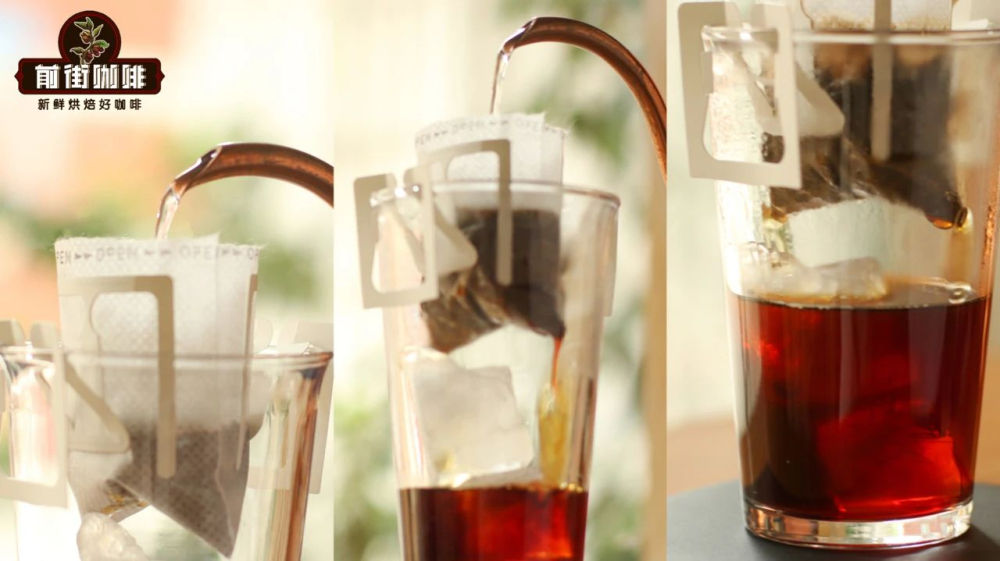
The brewing process for hanging ear coffee
1. Warm the cup—
Prepare a cup and first pour in some hot water to warm it. The purpose is to prevent the brewed coffee from cooling too quickly. Coffee's flavor changes continuously as the temperature drops, and if it cools too fast, you'll miss many different tastes.
2. Water temperature—
The brewing water temperature is very important. A temperature between 85 and 90°C is recommended. If the brewed coffee is too bitter, try lowering the water temperature. Conversely, if it's too weak or astringent, you can raise the temperature, but it should still be within the 85 to 90°C range.
3. Hanging the coffee bag—
First, gently shake the hanging ear bag to let the coffee grounds settle, avoidingcoffee grounds spilling when torn open. Then pour out the hot water from the cup, tear off the seal on the hanging ear bag, open the paper ears on both sides, shake to level the coffee grounds, and finally hang it on the rim of the cup.

4. Pre-wetting—
The first pour of water should just moisten the coffee grounds—too much or too little will affect the flavor. Then wait 20 seconds to let the coffee grounds fully absorb the water. The strength of the coffee can be adjusted by the pre-wetting time—extending to 40 seconds gives you a stronger coffee.
5. Pouring water—
The second pour can go up to about 80% full of the filter paper. It's best to use a thin, steady stream. Wait until the water level drops to the pre-wetted height, then continue pouring to 80% full, until you've extracted 150 to 180 cc. Once extraction is complete, there's no need to wait for all the water in the filter to drip out—just discard it directly.

6. Enjoy your coffee! Remember, you can taste different flavors as the temperature changes!
The above content is compiled by CoffeeHunters, a coffee news website.


