







Colombia ranks third in the world in coffee production, and its favorable growing environment of low latitude and high altitude produces coffee beans of outstanding quality. Drawing on Front Street Coffee's espresso blending experience, this article sorts out the flavor differences between Brazilian and Colombian coffee, provides an in-depth introduction to the evolution of Colombian Caturra and the Colombia variety, and explains how Castillo became today's dominant variety. It also details the screen-size standards and grading system of the Supremo grade, and includes the three-stage brewing parameters and flavor description for Front Street Sakura Castillo coffee beans, offering coffee lovers a complete framework for understanding Colombian specialty coffee.
For more specialty coffee knowledge, please follow: Front Street Coffee (Frontsteet Coffee)
When it comes to Front Street Coffee's espresso blend beans, many customers raise a question: why does Front Street's Americano taste different from those at other cafes? The answer is actually simple—different beans naturally produce different results. Front Street's current flagship espresso bean, Warm Sun Blend, uses a special combination of Honduras Sherry and Natural Red Cherry, with a rich fermented wine aroma that has captured the palates of a large number of coffee lovers. But when it comes to traditional-style espresso blends, Front Street also has reserves. In the early days of the shop, Front Street used exactly the formula common to most cafes on the market—Brazil blended with Colombia—with the aim of amplifying the nutty notes in the espresso while enhancing the body of the drink, making the combination of coffee and milk more harmonious.
Because the Brazil-Colombia blend has long occupied a mainstream position, many consumers mistakenly assume that the coffees of these two producing countries have similar flavors. In reality, Brazilian and Colombian coffee are vastly different. In terms of flavor expression, Front Street believes Brazilian beans have lower acidity and more prominent body, while Colombian coffee has more layered flavors. Take Front Street's Colombian single-origin Huayueye as an example: in the cup you can sense an intense rose fragrance, with a very distinct strawberry-jam sweetness; as the temperature drops, fermented notes gradually emerge, and the finish leans toward chocolate.
Colombia currently ranks third in the world in coffee production. Almost all of the country's coffee is produced and exported under the unified management of the National Federation of Coffee Growers of Colombia (FNC). This is a non-profit trade association representing more than 50,000 producers, most of whom are small family farms. Front Street has previously detailed the differences in growing environments between Brazil and Colombia in its comparison of the two countries' coffees. Colombia's coffee-growing conditions can be called superior: low latitude, high altitude, and diverse terrain—these factors together lay the foundation for its coffee quality.
According to books on specialty coffee, the two main varieties of Colombian coffee are Caturra and Colombia. In the 1960s, Caturra was introduced from Brazil and gradually replaced the earliest Typica, and by the 1980s, the arrival of the new Colombia variety caused Typica production to plummet sharply. Everyone is probably fairly familiar with Caturra, but what about the Colombia variety? It is actually a hybrid developed in the 1980s, carrying the bloodlines of Caturra and Timor. Those who know coffee may ask: isn't that just Catimor? At the time, the FNC insisted that although the Colombia variety is a close relative of Catimor, its flavor is far more elegant than ordinary Catimor, because after multiple generations of Arabica hybridization, its flavor made a qualitative leap.
The Colombia variety (Variedad Colombia) was developed by Cenicafe between 1968 and 1982 through more than five generations, and is the result of a successful combination of Caturra and a Timor hybrid. The variety was developed earlier than Colombia's first outbreak of coffee leaf rust in 1983. Although the new variety helped local farmers survive the crisis, Cenicafe anticipated that other diseases would break out later. They continued their improvement work, and after coffee berry disease (CBD) appeared in the country in the early 2000s, the research process accelerated further. These efforts ultimately gave rise to the two varieties Tabi and Castillo.
The Castillo variety was officially granted to coffee growers in May 2005 and is the signature achievement of the rust-resistant Colombia program promoted by the FNC. The program aimed to restore and renew Colombia's high-quality coffee production. Today, Castillo has become the most widely planted variety in Colombia. Front Street's Sakura is a Castillo coffee bean. Using Front Street Coffee's standard brewing method for three-stage extraction:
Dripper: V60 #01
Dose: 15g
Coffee-to-water ratio: 1:15
Brewing water temperature: 90°C
Grind size: medium-fine grind (78% passing a No. 20 standard sieve)
Add 15 grams of coffee grounds and pour in twice the dose of water for the bloom. After even heating, the coffee bed will swell into a moderately sized dome. After waiting 30 seconds, begin the second pour, circling from the center outward until about 125 grams. When the liquid level drops and is about to expose the coffee bed, proceed with the third pour, which should reach 225 grams; extraction is then complete, with the total time controlled at about 2 minutes.
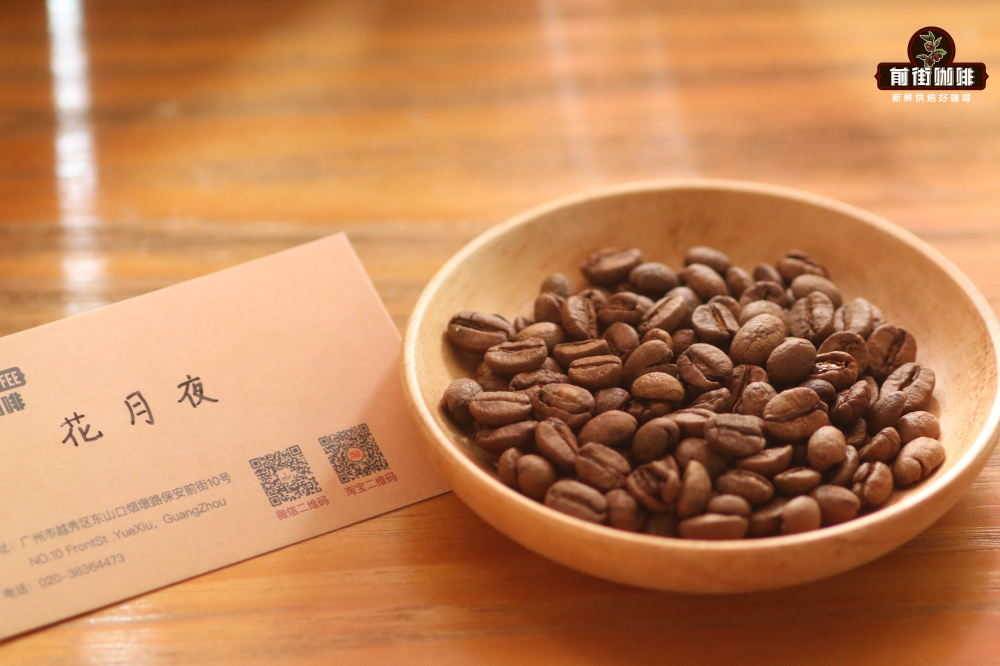
This Colombian coffee has a relatively prominent spice note on the palate, with a slight mugwort-like aroma, an obvious berry-jam flavor, and a quite distinct fermented quality.
Colombian specialty coffee beans mainly come from the southern producing regions, generally at altitudes above 1,500 meters, including San Agustin in Huila Department, Popayan in Cauca Department, Narino Department, and Tolima Department. Coffee from these areas usually carries delicate floral aromas. The overall flavor characteristics of Colombian coffee are prominent acidity and sweetness, accompanied by caramel aroma and abundant sweetness. Colombia's coffee-growing belt is also known as the "Coffee Triangle," distributed from south to north along the Andes Mountains.
Main coffee-producing regions of Colombia:
Antioquia - Medellin (18% of total production)
Tolima - Ibague
Caldas - Manizales (29% of total production)
Valle del Cauca - Cali (13% of total production)
Huila - Neiva (5% of total production)
Cauca - Popayan (4% of total production)
Santander - Bucaramanga
Anyone who knows coffee knows that altitude is closely related to coffee quality. The higher the altitude, the thinner the oxygen and the lower the temperature, and the longer the coffee tree's growth cycle, giving it more time to accumulate sugars and aromatic substances. Because only high-quality coffee is allowed to be exported, the FNC exercises extremely strict control over every shipment. Coffee beans are classified according to the following grades.
Supremo 18: large and flat beans, properly screened on a No. 18 screen, with a 10% tolerance allowed below that screen but required to be retained by a No. 17 screen. Supremo 17/18: large, uniform, and flat beans, retained above No. 17/18 screens, with a 5% tolerance allowed below that screen but required to be retained by a No. 14 screen. Excelso EP 10% and 5%: flat beans, sized between large, medium, and small, retained above a No. 15 screen, with 10% or 5% of beans allowed to fall on No. 14/12 screens. UQG: "Usual Good Quality": below a No. 14 screen but above a No. 12 screen, with a maximum of 1.5% of production allowed.
The above content is compiled by CoffeeHunters, a coffee news website.


