







Among the three major coffee varieties, Robusta has long been neglected as an ingredient for instant coffee, but in recent years it has quietly returned to the spotlight of the specialty coffee scene. This article begins with Robusta's African origins, clarifies its botanical relationship with Canephora and Arabica, reviews its glorious role during the heyday of espresso, and directly confronts its inherent flavor shortcomings. At the same time, the article will also discuss attempts at specialty-grade Robusta such as India's "Coffee Royal," and how Front Street uses Robusta in classic blends and shop-opening recipes to enhance crema and body. If you're curious about whether blending Robusta with Arabica actually tastes good, this article will give you a complete answer.
\n\nIn previous Front Street articles, we have talked many times about the three major coffee varieties: Arabica, Robusta, and Liberica. In reality, only Arabica and Robusta have real commercial value. However, in discussions of specialty coffee, Robusta is almost never mentioned. There are two main reasons it is disliked: first, the vast majority of Robusta is used as raw material for instant coffee; second, its taste tends to be on the bitter side, so it has been labeled as poor quality.\n\n
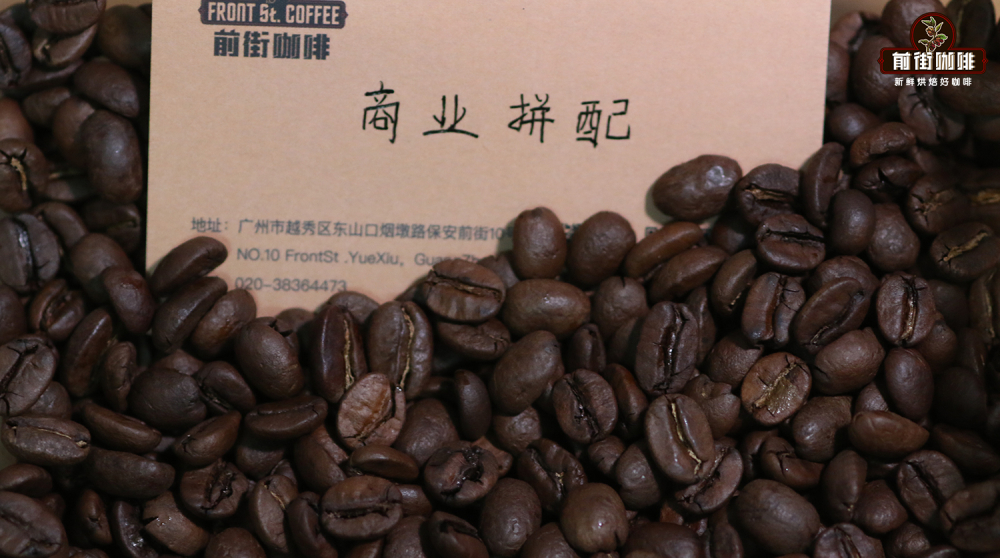
\n\n(To achieve a richer crema, Front Street's commercial espresso blend uses a combination of Arabica and Robusta)\n\nBut it is precisely this disliked variety that has re-entered the view of the specialty coffee world in the past two years. From independent specialty cafes and brands to the highly influential world coffee competitions, Robusta has begun to appear. So is Robusta really that bad? The answer is clearly no.\n\nThe Origin of Robusta\n\nAccording to materials consulted by Front Street, both Arabica and Robusta originate from Africa. Arabica is a small-bean coffee, native to the Ethiopian highlands at higher altitudes. After leaving Ethiopia, coffee seeds exported through the port of Mocha spread around the world, and after centuries of cultivation, further differentiated into more specific varieties, such as the familiar Typica, Bourbon, Geisha, and Caturra, all of which belong to the Arabica species.\n\n
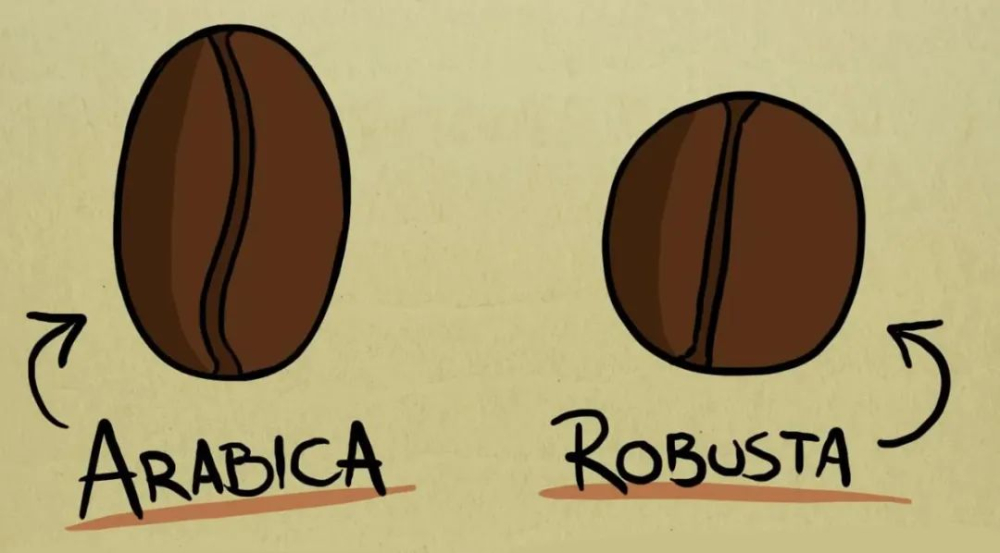
\n\nRobusta is a medium-bean coffee, originating from the Congo Basin region on the west coast of Africa. If classified strictly according to botany, it should be called the "Canephora coffee species" (i.e., the Congo species), belonging to the same level as the "Arabica coffee species." Robusta is merely a variety under the Canephora species, just as Typica is a variety under the Arabica species.\n\n
\n\nThe reason the name Robusta is more widely known than Canephora is that the other subspecies under Canephora have never been developed, and only Robusta has been commercially cultivated on a large scale by humans, while the rest remain wild. So now people usually directly call medium-bean coffee Robusta coffee.\n\nHowever, in terms of domestication time, Arabica predates Robusta by several centuries. Robusta was discovered in Congo in 1898 by a Belgian scholar, and later, due to the global spread of leaf rust, Robusta, with its excellent disease resistance, was introduced to affected regions.\n\n
\n\nRobusta Also Had Its Glory Days\n\nRobusta coffee has high caffeine content and abundant crema. During the period when espresso swept the globe, it was often added to espresso bean blends. At that time, a large part of the reason people drank coffee was to consume caffeine. Front Street's classic blend uses a combination of Brazil + Mandheling + Robusta, giving the coffee ample nutty and toasted bread aromas, a full body, and beautiful crema, making it very suitable for beginners.\n\n
\n\nFor cafe operators, stability, cost-effectiveness, and compatibility are key, so a combination of Colombia + Brazil + Robusta can be used: Brazil provides creamy nutty aromas, Colombia brings chocolate-like sweetness, and Robusta adds body and crema. This way, even a novice barista can easily make a standard espresso.\n\n
\n\nBut later, as the concept of specialty coffee rose, people began to focus on the flavor expression of origins. Robusta itself carries bitterness, as well as flavors of walnut, peanut, hazelnut, and smoke, which are usually regarded as less desirable expressions when they appear in coffee. More importantly, after Arabica was organized by origin, its flavor expression far surpassed Robusta by several streets. This can be considered an inherent problem—Robusta's flavor is far less appealing than Arabica's, which is also why people tend to choose Arabica.\n\n

\n\nInherently Deficient, and Also Maladjusted\n\nFront Street believes that in the evaluation system of specialty coffee, flavor always comes first, and caffeine is no longer the sole purpose of drinking coffee, so Robusta's advantages have instantly turned into disadvantages. Light-roasted Arabica can display floral and fruity aromas and acidity that are memorable. But if Robusta is light-roasted, grain-like and almond-like flavors as well as messy acidity will make people resistant. Overall, as far as current Robusta is concerned, there is basically no hope on the light-roast path.\n\n
\n\nWhat about the dark-roast path? Robusta's bitterness is completely amplified by dark roasting. Mm, it is indeed very bitter, but also very aromatic. For example, Vietnam frequently drinks Robusta coffee beans. They like Robusta's aroma but cannot stand the bitterness, so they add condensed milk or eggs to black coffee to neutralize the bitter taste.\n\n
\n\nSome people will say that Robusta's growing environment is inherently worse than Arabica's, but low-altitude Arabica also doesn't taste good. So some people have tried planting Robusta at high altitudes and caring for it meticulously, wanting to see whether that grinding bitter and muddy taste could be removed.\n\nIndia's "Coffee Royal" Robusta coffee beans, known as specialty Robusta, are grown according to the standards for cultivating specialty Arabica. This bean performs quite cleanly, without the troublesome defective flavors of cheap Robusta. Its mouthfeel is thicker and more grounded, and it also carries intense walnut, peanut, hazelnut, and wheat flavors reminiscent of peanut butter and hazelnut spread.\n\n
\n\nIndeed, improving cultivation standards can enhance coffee's flavor quality, but Robusta is ultimately Robusta, and its genes determine that its flavor cannot be like Arabica's. This is not to say that Robusta necessarily tastes worse than Arabica, but rather that when public flavor preferences still lean toward Arabica, it is very difficult for Robusta to have its day. The public will only measure Robusta by Arabica's standards, and although this is unfair, it is reality.\n\nIf It Doesn't Taste Good, What Is Robusta Used For?\n\nRobusta's greatest advantage is that it is cheap. Taking Brazilian coffee as an example, the price of ordinary Robusta is only half that of ordinary Arabica. Next are its body and caffeine content, both of which are superior to Arabica. When these three advantages are combined, serving as raw material for instant coffee becomes its best destination.\n\n
\n\nOf course, some better-quality Robusta will also appear in the form of espresso blends or single-origin Robusta coffee beans. To be honest, Front Street once tried a Vietnamese Robusta, and the milk and cream aromas were very rich and pleasant. Although it was a bit bitter, it was not especially hard to drink.
The above content is compiled by CoffeeHunters, a coffee news website.


