







Jamaican Blue Mountain coffee has long been regarded as the benchmark of the coffee world, captivating countless enthusiasts with its balanced, clean taste and lingering sweetness. This article begins with the geography of the Blue Mountain range and traces the region's unique cultivation and harvesting methods, its meticulous green bean processing procedures, and the historical arc from Japan's long-standing dominance of the trade to the opening of the Chinese market. It also explains in detail the CIB's official regulations on the Blue Mountain growing region and its grading standards, and offers practical methods for identifying authentic Blue Mountain beans. Drawing on hands-on experience at Front Street Coffee's stores, the article also shares pour-over tasting approaches for specialty Blue Mountain, helping readers fully understand the unique value of this classic coffee.
The Geography and Climate of the Blue Mountain Growing Region
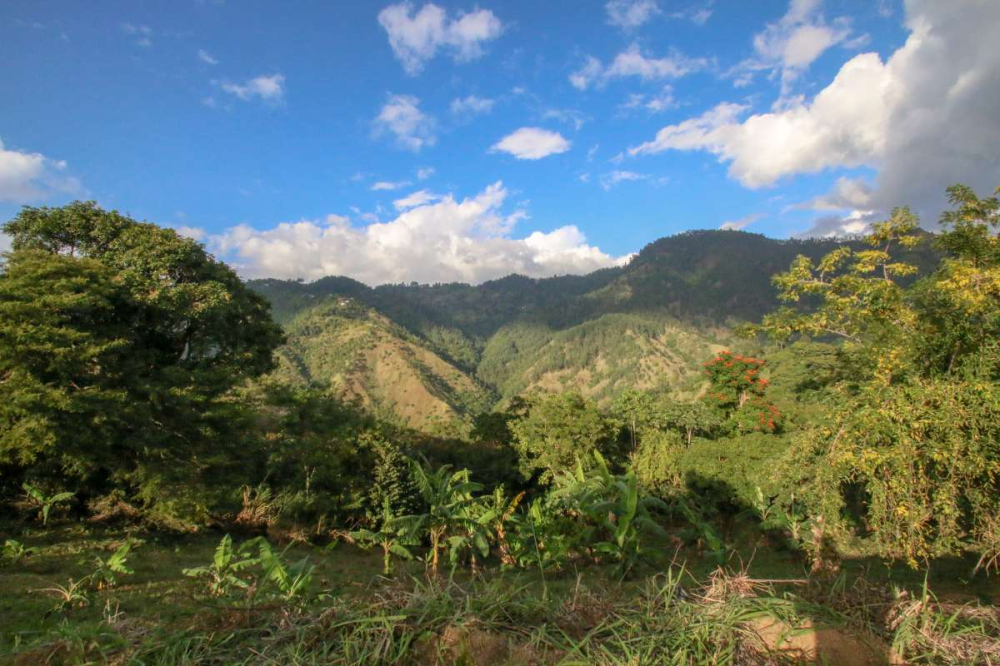
On the global coffee map, Jamaican Blue Mountain coffee is often held in extremely high regard. The Blue Mountain range lies in the eastern part of the island of Jamaica, encircled by the Caribbean Sea. On clear days, sunlight strikes the sea's surface directly, and the azure shimmer reflects off the mountain peaks, producing a brilliant blue spectacle—this is how Blue Mountain got its name.
The main peak of the Blue Mountains rises to 2,256 meters, making it not only the highest point in the Caribbean but also a well-known tourist destination. This area sits squarely within the coffee-growing belt, with nutrient-rich volcanic ash soil, exceptionally clean and pollution-free air, high humidity, heavy mist, and frequent rainfall, with average annual precipitation of about 1,980 millimeters and temperatures that stay around 27 degrees Celsius year-round. It is precisely these natural conditions that give rise to the world-renowned Jamaican Blue Mountain coffee and make it one of the most expensive coffees in the world.
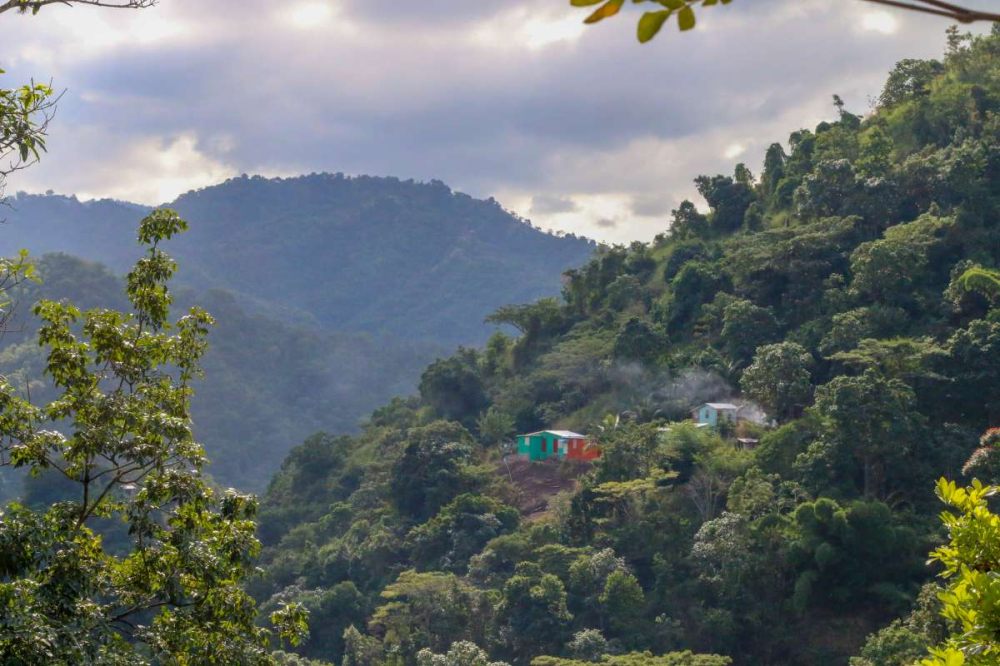
The region uses a mixed-planting model, with coffee trees growing alongside banana and avocado trees on terraced hillsides. Some small estates also grow coffee, but even the largest estate owners in the area would still count as smallholders by international standards, and many estate owners are small landholders whose families have worked in coffee for two hundred years. The Jamaican coffee industry also faces many challenges, such as hurricanes, rising labor costs, and the difficulty of mechanizing terraced terrain, making it hard for many small estates and farms to achieve rationalized cultivation. Take Front Street's Blue Mountain coffee beans, for example: their source is Clifton Farm, which sits on Clifton Mount, a sub-peak of the Blue Mountain range. The farm has been in operation since the 18th century and covers only 20 hectares.
Because it relies entirely on manual cultivation and harvesting, Blue Mountain coffee is not only rich and mellow in aroma but also strikes a perfect balance among acidity, sweetness, and bitterness, so it carries almost no bitterness and leaves only a moderate, elegant acidity. It is usually recommended as a single-origin brew, but because of its scarce output and high price, blends using coffees with similar flavor profiles are also common on the market.
The Story Behind Blue Mountain Coffee's Pure Flavor
Blue Mountain coffee's outstanding quality is inseparable from its rigorous production process. The coffee trees all grow on rugged hillsides, making harvesting extremely difficult—a task that few besides skilled local women can handle. Pickers must select coffee cherries at just the right stage of ripeness; underripe or overripe fruit will drag down the final quality. The cherries must be depulped the same day, then fermented for 12 to 18 hours, followed by washing and sorting. Next comes drying, which must be done on concrete patios or thick blankets until the beans' moisture content drops to 12% to 14%. After that, the beans are stored in dedicated warehouse stacks and only taken out when needed for roasting and grinding. Every step must be strictly controlled, or the coffee's quality will suffer. With the spread of the fresh-roasting philosophy, Jamaica has gradually relaxed its restrictions on green bean exports.
Japan has long invested in Jamaica's coffee industry, and today most Blue Mountain coffee is controlled by Japan, which also enjoys priority purchasing rights. In 1992, Jamaica sold 688 tons of Blue Mountain coffee to Japan, while the United States received 75 tons and the United Kingdom 59 tons. Today Japanese buyers purchase about 90% of Blue Mountain coffee. The rest of the world can only divide the remaining 10%, so no matter how prices fluctuate, Blue Mountain coffee is always in short supply. This pattern began to shift after the 2008 financial crisis, however: seeking more stable partners, Jamaica signed an agreement in 2010 with the Hangzhou Coffee and Western Cuisine Association as the general agent for Blue Mountain coffee in China, and in May 2011 the first container of Blue Mountain coffee beans arrived at Ningbo Port.
The Grading of Blue Mountain Coffee
Not all coffee grown in the Blue Mountains can be called Blue Mountain coffee. The Jamaica Coffee Industry Board (CIB) stipulates that only beans produced on roughly 6,000 hectares in the core Blue Mountain area are eligible to be called Blue Mountain coffee beans. According to Front Street's reading of official CIB documents and maps, only coffee grown above 910 meters (3,000 feet) in the Blue Mountain range may bear the Blue Mountain name.
Blue Mountain coffee beans are divided into four grades: No. 1, No. 2, No. 3, and PB. No. 1, No. 2, and No. 3 are distinguished by bean size: No. 1 is the largest, between 17 and 18 mesh; No. 2 is about 16 mesh; and No. 3 is about 15 mesh. The best quality is therefore No. 1, and what we commonly call Blue Mountain coffee actually refers specifically to Blue Mountain No. 1 coffee beans.
The PB grade is rather special: it consists of round beans picked out from the green beans and sold separately, with a screen size of about 14 to 15 mesh. Because of their distinctive appearance, these beans, once separated out, can even fetch the price of the No. 1 grade.
How to Identify Genuine Blue Mountain Coffee Beans
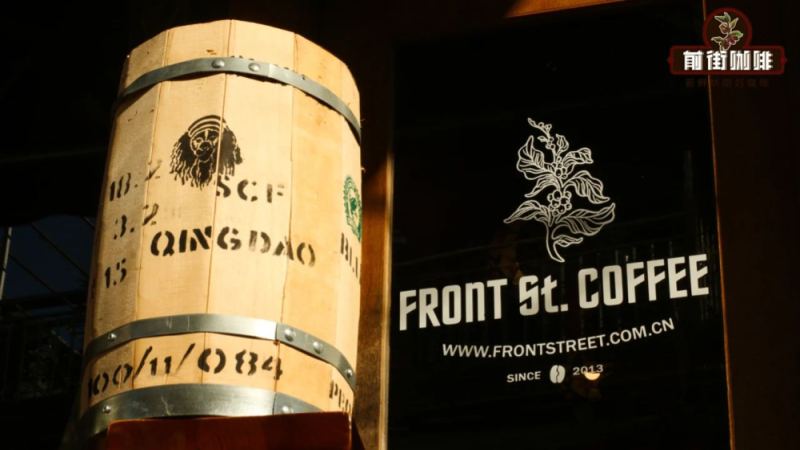
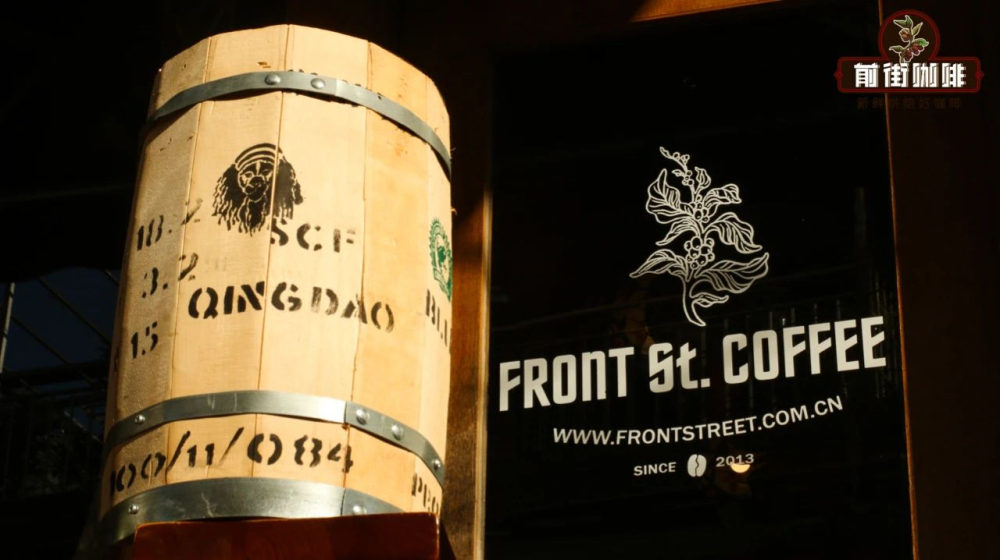
1. Check the Blue Mountain barrel. Authentic Blue Mountain coffee is packaged in wooden barrels in three sizes: 15 kg, 30 kg, and 70 kg. For example, the barrel on display at the Front Street store is a 15 kg Blue Mountain barrel. This particular barrel is unusual in that it contains 2020 Blue Mountain Geisha coffee beans, but aside from the different text markings, it is no different from an ordinary Blue Mountain No. 1 barrel.
2. Check the certificates. Currently, the Jamaica Coffee Board can issue certificates for all exported Blue Mountain coffee.
The certificates fall into three categories:
Category one: a certificate of quality issued by the Jamaica Coffee Board.
Category two: an authorized sales certificate issued by the Blue Mountain coffee producer. (Blue Mountain coffee is distributed by four Jamaican government-licensed processors and producers, with 16 licensed exporters handling exports.)
Category three: a certificate of origin for Jamaican Blue Mountain coffee.
The certificate hanging in the Front Street store is precisely the second category, issued by Clifton Farm.
3. Examine the appearance of the beans. Genuine Blue Mountain coffee has an extremely low defect rate, with beans of largely uniform size—flat, elongated, and plump. The green beans are light green, and the roasted beans are dark brown, with a uniform, consistent color.
How to Brew Specialty Blue Mountain Coffee
Authentic Blue Mountain coffee is made from the finest local green coffee beans, and that is precisely where the taster's pleasure lies. Its aroma is full, and its body is rich yet balanced, capable of satisfying a wide range of preferences. Moreover, high-quality fresh Blue Mountain coffee has an exceptionally long-lasting flavor, with the long, lingering finish that drinkers like to talk about.
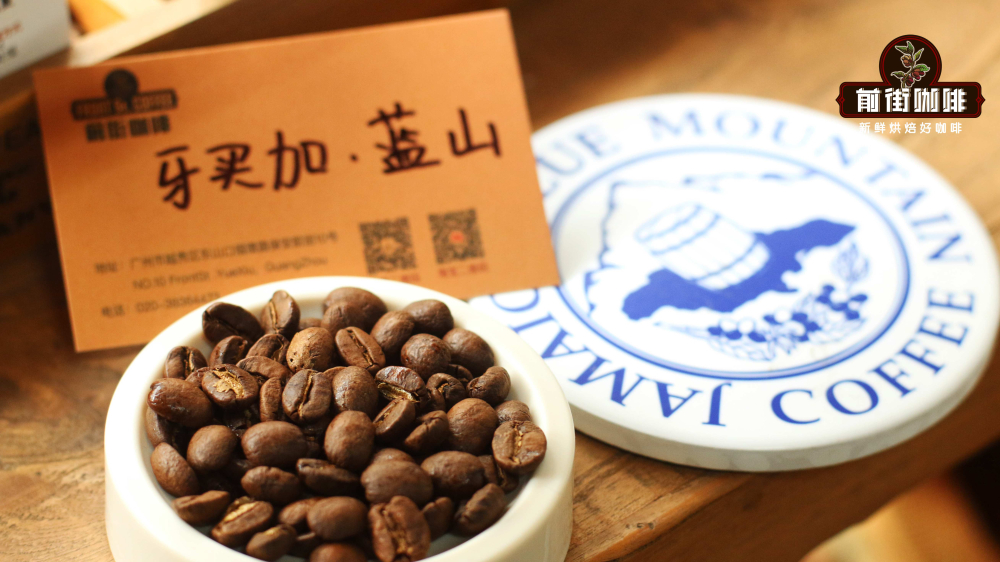
Many people today consider Blue Mountain coffee unremarkable and lacking in character, and Front Street thinks there is some truth to that view. In the era when Blue Mountain prevailed, people had not yet begun to fuss over flavor profiles; a cup that was mellow, clean, neither burnt-bitter nor astringent, and left sweetness in the mouth after drinking was a good cup of coffee, and Blue Mountain fit that standard perfectly. In today's trend of pursuing acidity and distinctive flavors, Blue Mountain does indeed seem out of step—but if you favor coffee in the traditional sense, Blue Mountain coffee remains the only choice.
For professional coffee knowledge exchange and more coffee bean information, please follow Coffee Workshop (WeChat public account: cafe_style) For more specialty coffee beans, please add the personal WeChat of Front Street Coffee (FrontStreet Coffee), WeChat ID: qjcoffeex
The above content is compiled by CoffeeHunters, a coffee news website.


