







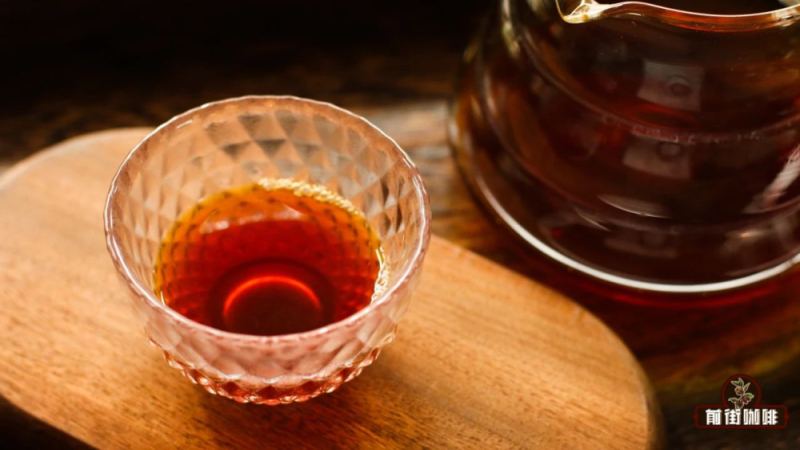
Geisha is one of the most prominent varieties in today's specialty coffee world, having won over countless coffee lovers with its complex flavors interweaving floral notes and tropical fruit. This variety originated in the Geisha Mountain Kaffa forest in southwestern Ethiopia, but rose to fame thanks to its discovery at Hacienda La Esmeralda in Panama. From being collected and recorded as T2722 in 1931, to winning first place at the BOP competition in 2003, to stunning the world at the SCAA evaluation in 2005, Geisha has traveled a long and winding road. This article will comprehensively cover the origin of the name Geisha, the historical spread of the variety, the terroir advantages of the Boquete producing region, and Front Street Coffee's professional recommendations for roasting and brewing, giving you a complete understanding of this new king among specialty coffees.
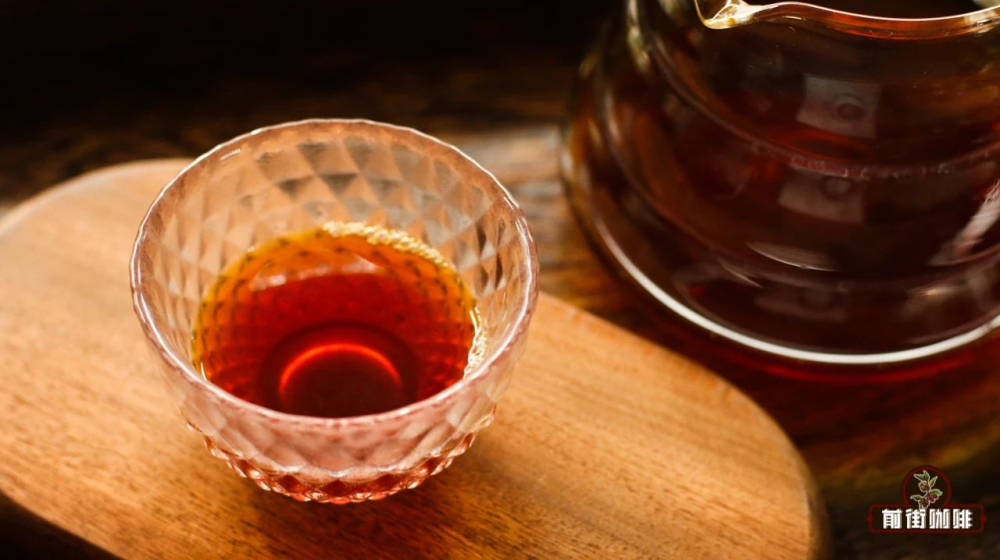
Tracing the Name of Geisha Coffee: The Legend of a Variety from Ethiopia's Geisha Mountain to Panama's Hacienda La Esmeralda
Coffee is named in many different ways—some are named after estates, some after countries or producing regions, while one of the most expensive coffees in the world, Geisha, is named after its variety. In other words, Geisha itself is a coffee variety. The original home of Geisha coffee beans is the Kaffa forest in the Geisha Mountain area of Ethiopia, but what truly made it famous was Panama's Hacienda La Esmeralda.
After Geisha coffee became popular, countries around the world began introducing and cultivating it. As the newly crowned king of the specialty coffee world, Geisha produced in South American countries such as Panama, Guatemala, and Colombia stands out for its quality, with correspondingly high prices. Geisha coffee beans exude floral and tropical fruit aromas with intense sweetness; drinking it is like sipping the fragrance of a bouquet of fresh flowers, or like drinking a cup of rich fruit juice.
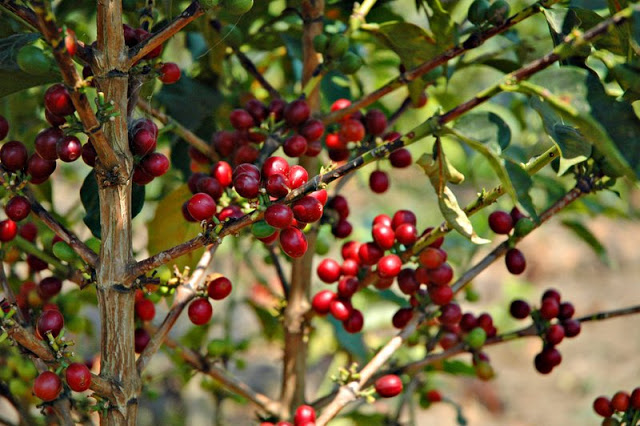
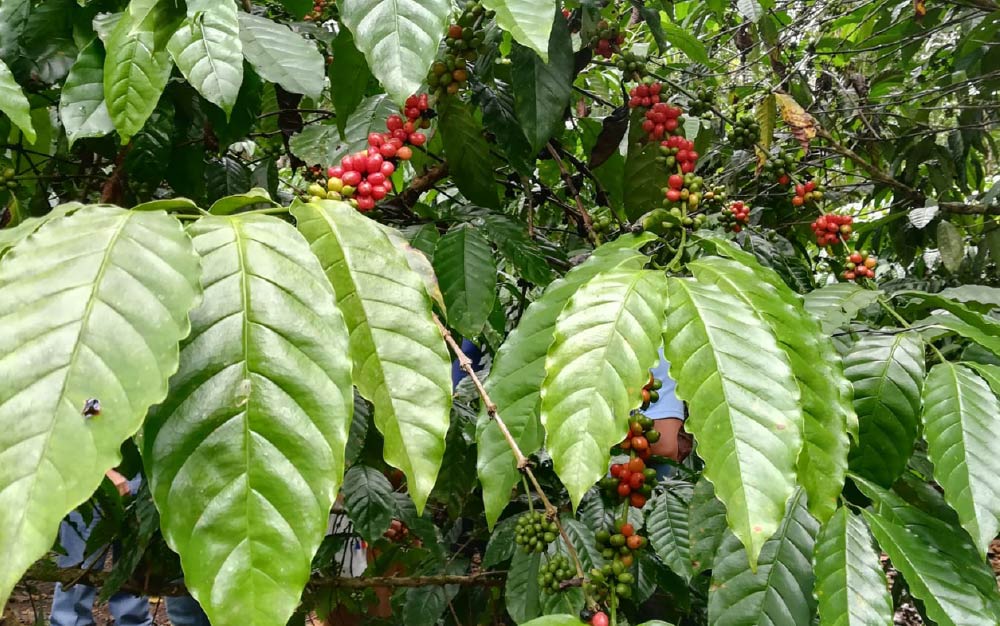
The Geisha coffee tree is relatively tall with slender leaves, has strong resistance to coffee leaf rust, and also has branches on the trunk. The green beans are slender in shape, and the roasted beans carry a strong, intense fruity aroma. Because this variety has extremely low yields, it is difficult to acquire as a commercial trade commodity. Only small amounts are cultivated in countries such as Panama, Jamaica, Malawi, Kenya, and Guatemala.
The Origin of the Name Geisha
Geisha originated in Geisha Mountain in southwestern Ethiopia. As cultivation areas have spread across the globe in recent years, the name has become synonymous with a coffee variety. The pronunciation of Geisha is similar to "geisha" in Japanese. Around 2006, Mr. Yuan of Coffee Lumo first imported Panama Geisha into China; its floral and fruity flavors were extremely explosive, and he set the Chinese name for this variety as 瑰夏 (Guixia), which has been used ever since. As a result, many people also habitually call Geisha coffee beans "geisha coffee beans."
Why Was "Geisha" Changed to "Guixia"?
According to information researched by FrontStreet Coffee, because of the translation "geisha," many coffee merchants borrow the Japanese "geisha" image for packaging and promotion. This practice is somewhat inappropriate, because the two have essentially no connection—it is merely that the written characters sound similar. By adjusting the Chinese translation of Gesha, consumers who are new to Geisha coffee will no longer mistakenly think it was named after the Japanese geisha performing arts tradition. At the same time, it clearly avoids the future misuse of Orientalist imagery to refer to this coffee in marketing, giving this variety—which has exquisite flavors and is worth savoring slowly—an added touch of poetry.
Geisha Coffee
Like many Arabica varieties, Geisha also originates from Ethiopia, the birthplace of coffee. In 1931, in search of new disease-resistant varieties, people collected Geisha in the wild Kaffa forest of southern Ethiopia, and it was named after the nearby Geisha Mountain. Afterward, Geisha was sent to research stations in Kenya, Uganda, Tanzania, and elsewhere for trial cultivation. In 1953, Geisha seeds arrived at CATIE, the Tropical Agricultural Research and Higher Education Center in Costa Rica, and were recorded as T2722. Several local farms had records of planting it, but Geisha's branches were fragile and yields were low, so it failed to win farmers' favor and was not widely cultivated.
Starting in the 1960s, CATIE gave T2722 Geisha to coffee farmers in Panama, and Geisha truly set foot on Panama's fertile soil. In the 1990s, the Peterson family, owners of Hacienda La Esmeralda, began to focus on coffee production and bought a new high-altitude farm—Jaramillo. Many coffee trees on the farm were infected with leaf rust, but Daniel Peterson noticed that the Geisha trees were not seriously affected, so they decided to transplant the Geisha that had originally been mixed with other varieties to more areas of the farm, while also raising its cultivation altitude.
After years of comparison and testing, Daniel and his sister Rachel finally locked onto this variety in 2003. Two weeks before the 2003 Best of Panama (BOP) competition, while selecting competition lots on their internal cupping table, they discovered that the Geisha variety possessed outstanding flavors of jasmine, citrus, peach, blueberry, bergamot, and sugarcane. These flavors differed from the mainstream preferences in the coffee circle at the time, but Daniel still chose to enter the Geisha variety in the competition and won first place in one fell swoop. Today's stunning Panama Geisha coffee is precisely that same T2722 variety from back then.
In 2005, Hacienda La Esmeralda sent Geisha to compete in the Specialty Coffee Association of America (SCAA) evaluation, defeating many star competitors to earn the honor of world-class specialty coffee, and swept the world championships in 2006 and 2007, once again drawing global attention from the coffee world. After that, coffee-producing regions everywhere raced to introduce Geisha, including Yunnan in China, which also began cultivating this hot variety. Although Geisha can now be produced all over the world, Front Street believes that as the discoverer of Geisha's flavors, Hacienda La Esmeralda not only strictly controls coffee quality, but its use of natural processing best presents the classic "Geisha taste."
Panama Geisha Coffee
Although many producing regions cultivate Geisha, each region has its own unique terroir, and different terroirs create different coffee flavors, with Geisha also showing its own flavor profile in each. Front Street believes that Geisha's flavors could become so popular thanks in no small part to Boquete's superb environment.
Panama has only three main coffee-producing regions: Boquete, Volcan, and Renacimiento, yet it produces the most expensive coffee in the world. The Boquete region is a town in Chiriqui Province, located on a plateau at about 1,000–2,000 meters on the eastern side of Baru Volcano, facing the warm, humid Caribbean monsoon, with the Atlantic cold current behind it, amid high and steep mountains. Among these, Volcan Baru National Park is an ecological conservation area with rich biodiversity, seven microclimates, and year-round mist, along with abundant rainfall, creating excellent local growing conditions.
Front Street's Geisha coffees from Panama's Hacienda La Esmeralda and Elida Estate both come from the Boquete producing region. To let more coffee lovers taste the flavors of Geisha coffee, Front Street has listed its washed Boquete Geisha coffee from the Boquete region as one of Front Street's staple beans.
Geisha is very particular about its growing environment, requiring high altitude, fertile soil, and cloud cover or shade from plants—it cannot be exposed to direct sun. The owner of Hacienda La Esmeralda once said that the estate needs a large number of shade trees to block sunlight for the delicate Geisha, and in the early stages of planting, traditional pruning methods must also be used, otherwise the plants easily die. Front Street has found that Geisha planted at higher altitudes takes longer for the coffee cherries to mature, and its flavor expression is also more complex and unique. This is precisely why Geisha did not taste as good when grown in Ethiopia as Panama Geisha, and why it only truly became famous at Hacienda La Esmeralda.
After Geisha won the championship, the Peterson siblings managed the Geisha coffee trees on the estate more systematically based on altitude, area, and cupping performance. The areas where Geisha is planted were divided into three major plots: Cañas Verdes, Jaramillo, and El Velo.
Geisha Coffee Bean Processing Methods:
Geisha coffee beans are mostly processed using the most original washed and natural methods. Front Street believes that naturally processed coffee has a fuller body than washed coffee, with more obvious juice-like character and stronger sweetness; while washed coffee has a cleaner, richer mouthfeel and better reflects the local coffee terroir. Therefore, most of Front Street's staple beans are washed-process.
Front Street's Recommendations for Roasting Geisha Coffee Beans:
Geisha coffee is famous worldwide for its rich floral aromas and complex fruit notes. Front Street's roasters want to preserve more of Geisha's fine acidity, so they choose a medium-light roast (with slight adjustments for different lots). This roast level does not do much to change the high hardness of high-altitude beans, so brewing requires a somewhat higher extraction rate to present fuller flavor layers. Here, a higher water temperature and a slightly finer grind are used to draw out more aromatic compounds.
Front Street's Brewing Parameters for Geisha Coffee:
Front Street's daily brews mostly use a V60 dripper, because the 60-degree angle design plus the spiral rib design allows the essence of Geisha coffee to be fully extracted by controlling the water flow and the number of pours, while the large outlet hole design prevents over-extraction. The V60 dripper body has guiding ribs connecting the top and bottom and a large central round hole, which speeds up the flow of water downward, while the spiral-shaped vent groove design lengthens the water flow path and increases the contact time between coffee grounds and hot water. Each stream of water converges along the grooves toward the center point of the dripper, concentrating the pressure on the coffee grounds and producing a brew with richer layering.
Dripper: V60, water temperature: 91–92°C, dose: 15g, water ratio: 1:15, grind size: fine granulated sugar (80% passing a No. 20 sieve).
[Flavor Characteristics of Panama Washed Boquete Geisha Coffee]: It has a clear acidity of citrus, lemon, and bergamot, a creamy smooth mouthfeel when swallowed, and a finish of green tea and honey sweetness.
Front Street's Coffee Brewing Recommendations:
Regarding coffee brewing, Front Street has always believed that the freshness of coffee beans greatly affects coffee flavor, so all coffee beans shipped by FrontStreet Coffee are within 5 days of roasting. Front Street's roasting philosophy is "freshly roasted good coffee," so that every customer who places an order receives the freshest coffee when it arrives. Coffee needs a resting period of about 4–7 days, so by the time customers receive it, it is at its best flavor.
For friends who need ground coffee, Front Street offers a warm reminder: once coffee beans have been ground in advance, they no longer need a resting period, because the pressure from carbon dioxide inside the packaging during transport also rounds out the coffee's flavor, so you can brew a cup immediately after receiving the ground coffee. However, ground coffee needs to be brewed promptly, because after contact with air it oxidizes relatively quickly, the coffee's flavor dissipates faster, and the quality is not as good. Therefore, Front Street recommends buying whole beans and grinding fresh before brewing, so you can better taste the coffee's flavor.
For more specialty coffee beans, please add the private WeChat FrontStreet Coffee, WeChat ID: qjcoffeex
The above content is compiled by CoffeeHunters, a coffee news website.


