







In 2017, a natural-process coffee from Ethiopia's Buku processing station won the TOH competition and was named "Flower Queen" by a Chinese green bean trader, thus beginning the legendary journey of this bean. Four years later, Flower Queen 4.0 was released with the brand-new Dega variety, with the production area expanded several times over, more scientific cultivation and management, and even more outstanding flavor performance. This article will walk you through the origin background of Flower Queen 4.0, the characteristics of the Dega variety, the natural processing method, and Front Street Coffee's roasting and pour-over recommendations, offering a comprehensive analysis of this highly anticipated Ethiopian coffee.
In 2017, DW Company submitted its coffee beans to the TOH (the Taste Of Harvest) competition held by the African Coffee Association, and a natural-process lot stood out and claimed the championship in the Ethiopian division. It was precisely this champion lot that was given the name "Flower Queen."
Name: Flower Queen 4.0
Country of Origin: Ethiopia
Region: Sidamo, Guji, Hambella
Processing Station: Buku BUKU
Altitude: 2350m
Variety: Dega
Processing Method: Natural
Region Introduction
Hambella is located in Guji (GUJI), Ethiopia's largest coffee-producing region, and administratively falls under the Oromia Region. To the west, Hambella faces the Kochore region of Yirgacheffe across a mountain barrier—a plateau ridge approximately 30 kilometers wide with an altitude of up to 3,200 meters separating the two areas; to the southeast and north, it borders the Guji sub-regions of Shakiso, Uraga, and Kercha respectively. This is the highest-altitude coffee sub-region in Ethiopia (while Harrar is the highest-altitude main producing region in Ethiopia).
Currently, the Hambella region is home to nearly 20 processing stations of various scales. In 2017, DW Company's "Buku Abel" processing station won the championship at the Ethiopia National Taste of Harvest Competition with a natural-process bean, which a Chinese green bean importer named Flower Queen; at the time, this bean displayed intense strawberry and cream aromas. Afterwards, DW Company expanded its estate processing stations in Dimtu, the core production area of Hambella, from one to four: Buku Abel, Buku Saysay, Haro Soresa, and Tirtiro Goye, with an annual coffee output of approximately 1,100 tons. Front Street Coffee also offers coffee products from the Buku processing station (Buku Abel).
Buku Processing Station (Buku Abel)
In the local Ethiopian language, Buku Abel means "NEW"—a new place. In this ancient nation with over two thousand years of history and a population exceeding one hundred million, the East African Rift Valley blocks the road to Asia, yet on this plateau, new virgin lands continue to await development. Compared to millennia of cultural accumulation, this is a relatively newly developed land.
Buku Abel is located in southeastern Ethiopia, in the Hambela area of the Guji region, a high-altitude indigenous tribal community with a population of about 30,000. This small village is much like most Ethiopian coffee gardens: coffee trees grow naturally in wild virgin forests, coffee farmers pass down their craft from generation to generation, and they also cultivate native bananas, interplanting local native coffee varieties among the banana groves.
Strictly speaking, only natural-process coffee from the Buku Abel processing station can be called "Flower Queen coffee beans." This is precisely why the natural-process beans from this station were named Flower Queen 2.0, Flower Queen 3.0, and Flower Queen 3.1 in 2018 and 2019 respectively.
The Flower Queen from the 2020 new crop season was named Flower Queen 4.0 to distinguish it from previous versions. As the fourth year of the Flower Queen coffee bean's journey, in 2020 its production area had expanded to several times its original size, and combined with more scientific cultivation and management, Flower Queen 4.0's flavor became even more outstanding, earning praise from numerous coffee enthusiasts. Front Street Coffee also purchased this batch of new-crop Flower Queen 4.0 for roasting and cupping.
Dega Coffee Bean Variety
This year, Ethiopia held the Cup of Excellence (CoE) for the first time, and the detailed classification of coffee varieties among the top 28 finalists surprised many. For Dega, which ranked 21st, there are two quite different versions of the origin of its name. One theory holds that Dega's name comes from a type of firewood, as the aroma Dega releases during roasting closely resembles the smell of this firewood burning. Another explanation points out that "dega" is the root word in Ethiopian language for "highland and shady places," and Dega indeed often grows in high-altitude areas. Unfortunately, since Dega did not make it into the top 14 of this CoE competition, no relevant flavor descriptions could be collected. The Flower Queen 4.0 that Front Street Coffee acquired this time is precisely a coffee bean of the Dega variety.
Green Bean Analysis
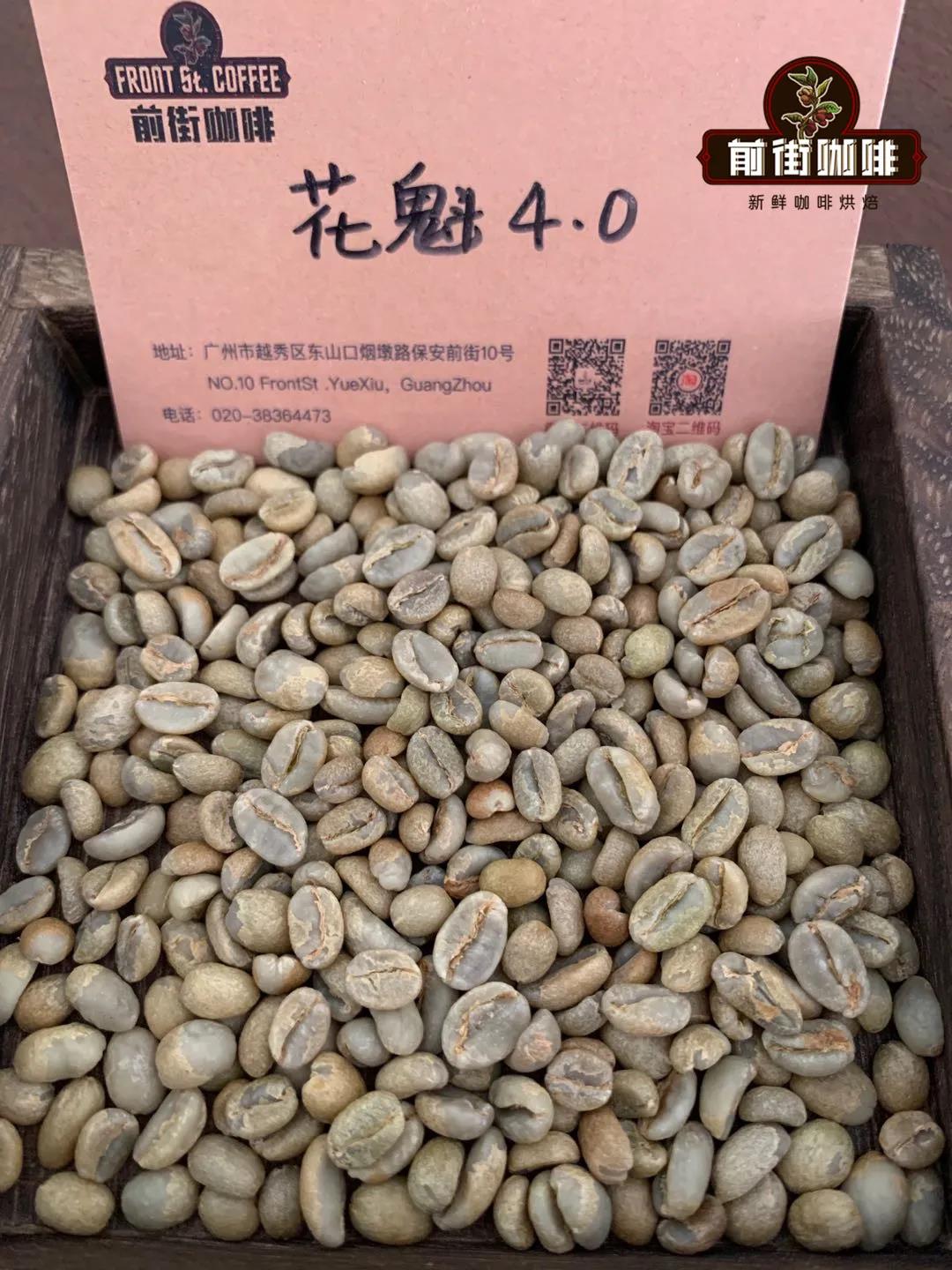
Looking at this batch of Flower Queen 4.0 that Front Street Coffee purchased, it can be seen from the appearance that the beans are somewhat smaller than the other two Flower Queen 3.0 versions, which stems from the difference in variety. Flower Queen 3.0 belongs to Ethiopian native varieties, while Flower Queen 4.0 is the Dega variety. In addition, the two Flower Queen 3.0 versions have relatively uniform bean sizes because they underwent a screening process after harvesting; Flower Queen 4.0 was not screened, so the beans appear to vary in size.
Coffee Processing Methods
The natural drying method is the most traditional processing method. After harvesting, the fruit is dried by natural sunlight. The specific steps are as follows:
1. After harvesting, coffee farmers spread the cherries directly on the drying beds to dry under the sun;
2. During the drying process, they must be turned and stirred at appropriate times to prevent uneven drying or excessive fermentation;
3. After several days, they are sun-dried to a dry state;
4. The dried green beans are then hulled to remove the pulp and parchment, extracting the green coffee beans.
Advantages: The natural processing method retains the coffee fruit's mucilage, which itself carries sweetness. During the sun-drying process, sugars gradually transfer into the coffee beans, so the processed coffee has a more pronounced sweetness, rich mouthfeel, and strong layering.
Disadvantages: It tends to produce more defective beans, the beans have an inconsistent appearance, and they easily absorb odors and earthy flavors from the ground.
Roasting Recommendations
Cupping Flavor
Front Street Coffee Brewing Recommendations
Brewing Equipment: HARIO V60
Parameters: 15g coffee / 1:15 / 90℃
Grind Size: Fine sugar grind (80% passing through Chinese standard No. 20 sieve)
Method: Bloom with 30g water for 30 seconds, then pour directly from the center to 125g before分段, wait for the coffee bed to appear, then pour to 225g, and once the coffee bed appears again, remove the dripper. Total extraction time: 2 minutes.
Flavor: Citrus acidity, full berry juice body, lemon black tea tea-like quality, lingering sweetness.
The above content is compiled by CoffeeHunters, a coffee news website.


