







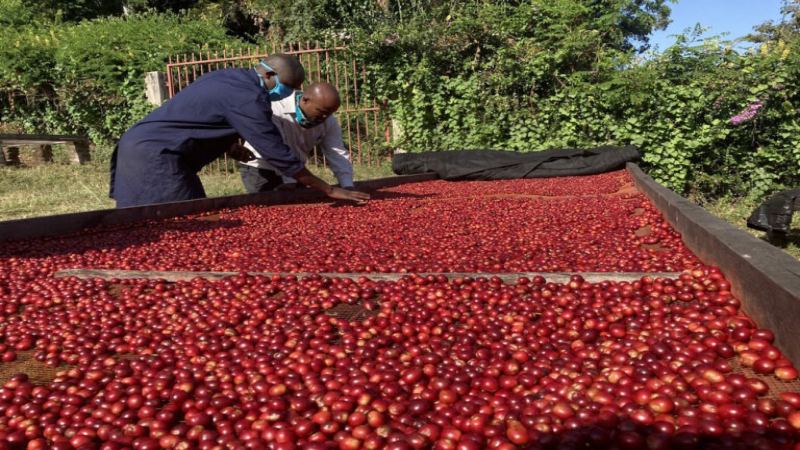
Although Kenya is not the birthplace of coffee, its high altitude, large day-night temperature difference, and phosphorus-rich soil nurture coffee beans with a distinctive flavor. This article will guide you through Kenya's coffee-growing geography, the origins of the SL28 and SL34 varieties, the AA and AB grade classifications, and what exactly the unique PB peaberry is. We will also introduce the Kenya 72-hour washed processing method (K72) recommended by Front Street Coffee, and how to brew a cup of Kenyan coffee with bright acidity and rich layers using the pour-over method.
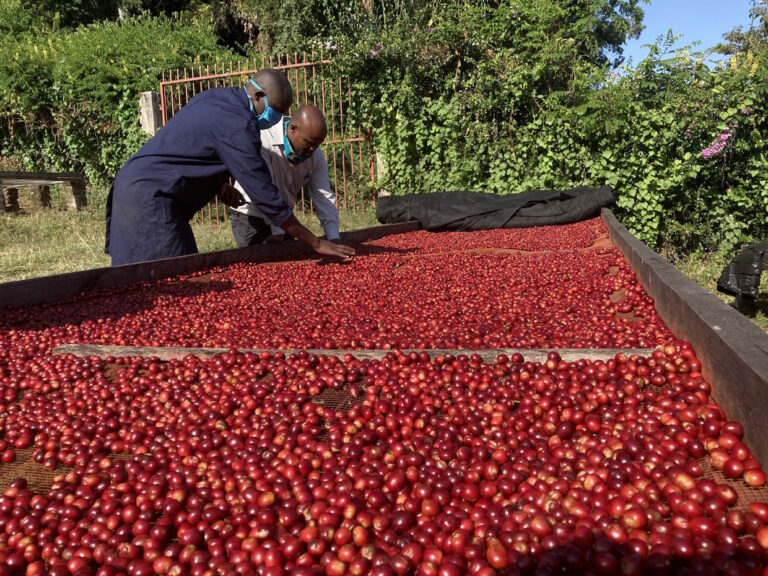
In the view of Front Street, Kenya's dedication and commitment to the coffee industry are worthy of recognition. As an important coffee-producing country in Africa, its coffee-growing history is much shorter than that of its neighbor Ethiopia, but the Kenyan people, through their own efforts, have made coffee an important pillar of the national economy, which in itself is remarkable. Today, let's talk about Kenyan coffee.
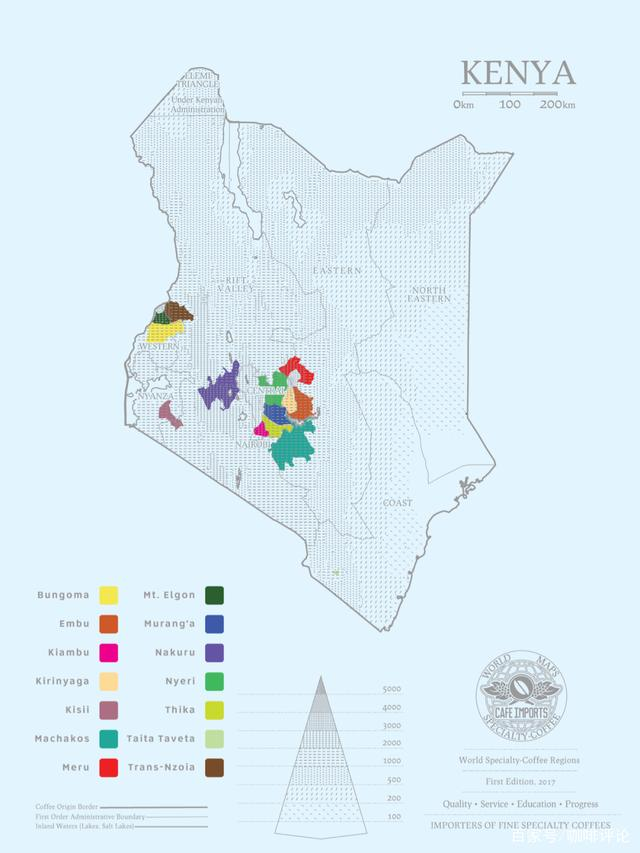
Kenya's Coffee-Growing Geography
Kenya is located in East Africa, with the equator passing through its center. It has high altitudes and a tropical savanna climate, with abundant rainfall and mineral-rich soil, providing ideal growing conditions for coffee trees. It is especially worth mentioning that the soil in some Kenyan producing regions has a high phosphorus content, which often gives local coffee beans more pronounced acidity.
Kenyan coffee beans are grown at an average altitude of 1,500 to 2,100 meters. The producing regions have a noticeable day-night temperature difference, with daytime highs of about 22 to 26°C and nighttime lows dropping to 10 to 14°C. This alternating hot-and-cold environment allows the coffee cherries to mature more slowly, giving them more time to accumulate flavor compounds.
Kenyan Coffee Cultivation
Coffee cultivation in Kenya can be traced back to 1893, when it was first introduced from Réunion Island. At the time, the coffee industry was firmly controlled by the British colonial authorities and officials. It was not until 1935 that local Kenyans gradually gained the right to manage it themselves. Before that, the local people mostly labored for the British in a manner akin to slavery. In the early days, Kenya planted the Bourbon variety. After 1935, people began to cultivate SL28 and SL34, which were selected and bred by the Scott Laboratories. These two varieties are easy to cultivate, have larger beans, higher yields, and quite good flavor.
SL28 and SL34 Coffee Varieties
SL28 was first selected in the 1930s by the newly established Scott Labs, commissioned by the Kenyan government, with the goal of screening varieties suitable for the country. After 42 initially selected varieties were numbered and screened one by one, SL-28 and SL-34 were ultimately retained. SL28 is derived from Bourbon, while SL-34 is derived from Typica, and the two do not belong to the same series. The original goal of breeding SL28 was to produce coffee beans with both high quality and resistance to pests and diseases in large quantities, but in some producing regions, the breeding focus was mainly on high yield and disease resistance, without considering disease resistance.
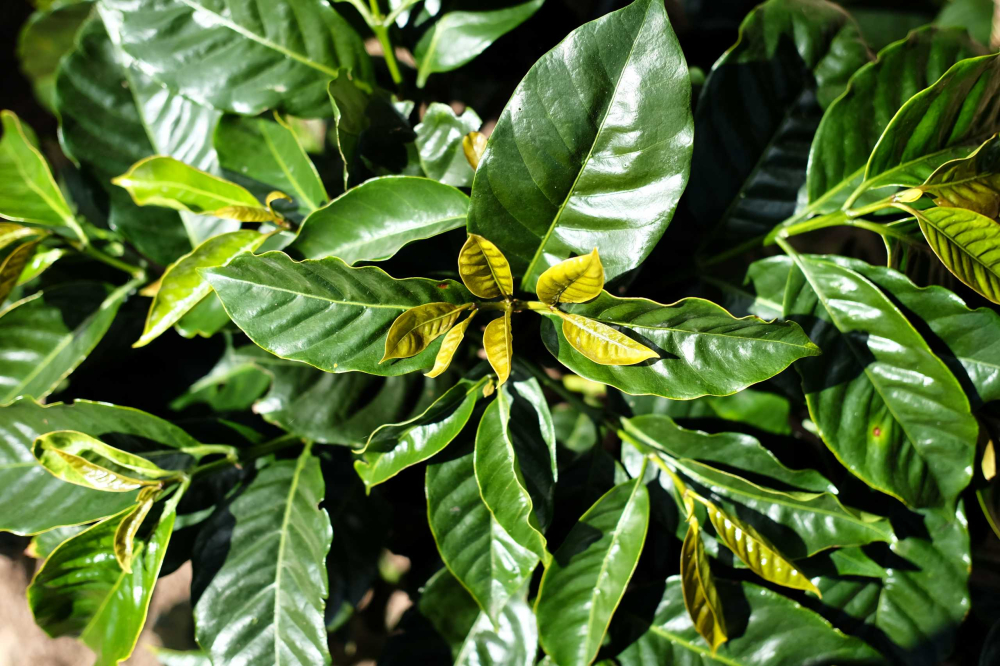
Thanks to its Bourbon genes, although SL28's yield later fell short of expectations, its bronze leaf color and fava-bean-shaped beans bring excellent sweetness, balance, and complex, varied flavors, along with pronounced citrus and smoked plum characteristics. SL34 has a flavor similar to SL28, also possessing complex and varied acidity and a wonderful sweet finish, but its mouthfeel is softer and cleaner than SL28. SL34 has French missionary, Bourbon, and more Typica lineage. Its bean appearance is similar to SL28, but it is better adapted to rainforest environments.
The Differences Between the Most Common Kenyan Coffee Grades
Kenyan coffee is graded through specific screens, with the grade determined by the size of the coffee fruit. The AA grade requires all coffee beans to be between 17 and 18 mesh in size. The Kenyan Azalia Washing Station washed coffee beans sold by FrontStreet Coffee are of the AA grade, with plump and uniform beans. The AB grade represents coffee sized between 15 and 16 mesh, allowing 10% below 15 mesh, but grade and actual quality are not absolutely directly related.
The Kenya Coffee Board is very strict about coffee research, development, and quality management, and through an excellent auction system it raises coffee bean prices, indirectly helping hardworking coffee farmers. At the same time, through agricultural education, it enables coffee farmers to continuously update their cultivation techniques and produce better coffee. High-quality Kenyan coffee with a particularly strong blackberry fruit acidity is rare in production, and these coffee beans are excellent estate products that raw bean buyers compete to purchase.
What Are Kenyan PB Coffee Beans?
Coffee beans usually consist of two pea-shaped beans (commonly called female beans), while PB peaberries are long rice-shaped or oval (commonly called male beans); there are photos on the blog for comparison. Kenyan peaberries are a variant of Kenyan beans, hand-selected, and are the most distinctive among the many coffee PB peaberries. The Kenyan coffee beans sold by FrontStreet Coffee come from the Sasini Estate.
Kenyan Coffee Bean Processing Methods
Both Kenyan coffee beans sold by Front Street use the Kenyan 72-hour washed processing method. Unlike the ordinary washed method, Kenyan coffee beans need to undergo 72 hours of fermentation, making the acidity fuller and more solid. After harvesting, the highest-quality cherries are selected, then pulped and fermented for 24 hours, after which they are washed clean with clean river water.
Next, they are fermented again with clean river water for 24 hours, then washed again. This cycle is repeated 3 times, reaching 72 hours, which is why it is called the Kenyan-style 72-hour fermentation washed processing method, or K72 for short. Front Street believes that the K72 processing method allows the coffee beans to ferment for a long time at low temperatures, making the acidity brighter while also preserving a clean and full flavor!
How should such high-acidity Kenyan coffee beans be brewed to taste good?
The unique coffee varieties, the environmental characteristics of the growing regions, and the distinctive Kenyan 72-hour washed processing method together create an excellent coffee flavor for Kenyan coffee beans. Front Street recommends using drip brewing, which is what we commonly call the pour-over method, to extract the coffee.
Dripper: Hario V60; Grind size: medium-fine (75% passing rate with China No. 20 standard sieve); Coffee dose: 15g; Brewing ratio: 1:15; Brewing water temperature: 91°C.
Front Street recommends a three-stage brewing method: In the first stage, pour 30g of water and let it bloom for 30 seconds; in the second stage, pour 95g of water (the electronic scale shows 125g), finishing in about 1 minute; in the third stage, pour 100g of water (the electronic scale shows 225g), finishing in about 1 minute 45 seconds. The total extraction time is 2 to 2 minutes 10 seconds. Remove the dripper, swirl to mix evenly, and then begin tasting.
Brewed flavor of Kenyan coffee beans: Whether AA-grade coffee beans or PB peaberries, the coffee has a very full berry acidity, resembling both tomato juice and mixed fruit juice, with a caramel-like sweet finish. It tastes layered and complex, with bright, clean acidity!
For professional coffee knowledge exchange and more coffee bean information, please follow Coffee Workshop (WeChat public account: cafe_style) For more specialty coffee beans, please add the private WeChat of FrontStreet Coffee: kaixinguoguo0925
The above content is compiled by CoffeeHunters, a coffee news website.


