







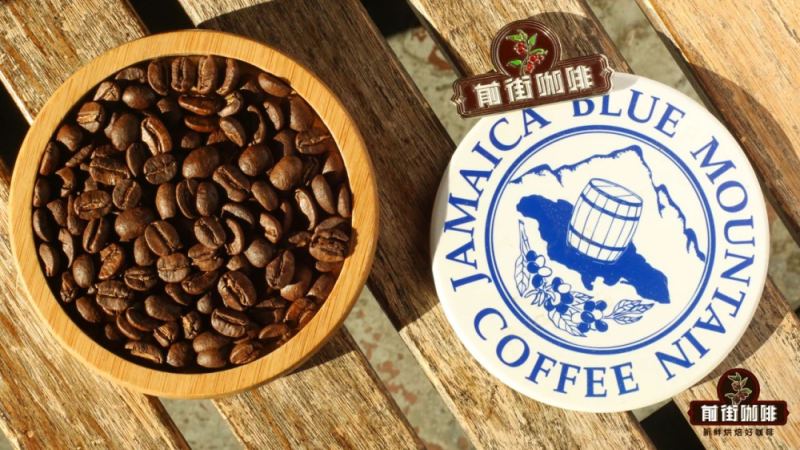
Blue Mountain coffee has long been regarded by Chinese consumers as synonymous with premium coffee, yet with the rise of the specialty coffee movement, its halo seems to have dimmed. This article systematically reviews the grading standards for Jamaican Blue Mountain coffee beans, the historical and current reasons behind their persistently high price, how to identify authentic Blue Mountain coffee, and provides a detailed description of its flavor characteristics and brewing suggestions. It also introduces the origin background and certification information of the Blue Mountain No. 1 coffee beans sold by FrontStreet Coffee, helping coffee enthusiasts gain a more comprehensive understanding of this legendary coffee.
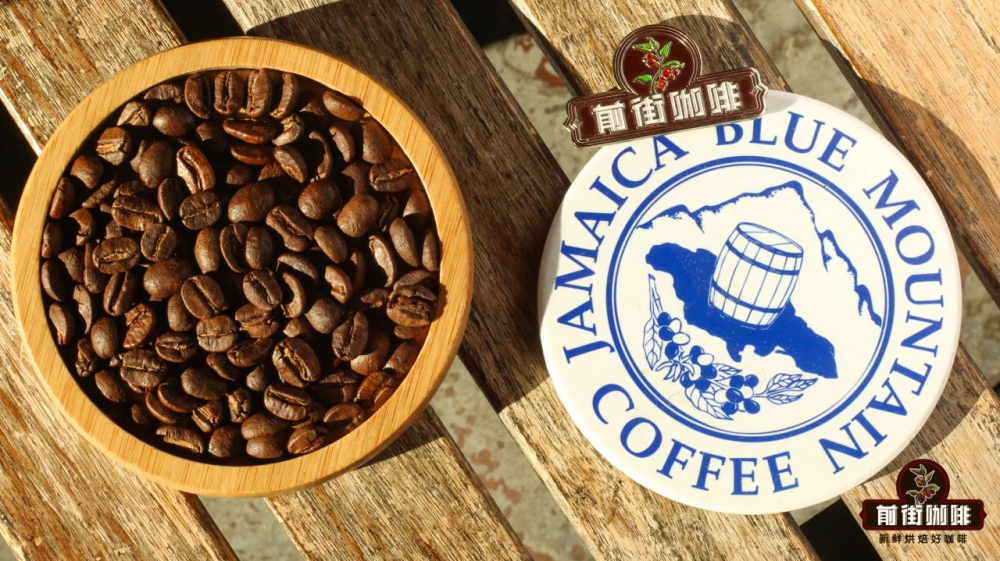
The high price of Blue Mountain coffee is almost universally acknowledged. Even those who have never tasted coffee have likely heard of Blue Mountain's fame. Thus, in the eyes of many domestic consumers, Blue Mountain coffee equates to premium coffee and expensive coffee. However, with the continued spread of specialty coffee culture, ongoing improvements in coffee varieties, and a general rise in overall quality, Blue Mountain coffee beans are no longer as prominent as they once were.
Last year, a post about Blue Mountain coffee sparked widespread discussion online. It pointed out that Blue Mountain coffee was at its peak thirty years ago but has gradually been replaced by coffee beans from other regions. Why is Blue Mountain coffee no longer popular?
Some netizens analyzed that the large number of instant coffee products on the market marketed as "Blue Mountain flavor" has led consumers to think of instant coffee rather than coffee beans when they hear the name Blue Mountain. On the other hand, many coffee bean merchants claim their products originate from Blue Mountain, but in reality, Blue Mountain coffee beans have limited production, making it difficult for ordinary consumers to distinguish authenticity.
Blue Mountain coffee beans are primarily divided into three grades: Blue Mountain No. 1 — top quality, highest price, largest beans, requiring over 96% of beans to be 17/20 screen size, with no more than 2% defects. Blue Mountain No. 2 — requiring over 96% of beans to be 16/17 screen size, with no more than 2% defects. Blue Mountain No. 3 — requiring over 96% of beans to be 15/16 screen size, with no more than 2% defects.
There are also two special classifications: Blue Mountain Peaberry — requiring over 96% round peaberry beans, with no more than 2% defects. Blue Mountain Triage — a mix of the above four grades of Blue Mountain beans, with no more than 4% defects.
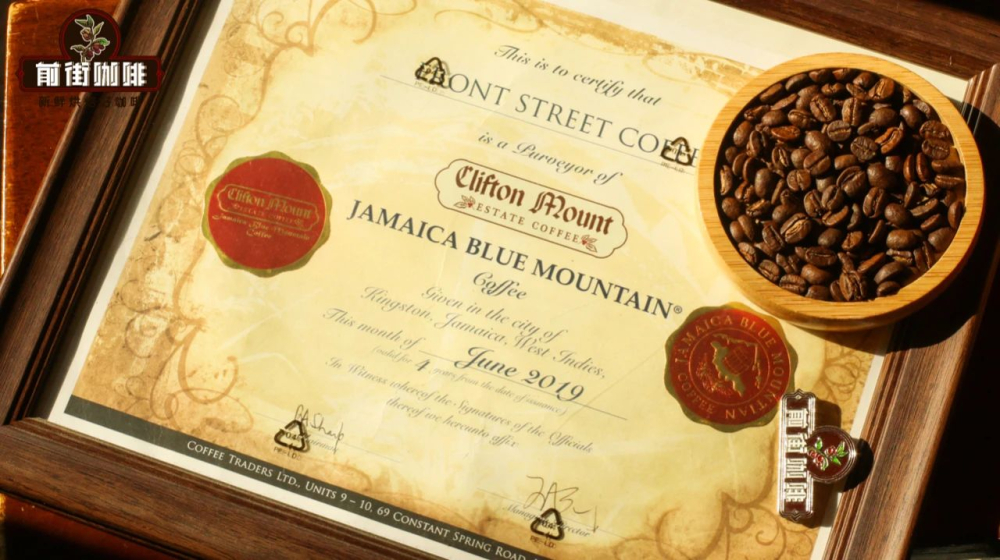
So is it truly impossible to buy authentic Blue Mountain coffee beans domestically? The answer is that you can. The Blue Mountain No. 1 coffee beans sold by FrontStreet Coffee all hold certificates issued by the Jamaican government and are sourced from the Clifton Coffee Estate, the oldest coffee plantation in Jamaica's Blue Mountain range and one that has obtained Rainforest Alliance certification. To identify whether Blue Mountain coffee beans are authentic, first confirm whether there is a certificate issued by the Jamaican government; second, Blue Mountain coffee green beans are shipped in wooden barrels, which is the only coffee bean in the world transported in wooden barrels.
Blue Mountain coffee originates from Jamaica, an island nation in the Caribbean Sea. The island is home to a famous mountain range—the Blue Mountain range—located in eastern Jamaica. On clear days, when sunlight strikes the azure sea, the peaks reflect a brilliant blue glow from the water, and the entire mountain seems shrouded in a light blue veil, hence the name Blue Mountain.
The island's geographical environment gives the Blue Mountain range a unique microclimate, and frequent volcanic activity nearby enriches the soil with minerals. High altitude, abundant water, and a mild climate together provide superior growing conditions for coffee trees, enabling Blue Mountain coffee to excel in flavor and aroma, achieving a high balance of acidity, sweetness, and bitterness, with a full and solid body.
Why is Blue Mountain coffee so expensive? First, naturally, because of its outstanding quality, possessing all the traits of a premium coffee; second, because its production is extremely limited. Rare things are precious, and in the past, buying Blue Mountain coffee was no easy task. Over a decade ago, before specialty coffee culture took shape, most coffee beans varied greatly in quality, and Blue Mountain coffee stood out due to its small cultivation volume, while limited transportation conditions also naturally made its price higher than other coffee beans.
However, today, as coffee cultivation techniques and management become increasingly scientific and consumers' pursuit of specialty coffee beans deepens, more and more coffee beans are showing excellent flavor performance, and Blue Mountain coffee's fame has gradually faded. Is Blue Mountain coffee the best coffee? That is a matter of opinion. Some prefer intensity, others lightness; some crave acidity, others bitterness. Those who love Blue Mountain love its mild, smooth body, alluring fruity notes, and subtle acidity, where bitterness turns to sweetness on the palate, mellow and lingering. Perhaps it is not the best coffee, but it is enough to be a benchmark for a good cup of coffee.
FrontStreet Coffee chose Clifton Estate because it is one of the oldest coffee estates still in operation in Jamaica. In Jamaica, only coffee beans produced by Clifton Farm have the Rainforest Green Frog logo printed on their barrels. This logo requires compliance with the "Sustainable Agricultural System Standards" for certification, and its barrels bear the Rainforest Alliance certification mark.
As early as the mid-eighteenth century (around 1750), Clifton Farm had already begun cultivating and producing coffee. Its coffee cultivation and processing areas are located at an average altitude of 1,310.64 meters. Sufficient altitude, gentle afternoon cloud cover shading the mountain forests, ample sunlight, and mineral-rich soil provide excellent growing conditions for coffee trees and also extend the maturation period of coffee cherries.
FrontStreet Coffee roasts the beans to a medium-dark level to highlight Blue Mountain coffee's smooth, rich, and solid flavor characteristics. Since all shipments are freshly roasted within 5 days, there is no need to rush to drink the Blue Mountain coffee beans upon receiving them. Leave the beans sealed in their original packaging until 5 to 6 days after the roast date before brewing, and the flavor will be even more outstanding.
Blue Mountain coffee's rich and solid characteristics make it very suitable for brewing with a French press, siphon, or drippers that extend extraction time (such as the Clever Cup or Kono). FrontStreet Coffee's daily store offerings use the slower-flow Kono dripper, aiming to extract as much coffee material as possible at a lower water temperature.
Therefore, the following parameters are used for extraction: Kono dripper, 88°C water temperature, 1:15 coffee-to-water ratio, 15g coffee dose, grind size (70% to 75% passing a No. 20 standard sieve).
The brewing method is as follows: first pour 30g of water for blooming, with a bloom time of 30 seconds; second pour to about 125g of water, then wait for the coffee liquid to drop; when it has dropped halfway, pour the final stage of water up to 225g; after all the coffee has dripped through, end the extraction. Total extraction time is generally about 2 minutes 10 seconds.
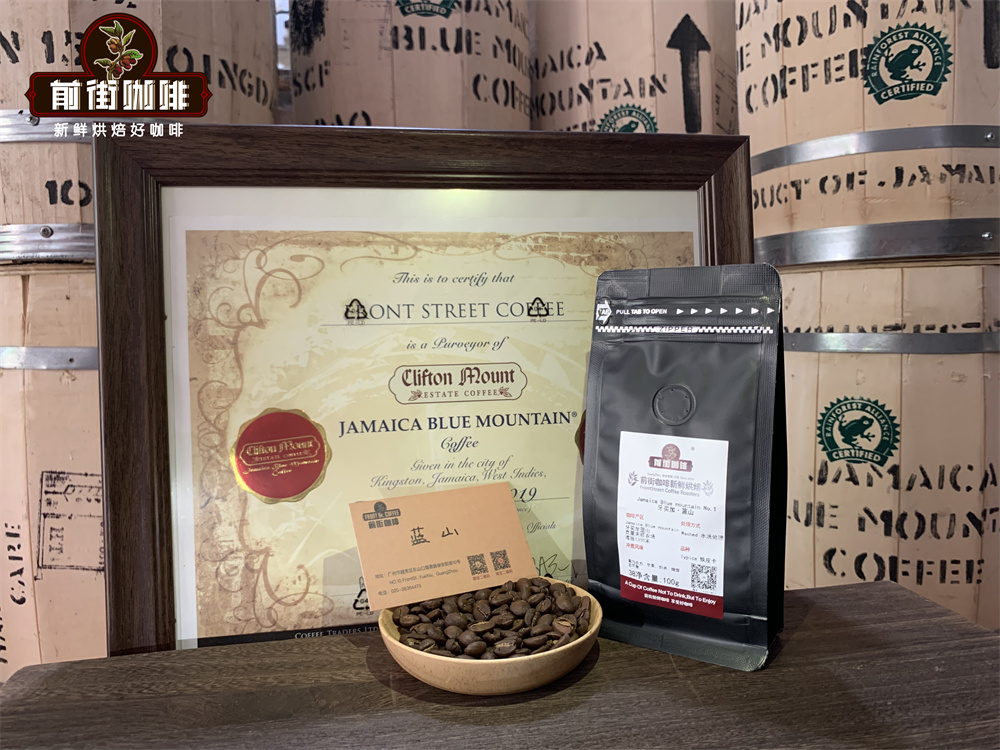
Authentic Jamaican Blue Mountain No. 1 coffee bean flavor: rich dark chocolate and nutty notes, creamy smooth body, balanced acidity, sweetness, and bitterness.
For professional coffee knowledge exchange and more coffee bean information, please follow Coffee Workshop (WeChat public account: cafe_style)
For more specialty coffee beans, please add the private WeChat of FrontStreet Coffee, WeChat ID: qjcoffeex
The above content is compiled by CoffeeHunters, a coffee news website.


