







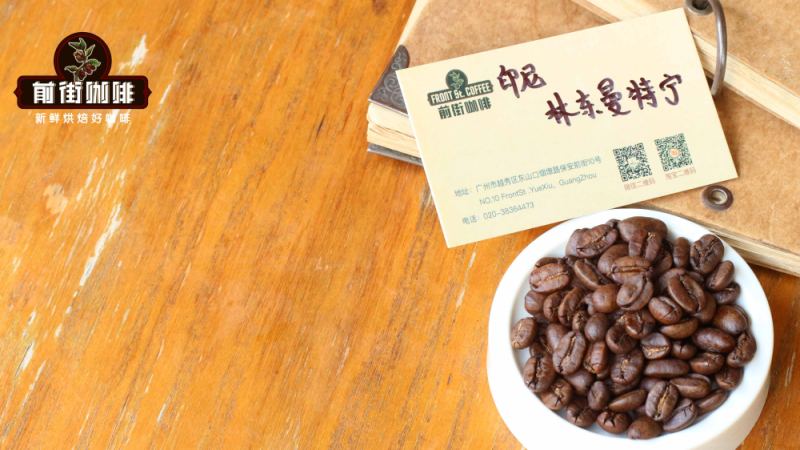
In the world of coffee, Mandheling is a distinctive presence. It does not chase after floral aromas and fruity acidity like many beans do; instead, it earns its place with the steady notes of herbs and pine wood and a thick, full body. This article will take you deep into the cultivation history of Indonesian coffee, the terroir characteristics of major producing regions such as Sumatra, clarify the WWII anecdote behind the name Mandheling, and break down in detail the special wet-hulling process. At the same time, we will also share Front Street Coffee's pour-over recommendations for dark-roasted Mandheling, including dripper selection, water temperature, coffee-to-water ratio, and pouring rhythm, to help you brew a cup of Mandheling that is full-bodied and richly layered.
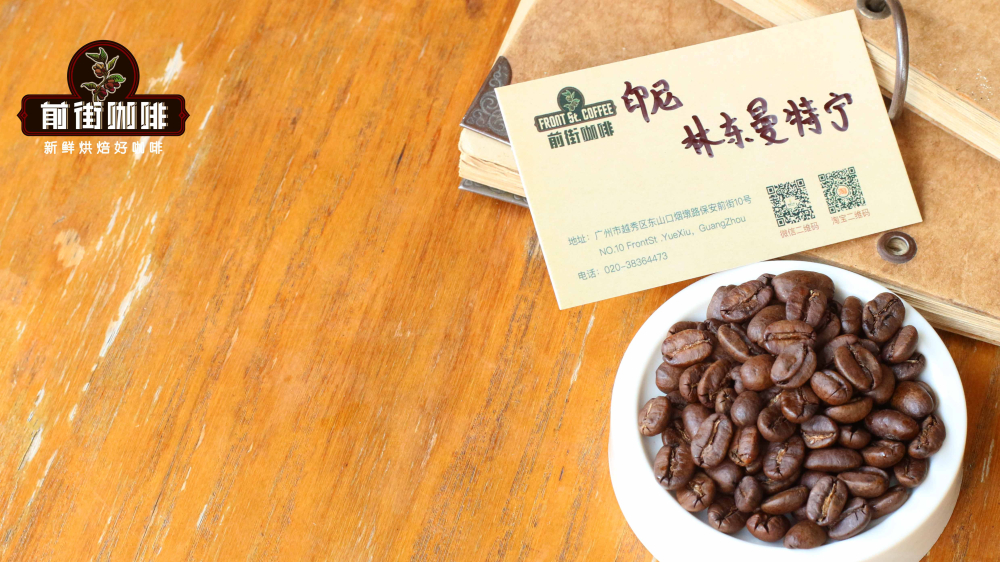
Front Street has a distinctive coffee called "Mandheling." It does not pursue bright qualities like "floral aromas" or "fruity acidity," but is known for its notes of green grass, pine wood, and thick mouthfeel. Today, Front Street will talk about this unique classic coffee.
History of Indonesian Coffee
In 1699, Indonesia was still under Dutch colonial rule, and the VOC (Dutch East India Company) introduced Arabica coffee trees here with the aim of breaking the Arab monopoly on the global coffee trade. The Dutch colonial government first planted coffee around Batavia (present-day Jakarta).
Subsequently, more plantations were opened up in East Java, Central Java, West Java, as well as parts of Sumatra and Sulawesi. Indonesia was the first place outside Arabia and Ethiopia to cultivate coffee on a large scale. The VOC successfully monopolized the coffee trade between 1725 and 1780.
By the mid-17th century, the East India Company had expanded Arabica coffee cultivation to Sumatra, Bali, Sulawesi, and Timor. On Sulawesi, coffee was first planted in 1750. In the highlands of North Sumatra, coffee was first planted near Lake Toba in 1888, and later in 1924 in the Gayo Highlands (Aceh) near Lake Laut Tawar. In the late 18th century, Dutch colonists opened large coffee plantations on the Ijen Plateau in eastern Java.
In the 1920s, smallholder farmers across Indonesia began growing coffee as a cash crop. However, disaster struck in 1876 when coffee rust swept through Indonesia, destroying most Typica varieties. In 1900, Robusta coffee was introduced to East Java as a substitute, especially in low-altitude areas where rust was particularly severe.
The plantations on Java were nationalized upon independence and were revitalized in the 1950s through new Arabica varieties. These varieties were also adopted by smallholder farmers through government and various development programs. Today, more than 90% of Indonesia's coffee is grown by smallholder farmers, with average farm size at one hectare or less.
Indonesian Coffee Producing Regions
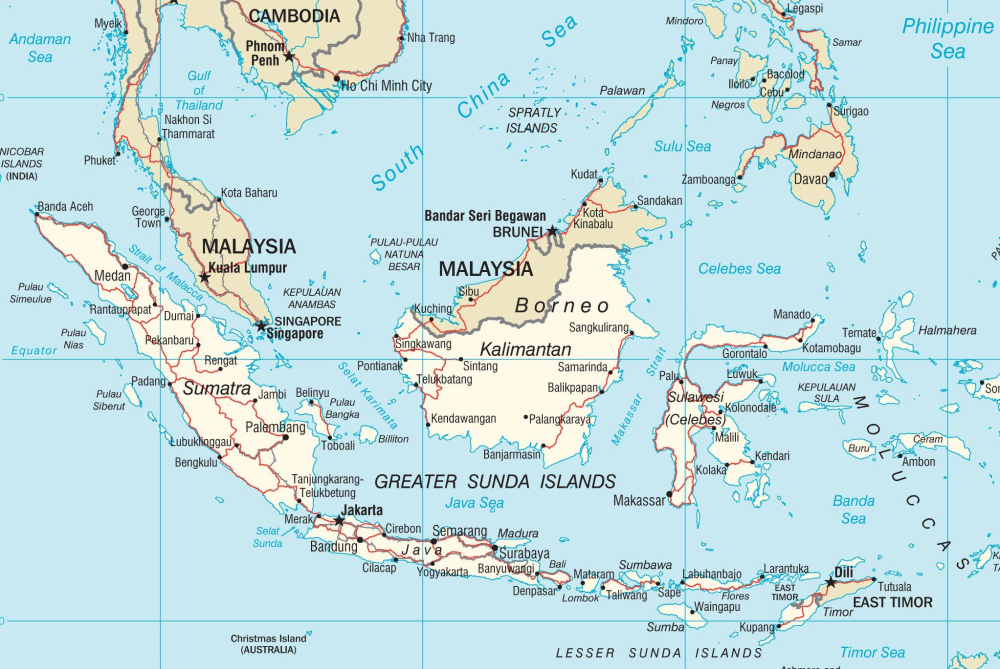
Sumatra Sumatra is not only the largest island in Indonesia but also the sixth largest island in the world, located in the northwestern part of Indonesia. Thanks to its geographical location, Sumatra has the country's earliest harvest season, lasting from November to March.
Mandheling coffee beans are Arabica coffee beans grown on the island of Sumatra. Sumatra coffee has low acidity and a complex flavor profile, and many coffee lovers call it the representative of spice and herbal notes.
Front Street believes there are several factors influencing the taste of Sumatra coffee. On the one hand, the island's fertile volcanic soil creates the coffee's earthy flavor. When it comes to its low acidity, the most important factor is the processing method of Sumatra coffee, namely the locally prevalent wet-hulling method, which we will introduce in detail below.
On the island of Sumatra, specialty Mandheling coffee mainly comes from the Lake Toba Lintong region and the Gayo Mountain region of Aceh. The two Indonesian coffees currently offered by Front Street Coffee both come from the producing areas of specialty Mandheling coffee. "Front Street Coffee — Daily Series Lintong Mandheling Coffee Beans" shows flavors of baked toast, nuts, caramel, pine wood, and herbs; "Front Street Coffee — Front Street PWN Golden Mandheling Coffee Beans" shows deeper flavors such as spices, nuts, pine wood, caramel, herbs, and dark chocolate.
Java
If you love coffee deeply, you must know that Java is synonymous with coffee. But what you may not know is that Java is an island in Indonesia, and some of the world's best coffee comes from there. In the 17th century, the Dutch East India Company brought Arabica coffee plants to Indonesia. Most of Java's coffee is grown on five government-owned estates: Blawan, Tugosari, Pancoer, Jampit, and Kayumas. Java coffee is washed, making the coffee cleaner and fuller-bodied rather than earthy like Sumatra. Java coffee is also known for its low acidity and rich notes of molasses, clove, and fig.
Sulawesi
Sulawesi was formerly called Celebes and has six different provinces. One of these provinces, South Sulawesi, is where most of Sulawesi's coffee is grown, especially on smallholder farms in the Toraja highlands. Compared with other Indonesian coffees, Sulawesi coffee tastes lighter. Through cupping comparisons, Front Street Coffee found that specialty coffee beans from Sulawesi Toraja have bright acidity, distinct layers, and rich caramel sweetness, while the full-bodied herbal and spicy flavors are much more restrained, with a slight floral note.
Flores
Compared with other Indonesian islands, Flores is relatively small, spanning 200 miles from end to end. The island is known for its rich vegetation and is one of the few places where the endangered Komodo dragon can be seen. Most of the coffee is produced in the town of Bajawa at altitudes of 1,200 to 1,800 meters. Flores has rugged terrain with several active and inactive volcanoes. The ash from volcanic eruptions has created fertile ridge soils that are very suitable for producing organic coffee.
Bali
Bali is famous for its beautiful beaches, coral reefs, and yoga and meditation retreats. This tropical paradise offers some of the best coffee that Indonesia and indeed the world has to offer. Most of the coffee grows in the Kintamani highlands located between the Batukaru and Agung volcanoes.
The Origin of Mandheling Coffee
Most coffee beans on the market today are named after their growing region or country, but Mandheling coffee is different. It is named after the Mandheling people who traditionally grew and processed the coffee beans. Why is that?
The story goes that during World War II, a Japanese soldier stationed in Sumatra asked a local Sumatran where his coffee came from. The Sumatran man mistakenly thought he was being asked about his own origin and replied: Mandheling. After the war, when the Japanese soldier returned home, he remembered that the coffee with the special taste seemed to be called "Mandheling." In 1968, Nomura Trading Company of Osaka, Japan, visited the Indonesian company N.V. Pawani Medan and imported 15,000 kilograms of Sumatra Mandheling coffee, which became very popular after being released on the Japanese market. From then on, Mandheling coffee and Pwani Coffee Company became widely famous.
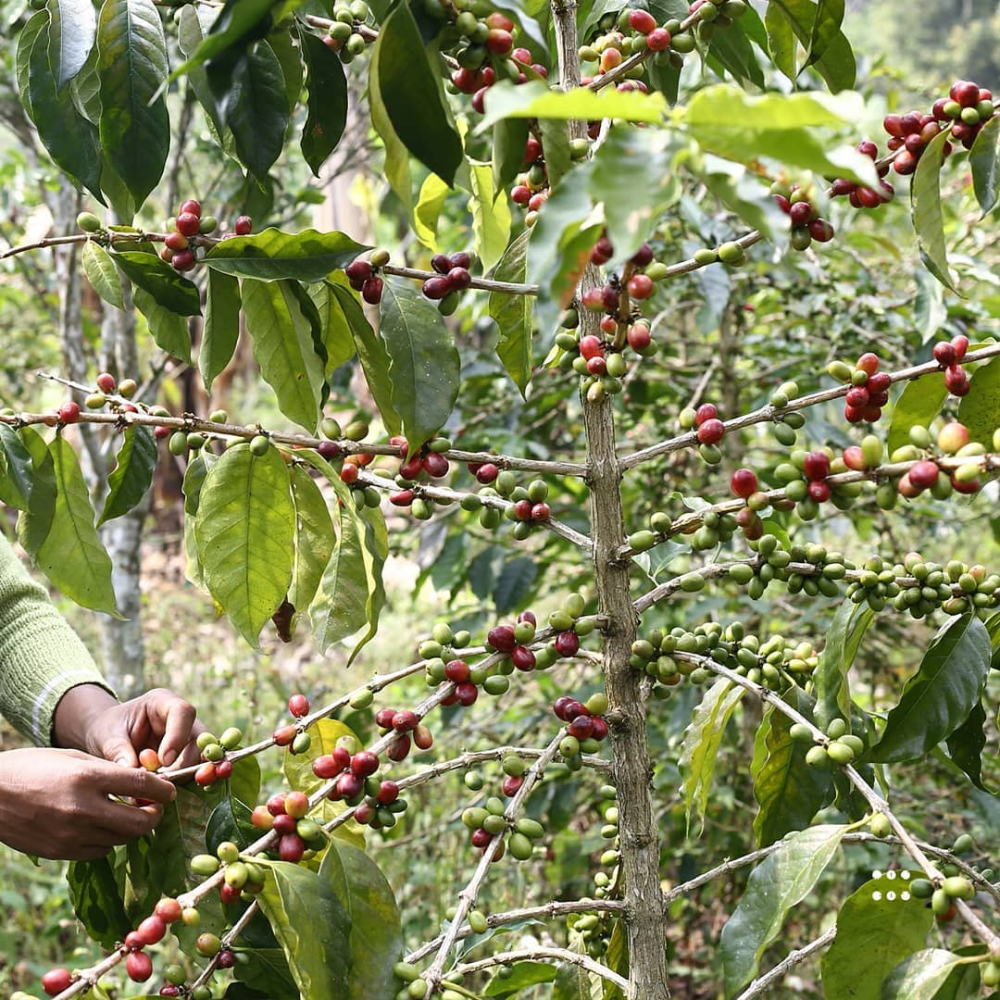
PWN is a well-known local green bean purchasing company in Indonesia. They subject wet-hulled Mandheling green beans to one mechanical sorting plus three rounds of hand sorting to ensure the batches produced reach Indonesia's highest grade, namely G1. The purpose of mechanical sorting is first to screen out beans that must be at least 18 screen size, while the subsequent multiple hand sortings are to remove irregular defective beans. Reducing the defect rate greatly improves the quality of Mandheling coffee.
To distinguish it from regional Mandheling coffee, PWN registered "Golden Mandheling" as a trademark. The Golden Mandheling coffee beans sold by Front Street Coffee all come from PWN. In Front Street's offline stores, you can see PWN's Golden Mandheling coffee bean certification certificate as well as coffee burlap sacks printed with the company logo.
Special Processing Method — Wet Hulling Wet hulling, also known as wet shelling, is called giling basah in the local language and is a traditional Indonesian coffee processing method. From the name alone, wet hulling sounds similar to the wet process. But in fact, the coffee processed by the two methods has completely different flavors.
So how exactly does wet hulling process coffee beans?
Remove the skin and pulp, keeping the parchment and mucilage
Ferment in a water tank
Wash off the mucilage
Sun-dry with parchment for 2-3 days, until moisture content reaches 20-24%
Remove the parchment
Dry the green beans until moisture content reaches 12-13%
Ready for export
Front Street Coffee's Golden Mandheling is a very typical representative of wet hulling. Because the extremely fast wet-hulling process results in a higher defect rate in coffee beans, workers are arranged at the processing plant to hand sort and remove defects. There is generally DP (double picked) and TP (triple picked), and Mandheling that has undergone triple picking will have a greatly reduced defect rate.
Apart from some minor differences, wet-hulled coffee beans are generally considered to have earthy, smoky, and chocolate notes, with acidity described as low and the body as full, though sometimes also considered dull. PWN's Golden Mandheling coffee beans, however, show high-quality herbal notes, very obvious caramel sweetness, and a steady and elegant entry. After swallowing, the mouth is filled with rich sweetness, body, and wild spice flavors.
Front Street Coffee Brewing Recommendations
Dripper: Kono dripper Water temperature: 88-89°C Dose: 15 grams Coffee-to-water ratio: 1:15 Grind size: medium-coarse grind (70% passing rate on China No. 20 standard sieve)
*Reason for choosing the Kono dripper: The Kono dripper has few ribs and they are located at the lower end. The filter paper fits closely against the dripper, which can restrict airflow and extend the contact time between water and coffee grounds, allowing the coffee grounds to be fully extracted and enhancing the full-bodied mouthfeel.
Bloom with 30 grams of water for 30 seconds, then pour in a small stream in circles until 125 grams for a split pour. When the water level is about to expose the coffee bed, continue pouring until 225 grams and stop. Wait for all the poured water to pass through the coffee grounds, then remove the dripper to end extraction. (Start timing at the beginning of the bloom.) Extraction time is 2'00"-2'00".
The above content is compiled by CoffeeHunters, a coffee news website.


