







Green Mountain Coffee and Blue Mountain Coffee differ by only one character in Chinese, yet they belong to completely different concepts. The former is a commercial coffee brand from Vermont in the United States, known for its K-Cup single-serve system and its environmental and fair trade philosophy; the latter is a top-tier origin coffee produced in Jamaica's Blue Mountains, subject to strict regional standards, with scarce output and a high price. This article will sort through the essential differences between the two from the perspectives of origin background, brand positioning, market history, and quality standards, and introduce the Blue Mountain No. 1 coffee beans recommended by Front Street Coffee along with brewing suggestions, helping coffee lovers clearly distinguish between these two often-confused coffees.
Green Mountain Coffee and Blue Mountain Coffee differ by only one character, but the difference between them is far more than a tiny bit. Below, Front Street will introduce these two coffees separately, so you can see what origins and characteristics each one has.
Green Mountain Coffee from the United States
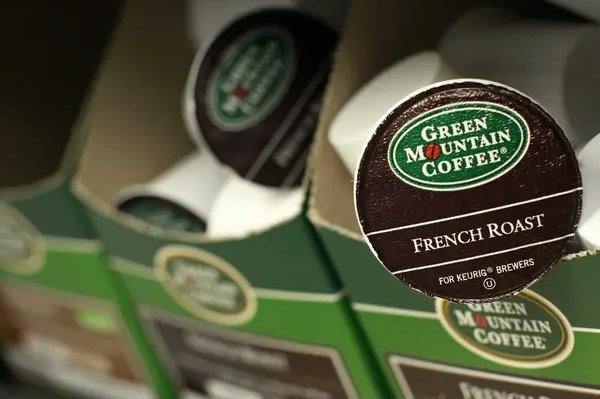
Green Mountain is not the name of a coffee-producing region. Green Mountain Coffee is a coffee brand born in Vermont in the United States, founded in 1981 and successfully listed in 1993.
Also in coffee brand marketing, Green Mountain Coffee took a route completely different from Starbucks' emphasis on "high style" and high-price strategy. It mainly promotes high-quality Arabica coffee beans at more affordable prices. At the same time, Green Mountain Coffee has also done a great deal in environmental protection: starting in 2002, the brand sold certified fair trade coffee, and all of it was organic coffee. (To obtain fair trade coffee certification, the purchase price a coffee merchant pays to coffee farmers must reach at least US$1.26 per pound, and technical support must also be provided so that farmers can adopt organic cultivation methods to grow coffee—a cultivation method that balances sustainable development, environmental protection, and health concepts.)
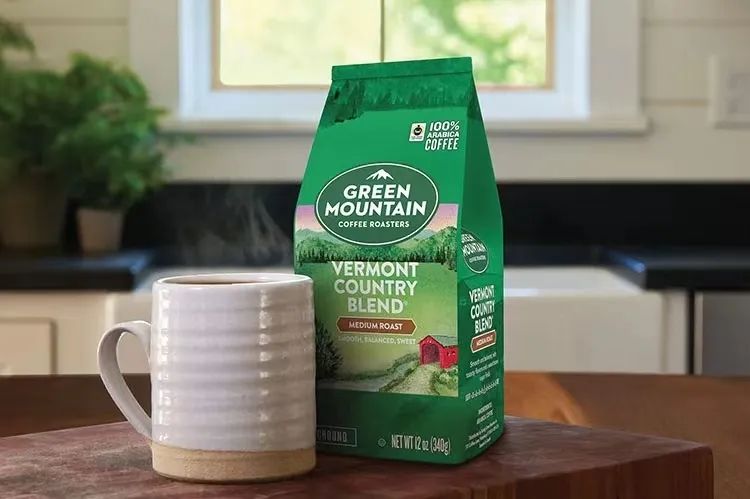
In recent years, the coffee market has continued to heat up, and various single-origin coffees have emerged one after another, but Green Mountain Coffee has always adhered to its positioning of environmental protection and practicality. Among its many product lines, the coffee K-Cup is an extremely practical one. According to the original design intention of Keurig founders Peter Dragone and John Sylvan—"no need to brew a whole pot, one cup at a time is just right"—they invented the Keurig K-Cup that brews only one cup at a time, and launched matching single-serve capsules. Later, Keurig also successively developed dedicated single-serve coffee machines.
The K-Cup advertisement presents it this way: put the K-Cup into the coffee machine, and in one minute you get a cup of fragrant hot coffee, with no need to grind beans, weigh, or clean, and no coffee grounds left behind. Most importantly, a K-Cup costs only 50 cents each, just one-tenth the price of a cup of Starbucks coffee.
The design concept of the K-Cup caused Green Mountain Coffee's sales to rise sharply, and Green Mountain also applied for multiple K-Cup-related patents for this reason. If other manufacturers want to use K-Cup packaging, they must pay Green Mountain the corresponding licensing fees.
Blue Mountain Coffee from Jamaica
On the map, Jamaica is an island country located in the Caribbean region of North America, situated in the tropics. To its north is Cuba, and next to it is Central America. Coffee-growing areas are mainly concentrated in the Blue Mountains in the eastern part of the island of Jamaica. When the weather is clear, sunlight shines directly on the blue sea, and the color reflected by the mountain body also appears blue, which is how the Blue Mountains got their name. The Blue Mountains have the highest peak in the area, about 2,256 meters at the highest point. Only areas below 1,700 meters can grow coffee trees, while areas above 1,700 meters are designated as local protected forest.
The high-altitude Blue Mountain growing area is shrouded in clouds and mist all year round. Together with the fertile soil brought by the volcanic zone, the humid and rainy climate throughout the year, the average temperature of around 27°C, and the almost complete lack of local industrial pollution, these conditions all help produce Blue Mountain coffee beans of outstanding quality. By this point, I believe everyone can already see that there is no connection between the commercial brand Green Mountain Coffee and the excellent-quality Blue Mountain Coffee. Next, Front Street will explain why Blue Mountain Coffee is so expensive.
The Jamaica Coffee Industry Board (CIB) has established strict production standards: only Arabica coffee grown in the specific high-altitude areas from 910 meters to 1,700 meters is eligible to be called Jamaica Blue Mountain Coffee. Blue Mountain Coffee is divided into four production areas—St. Mary, St. Thomas, St. Andrew, and Portland—with a total area accounting for only one-third of the entire Blue Mountain growing region; the other two-thirds of the land is used to grow Jamaica High Mountain Coffee and Jamaica Prime Coffee. In addition, the steep slopes make manual harvesting difficult, further restricting output. In recent years, less than 15% of the coffee beans produced in Jamaica can bear the Blue Mountain Coffee label.
We often hear a saying: in the early period, Jamaica's Blue Mountain coffee market was almost monopolized by Japan. In 1969, the island of Jamaica suffered a storm disaster, and the growing areas suffered heavy losses. Japan's UCC Coffee Group extended a helping hand, providing large amounts of aid to help it through the crisis, and afterward continued to invest in Jamaica's coffee industry. In 1972, Jamaica signed an approximately 30-year agreement with Japan, promising Japan priority purchasing rights for Blue Mountain Coffee. During this period, 90% of Blue Mountain output was supplied to Japan, and only the remaining small 10% quota was allocated to other countries and regions such as Europe, America, and Asia. This was also the reason Blue Mountain Coffee prices remained high in that era. In earlier years, it was very difficult to drink authentic Blue Mountain Coffee in China, or rather Blue Mountain Coffee was too expensive for ordinary people to afford, so many low-priced "Blue Mountain flavor instant coffees" and lower-quality "Blue Mountain blends" appeared on the market.
As the agreement between Jamaica and Japan expired, Jamaica hoped to expand to more buyer markets, so it allocated more of the Blue Mountain Coffee quota to other coffee markets. China imported its first batch of Blue Mountain Coffee green beans in 2010, and Front Street also added the highest-grade Blue Mountain No. 1 coffee to its daily coffee bean list for everyone to taste.
The so-called Blue Mountain No. 1 coffee is Jamaica's national treasure-level Blue Mountain coffee bean. The green beans are above 17 screen size, with a defect rate below 3% and a moisture content of 10% to 12.5%. The five flavors of acidity, sweetness, bitterness, body, and aroma are balanced and just right. The green beans have a uniform color and neat shape, making it an extremely rare top-grade lot.
Front Street Coffee: Jamaica Blue Mountain No. 1 Coffee Beans
Region: Jamaica Blue Mountain
Estate: Clifton Mount Estate
Altitude: 1310m
Processing Method: Washed
Variety: Typica
Flavor: Chocolate, Nuts, Cream, Cocoa, Toffee
Blue Mountain Coffee Brewing Suggestions
If you want to drink coffee with a full and rich aroma, Front Street suggests using freshly roasted coffee beans for brewing. After roasting, coffee needs a resting period ranging from 4 to 7 days. Coffee beans shipped by Front Street Coffee are all roasted within 5 days, ensuring that the beans everyone receives after ordering are in the freshest state and just within the best tasting period. If you do not have grinding equipment at home, Front Street Coffee provides a grinding service; however, ground coffee loses its aroma faster than coffee beans, so if conditions allow, Front Street suggests preparing your own grinder to fully appreciate the coffee's aroma.
Front Street believes that the excellent flavor of Blue Mountain No. 1 coffee lies in its balance of acidity, sweetness, and bitterness, high body, and full aroma. In terms of roasting, Front Street chooses a medium-dark roast to highlight the coffee beans' nutty and cocoa aromas. Paired with a KONO dripper, it can achieve a better body.
First rinse the KONO dripper with clean water so the filter paper fits the dripper more closely. After pouring out the water in the server, add 15g of coffee powder, bloom with 30g of water for 30 seconds, then start pouring in circles from the center with a small stream of water, and begin分段 at 125g; when the coffee bed drops to half the height of the dripper, pour the second stage using the same method until 225g. After all dripping is complete, remove the dripper.
After Blue Mountain No. 1 coffee is ground, you can smell a very rich aroma. During brewing, it carries a caramel-like sweet fragrance. On the palate, it has the mellow richness of nuts and chocolate, moderate acidity and sweetness, a clean mouthfeel, and a lasting finish.
Professional coffee knowledge sharing. For more coffee bean information, please follow the WeChat public account: Front Street Coffee (FrontStreet Coffee)
The above content is compiled by CoffeeHunters, a coffee news website.


