







Espresso is the soul drink of coffee shops worldwide; classic beverages like Americano, latte, and cappuccino all depend on it. But Espresso itself is far more than just one form—based on extraction method and coffee-to-water ratio, it can be divided into three types: Ristretto, Normale, and Lungo. From the perspective of Front Street Coffee, this article first sorts out the etymology and meaning of Espresso and the evolution of Italian coffee machines, then breaks down the specific parameters and flavor differences of the three espresso extraction methods one by one, while also explaining the formation principle of crema, the steps for tasting, and Front Street's actual practices in blend bean selection and serving, helping coffee enthusiasts fully understand the flavor logic of espresso.
For more specialty coffee knowledge, please follow: Front Street Coffee ( Frontsteet Coffee )
Italian coffee has played an undeniable role in driving the direction of the global coffee market, and espresso is a foundational beverage that almost every coffee shop cannot avoid. Taking Front Street's stores as an example, the menu includes classics like Americano, latte, cappuccino, and flat white. In addition, many coffee shops add various ingredients to create more innovative specialty drinks. Today, Front Street will take everyone to experience the unique charm of Italian coffee culture.
Espresso means "fast" in Italian. From the start of preparation to being handed to the customer, the whole process takes only a few short minutes, so Italians borrowed the word "Express" (fast) to name it.
For more specialty coffee knowledge, please follow: Front Street Coffee ( Frontsteet Coffee )
The core principle of a cup of espresso is to use steam pressure to force hot water through a bed of coffee grounds, resulting in a small, rich, and aromatic dark coffee liquid covered with a layer of golden foam. Although it may not be directly visible on coffee shop menus, the Americano, latte, and cappuccino that people order daily all contain it. It is no exaggeration to call it the soul of a coffee shop.
Early coffee was mostly brewed by immersion, requiring the beans to be ground very fine and a slow extraction process with a waiting time of at least ten minutes. In 1884, the Italian Angelo Moriondo designed the first espresso machine, equipped with two independent brewing boilers, with pressure and steam reaching 1.5 bar. The extracted coffee liquid was more viscous, and the mouthfeel was much heavier than drip coffee. After that, coffee machines continued to evolve, and variables such as water temperature and pressure gradually became more precisely controllable.
In 1948, Milan coffee shop owner Achille Gaggia invented a lever-driven coffee machine, which relied on high pressure to produce what we now call crema. Since then, crema has been regarded as one of the indicators for measuring espresso quality, and espresso has also come to specifically refer to the highly concentrated coffee made through pressure and rich in crema.
Theoretically, the fresher the coffee beans, the darker the roast, and the greater and more stable the equipment pressure, the better the crema performance. Italians prefer mellow and rounded strong coffee, habitually roast beans very dark, and sometimes blend in Robusta beans to make the espresso's crema richer, the aroma more concentrated, and the taste more intense. However, consumers today are beginning to pursue richer flavor layers, and many coffee beans with brighter profiles have also been introduced into espresso. For example, the espresso served at Front Street stores uses the "Sunflower Warm Sun Blend Coffee Beans," which carries fermented wine aromas and berry-like sweet acidity, with a full aroma, soft mouthfeel, and very easy drinkability.
When a customer orders and says, "Give me an Espresso," the barista at Front Street Coffee (FrontStreet Coffee) begins working. After about two minutes, they bring the customer a glass of ice water, a small spoon, and a small cup of rich coffee liquid with a golden-brown crema layer. Before drinking espresso, take a sip of water first; it rinses the mouth and also helps calibrate the taste buds. Then gently stir the coffee with a small metal spoon to integrate it. The first sip reveals dense crema and a full roasted aroma. Immediately after comes the warm coffee liquid, where you can sense rich flavors of nuts, chocolate, berries, and wine. Take another sip of water midway and slowly appreciate the sweet aftertaste left in the mouth.
In fact, espresso is not limited to the conventional "Espresso" alone. According to the extraction method and the specific coffee-to-liquid ratio, it can be divided into three different types: Ristretto (short extraction), Normale (normal), and Lungo (long extraction). All three are concentrated liquids quickly extracted by an espresso machine.
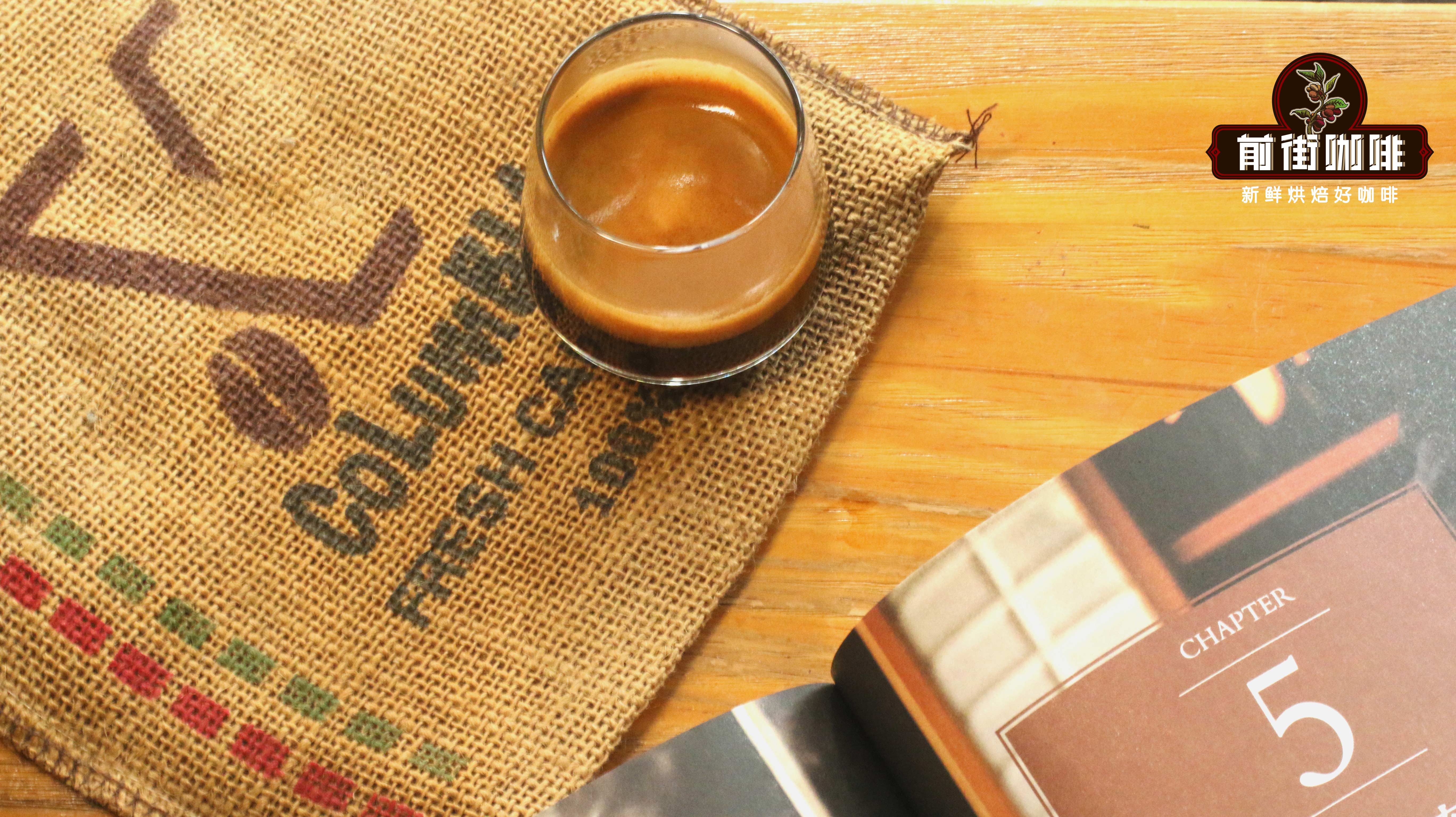
Ristretto usually refers to extra-concentrated espresso, also called refined extra-concentrated coffee. Compared with common Espresso, Ristretto is more niche. The Flat White we are familiar with is actually made with Ristretto as its base. Ristretto carries the meaning of "restricted," which can be understood as "restricting" the extraction amount to capture only the front and middle segments of the espresso, thereby increasing coffee concentration.
For example, Front Street's Espresso extraction plan is 20 grams of coffee powder extracting 40 grams of coffee liquid, with a coffee-to-liquid ratio of 1:2, taking 30 seconds. When extracting Ristretto, only 70% of the Espresso is taken, that is, 20 grams of coffee powder extracting 28 grams of coffee liquid, with the time shortened accordingly. In addition, the grind size can be made finer to slow the flow rate, thereby increasing the coffee liquid's concentration. Of course, every store will make different adjustments based on the coffee beans used and the flavor and mouthfeel the barista wants to present.
Normale is the most common and most popular espresso. It is actually Espresso in the usual sense. At present, most stores on the market mainly serve Normale, though they do not especially emphasize it. According to the golden cup standard, Normale's extraction yield falls between 18% and 22%, with a concentration range of 8% to 12%.
Lungo, on the other hand, is coffee made with twice the normal amount of water. "Lungo" means "long, extended" in Italian, and it is also called "stretched espresso," that is, extending the extraction time so that the coffee concentration is lower and it drinks softer. After repeated adjustments and tastings, Front Street finally set Lungo's coffee-to-liquid ratio at 1:5. That is, using 20 grams of coffee powder, extending the extraction time to 42 seconds, and extracting 100 grams of coffee liquid.
It is worth mentioning that no matter which extraction form is used, the flavor and mouthfeel of espresso mainly depend on the coffee beans used. For friends who prefer mellow and fragrant coffee, Front Street's classic espresso blend coffee is recommended. This blend is composed of beans from three origins: Brazil, Indonesia, and Vietnam. It uses a dark roast, which can highlight the coffee's mellow aroma to the greatest extent and also makes it easier to extract rich and dense crema. Whether making an Americano diluted with water or a latte paired with milk, it is very suitable. It can be purchased and ordered at Front Street's Taobao store or Front Street Tmall flagship store.
The above content is compiled by CoffeeHunters, a coffee news website.


