







Indonesia is an important coffee-producing region globally, with Mandheling coffee and kopi luwak being the most talked-about. Kopi luwak is fermented inside the civet, giving it an herbal aroma and excellent body, but it is scarce in production and expensive. However, driven by commercial interests, caged farming forces civets to eat only coffee cherries, sparking animal welfare controversies. Front Street Coffee believes that the formation of kopi luwak itself is not problematic; the issue lies in forced imprisonment and force-feeding. This article will discuss the origins of kopi luwak, the causes of its flavor, and the principles of in vivo fermentation, share Front Street's neutral views and brewing methods, and recommend several Indonesian and other origin coffees worth trying.
Kopi luwak has always been a controversial topic. Front Street Coffee has also listed kopi luwak, but it should be noted that Front Street believes the formation process of kopi luwak itself is not problematic; the real issue lies with those who imprison civets and force them to eat only coffee cherries—whether ripe or not—solely to increase production. This behavior has gone beyond the scope of our coffee discussion. In this article, Front Street will talk about kopi luwak.
Kopi Luwak
Civet coffee, Kopi Luwak (also known as cat poop coffee), is a name that is surely well-known. As everyone knows, the world's most expensive coffee is "kopi luwak," and it is also the least produced coffee, with annual output being extremely limited. Because the coffee beans undergo in vivo fermentation, the flavor carries a unique herbal aroma and excellent body, making it highly sought after by the wealthy, and the price is naturally very high. However, despite the high price, the bean variety quality is usually rather average.
Civets mainly inhabit hilly and mountainous tropical rainforests and subtropical evergreen broad-leaved forest edges, shrublands, and grassy areas below 2,100 meters in altitude, and choose rock caves, burrows, or tree holes as resting spots. These coffee beans are generally of the Robusta variety, because civets' activity range is concentrated at low to medium altitudes, so the coffee varieties are mostly Robusta. High-altitude Arabica kopi luwak is extremely rare in production.
What does kopi luwak taste like?
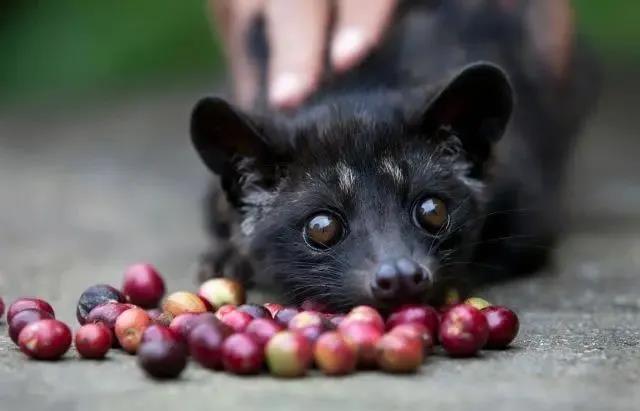
Civets have an omnivorous diet; animal-based foods include small mammals and birds, while plant-based foods include stems and leaves of Solanaceae plants, seeds of various figs, and fruits like luffa and sour berries. However, civets have poor digestion of plants, so eating berries is like their dessert, while their main food is meat. Because of their poor plant digestion, they mainly live in broad-leaved forests, shrublands, and agricultural areas in South and Southeast Asia, which are also environments suitable for coffee tree growth, so many of the sour berries civets eat are coffee cherries. What civets can digest is only the skin and pulp of the berries; the pit inside, which is the coffee bean, is eventually excreted.
Since civets' habitat is in the low-altitude areas of Indonesia, and the coffee variety is the low-quality Robusta bean, kopi luwak has the earthy and herbal flavors of Robusta beans. Combined with the special processing method, the coffee has high viscosity, drinking like syrup in texture, full-bodied and solid.
The special processing method of kopi luwak—in vivo fermentation
In the early days, locals collected the feces of wild civets in the forest, extracted the undigested coffee seeds, and processed them into green beans. Due to low production and the unique in vivo fermentation method, later many merchants seized the business opportunity and began to capture civets en masse for caged farming. Civets, which should eat meat, could only eat coffee cherries. The nutrients in coffee cherries cannot keep civets healthy.
They believe that although the coffee beans are not digested in the civet's digestive tract, the highly corrosive digestive juices have corroded their surface. These digestive juices contain a special protease that can break the original protein chains of the coffee beans, decomposing long-chain proteins into small particles, forming short-chain peptides and amino acids. But in fact, because they have long been fed only coffee cherries, the civets may excrete the coffee beans within one or two hours after eating. The coffee beans being in the civet's stomach for one or two hours is not enough to produce the series of changes mentioned above; the beans are still the same as when they were eaten, and even if the flavor changes, it is only a tiny, tiny change.
Front Street's neutral view on kopi luwak
Front Street Coffee believes that the formation of kopi luwak itself is not problematic. Civets use their noses to identify ripe coffee cherries, just as Ethiopian red cherries are harvested fully ripe—both are similar in principle. The problem lies with those who lock up civets. Forcing them to eat only coffee cherries, whether ripe or unripe, solely to increase kopi luwak production, leading to these cruel practices, is no longer within the scope of our coffee discussion.
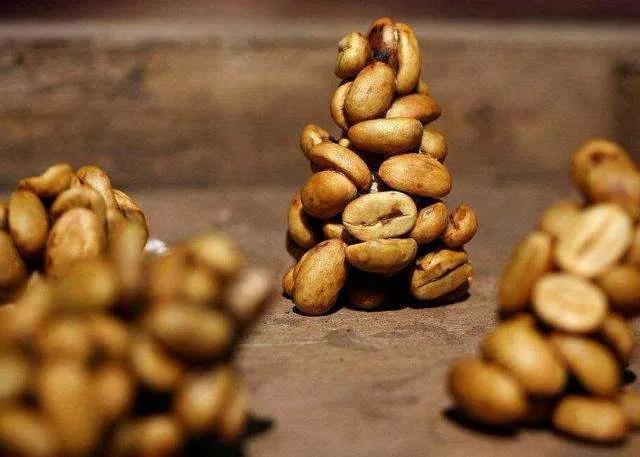
Imagine if passing through the digestive tract really made coffee taste good, then feeding a civet a large amount of coffee beans regardless of ripeness would also make it taste good, which is why there are so many farmed Vietnamese kopi luwak, Yunnan kopi luwak, and Indonesian kopi luwak. Front Street Coffee believes that only coffee beans from ripe coffee cherries will taste good. So even if kopi luwak production continues, it can only be done by establishing a large movable area for civets to choose the coffee cherries they deem suitable, while also providing other nutritional food sources.
Can the in vivo processing method of kopi luwak be replaced by technology?
The excessive pursuit and extremely high prices of this type of coffee may lead to the consequence of wild animals being forcibly imprisoned and forced to produce coffee beans. Persecuting wild animals for the sake of appetite is unnecessary.
According to online reports, with the development of microbial technology, people are also trying more environmentally friendly ways to ferment green coffee beans. For example, some are committed to developing modern technology and microbial techniques to simulate the civet's digestive system to process coffee cherries. If successful, this simulated kopi luwak would neither threaten wildlife nor fail to produce high-quality coffee.
How does Front Street brew kopi luwak?
To better express the herbal flavor and full-bodied taste of kopi luwak, Front Street Coffee uses medium-dark roast for kopi luwak beans. Medium-dark roasted beans generally have a higher dehydration rate, so they are lighter in weight. During brewing, the grounds do not completely sink to the bottom; as soon as water is poured, it is immediately absorbed. Due to vigorous degassing, bubbles surround the grounds, creating channels. The fresher the beans, the longer these channels last, causing the water level to drop quickly. I generally use a coarse water stream and slowly circle. Front Street uses the KONO dripper because it can bring out a rounder, fuller body and a more direct flavor expression.
Brewing parameters: water temperature 86-87°C, grind size: granulated sugar, coffee-to-water ratio: 1:15 (15g coffee, 225ml water)
Front Street uses staged extraction: bloom with 30g water for 30 seconds, then pour in a small stream in circles until 125g for a stage, and when the water level is about to expose the coffee bed, continue pouring to 225g and stop. When the water level is about to expose the coffee bed again, remove the dripper. (Timing starts at blooming) Extraction time is 2'00".
Kopi luwak flavor description: herbal, nutty, dark chocolate, fermented.
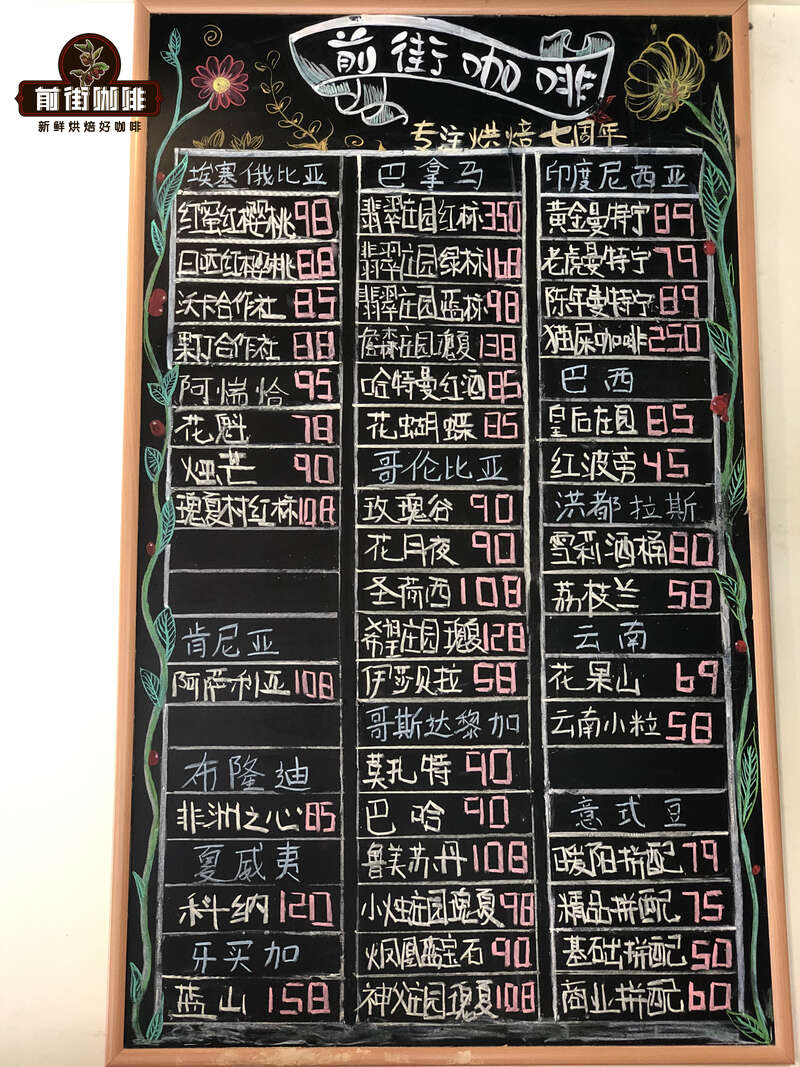
Considering its scarcity and high price, Front Street does not recommend drinking kopi luwak. Although genuine kopi luwak has a good flavor, coffees from other producing countries are also excellent. For those who like floral flavors, Front Street Panama Geisha coffee is recommended, one of the most expensive coffees in the world; for those who like fresh, slightly acidic coffee, Front Street Ethiopia Huakui coffee beans are recommended, with notes like black tea and berries; for those who like a balanced nutty and caramel flavor, that is, coffee that is neither sour nor bitter, Front Street Brazil coffee beans are recommended; if you still love the solid, full-bodied taste of Indonesian coffee, it is suggested to buy the highest-grade Front Street Golden Mandheling coffee. Through multiple hand-sorting, the defect rate of the coffee beans is minimized, making the coffee aroma clearer and the aftertaste better. All the above coffee beans can be purchased at Front Street stores and the Front Street Tmall flagship store.
The above content is compiled by CoffeeHunters, a coffee news website.


