








Coffee is a beloved beverage around the world and the most popular drink globally. When it comes to dedication to coffee, Japan undoubtedly stands out, as its coffee culture has a very long history, and Japanese coffee artisans are highly devoted. As another mainstream representative, Italian coffee is equally well-known for its consistently high popularity. For example, the Americano, latte, and cappuccino that many friends enjoy daily are all extensions of espresso. Today, Front Street Coffee will introduce this faction in detail and explore their characteristics.
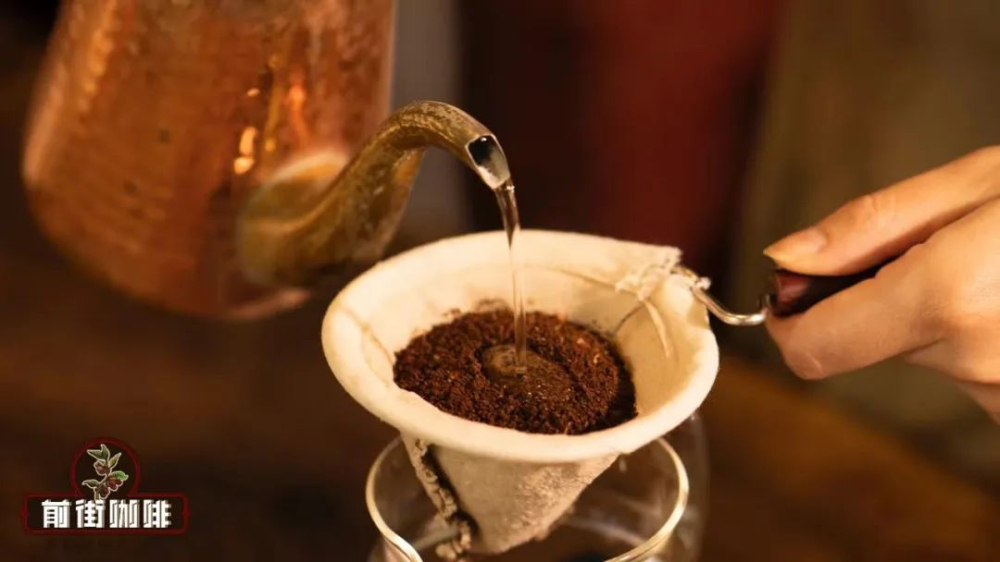


But no matter which of the above brewing methods is used, they are all more suitable for brewing dark-roasted coffee beans, because they were all developed around how to extract rich dark-roasted coffee. If you also like steady, rich, bitter coffee, then you might try these Japanese brewing methods. I believe that under these brewing methods, which are different from the usual, you will gain a unique and distinctive experience.
Early Italian Coffee Culture
Compared with Japanese coffee culture, Italy has a very long history of coffee drinking. Since 1580, coffee beans originally from Africa and the Middle East have entered Italy through the port of Venice. At first, it was only a beverage that the upper class could enjoy. Because it originated as a "Muslim drink" from the Middle East and Turkey, many Christian Italians called it "the devil's drink."

It was not until the early 17th century that Archbishop Clement VIII fell in love with this black thing and performed a baptism for coffee, officially designating it as a drink for Christians and giving it the name "the drink of God." Soon after, in 1645, Rome opened Europe's first café, also Italy's earliest shop specifically selling coffee. From then on, coffee spread rapidly throughout Italy.
The Italian contribution to coffee is not only in taste, but also in the development of equipment
In the early days, people used old-fashioned Turkish pots to brew coffee and then filtered it. With the arrival of the Industrial Revolution, it seemed everything was pursuing a fast pace, and Italians were no exception. In 1884, Angelo Moriondo successfully registered a patent in Turin, Italy, for a steam-powered machine used to make coffee. However, because this machine relied entirely on steam, the temperature was difficult to control, often making the coffee burnt and bitter, so it was later modified many times by different people.
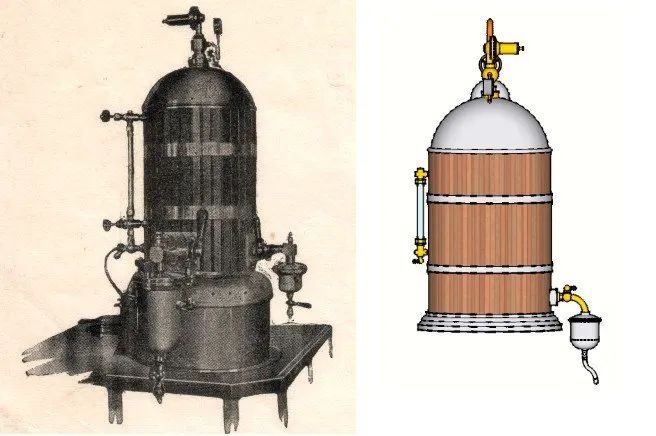
(Angelo Moriondo's Espresso Machine)
In the early 19th century, Milanese manufacturer Luigi Bezzara improved this patent and introduced the prototype of the world's first steam-pressure coffee machine. It not only had a detachable handle and a separable assembly head, but could also extract a cup of coffee in a short time using high pressure.


With the advent and application of the new machine, more and more Italians fell in love with the coffee quickly extracted by this machine. The word "espresso" was first included in an Italian dictionary around 1920, defined as: coffee made with a pressure machine or filter.
For those who tasted this "fast coffee" for the first time at the time, it did not taste good. But after learning that it was a method quickly obtained from steam pressure, Italians, as if injected with adrenaline, kept thinking about how to upgrade and modify this steam-powered coffee machine to make the coffee it produced taste better.
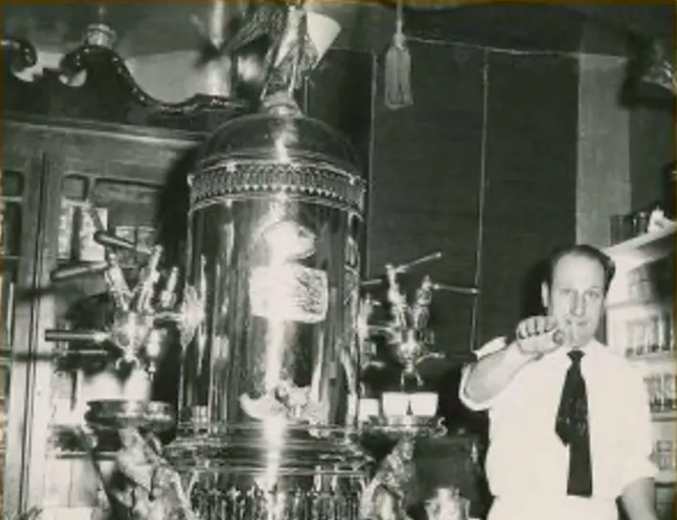
For example, Achille Gaggia, an engineer in Milan, managed in 1938 to add a lever to the coffee machine, which could forcibly increase the water pressure from 1.5 bar to 9 bar. This not only gave the coffee a layer of dark brown "crema," but also quantified the volume of the solution, making coffee quality more stable.
In this way, thanks to people's improvement and popularization of these machines, coffee-making methods underwent earth-shaking changes. Speed and convenience also became new indicators of service in every café, and that small cup of espresso began to evolve into the basic core of today's modern coffee system.

About Italians' Strong Tastes
When espresso reached its final form, coffee culture also kept pace. Compared with many other countries, Italian cafés focus on an efficient, fast-paced atmosphere, and this perfectly matches the small cup of espresso, allowing people coming and going to enjoy it quickly, then chat a few words with acquaintances and leave. Using brief leisure time to go to a café and order an espresso can be said to be one of Italians' most deep-rooted habits.
Walking into a café, they will directly tell the barista to bring a single espresso, mostly dominated by dark-roasted bitterness, generally with robusta added to make the crema richer. Some people add a little yellow sugar and stir before tasting, then drink it in one go—very satisfying. The price of an espresso in Italy is usually only 1 euro, equivalent to 7 RMB, making it a very popular drink.
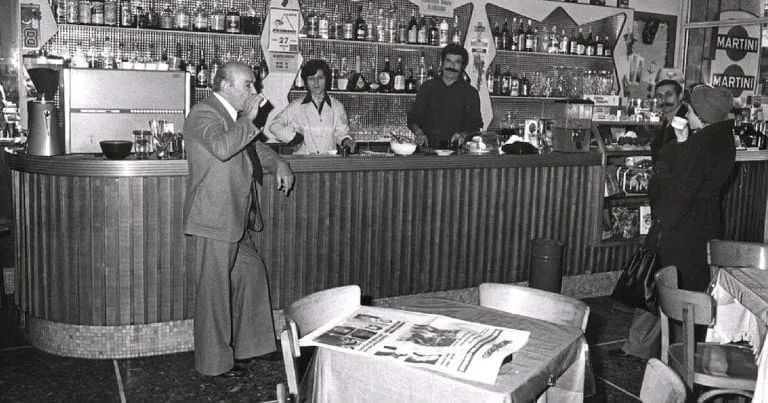
You should know that in the eyes of most Italians, only espresso is "real" coffee, because compared with those lighter-roasted specialty coffees that emphasize a single origin, they are more accustomed to a rich, full-bodied, heavy, even bitter taste. It is said that in Italians' belief, coffee is "digestive" and has nothing to do with refreshment, so after every meal, if there is no cup of espresso, they feel as if something is missing.
It is not hard to see that the reason Italians are so fanatical about espresso is that they are loyal to their cultural roots. As Front Street Coffee mentioned above, Italy invented the espresso machine, which not only made the production of coffee drinks faster, but forever changed the global coffee industry. Therefore, for the Italian people, espresso is an important part of national identity and also makes Italy appear different from the rest of the world.

So if you order an iced Americano in an Italian café, will you get beaten up?
Although most traditional Italians still stick to their drinking habits, as the Italian coffee system has become popular worldwide, coffee-drinking styles in many countries and regions have also developed their own schools. Out of respect for others' dietary habits, some local Italian baristas will also try their best to satisfy foreign tourists' needs if they want an iced Americano.

(espresso + ice cubes + water)
Of course, it cannot be ruled out that there are still many "stubborn factions" who only serve espresso. When you ask them for an iced Americano, chances are you will get a "side-eye," and then they will bring you a combination like this. (Front Street Coffee is joking; any resemblance is purely coincidental.)
The above content is compiled by CoffeeHunters, a coffee news website.


