







As the core production region for domestic Chinese coffee, Yunnan's coffee bean quality and grading system have always attracted much attention. From the perspective of Front Street Coffee, this article systematically reviews the history of coffee cultivation in Yunnan, the current state of varieties, and the existing grading standards, and takes a deep look at the opportunities and challenges Yunnan coffee faces on the path to specialty coffee. At the same time, drawing on its own cultivation experience in Lincang, Yunnan, Front Street recommends representative washed and natural Yunnan small-bean coffees, offering coffee lovers a reference for understanding the regional taste of Yunnan.
For more specialty coffee knowledge, please follow: Front Street Coffee (Frontsteet Coffee)
As coffee beans produced in our own country, Yunnan coffee is, in Front Street's view, very much worth trying, so Front Street has also added washed Yunnan small-bean coffee to its everyday-bean series so everyone can taste the flavor of the region. Some friends have also asked Front Street whether Yunnan coffee actually counts as specialty coffee, and to answer this question Front Street needs to start with the development of Yunnan coffee.
Yunnan Coffee in the Past
Yunnan coffee is also called Yunnan small bean, because the coffee grown in Yunnan is Arabica, which belongs to the small-bean category, distinguishing it from the medium-bean Robusta coffee grown in Hainan.
Yunnan's coffee cultivation began in 1904, when the French missionary Théodore Monbeig introduced the first coffee tree to Zhugula Village in Binchuan, Yunnan. The first planting truly for commercial purposes came in 1937, when the patriotic overseas Chinese Liang Jinshan brought coffee seeds back from Myanmar and began raising seedlings near Lujiangba in Baoshan. By 1952, after the founding of New China, large-scale coffee cultivation was officially developed under the leadership of agricultural academy expert Ma Guojin, with the coffee produced used to supply the Soviet Union.
Yunnan coffee truly entered the international market starting in 1988, when Nestlé established a branch in China. Not only did this introduce the high-yielding, disease-resistant Catimor variety, it also promised to purchase Yunnan coffee beans as raw material at the then-current U.S. futures price. Subsequently, brands such as Starbucks and Maxwell also set up facilities in Yunnan to purchase green beans. These moves further expanded Yunnan's coffee planting area and increased the enthusiasm of coffee farmers.
The Current State of Yunnan Coffee
Under Nestlé's commercial influence, the vast majority of coffee varieties grown in Yunnan are Catimor. Catimor is a hybrid of Caturra and Timor, carrying one-quarter Robusta genes, which improves disease resistance and guarantees yield, but its flavor is not as good as that of pure Arabica varieties. In addition, farmers habitually use rough green bean processing methods, so the quality of the coffee produced is not high either, and more of it flows to the bulk commodity market as raw material for instant coffee or cheap blends. So when we compare Yunnan coffee beans with already very mature coffees such as Ethiopian or Panamanian coffee, there will of course be a certain gap.
Of course, Yunnan also has specialty coffee beans with better flavor, but they account for only a very small portion of Yunnan coffee beans. So returning to the question raised earlier by Front Street, Yunnan certainly has specialty coffee, but not all of it is at specialty grade. Overall, to catch up with the international specialty coffee level, coffee people still need to work hard.
Yunnan Coffee's Grading System
Compared with other mature coffee-producing regions, Yunnan's coffee grading system is still not sufficiently developed. Standards commonly used for classification include screen size, color, cleanliness, odor, and moisture content.
Based on screen openings of 6.5, 6.0, 5.5, and 5.0 mm, it is divided into five grades:
Grade 1: above 6.5 mm, plump and intact beans
Grade 2: 6.0-6.4 mm, plump, relatively uniform
Grade 3: 5.3-5.9 mm, relatively plump, slightly less uniform
Grade 4: 5.0-5.4 mm, contains broken beans, with intact beans accounting for more than 75%
Grade 5: below 5.0 mm, contains broken beans, with intact beans accounting for more than 30%
Color: glossy, light blue, light green, and light white are considered good. Blackish brown and dull orange are inferior:
Grade 1: light blue, light green, light white, light yellow, uniform in color
Grade 2: light blue, light green, light white, light yellow, slightly inferior in color
Grade 3: light blue, light green, light white, light yellow, even more inferior in color
Grade 4: slightly yellow, with a small amount of brown
Grade 5: mottled and mixed in color
Cleanliness: containing no impurities or only a small amount of impurities is considered good:
Grade 1: more than 70% silver skin removed, no impurities
Grade 2: more than 65% silver skin removed, no impurities
Grade 3: more than 60% silver skin removed, no impurities
Odor: fermented and spoiled, with pale red or brown indicating sourness, and sour odor or other off-odors being undesirable.
Moisture: moisture content not exceeding 12%.
In order to maximize the interests of the many coffee farmers and coffee enterprises and to further enhance Yunnan coffee's international market voice and competitiveness, Pu'er City established the Yunnan International Coffee Exchange (YCE). In 2019, combining the systems of the Specialty Coffee Association (SCA) and the Coffee Quality Institute (CQI), YCE planned a new grading system for traditionally washed Yunnan small-bean coffee, and coffee farmers all grade and quote prices according to this standard.
Recommended Yunnan Small-Bean Specialty Coffee
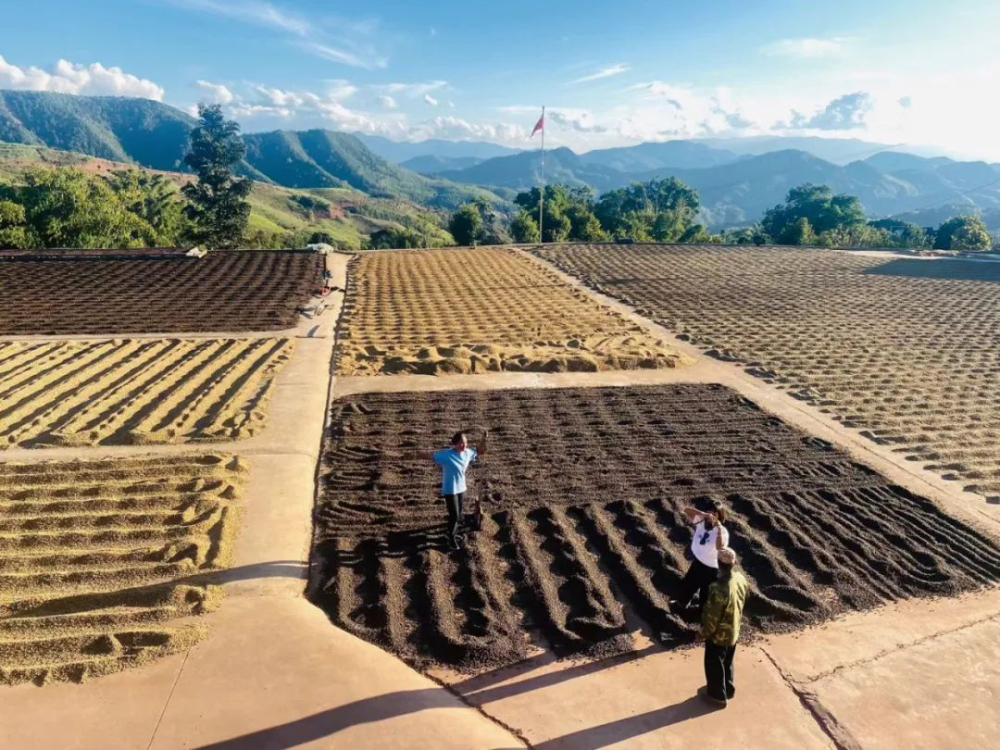
If Yunnan coffee is to keep progressing and developing, coffee people first need to understand its basic flavor before they can help improve coffee quality. Therefore, Front Street specifically selected washed Yunnan small-bean coffee as the representative face of Yunnan. Front Street believes that in the washed processing steps, the mucilage layer is completely removed from the green beans before drying, which better highlights the coffee's own aroma in the cup, which is what we call the "taste of Yunnan."
In the Yunnan coffee section of Front Street's bean list, there is also a natural-process coffee bean named after us, "Front Street 2013." Front Street had already thrown itself into the Yunnan production region many years earlier, beginning coffee cultivation in Lincang, Yunnan, in 2013, and also selected the ancient, pure Arabica variety Typica. Because Typica is weak and poor in disease resistance and requires a great deal of care in management, the first harvest finally came in 2020, using natural processing.
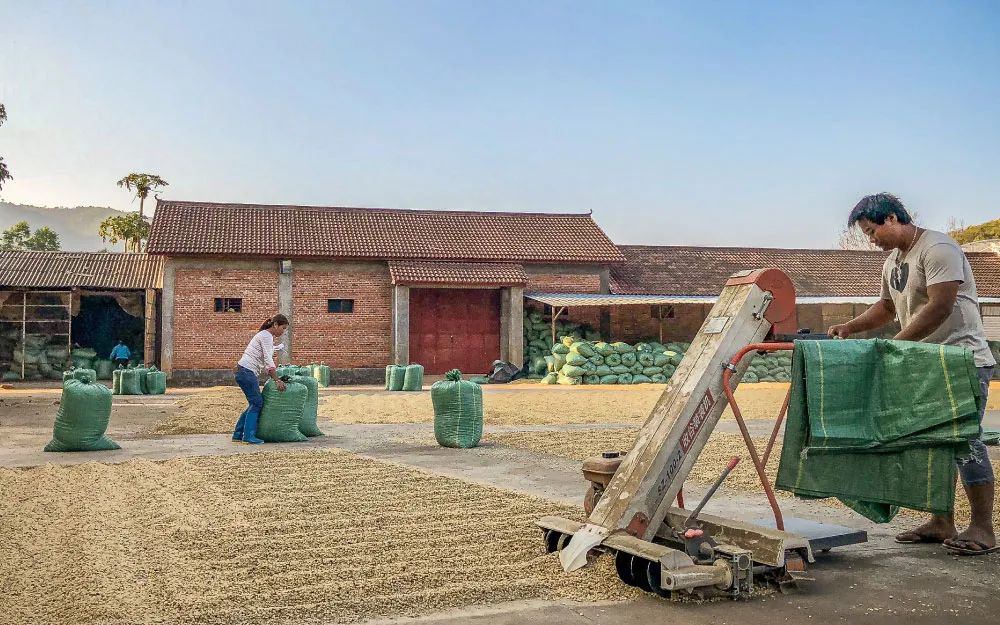
Front Street believes that the flavor profile of Yunnan coffee should be neutral, that is, having both acidity and a rich bitterness, so for the roast level Front Street chose a medium roast. Through cupping, this Front Street 2013 coffee bean presents aromas of plum, dried fruit, chocolate, and nuts, with the various flavors properly integrated.
Front Street Coffee (FrontStreet Coffee) Pour-Over Recommendation
Dripper: hario v60
Dose: 15g
Water temperature: 90°C
Grind size: 75% passing a No. 20 sieve
Water-to-coffee ratio: 1:15
Three-stage pouring: wet the coffee bed with twice the amount of water as coffee grounds to form a dome and let it bloom for 30s, then pour in a thin stream in circles from the inside out until 125g, pause, and when the coffee bed drops to half the height of the dripper, continue pouring the third stage in the same thin stream until 225g, then wait until all the coffee liquid has finished filtering and remove the dripper; the total time is about 2 minutes.
The above content is compiled by CoffeeHunters, a coffee news website.


