







As camping becomes increasingly popular among the younger generation, many people bring along coffee gear that can be heated directly on a portable gas stove to enhance the outdoor atmosphere. As a result, the moka pot has become one of the must-have coffee tools for many camping enthusiasts.Moka PotIts popularity stems from two things: it can be heated directly, and it's simple to use without requiring any additional equipment. A gas stove, a packet of pre-ground coffee, and amoka potare all you need to leisurely enjoy a day while taking in the outdoor scenery.
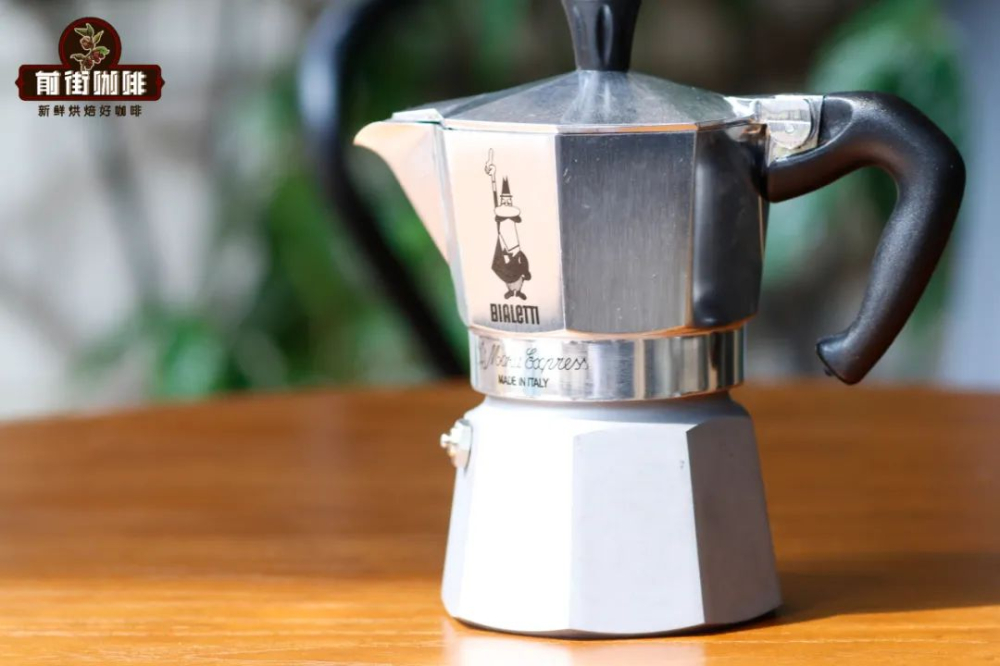
With no complicated steps and no need for professional coffee-making knowledge, you can easily brew a cup of coffee whether outdoors or at home. It's currently the simplest pressure-based coffee extraction device on the market. Although the moka pot is called amoka pot, the coffee it produces isn't actually called mocha coffee! Mocha coffee generally refers to milk coffee with chocolate added, or coffee beans exported from the port of Mocha. The coffee extracted from a moka pot, on the other hand, is a type of espresso.
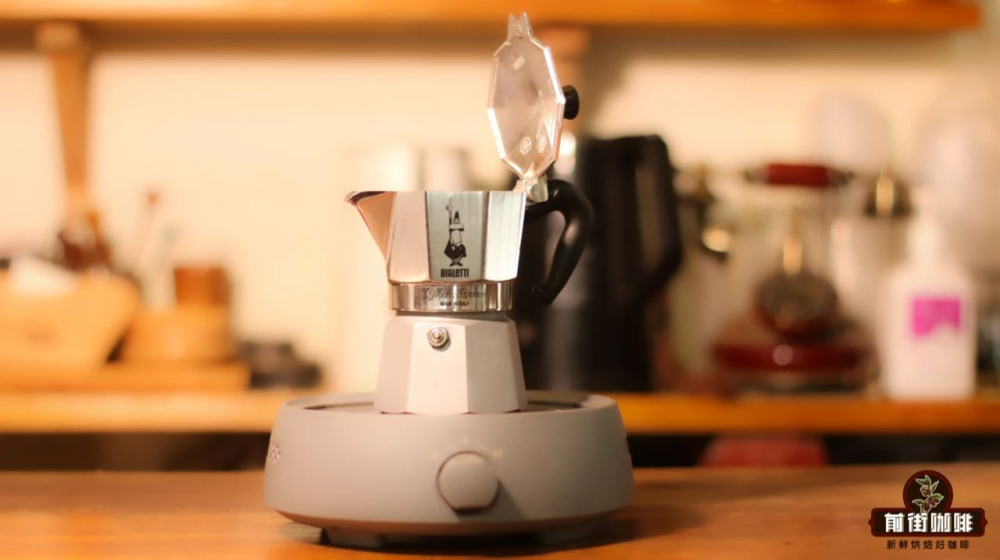
The moka potis composed of several parts. The upper chamber is called the coffee collector, and the column in the middle is called the small column. At the bottom of the collector there's a perforated filter plate, which serves to filter out the residual grounds after extraction. Around the filter plate there's a gasket that provides a seal.
The middle section is the important container for holding coffee grounds — the funnel. The funnel here works in the opposite way from normal: water flows from bottom to top. Its purpose is to hold coffee grounds rather than to channel water.
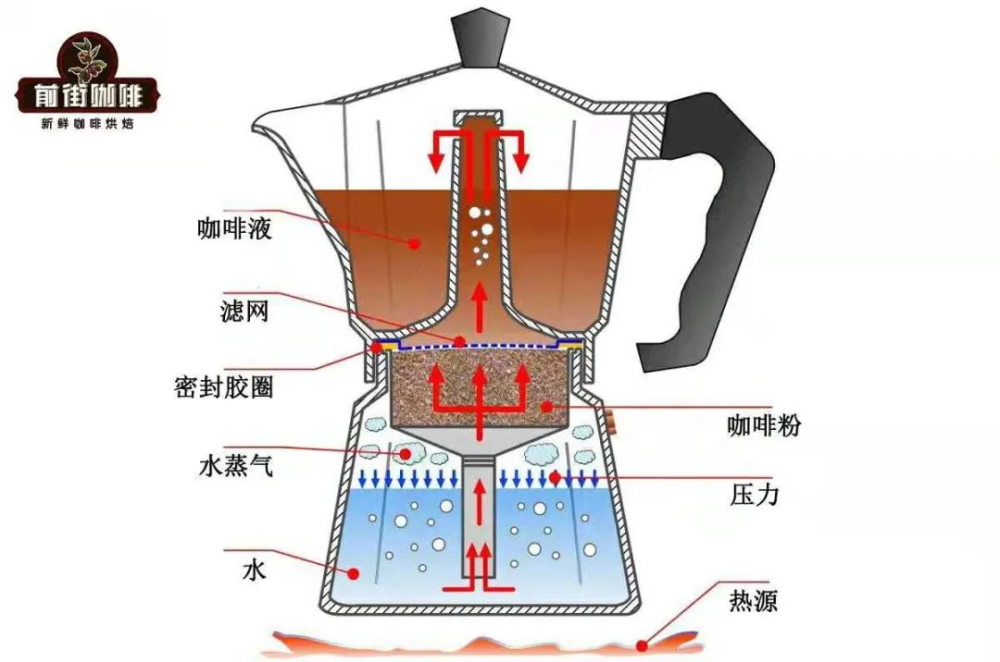
The lower chamber is the heating vessel, used to hold clean water and heat it. On the wall of the heating vessel there's a nut-like metal component called the valve — a safety device installed to release pressure when internal pressure exceeds the limit during heating. If the valve fails, there's a risk that the upper and lower chambers may separate during heating, and the extremely hot coffee grounds/liquid could splatter in all directions, causing personal injury and property damage.
Therefore, you must not cut corners when buying a moka pot!!! Front Street Coffee recommends the Bialetti brand of moka pots, which is the oldest manufacturer of moka pots currently on the market. However, due to its great fame around the world, there are many counterfeit products on the market, so be sure to buy from official flagship stores when purchasing. Prices are generally 499+.
Anyway, back to the point! Not all coffee beans are suitable formoka potextraction! Since it's a directly heated coffee device, the brewing process reaches temperatures as high as 100°C while generating pressure, and water rapidly passes through the coffee bed. If you use light-roast coffee beans, their inherent acidity extracted under high-pressure conditions tends to produce a sharp, sour taste. Also, because light-roast beans contain less carbon dioxide than dark-roast beans, the resulting espresso struggles to produce golden crema.
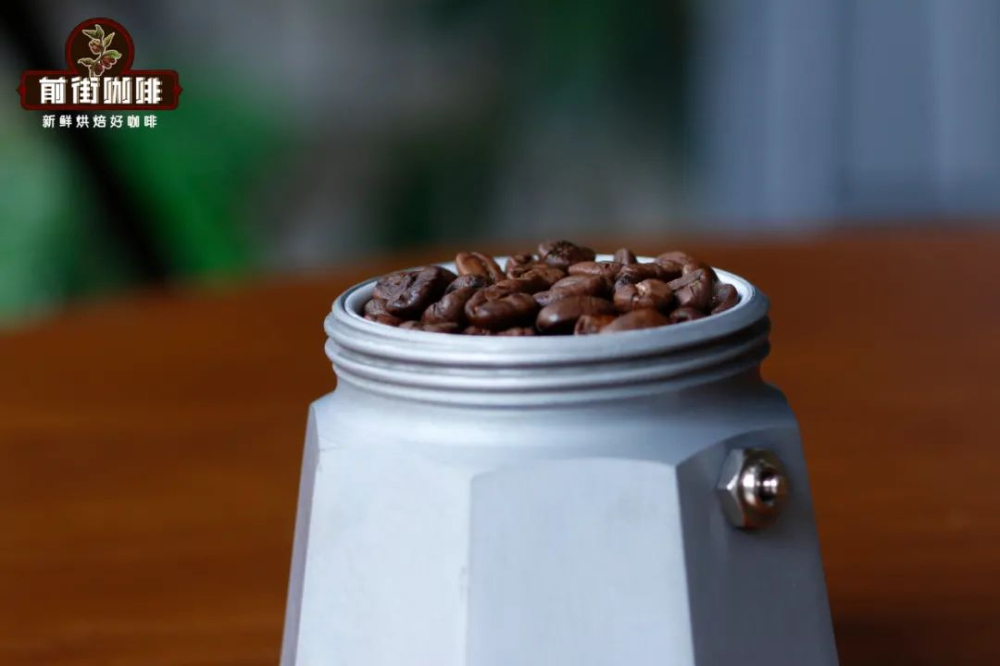
The formation of espresso crema occurs when the carbon dioxide in the coffee grounds, due to excessive pressure, causes water to become supersaturated with CO2, so the carbon dioxide cannot be released and instead dissolves directly into the coffee liquid. The presence of crema makes espresso fuller and rounder.
Therefore, Front Street Coffee recommends using medium-dark to dark roast single-origin or blended coffee beans. For example, Front Street Coffee Brazil Queen's Estate coffee beans (with notes of nuts and cocoa), Front Street Coffee Indonesia PWN Golden Mandheling coffee beans (with notes of herbs and spices), and Front Street Coffee Sunflower Warm Sun blend coffee beans (with notes of whiskey and vanilla cream) are all very suitable for making moka pot coffee.

Using a moka pot is also very simple — just be careful not to burn yourself!!!!!
1. Add hot water to the lower chamber, not exceeding the water level of the safety valve, to avoid accidents caused by failure to release pressure.
2. Fill the filter with ground coffee. Use a grind size based on pour-over coarseness; if you want a stronger brew, grind finer. Level off the excess grounds, reassemble in the original position, and place a filter paper to improve cleanliness.
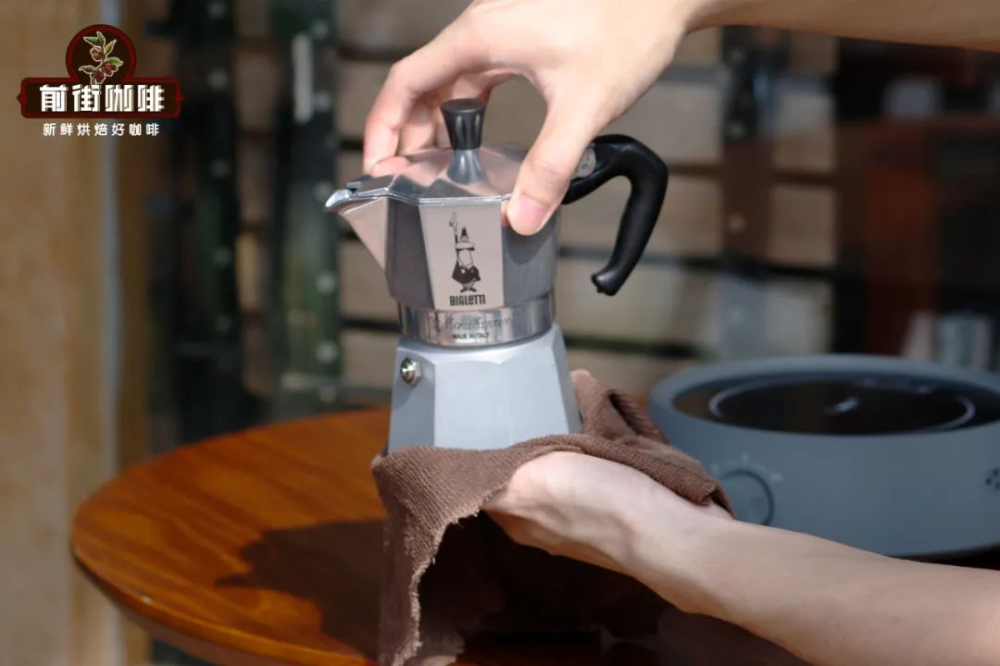
3. After assembling, put on the lid and heat using a heating device. Once the water boils, the water level rises and extracts the coffee.
4. Wait until a hissing sound is heard at the end of extraction — this means extraction is nearly complete. You can turn off the heat to end extraction. Total extraction time is about 5 minutes.
For professional coffee knowledge exchange and more coffee bean information, please follow Coffee Workshop (WeChat public account: cafe_style)
For more specialty coffee beans, please add the personal WeChat of Front Street Coffee: qjcoffee
The above content is compiled by CoffeeHunters, a coffee news website.


