








The word mocha appears extremely frequently in the coffee world, but what exactly does it refer to? Friends new to coffee often confuse mocha coffee beans, mocha coffee drinks, and the moka pot. In fact, their origins may span one or two centuries, and they have no direct derivative relationship with each other, yet they all coincidentally share the name "mocha." To clarify this relationship, the clue traces back to Yemen's Port of Mocha. This article will dissect the true meanings of these three "mochas" from three angles: historical origins, flavor characteristics, and brewing principles, and include Front Street Coffee's practical advice on bean selection for the moka pot.

For more specialty coffee knowledge, welcome to follow our WeChat public account: Front Street Coffee (FrontStreet Coffee)
Newcomers just stepping into the coffee world are often baffled when they encounter terms with "mocha" in them. Those who start with espresso-based coffee and those who start with single-origin coffee have completely different understandings of mocha. Below, let's sort out the connections among mocha coffee beans, mocha coffee, and the moka pot.
Mocha
At face value, all three seem inseparable from mocha, easily leading people to think it is mocha coffee extracted using mocha coffee beans and a moka pot. However, this inference does not hold up—their introductions are separated by as much as one or two centuries. The only common clue points to Yemen's Mocha. Next, let's explore why they are all named after mocha.
Mocha Coffee Beans
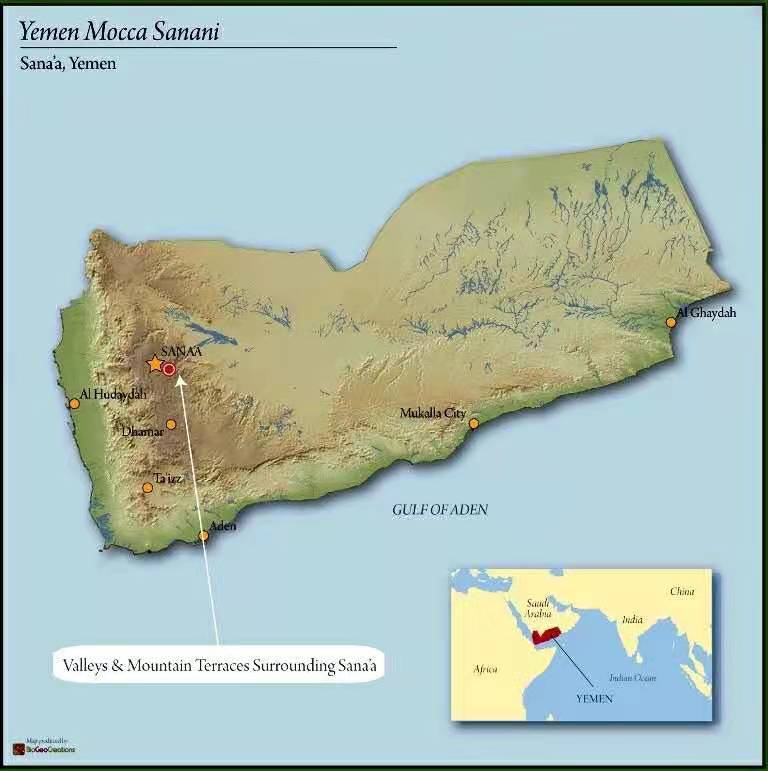
From the 15th century onward, Yemen's Port of Mocha remained a key port on the Red Sea outlet for more than three hundred years, with a status comparable to today's Port of Shanghai. Most global maritime trade goods had to pass through here. Mocha itself did not grow coffee; nearby coffee mainly came from the high-altitude areas of central Yemen's mountains. After these coffees were shipped from Port of Mocha to various European countries, they were widely praised. At the time, people only knew the goods came from Port of Mocha, so they called it "mocha coffee (beans)." Thereafter, any coffee exported from Port of Mocha was sold under the label "mocha coffee."
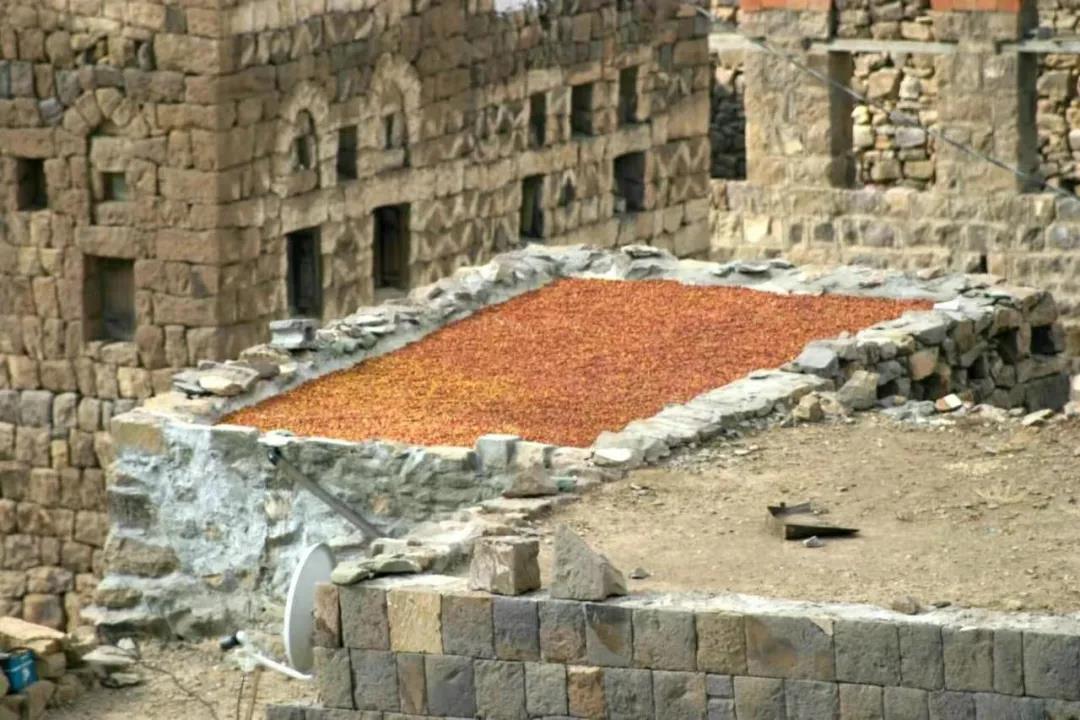
To this day, Yemeni Mocha remains one of the world's precious and rare coffees. In recent years, Yemen's situation has remained unstable, and its coffee-growing industry has suffered severe damage, with only a small amount of Yemeni coffee able to pass through the flames of war to reach the market each year. A few years ago, Front Street was fortunate to obtain a bag of Mokha Mattari coffee, produced in Yemen's Bani Matar region, from which its name derives. Yemeni coffee packaging is also distinctive—not the common burlap sack, but made of fine-mesh woven fabric similar to flour bags.
Yemeni Mocha has diversified into multiple styles depending on the growing region, such as Mattari with chocolate notes and acidity, and Sanani mocha with both rugged character and fragrance. Overall, however, its rich chocolate flavor is the core characteristic.
Mocha Coffee
Understanding mocha coffee (Coffea Mocha) as a drink in the espresso family, it is made by combining espresso, milk, and chocolate sauce (or chocolate powder), with some cafés also using chocolate chunks instead of chocolate sauce or powder. Melding chocolate into espresso, then pouring in steamed milk, is the meeting of coffee and cocoa—rich in aroma and full in sweetness.
This seems to have no direct connection to mocha. But espresso mocha coffee can be traced back to 18th-century Italy. Although more authoritative historical sources are currently lacking to corroborate the origin of its name, we may boldly speculate: in the 18th-century coffee trade landscape, the Dutch had already brought coffee to Southeast Asia, and the French had introduced coffee to South America. Mocha's monopoly on coffee had been lost, and coupled with the influence of the Ottoman Empire's mid-to-late period rule, mocha coffee's market share continued to shrink.
From this, it is not hard to infer that as less and less mocha coffee flowed into Europe, Italians, in order to replicate the chocolate charm in mocha coffee beans, added chocolate sauce to espresso and paired it with milk, blending a flavor close to mocha coffee beans. Therefore, the birth of espresso mocha coffee was most likely an attempt to imitate the increasingly scarce mocha coffee beans. Moreover, since mocha coffee beans held a status in people's minds comparable to today's Geisha coffee beans, naming a similarly flavored drink "mocha coffee" could better showcase its class.
As espresso coffee culture spread globally, espresso mocha coffee (chocolate milk coffee) also became an indispensable member of the espresso family.
Moka Pot
The moka pot actually has little to do with Port of Mocha. Its inventor was Alfonso Bialetti, and among the three "mochas" it was born the latest (1933). It is a traditional Italian household brewing device, not originating from Yemeni Mocha, but its influence cannot be underestimated—it is said every Italian household must have one.
The moka pot consists of three parts: the upper chamber, the filter basket, and the base. The lower chamber holds water, the filter basket holds finer-ground coffee, and the upper chamber receives the extracted coffee liquid. The moka pot's extraction principle is not complicated: it relies on the steam pressure generated in the lower chamber. When the pressure is sufficient to penetrate the coffee bed, hot water is pushed up into the upper chamber, brewing a rich and aromatic coffee. Although its pressure (1.5-2 bar) is vastly different from an espresso machine (9 bar), it can still extract coffee oils (crema), and the mouthfeel is quite full-bodied.
So why is the moka pot called "moka pot"? In English it is written as Moka pot. The most common explanation is: since the first batch of coffee entered Venice in the 17th century, the words mocha and coffee have been closely linked, and in northern Italy mocha is almost synonymous with coffee. Therefore, the moka pot can actually also be called a coffee pot, meaning a device that lets you brew a rich cup of coffee at home.
Since the moka pot uses pressure-based extraction, Front Street recommends prioritizing medium-roast coffee beans for brewing. If you prefer a balanced mouthfeel, we recommend Front Street Brazil Cerrado, Front Street Colombia Huila, and Front Street Bird of Paradise;
If you are fond of a solid, rich coffee aroma, we suggest buying the highest-grade Front Street Golden Mandheling drip coffee bags. These beans undergo multiple rounds of hand sorting, minimizing the defect rate and making the coffee aroma clearer with a lasting sweet aftertaste; but if you dislike excessive bitterness and want to drink coffee with fruity notes, it is best to buy Front Street Strawberry Candy espresso. All the above freshly roasted coffee beans can be purchased at Front Street stores and the Front Street Tmall flagship store.
The above content is compiled by CoffeeHunters, a coffee news website.


