







Blue Mountain coffee has always held a place in the specialty coffee world, winning the favor of generations of coffee lovers with its balanced, rich flavor. However, products labeled "Blue Mountain flavor" keep appearing on the market, while few truly understand Blue Mountain coffee's origin rules, grading, and certification system. This article starts from the geographical environment of the Blue Mountains, systematically sorts out the strict definition of Blue Mountain coffee by the Jamaica Industry Board, explains in detail the criteria distinguishing Blue Mountain No. 1, No. 2, No. 3, and peaberry, and introduces the traditional wooden barrel export practice and certificate of origin system for authentic Blue Mountain coffee. At the same time, Front Street Coffee will also share the brewing parameters and flavor presentation of Blue Mountain coffee in its stores, helping readers fully understand the true face of this classic coffee.
For more specialty coffee knowledge, please follow: Front Street Coffee (Frontsteet Coffee)
Not long ago, remarks made online stirred up quite a wave in the coffee community. A barista said bluntly in a video: "Don't ask whether a coffee shop has Blue Mountain coffee when you go in—it will expose that you don't understand coffee." These words sparked a lot of discussion. Although Blue Mountain coffee may not necessarily be the best in the world, it can absolutely serve as a benchmark for judging good coffee.
Over decades, Blue Mountain coffee has firmly captured the hearts of generations of coffee connoisseurs with its balanced, rich, and solid flavor traits. It is a very classic coffee that is also worth savoring carefully. Drinking Blue Mountain coffee is not out of date, and drinking Blue Mountain coffee certainly does not mean you don't understand coffee~
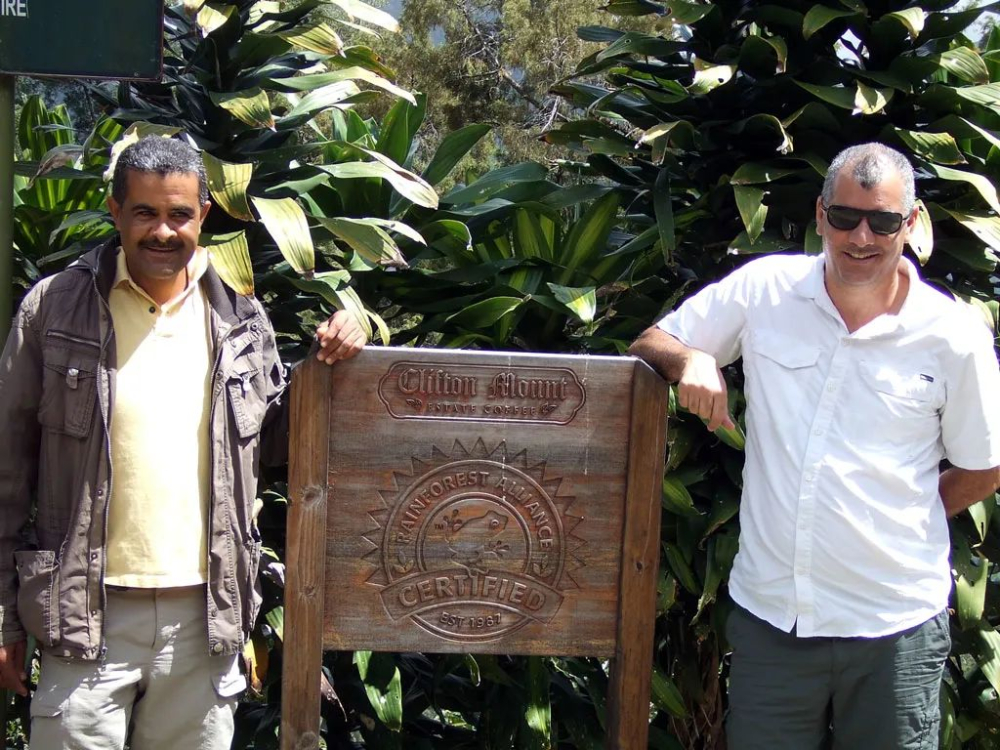
Front Street Coffee has always been a loyal supporter of Blue Mountain coffee! In order to let everyone taste authentic Blue Mountain No. 1 coffee at a reasonable price, Front Street chose Clifton Estate, located in Jamaica's Blue Mountains and with a long history of coffee cultivation. This estate has been engaged in coffee planting and production since around 1750, and it is also the only coffee estate in Jamaica's Blue Mountains to obtain Rainforest certification (this environmental certification is issued only to regions that meet sustainable agriculture system standards).
What exactly is Blue Mountain coffee?
Blue Mountain coffee is recognized as one of the world's most outstanding coffees. The Blue Mountains are located in the eastern part of the island of Jamaica. When the weather is clear, the azure waters of the Caribbean Sea reflect brilliant blue light among the peaks under direct sunlight, which is how the Blue Mountains got their name. The highest peak of the Blue Mountains is 2256 meters above sea level, the highest point in the Caribbean region, and is also a famous tourist destination.
However, not the entire mountain range is suitable for growing cash crops. The Jamaican government clearly stipulates that areas above 1700 meters above sea level belong to nature reserves, where planting coffee and other cash crops is prohibited. Therefore, the cultivation area for Blue Mountain coffee is concentrated between 910 and 1700 meters above sea level.
This area lies within the coffee belt and has fertile volcanic soil, fresh air, an unpolluted environment, and a humid climate, with frequent fog and rain year-round, an average annual precipitation of about 1980 millimeters, and temperatures maintained at around 27 degrees Celsius. It is precisely these natural conditions that give rise to the world-renowned Jamaican Blue Mountain coffee.
This coffee has all the characteristics of high-quality coffee. It is not only rich and aromatic in taste, but also, because its sweet, acidic, and bitter notes are balanced just right, it has almost no bitterness and leaves only a moderate and perfect acidity. Through cupping, Front Street Coffee found that Blue Mountain coffee with a medium-dark roast level shows an extremely balanced and rich flavor, with dark chocolate, roasted nuts, and subtle fruit acidity interwoven, each flavor complementing the others without stealing the show.
Can all coffee grown in the Blue Mountains be called Blue Mountain coffee?
According to the classification standards of the CIB (Jamaica Industry Board), only coffee grown between 910 and 1700 meters above sea level can be named "Jamaica Blue Mountain Coffee." Coffee produced between 460 and 910 meters above sea level can only be called "Jamaica High Mountain Coffee," while coffee below 460 meters is called "Jamaica Supreme Coffee."
For Jamaican Blue Mountain coffee, the CIB also classifies grades according to bean size and defect rate after processing, in order: Blue Mountain No. 1, Blue Mountain No. 2, Blue Mountain No. 3, and Blue Mountain Peaberry. At present, the Blue Mountain coffee imported into China is mainly Blue Mountain No. 1 grade~
Blue Mountain No. 1 coffee beans require 96% of the coffee cherries to reach a size of 17 screen or above, and the defect rate after processing must not exceed 2%;
Blue Mountain No. 2 coffee beans require 96% of the coffee cherries to reach a size of 16 screen or above, and the defect rate after processing must not exceed 2%;
Blue Mountain No. 3 coffee beans require 96% of the coffee cherries to reach a size of 15 screen or above, and the defect rate after processing must not exceed 2%;
Blue Mountain peaberry requires 96% of the coffee cherries to reach a size of 10 screen or above, and the defect rate after processing must not exceed 2%.
How can you identify authentic Blue Mountain coffee?
In supermarkets or convenience stores, we often see products labeled "Blue Mountain coffee flavor," and many coffee shops also use Blue Mountain-flavored blended beans to make coffee, but these are not authentic Blue Mountain coffee, and may even have no connection to Blue Mountain at all.
The reason a large number of Blue Mountain-flavored coffees have emerged on the market is, on the one hand, that Blue Mountain coffee has extremely high recognition in the domestic market, and many people regard Blue Mountain coffee as synonymous with good coffee; on the other hand, early Blue Mountain coffee was scarce and expensive, so operators used blended beans combined with dark roasting to piece together a coffee close to Blue Mountain's taste based on its flavor characteristics.
Authentic Blue Mountain coffee, however, is not a blend. It is a single-variety coffee bean, using one of the oldest varieties in the Arabica line—Typica. The notable feature of this variety is that its flavor itself is extremely clean and serene.
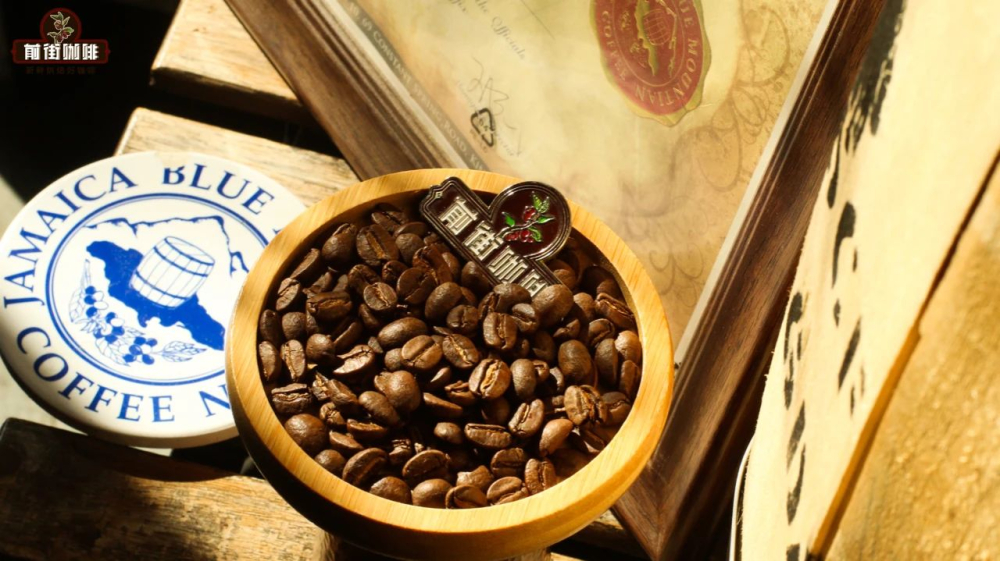
In terms of export, the Jamaican government stipulates that Blue Mountain coffee beans must be exported in wooden barrels, and it also has strict requirements and designated export standards, with certificates issued as proof. In Front Street Coffee's physical stores, related wooden barrels and certificates are on display~
There are three types of certificates:
(1) Quality certificate issued by the Jamaica Coffee Board.
(2) Authorized sales certificate issued by the Blue Mountain coffee producer.
(Blue Mountain coffee is distributed by 4 processing producers licensed by the Jamaican government, and exported by 16 licensed exporters.)
(3) Certificate of origin for Jamaican Blue Mountain coffee.
Many people still cling to the fixed impression that Blue Mountain coffee is rare and expensive. Compared with today's coffee bean market, the price of Blue Mountain coffee beans is actually quite affordable. At Front Street Coffee, roasted Blue Mountain coffee beans are priced at 158 yuan/100g.
How should Blue Mountain coffee be brewed?
When Front Street Coffee makes Blue Mountain coffee in its daily store service, it uses the following parameters for extraction: Kono dripper, 88°C water temperature, 1:15 coffee-to-water ratio, 15g coffee dose, grind size (70-75% passing through a No. 20 standard sieve).
The brewing method is as follows: pour 30 grams of water in the first stage for blooming, with a blooming time of 30 seconds; in the second stage, pour to about 125 grams of water, then wait for the coffee liquid to drop; when it has dropped by half, pour the final stage of water up to 225 grams, and end extraction after all the coffee has dripped through. The total extraction time is generally about 2 minutes and 10 seconds.
Front Street Coffee Jamaican Blue Mountain No. 1 coffee flavor presentation: rich dark chocolate and nutty flavors, a creamy and smooth mouthfeel, and a balance of acidity, sweetness, and bitterness.
The above content is compiled by CoffeeHunters, a coffee news website.


