







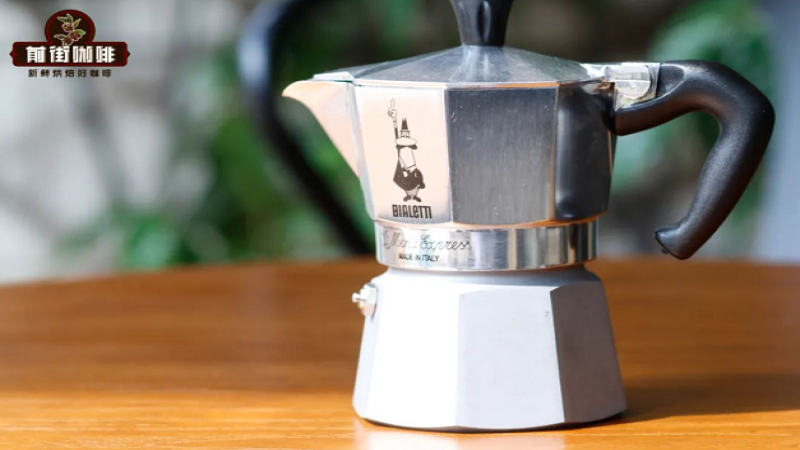
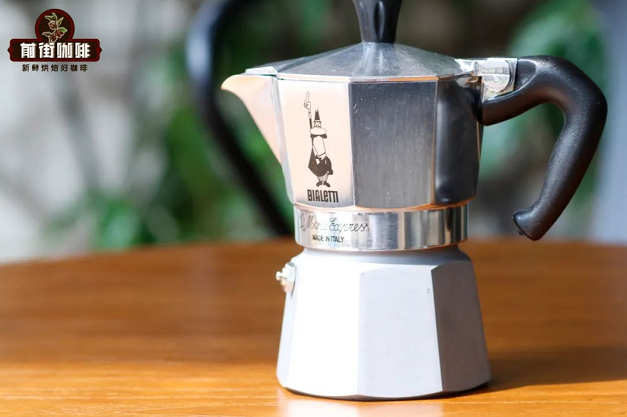
When you're used to drinking coffee made with commercial coffee machines outside, it's not a simple matter to recreate the taste of a coffee shop at home. Due to a lack of funds and space, you have no choice but to use a moka pot to brew the rich, full-bodied coffee you want. But once you have the tool in hand, how should you adjust the coffee grounds used in a moka pot to produce a cup of coffee that makes everyone give a thumbs-up after drinking it?
First, we need to understand the history and brewing principle of the moka pot before we can understand how to correctly use it to brew a rich cup of coffee.
In the 1920s, the Italian Alfonso Bialetti drew inspiration from a washing machine, seeing that in the middle of the washing machine there was a metal tube connecting the upper and lower layers, and that heated soapy water gushed upward through the central pipe and spread over the clothes. Through many experiments, Alfonso finally produced the world's first moka pot in the 1930s.
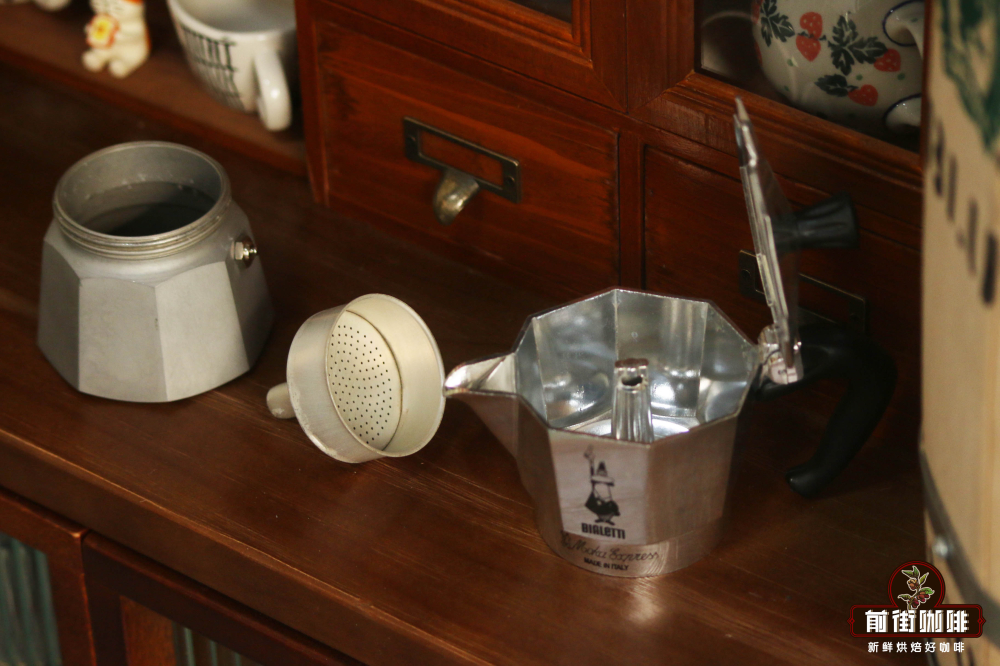
The principle of the moka pot is similar to that of the washing machine at the time. A certain amount of hot water is placed in the lower chamber, the middle is filled with coffee grounds, and then the entire moka pot is assembled in order and placed on a heating device to be heated. When the hot water in the lower chamber boils, more steam is produced, forcing the hot water in the lower chamber through the metal tube, through the relatively compact layer of grounds in the middle, and continuing upward until the coffee liquid flows into the upper chamber.
Its convenience, speed, small footprint, and modern appearance made it look very fashionable at the time, and it became increasingly loved by the Italian people. Later, because Alfonso's son achieved mass production of the moka pot and put great effort into its appearance design and later advertising, this product became deeply engraved in the lives of the Italian people.
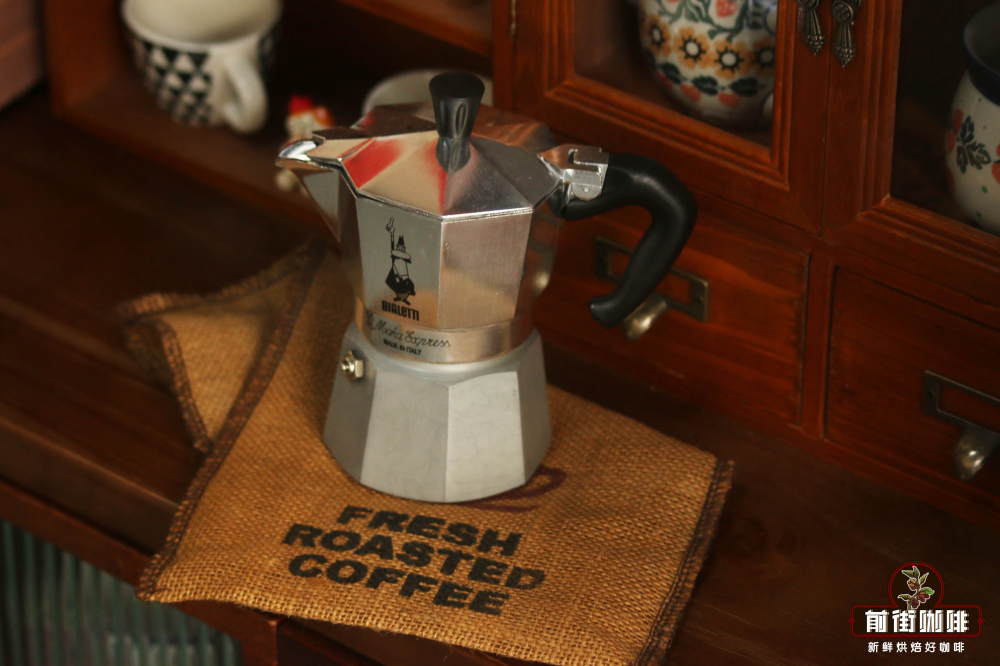
The convenience of the moka pot became known to more coffee lovers, and many friends online shared that they had brewed a cup of coffee with rich oils and a full-bodied taste using a moka coffee pot. Seeing this, many who had not yet bought a moka pot were itching to get one. And those who already had one were curious: how should you operate a moka pot to brew coffee? So, Front Street will first teach everyone how to use a moka pot.
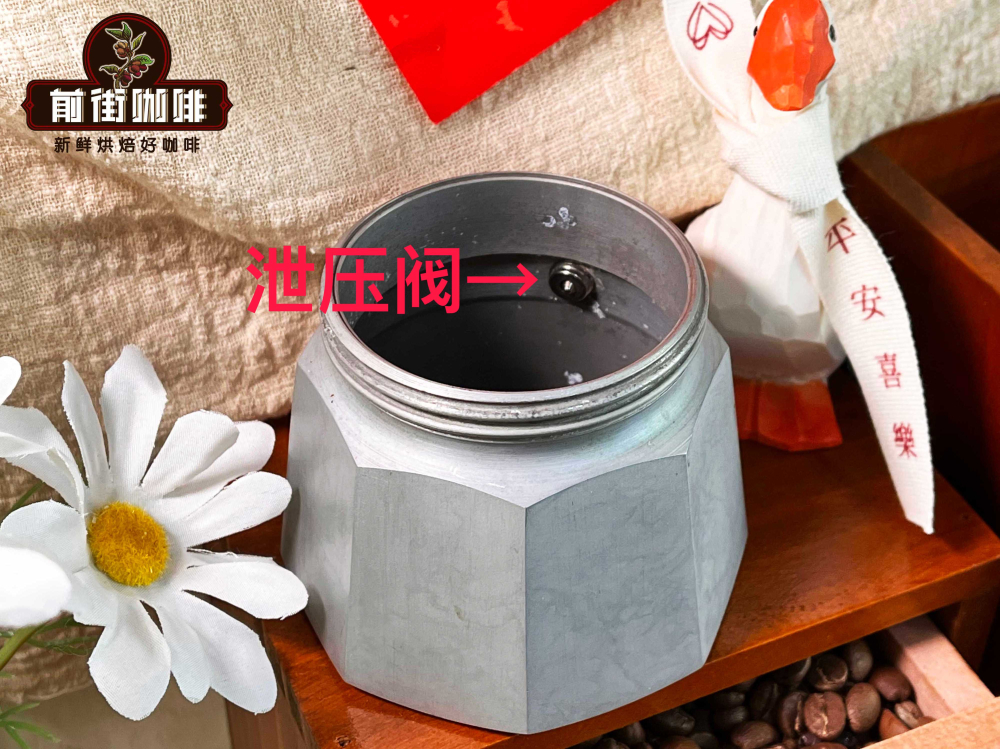
First pour hot water into the lower chamber up to 0.5 cm below the pressure relief valve, then pour the ground coffee into the middle filter basket, tapping gently from side to side so that the coffee grounds are distributed relatively evenly and levelly. Place the filter basket into the lower chamber, then screw the upper chamber tightly onto the lower chamber. Finally, place the entire moka pot on a heating device to heat.
When the moka pot rises to a certain temperature, it will make a sound similar to "woo woo." At this point, reduce the heat of the heating device and open the lid of the upper chamber. Soon, the coffee liquid will gush out into the upper chamber; pick up the moka pot and turn off the heat source. Finally, you will have a cup of coffee with a strong aroma and a rich, full-bodied taste.
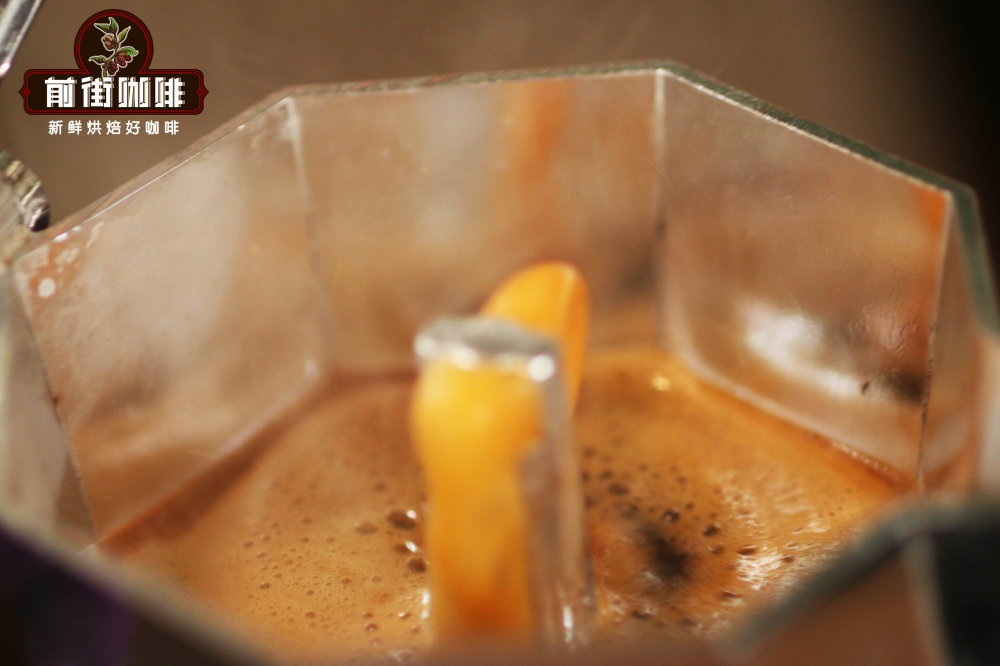
Some friends want to use a moka pot to brew the kind of coffee oils that only an espresso machine can produce, so they ask Front Street: how should the parameters be adjusted to present this stunning effect?
In fact, the oils in espresso are made up of countless carbon dioxide bubbles. When the coffee grounds are ground finer, the contact area between the hot water and the surface of the coffee particles increases, and the release of gas becomes more intense, thus creating that dense, golden layer of coffee oils.

Therefore, if you want to brew coffee liquid with rich oils using a moka pot, there are three solutions: coffee bean freshness, coffee bean roast level, and coffee ground particle size. And FrontStreet Coffee ships coffee beans freshly roasted within 5 days, and by the time they arrive they have gone through a 4- to 7-day resting period, right at their peak flavor. So, friends can start from the other two aspects.
One is to choose coffee beans with a darker roast level, and you can prioritize espresso blends, such as the Sunflower Warm Sun blend coffee beans that Front Street uses to make espresso. This is blended from 70% Honduras Sherry and 30% Ethiopian natural Red Cherry, with rich vanilla cream flavor and notes of wine aroma; in addition, if we like single-origin coffee, we can also use varieties intended for pour-over, such as Brazil Queen's Farm coffee beans.
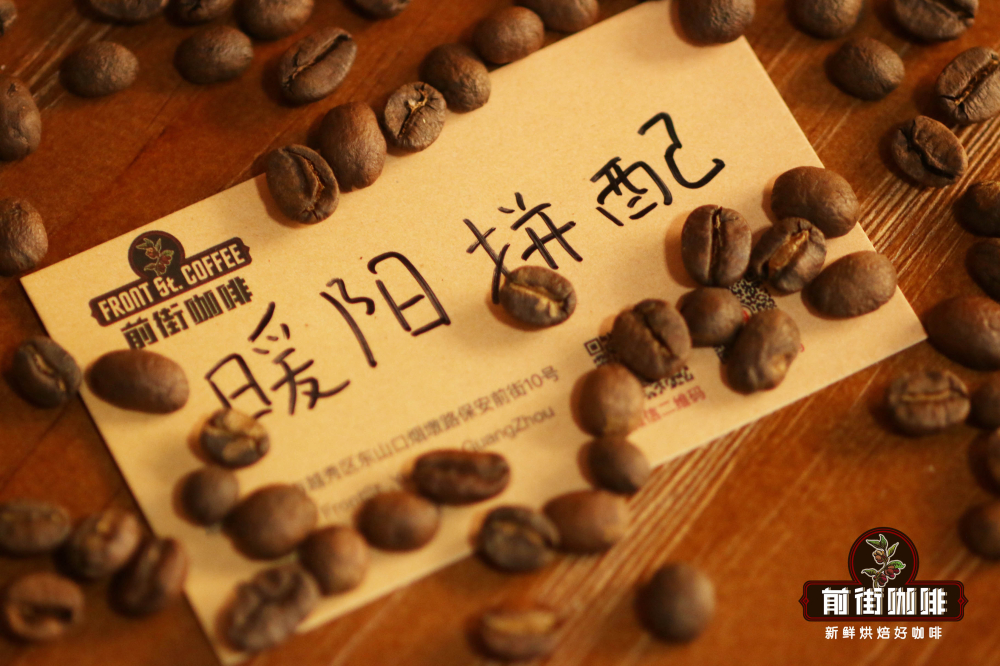
FrontStreet Coffee: Sunflower Warm Sun blend coffee beans
Region: Honduras & Ethiopia
Variety: Caturra, Catuai, Heirloom
Processing method: Fine washing + whiskey barrel fermentation & natural
The latter is a naturally processed Yellow Bourbon coffee bean from Queen's Farm. Naturally processed coffee beans are already superior to washed beans in aroma and sweetness, and with the addition of the Yellow Bourbon variety, the sweetness of this Brazil Queen's Farm coffee bean is even stronger. After brewing, it has a rich nutty and creamy profile, a full body, and overall balance.
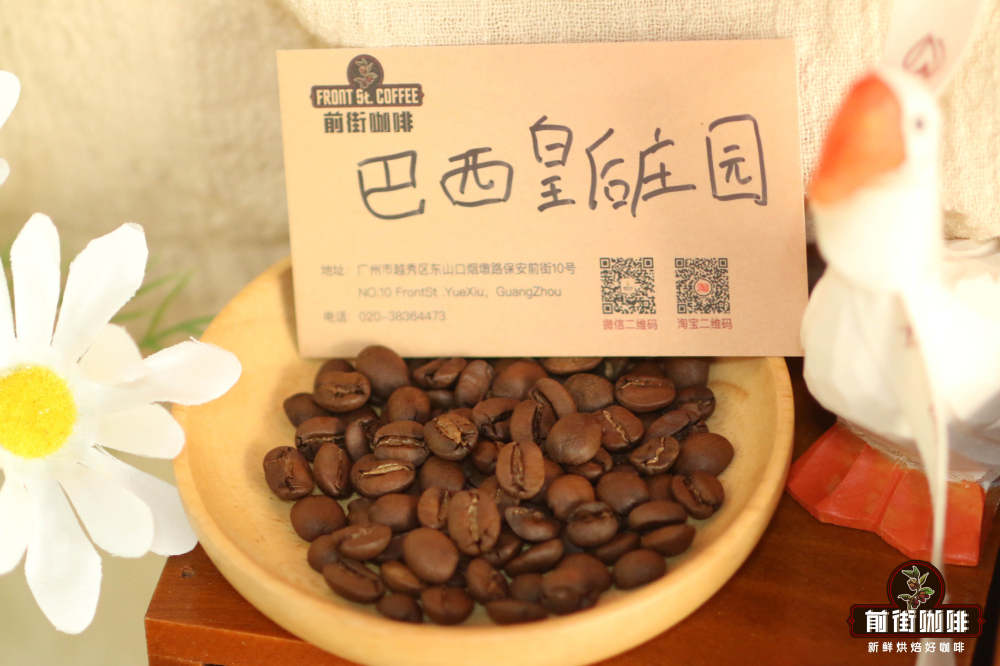
FrontStreet Coffee: Brazil Queen's Farm coffee beans
Region: Mogiana, São Paulo, Brazil
Farm: Queen's Farm
Altitude: 1400 meters—1950 meters
Variety: Yellow Bourbon
Processing method: Natural process
The second is to grind the coffee beans a little finer. Front Street suggests that the particle size of the grind used in a moka pot should be between 0.3 and 0.55 mm; simply put, it should be coarser than for an espresso machine. Because the particle size is very small, it is difficult for the naked eye to determine, so Front Street provides two methods here to determine the grind. The first is to buy a particle size ruler or moka-specific grounds for reference and comparison. The second is to determine the grind through continuous testing. When the coffee liquid gushes out like a fountain, it means the grind is too coarse and the water encounters too little resistance; when you hear the "woo woo" sound but the coffee liquid still shows no sign of rising for a long time, at this point you need to pick up the moka pot and move it away from the heat source, and take safety precautions.

Front Street needs to remind everyone to pay attention to safety when using a moka pot to make coffee. Those who have carefully observed the lower chamber of a moka pot should have noticed that there is a protruding hole in the lower chamber. This is the moka pot's pressure relief valve. The pressure relief valve exists to prevent explosions caused by excessive pressure inside the pot due to certain factors, such as coffee grounds being too fine. When water covers the valve, the pressure relief valve loses its pressure-relief effect, increasing the risk of explosion.
Having said all this, it shouldn't be difficult to use a moka pot to make a cup of rich, full-bodied coffee with beautiful oils, right? Hurry and make a cup yourself to try it!
For more coffee bean information, please follow Coffee Workshop (WeChat public account: cafe_style)
For professional coffee knowledge exchange, please add WeChat ID: kaixinguoguo0925
The above content is compiled by CoffeeHunters, a coffee news website.


