







The moka pot is a symbol of Italian coffee culture and one of the most famous coffee brewing devices in the world. Its iconic design, ease of use, and widespread availability have made it one of the must-have coffee tools in many coffee lovers' collections.
Although not everyone has the money or the space at home for an espresso machine, people can still brew a pot of coffee just as rich as espresso at home with a moka pot. One of the pros and cons of brewing coffee with a moka pot is this: it is very convenient, and not everyone needs an espresso machine to brew coffee with a rich layer of crema.

History of the Moka Pot
The moka pot was invented in 1933 in Crusinallo, in northern Piedmont. Alfonso Bialetti returned to Piedmont after working for 10 years in the French aluminum industry. He set up his own workshop near his hometown, where he produced aluminum household products. The most common story about how Bialetti came up with and made the moka pot goes like this: Bialetti's wife got the idea while doing laundry. The washing machine was a tub covered with a lid fitted with a tube. The soapy water in the tub was heated to boiling, and due to thermal expansion, pressure was generated, pushing the water up through the tube and dispersing it over the clothes. With the help of Luigi De Ponti, Bialetti eventually developed a device for brewing coffee that worked on basically the same principle as the washing machine.
How the Bialetti Moka Pot Works
The Bialetti moka pot has an octagonal shape and is made of aluminum, with a rubber handle for heat insulation. The device has three main parts: the bottom chamber holds hot water, the middle metal filter holds coffee grounds, and the top chamber holds the brewed coffee liquid.
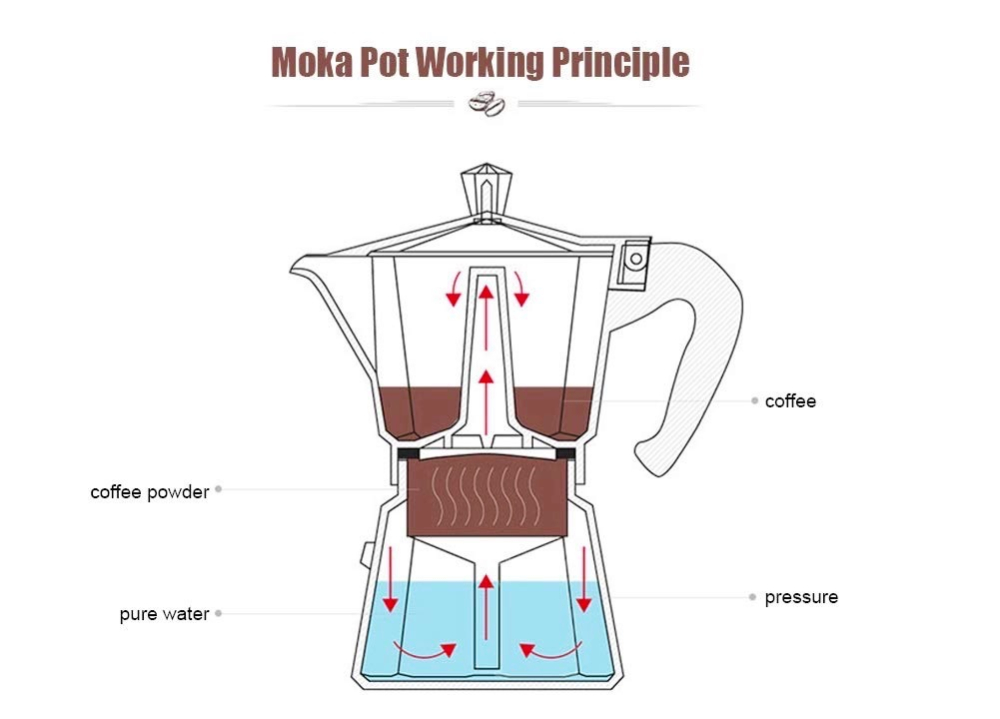
When brewing coffee, the bottom chamber is filled with hot water, then the metal filter is installed on the bottom chamber and filled with coffee grounds, the top chamber is screwed on tightly, and finally the entire moka pot is placed on a heat source. When the water boils, steam is produced, the pressure in the bottom chamber increases, forcing the hot water in the bottom chamber through the coffee grounds in the middle, and then pushing the hot water from the conduit that runs through the upper and lower chambers into the top chamber.
Is coffee brewed with a moka pot the same as espresso?
Although coffee brewed with a moka pot is also very rich, and sometimes even has crema, it is not the same as the espresso we know today. Coffee brewed with a moka pot has a similar extraction rate to espresso, but the extraction pressures of the two are very different. The standard pressure of a modern espresso machine is at least 9 bar, while the pressure of a moka pot is around 1.5 bar.
The water temperature of a moka pot is also higher. The temperature at which water boils and produces a large amount of steam is about 100°C, while espresso machines are usually around 92 to 96°C. In fact, the extraction principle of the moka pot is very similar to the working principle of steam-driven espresso machines in the late 19th and early 20th centuries.
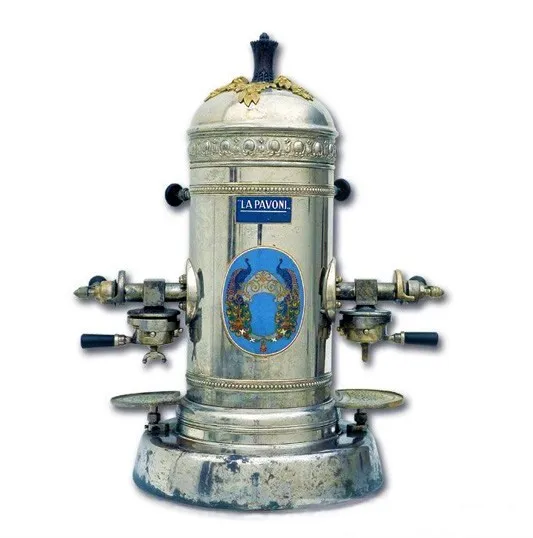
When the moka pot was invented, the espresso machine used in Italian cafés was called La Pavoni. When making coffee, the entire machine had to be placed over a flame to heat. Inside the machine, a tube led from a compartment at the bottom to a mass of ground coffee. When the water boiled, pressure formed, forcing steam and hot water through the tube and the coffee grounds. La Pavoni was a large commercial espresso machine, designed to provide cafés with fast coffee on demand. But this machine was too expensive, too large, and too heavy. Unless a family was wealthy, it was impossible for an ordinary household to own one. So the moka pot became a good choice.
Moka Pot Brewing Parameters
Each way of making coffee has its own parameters, such as grind size, time, and water temperature for pour-over coffee. But the principle of the moka pot is to use high temperature to make water produce steam, pushing the hot water through the layers and then into the top chamber. That means the water temperature and time are uncontrollable. The only things controllable are the amount of coffee grounds and the coarseness of the moka pot coffee grounds.
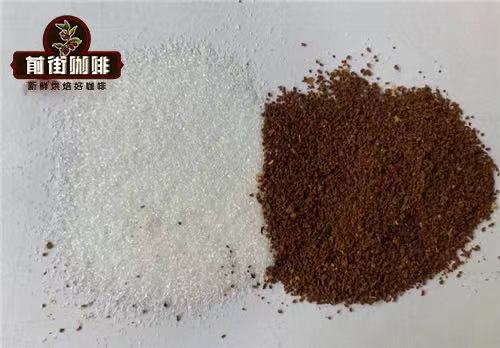
For the coarseness of moka pot coffee grounds, Front Street chooses a slightly coarser degree than espresso. You can refer to the size of the gaps in the filter screen of the grounds basket; as long as the coffee grounds do not fall into the bottom chamber, it is fine. For the amount of coffee grounds, simply fill the grounds basket and tap it gently so that the coffee grounds are evenly distributed.
As for the question of what coffee beans are suitable for brewing in a moka pot, since coffee brewed with a moka pot is relatively rich, Front Street recommends using coffee with a darker roast level, as this better brings out the coffee's mellow body. Therefore, Front Street suggests using the Brazil Queen Estate from the Front Street bean list.

Front Street Coffee: Brazil · Queen Estate
Region: Mogiana region, São Paulo State, Brazil
Altitude: 1,400 meters—1,950 meters
Variety: Yellow Bourbon
Processing Method: Natural Process
Flavor Description: Nuts, Cream, Cane Sugar, Fermented Fruit
Why can't a moka pot produce crema?
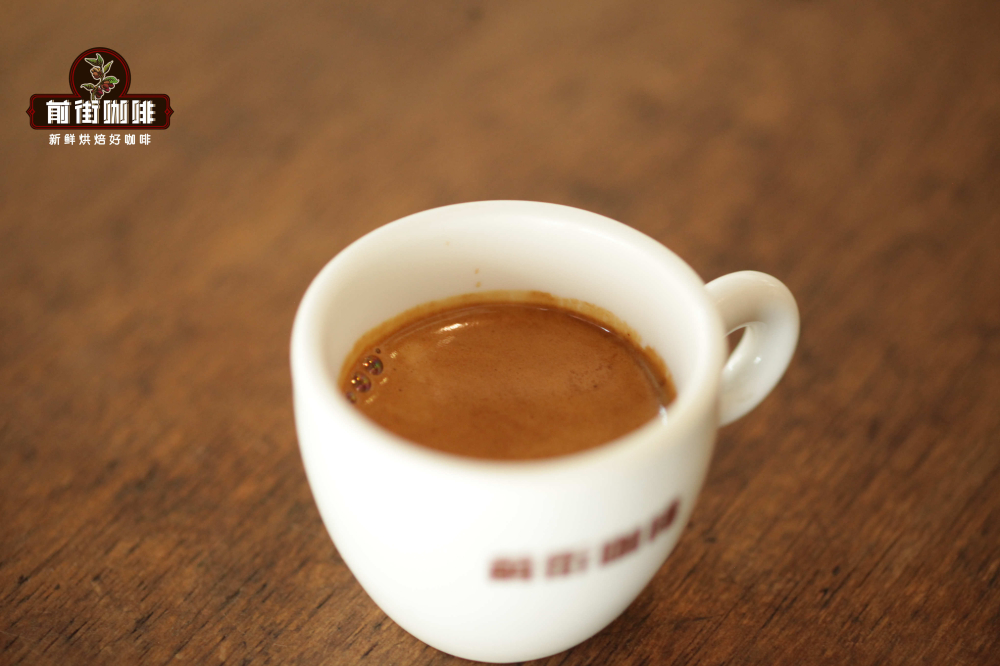
Ordinary households without an espresso machine all think of using a moka pot as a substitute, which means they have the same requirement for coffee brewed with a moka pot: crema. The most frightening thing is none other than seeing that coffee brewed with a moka pot actually has no crema. The formation of crema is related to the roast level and freshness of the coffee beans.
After coffee beans are roasted, they need to go through a resting period to let the aromatic molecules in the beans stabilize, so that they can better present their flavor. Coffee beans sold on the market all have two key numbers printed on the packaging: one is the shelf life, and the other is the roast date. The shelf life is generally one year, but the shelf life and the best-tasting period are not the same thing. The best-tasting period should be about 30 to 45 days after the coffee bean roast date, which includes the resting period. The darker the coffee beans are roasted, the longer the required resting period, and the more gas needs to be released, with the gas released being mainly carbon dioxide.
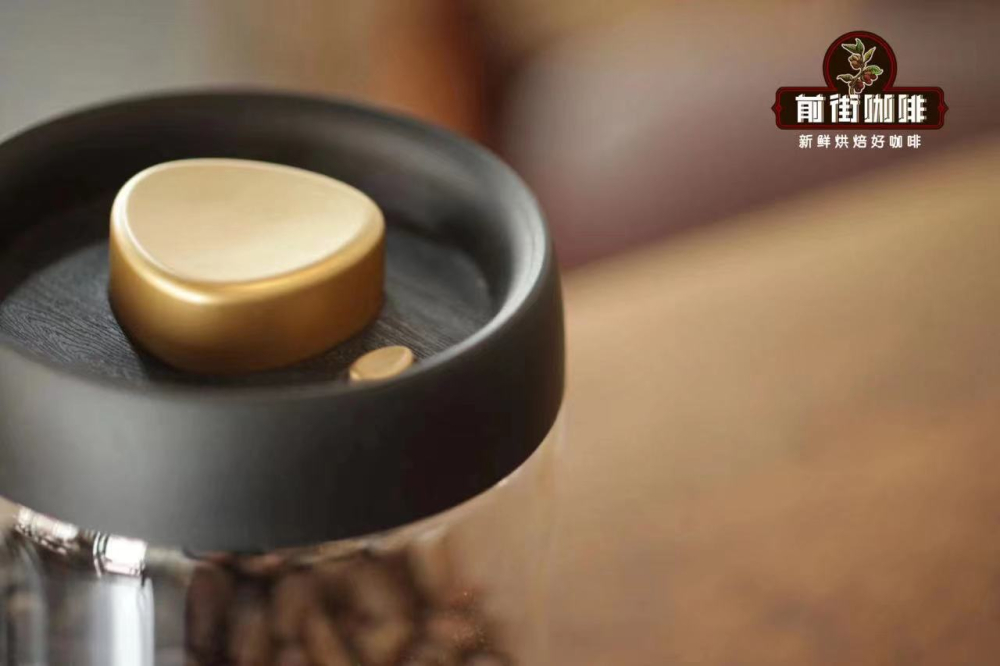
The longer the time since the roast date, the more the flavor compounds in the coffee beans dissipate. Coffee beans that have passed their best-tasting period but not their shelf life are not undrinkable; it is just that the flavor compounds have almost disappeared.
In espresso, that delicate layer of crema is actually made up of countless carbon dioxide bubbles. The longer the coffee beans sit, the more the carbon dioxide content in the beans disappears, so the crema layer becomes thinner.
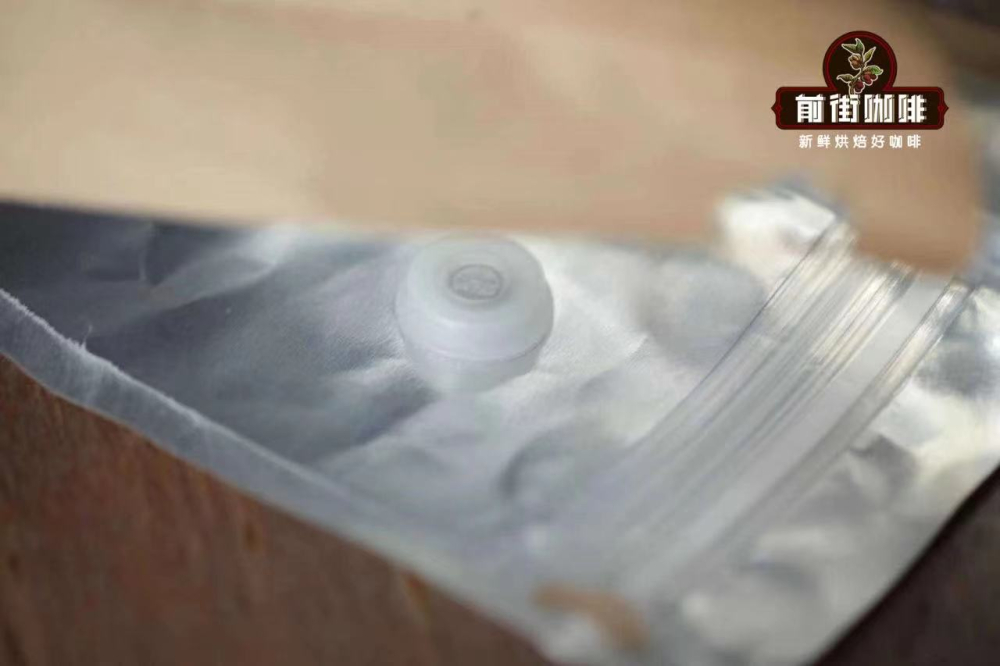
And based on the roast level of the coffee beans, Front Street freshly roasts them according to the time they are sent to friends and reserves the resting period in advance. When friends receive Front Street's coffee beans, they can immediately open them, brew, and taste them. What are you still waiting for in front of the screen? Get started right away!
The above content is compiled by CoffeeHunters, a coffee news website.


