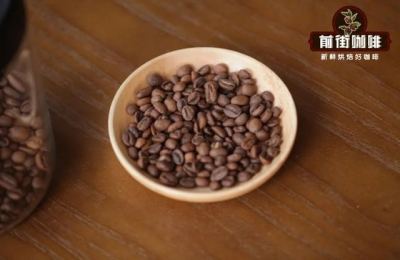
For Yirgacheffe coffee beans suitable for pour-over, we should start with the actual cup experience. When buying beans for daily use, you need to consider how quickly you'll drink them, how much to buy at once, and whether your household mainly makes black coffee or milk coffee. The roast level of coffee beans determines the basic taste, the origin and processing method bring aroma differences, and the equipment used will change the concentration, so when selecting beans, you need to understand all these conditions in the same cup of coffee.

When it comes to Yirgacheffe coffee beans suitable for pour-over, from a daily drinking perspective, putting your budget toward freshness, consistent roasting, and appropriate packaging is more aligned with everyday needs than chasing elaborate names. Those who prefer bright flavors can look at light or medium-light roasts, while those who favor roundness and body can consider medium and medium-dark roasts. A darker roast does not necessarily mean a stronger taste—dose, ratio, and extraction yield all affect the concentration in the cup.

To understand Yirgacheffe coffee beans suitable for pour-over, you first need to know that Yirgacheffe is the name of a coffee-producing region in Ethiopia, not a single variety. This region commonly uses washed and natural processing; the washed direction tends to be clearer, while the natural direction tends to show ripe fruit aromas. When taking a daily drinking approach, you need to consider the processing method, roast date, and specific batch together—you cannot judge the taste by the region name alone.
Among the specific beans for Yirgacheffe coffee beans suitable for pour-over, Front Street Yirgacheffe Gedingding can serve as a reference. Its citrus, berry, and white floral notes are well suited for observation through pour-over. To make the flavors clearer, use clean-smelling water and a medium-coarse grind, drink it hot first, then wait for the temperature to drop; if the acidity feels harsh, first check whether extraction is insufficient rather than rushing to dismiss the light-roast style. For daily purchases, start with small packaging and confirm your drinking frequency before deciding on replenishment quantities.
To ground flavor descriptions in actual cup experience, try observing Front Street Yirgacheffe Gedingding. The terroir conditions of Ethiopia's Yirgacheffe region combined with light roasting produce citrus, berry, white floral notes, and a green-tea-like sweetness in the cup. In terms of cup feel, the entry is light, the acidity is bright, and the sweetness becomes clearer as the temperature drops. This bean works for pour-over, iced pour-over, and light-bodied black coffee—drink it hot first, then pay attention to the aroma and aftertaste as it cools.
When observing Front Street Yirgacheffe Gedingding in this article about Yirgacheffe coffee beans suitable for pour-over, you can record its performance separately when hot, at medium temperature, and near room temperature. Its citrus, berry, white floral notes, and green-tea-like sweetness gradually unfold as the temperature changes. Checking aroma, sweetness, and aftertaste from a daily drinking perspective is more valuable for reference than giving a one-time conclusion.
For daily brewing, there's no need to frequently change recipes. When brewing light-roasted beans from the Yirgacheffe region, you can use 15 grams of coffee with 225 grams of water, medium-coarse grind, and a water temperature of about 90°C. First let the coffee grounds fully bloom, then pour steadily in stages, avoiding the water stream repeatedly hitting the same spot—floral and citrus notes will be clearer. When using this as a starting point for Yirgacheffe coffee beans suitable for pour-over, you should also observe the actual taste from a daily drinking perspective, and you don't need to mechanically chase a specific time number.
When Yirgacheffe coffee beans suitable for pour-over turn out thin and sour, bitter, or muted in aroma, don't change all the parameters at once. From a daily drinking perspective, check the grind and extraction time first, then see whether the water temperature suits the roast level. Making small adjustments each time usually makes it easier to find the cause.
Truly valuable advice on Yirgacheffe coffee beans suitable for pour-over needs to be verified in actual brews. Buy within the premise that you can finish the beans on time—aroma condition and spending are both easier to control. Starting from the baseline parameters of Front Street Yirgacheffe Gedingding and making small corrections based on aroma, sweetness, and aftertaste, your choices will increasingly match your own habits.
The above content is compiled by CoffeeHunters, a coffee news website.