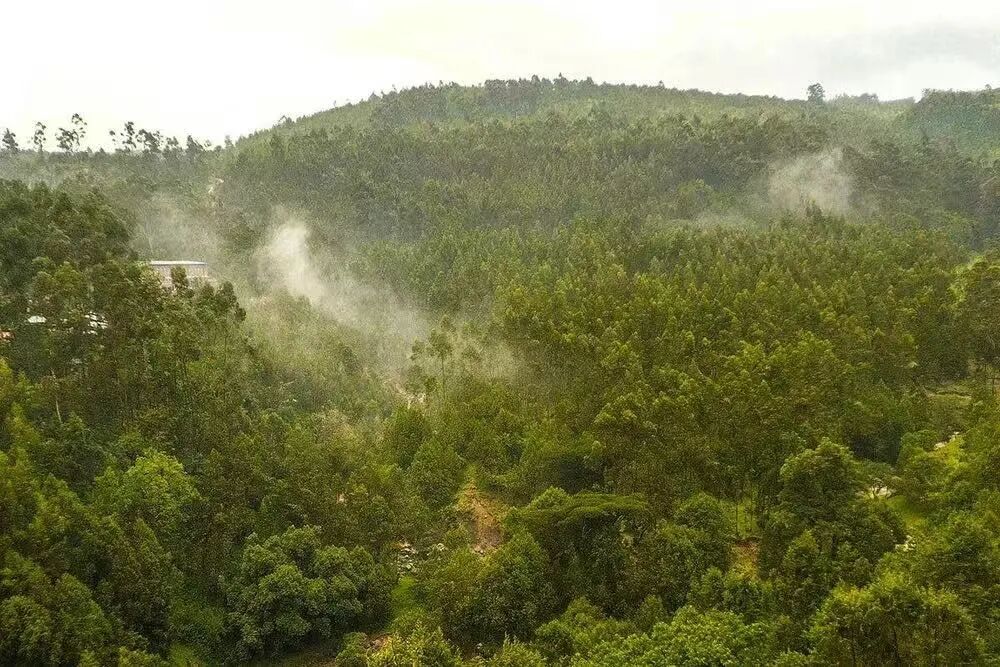
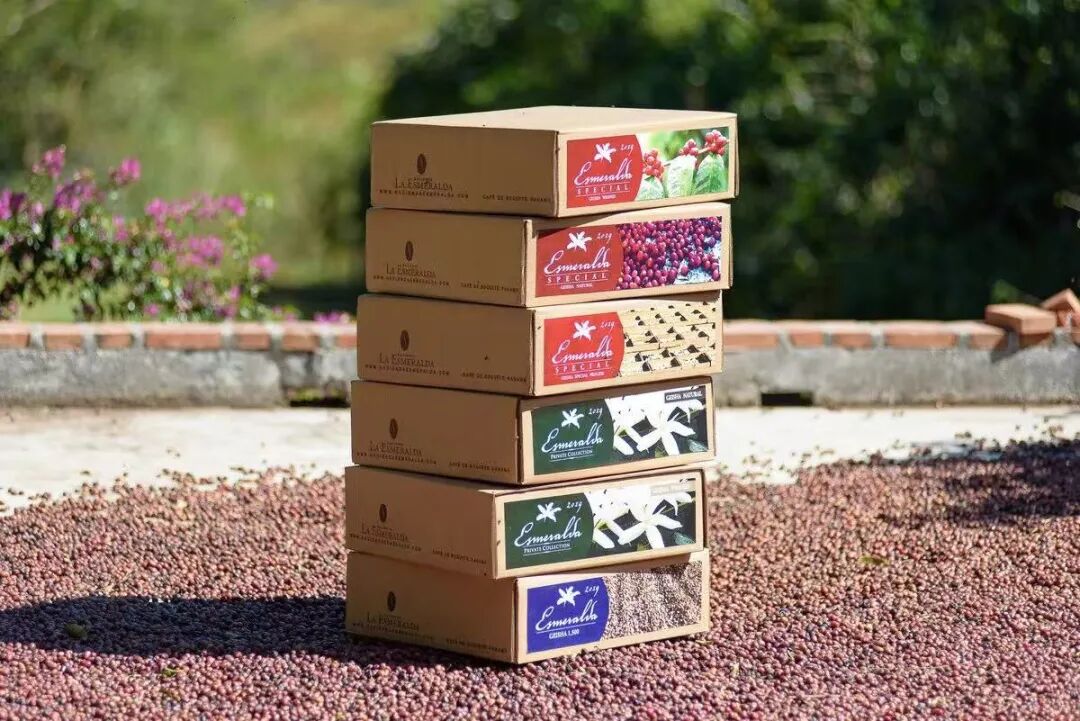
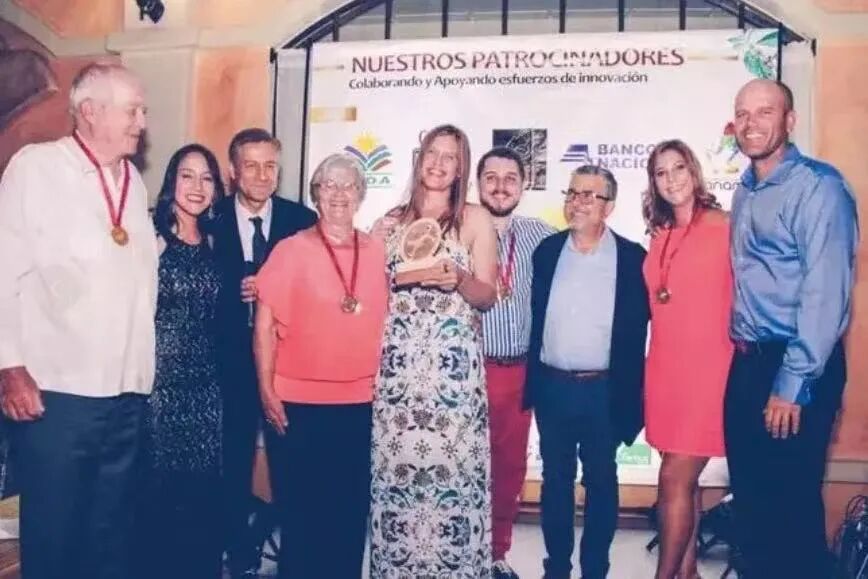
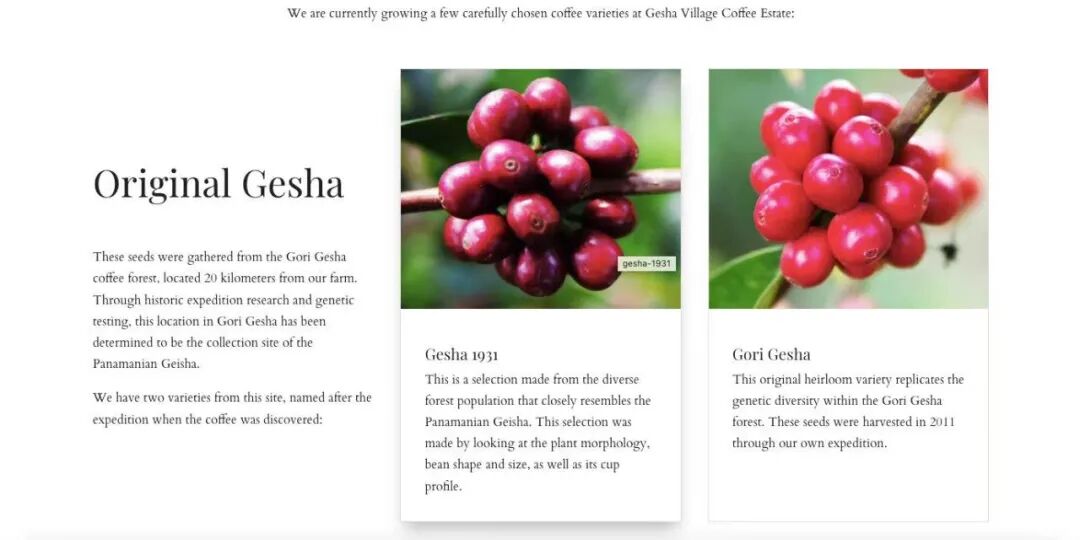
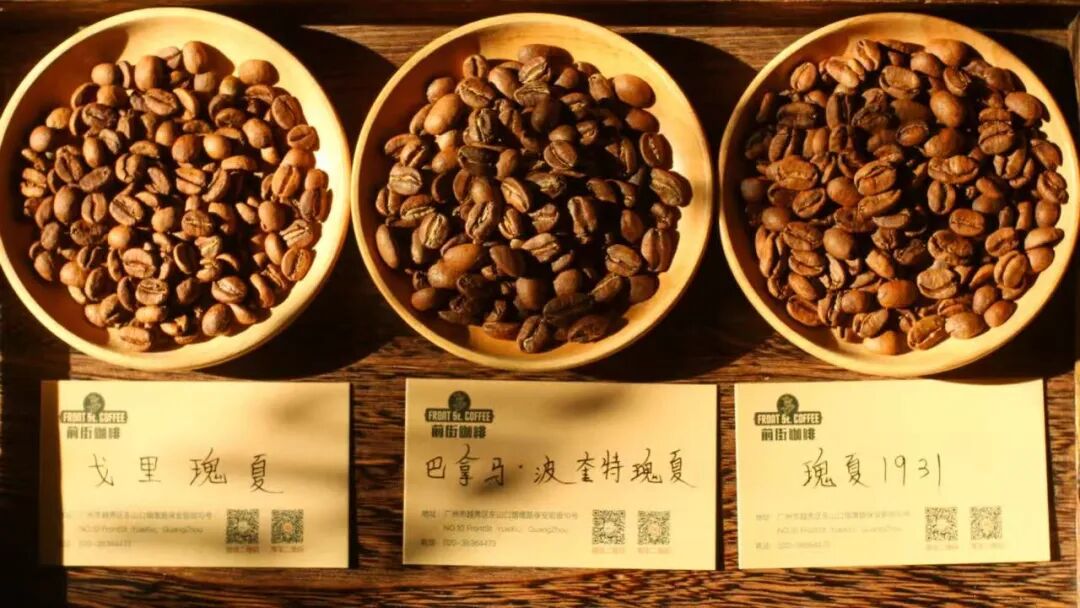
Many friends have noticed a phenomenon: whenever people chat about Geisha coffee, even though no specific origin is mentioned, the first thing that comes to mind is often Geisha from Panama; or when talking about Panamanian coffee, they automatically assume it's the Geisha variety; some even put a small parenthesis after the name Geisha to emphasize that it's Panamanian.It's as if the Geisha variety is deeply bound to the Panama origin.But that's indeed the case! This is not only because Panama is the origin that made Geisha famous, but also related to the emergence of Geisha in Ethiopia! So today Front Street Coffee will share why the Geisha variety always needs to emphasize Panama, and what relationship this has with Panama and Ethiopia! First, let's review how Geisha became famous in Panama!Although Geisha became world-famous in 2004, it was actually discovered as early as 73 years earlier in 1931. In 1931, in order to find coffee varieties suitable for large-scale commercial cultivation with disease resistance,Colonel Richard Whalle and his border garrison troops went deep into the Kafa forest in southwestern Ethiopia to collect samples for research. Geisha was one of the varieties they collected from a nearby forest, and it was named "Geisha," a mistranslation of the local name "Gesha."Afterwards, Geisha was sent to research institutes in Kenya, Uganda, Tanzania, and other places for cultivation trials, and in 1953 it arrived at CATIE, the Tropical Agricultural Research and Higher Education Center in Costa Rica. There, it was recorded as a fungal-resistant variety and given the designation "T2722," with related cultivation records at several local farms.Unfortunately, Geisha's potential was not discovered at that time—one could say its timing was poor. Although the Geisha variety has strong disease resistance, its yield is not high, only half that of conventional Arabica varieties. In an era that valued quantity, its low-yield characteristic was not favored by coffee farmers, so Geisha was not widely planted at the time.It wasn't until the 1960s that CATIE gave Geisha to Panamanian coffee farmers, and only then did Geisha formally step into its promised land. But merely stepping into the promised land was far from enough. As the saying goes, there must be a talent scout before a千里马 can be recognized, and Geisha's potential also needed a talent scout to be discovered. And that talent scout was the one that let Geisha showcase its talents and gain great fame at the 2004 BOP competition—Hacienda La Esmeralda!Hacienda La Esmeralda did not plant Geisha particularly late, but in the early days, Geisha was only mixed-planted with other varieties on the estate. It wasn't until the 1990s, when leaf rust arrived, that Geisha got thechance to be noticed.Because at that time most of the coffee on the estate was infected with leaf rust, and only Geisha was not much affected. This made Daniel Peterson(Daniel Peterson)notice this special variety and develop a strong interest in it. So he transplanted Geisha to more high-altitude areas and also established separate plots for cultivation.The higher-quality growing environment allowed Geisha to break through its upper limit, and then in the 2003 cupping at Hacienda La Esmeralda, it amazedthe Peterson family with its extremely outstanding flavor performance: intense white floral aroma, clean green tea finish, round acidity with berries, citrus, and bergamot—this is the astonishing flavor that Geisha displayed.As a result, everyone amazed by Geisha immediately decided to send it to the 2004 BOP(Best of Panama)competition. What happened next is as everyone knows: Geisha shone brilliantly at BOP, not only making itself and Hacienda La Esmeralda famous, but also making flavors such as white florals, citrus, and honey—which dominated the competition that year—become the classic flavors of Geisha, namely the "Geisha flavor."And after 2004, Geisha won the BOP championship for three consecutive years and became the variety with the highest auction price in history, which made more and more people want to own Geisha. So some of them began a journey of chasing dreams, going one after another to the place where the British expedition discovered Geisha back then, trying to find the Geisha variety.And Adam Overton, the estate owner of Gesha Village, can be said to be the first to achieve this vision. After enduring countless hardships, he finally found in the surrounding forest two varieties relatively close to Geisha—"Gori Gesha" and "Gesha 1931"(T2722)—and then established Gesha Village in the Bench Maji region of Ethiopia for dedicated cultivation and sales.As Gesha Village's Geisha sold well, many people saw the business opportunity in it. As long as the same method was used to name the varieties, basically all varieties originating from that forest could be named Geisha. And after obtaining the name Geisha, their fame and sales would multiply.Then the result is what we see now: a great many various Geishas have appeared on the market. They are not the T2722 fungal-resistant variety "tamed" in Panama, and their flavors are vastly different, but the same naming method allowed them all to gain the title of Geisha, with fame and sales rising steadily.So in order to distinguish the T2722 Geisha variety, which was purified in Panama and shone brilliantly there, from them, people began adding notes to Geisha. For example, Front Street Coffee often, whenPanama Geishaand Ethiopian Geisha appear together, adds after Panama Geisha(T2722). And the World Coffee Research organization also adds Panama after the T2722 Geisha to indicate that it is a variety purified in Panama.So everyone can understand that the reason the Geisha variety needs to emphasize Panama is not to say that Geisha grown in Panama tastes better, but to refer to the fact that this Geisha is a variety purified in Panama.If everyone wants to tastethe legendary "Geisha flavor," then Front Street Coffee would recommend prioritizing Geisha from the Panama origin. Because although other origins now also cultivate Geisha, we need to know that coffee is an agricultural product, and its flavor is influenced not only by its own variety genes but also by the terroir where it is grown.The flavor characteristics of different origins are completely different. Even the same variety will have different flavor expressions due to different production places. So compared with Geisha grown in other origins, the Panama origin that made Geisha famous will better allow you to experience the "legendary Geisha flavor." For example, Front Street Panama Boquete Geisha from Front Street Coffee's bean list is a very good choice~ The above content is compiled by CoffeeHunters, a coffee news website.