







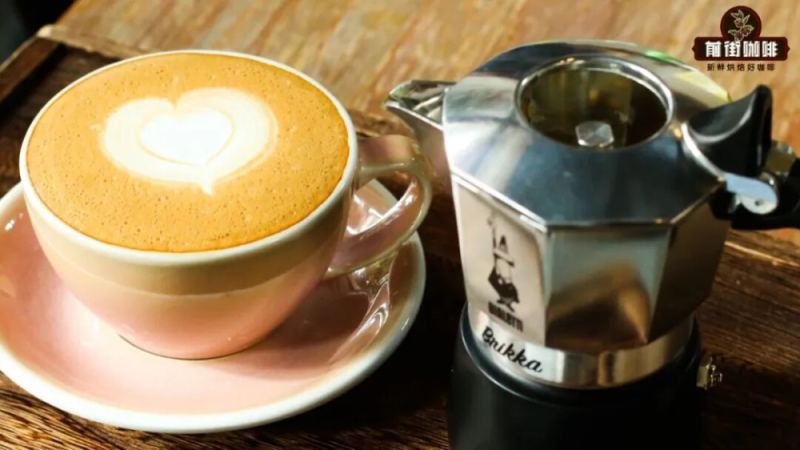
Does Putting Milk in a Moka Pot Instead of Water Work?
Yes, milk can go into a moka pot, but the results differ from a standard brew. Two methods were tested: pouring milk into the upper chamber so coffee flows into it, and replacing the water in the lower chamber with milk to extract the grounds directly. Both produce a milk-and-coffee drink, though each changes flavor and texture in its own way.
Bean choice matters most with a moka pot. Medium-dark Italian-style blends with dark chocolate, cocoa, roasted nuts, or butter notes give a rich, low-acid cup that stands up to milk. Such blends combine two or more origins and build balanced sweetness, which suits a coffee enthusiast trying milk-based brewing for the first time.
The moka pot, thanks to its pressurized extraction, can produce a fairly strong black coffee, and adding milk turns it into a simple version of a latte. The conventional method is to brew the coffee first and then add milk, but some people have proposed two unconventional approaches: one is to pour milk into the upper chamber and let the coffee liquid flow directly into the milk; the other is to replace water with milk in the lower chamber and directly brew the coffee grounds with milk. Can these two methods actually make a tasty moka pot latte? Front Street decided to test them personally. This article will first discuss how to choose coffee beans suitable for pairing with milk, then record the parameters, steps, and resulting flavors of the two "heretical" methods for coffee enthusiasts' reference.
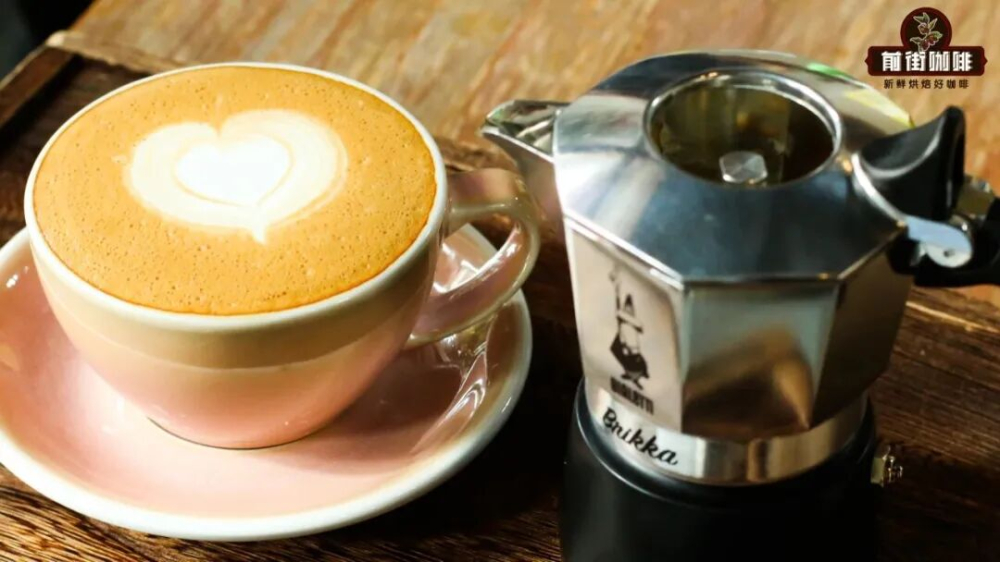
The moka pot, like an espresso machine, uses pressurized extraction, so it can produce a relatively strong black coffee. Because the concentration is sufficient, many enthusiasts are used to adding milk to drink it, equivalent to a simplified latte. The idea of adding milk to a moka pot is not complicated and is consistent with a traditional latte: first extract a "shot" of espresso, then pour in milk to adjust according to personal taste.
However, some people find this method too ordinary and shared two unconventional operations with Front Street: one is to pour milk into the upper chamber before extraction, so that the moment the coffee liquid emerges from the spout, it mixes with the milk, saving effort and incidentally heating the milk; the other is more radical, directly pouring milk into the lower chamber instead of water, and after heating, extracting the coffee grounds—that is, a heated version of milk extraction.
After hearing these two ideas, Front Street couldn't help but frown and decided to try them immediately to see whether these two exotic methods could actually make a tasty moka pot latte.
The flavor of a moka pot latte first depends on the coffee beans themselves, so the first step is to choose a bean suitable for pairing with milk according to your own taste preferences.
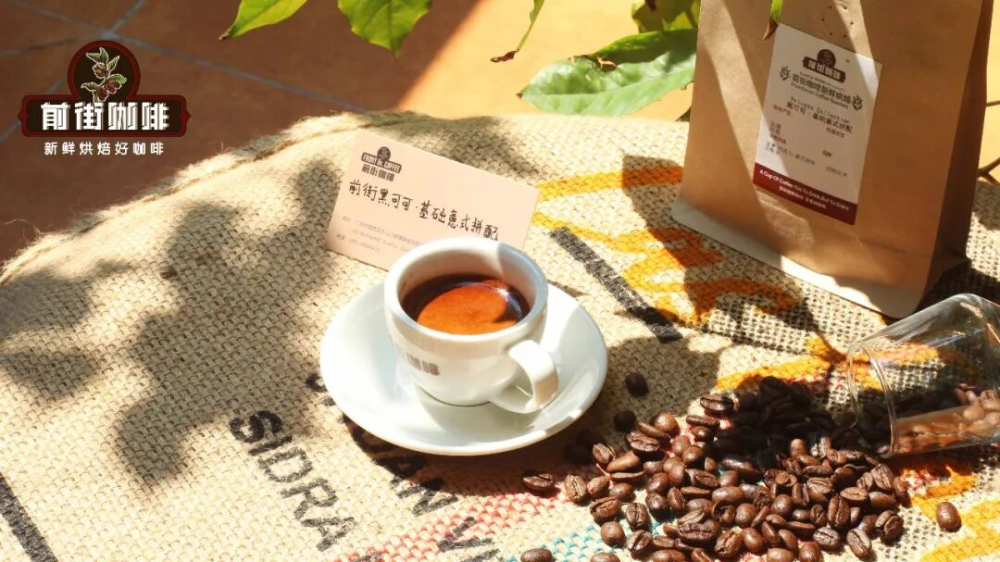
The method is simple: if you prefer a rich, full-bodied, and non-acidic type, choose traditional Italian-style beans, prioritizing blends with flavors of dark chocolate, cocoa, roasted nuts, butter, etc. Recommended are Front Street Dark Cocoa Blend, Front Street Autumn Chestnut Blend, Front Street Classic Blend, etc. These beans are usually composed of two or more origins, medium-dark roasted, with a balanced taste and richer crema, making them less likely to fail for beginners.
If you want to try a moka pot latte with delicate aroma and lighter bitterness, you can choose medium-roasted coffee beans. Friends who can accept fruity acidity might try Front Street Granadilla Geisha SOE, Front Street Flower魁 SOE, which have shorter heating times, retaining more bright floral and fruity notes, and become softer after adding milk; in addition, you can also choose beans dominated by ripe fruit flavors, such as Front Street Sidra, Front Street Blackberry, which provide rich fermented aromas and make a sweeter moka pot latte.
Moka pot latte heretical method ①—Pour milk into the upper chamber
This time we use Front Street Dark Cocoa Basic Blend. In terms of parameters, the core consideration is how to obtain a coffee base relatively close to espresso while avoiding an overwhelming bitterness, i.e., over-extraction. Therefore, Front Street slightly adjusted the grind size and water amount from the original.
Coffee beans: Front Street Dark Cocoa Basic Blend
Dose: 18g
Grind size: EK43s setting 2.0 / C40 setting 12
First, pour hot water into the lower chamber, keeping the water level at 2/3 below the pressure relief valve (safety valve); Front Street measured this position to be about 80g of water. The reason for using hot water is that cold water would prolong the contact time with the coffee grounds, easily leading to over-extraction and bitterness, while hot water helps shorten the extraction time.
Next, grind 18g of Front Street Dark Cocoa Basic Blend into a corresponding fine powder, pour it into the filter basket and level it, put the basket back into the lower chamber, screw on the upper chamber, and place it on an electric ceramic stove; then open the moka pot lid, add fresh milk to the upper chamber up to half (about 80ml), start heating, and wait for the pot to heat up.
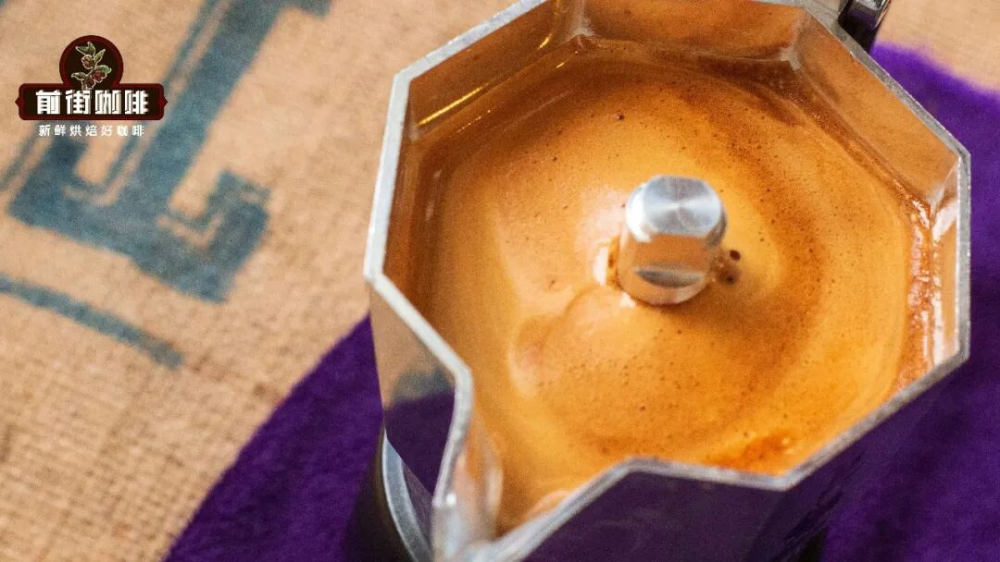
When the moka pot starts to make a hissing sound, turn the stove to low heat, and soon you will see the coffee liquid slowly flowing out from the spout and merging into the white milk.
When the milk coffee in the upper chamber reaches seven-tenths full, immediately turn off the heat, move the pot to a damp cloth on the table, and use the residual heat and pressure inside to continue extracting the remaining coffee liquid.
Once the coffee liquid is fully released, the milk in the upper chamber has turned a rich milk-tea color, and the yellow-brown foam floating on the surface gives off waves of nutty aroma. The resulting moka pot latte has a rich and fragrant taste; Front Street tasted distinct dark chocolate notes, slightly bitter, but then almond, cream, and macadamia flavors filled the mouth and lingered.

Moka pot latte heretical method ②—Pour milk into the lower chamber
Letting coffee grounds directly contact and extract with milk is actually riskier. Milk itself is highly saturated, and its extraction power is much worse than water; moreover, the extraction temperature of a moka pot is close to boiling, and once milk is heated above 70°C, the proteins denature, and the coffee taste deteriorates. So rather than pursuing flavor, using milk instead of water to brew a moka pot is more for fun.
Here we use the butter-flavored Front Street Classic Blend, which in its fresh state presents a beautiful crema and roasted chestnut aroma. In terms of parameters, to allow the milk to pass through into the upper chamber smoothly, Front Street will coarsen the grind size and reduce a portion of the dose.
Coffee beans: Front Street Classic Blend
Dose: 15g
Grind size: EK43s setting 3.5
First, add refrigerated fresh milk to the lower chamber, with the water level at 0.5cm below the pressure relief valve (safety valve); then put the Front Street Classic Blend coffee grounds into the filter basket (just tap lightly to level, no pressing needed), secure the upper and lower chambers, and start heating.
Because the milk temperature is lower, the extraction time will be correspondingly longer. When you hear the moka pot making a sound, open the lid and wait for the coffee liquid to flow out, while turning to low heat.
Initially, due to resistance, the flow rate is visibly slow, but as the coffee bed becomes fully wetted, the flow rate gradually increases. When the coffee liquid reaches half full in the upper chamber, you can turn off the stove, move the pot to the table, and rely on residual heat to force out the remaining "latte."
As expected, the moka pot latte extracted with milk delivers an extremely strong bitterness the moment it touches the mouth. Although there are also caramel and roasted nut aromas, the overall taste is too harsh, and in the end Front Street had to add sugar to barely finish this "special" coffee.
- END -
The above content is compiled by CoffeeHunters, a coffee news website.


