








What Is the Difference Between Cappuccino and Coffee?
The difference between cappuccino and coffee comes down to the base and the milk. A cappuccino is built on espresso and sits in the Italian milk coffee family, so it tastes strong and feels thick. French café au lait uses brewed coffee, such as pour-over, French press, or drip, mixed with warm milk, which makes it softer and lighter.
The base decides everything. Espresso gives intensity; brewed coffee gives a gentler cup. For a balanced café au lait, brew a medium roast at a 1:16 coffee-to-water ratio and add milk until the color looks like light caramel. A common latte milk to coffee ratio of one part coffee to one part warm milk works, adjusted to taste.
Milk coffee actually has an Italian and a French distinction? This seemingly obscure topic actually conceals a fundamental difference in coffee strength and mouthfeel. Italian milk coffee uses espresso as its base, with high strength and full flavor; French au lait, on the other hand, uses any black coffee plus milk, giving a softer mouthfeel and a lighter burden. So can pour-over coffee actually have milk added? How much is appropriate? Starting from Front Street's actual brewing parameters, this article walks you through the essential differences between the two kinds of milk coffee and provides a specific recipe for Café au Lait. Whether you're an espresso lover or a pour-over devotee, you'll find the cup that suits you.
"Milk coffee actually comes in Italian and French versions—did you know?"
This was a topic Front Street happened to overhear yesterday while having coffee at a café. Because this claim overturned quite a few people's understanding, everyone present immediately perked up and joined the discussion. And the question everyone most wanted to figure out was: why, when it's all milk coffee, are there these two names, "Italian" and "French"?




From one angle, milk coffee can indeed be distinguished as Italian and French, a topic Front Street has discussed several times before. The differences between the two are quite striking—whether in flavor or mouthfeel, they head in completely different directions.


What exactly is different between "Italian milk coffee" and "French milk coffee"?
Italian milk coffee is surely familiar to everyone: it refers to the various milk coffees made by using espresso extracted from an espresso machine as the base, then adding milk. Lattes, cappuccinos, flat whites, Dirty, and so on all fall into the category of Italian milk coffee.

The so-called "French milk coffee," meanwhile, is milk coffee made by adding milk to any kind of black coffee. No matter whether the black coffee you use is made by pour-over, French press, or any other device, as long as it's this kind of black coffee as the base with milk added, the resulting milk coffee can be called "French milk coffee"—that is, Café au Lait.

Around the 17th century, coffee began to spread in popularity in France, and many French people gradually developed the habit of drinking coffee. Especially at breakfast time, having a cup of coffee with a meal made life quite pleasant. But at the time coffee was mainly dark-roasted, and many people actually couldn't accept coffee's bitterness, so adding various seasonings to the coffee to neutralize the bitter taste was an extremely common practice.
Milk was one of the most commonly added seasonings. Pour heated milk into brewed coffee, and a cup of coffee that's perfect with breakfast—sweet in taste and gentle in mouthfeel—is born. Coffee made this way was named "Café Au Lait"; Lait means "milk" in French, so a literal translation would be "coffee and milk," and "欧蕾咖啡" is precisely its transliterated name.
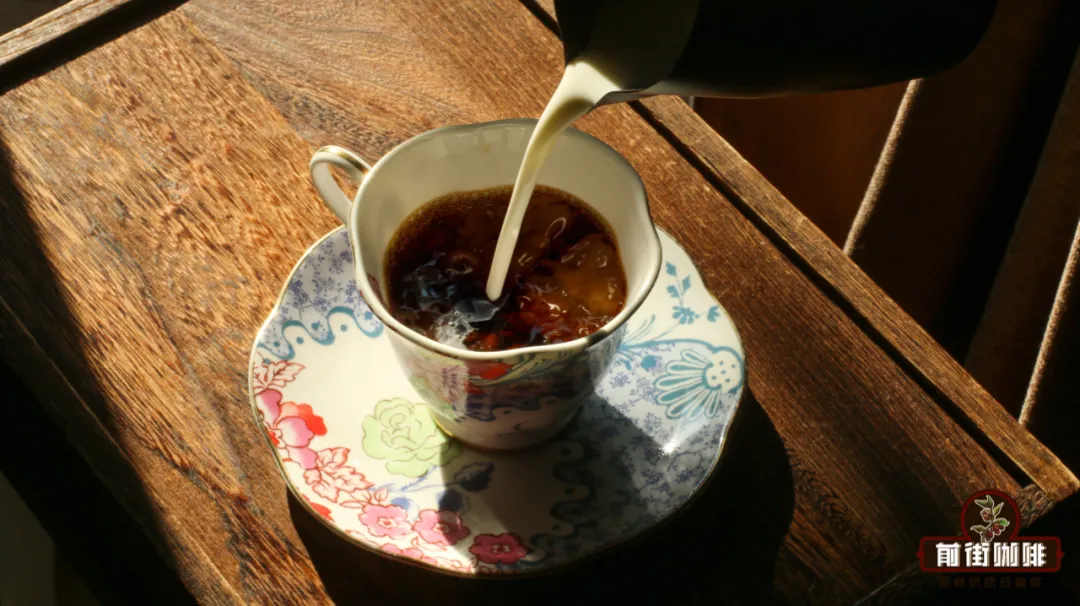
It's not hard to see that the core difference between the two lies in the coffee base used for the milk coffee: one comes from espresso extracted by an espresso machine, the other is black coffee made by any method. And the difference in base is precisely the key that causes the coffee's taste and mouthfeel to diverge. Why is that? Because the strength of the two differs enormously.
When making espresso, the espresso machine uses pressure to assist extraction, so it can dissolve a large amount of flavor compounds out of the coffee using very little water. Taking Front Street as an example, the beans Front Street uses for espresso are the Front Street Ethiopia · Huakui from its bean list, with parameters: 20g dose, brew ratio 1:2, time 30 seconds.
The espresso finally extracted weighs 40ml, with strength as high as 11%. It's very rich on the palate, with sweetness and acidity leading the flavor, and you can taste notes of citrus, strawberry, and floral. Then pour in 200ml of milk at a 1:5 ratio, and a Huakui SOE latte is complete.
Because the coffee base has high strength, this latte's mouthfeel is quite substantial, and with the milk blended in, it drinks exceptionally smooth. The same goes for the flavor: even with a fair amount of milk added, we can still clearly pick up the notes of strawberry, citrus, and caramel—a quite outstanding performance.
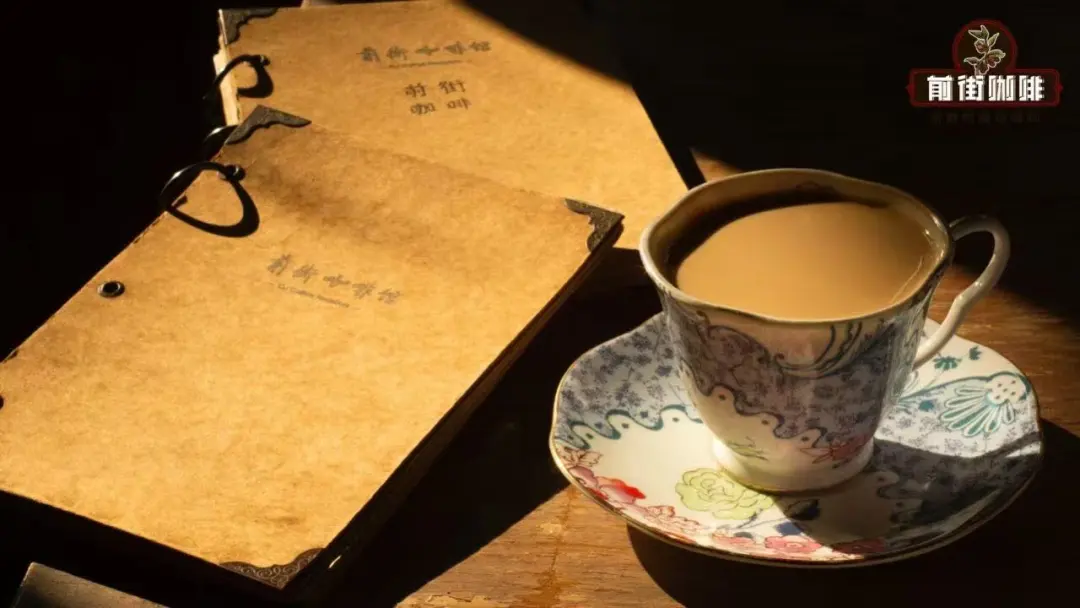
The coffee base used for Café au Lait, by contrast, is made under normal pressure, so its strength is usually not too high. Take pour-over coffee as an example: when making the coffee base needed for Café au Lait, Front Street deliberately uses parameters with higher extraction efficiency for brewing, because only in this way can it avoid the problem of the coffee's strength being too low, which would make the mouthfeel thin and watery and the flavor bland after milk is added.
The beans Front Street demonstrates with here are still the Front Street Ethiopia · Huakui, suitable for both pour-over and espresso, with brewing parameters following the settings used for iced brewing: coffee-to-water ratio 1:10, grind size 80% passing a No. 20 sieve, extraction time 2 minutes, water temperature 92°C, and this time a dose of 20g.
We'll skip the brewing process! Although this set of parameters produces pour-over coffee with higher strength than conventional pour-over, it's still much lower compared to espresso—not even reaching half of espresso's strength.
Of course, we can't measure this cup by espresso's standards; drip coffee has its own yardstick for judgment. It tastes quite full-bodied, and you can likewise clearly sense the berry, citrus, and floral notes. But since its strength falls short of espresso, it isn't suited to too much milk; usually it's made at a 1:1 ratio.
Front Street pours in hot milk at a 1:1 ratio. The milk coffee made this way isn't as full in mouthfeel as the former, nor as rich in taste, but it's likewise very tasty. Because the strength isn't high, overall it doesn't place too much of a burden on the drinker—both taste and mouthfeel are very soft, and the flavor is prominent enough—a very good performance.
Taken together, everyone should now be clear on the difference between "Italian milk coffee" and "French milk coffee." That's all for this installment of Front Street's sharing. Friends who haven't tried Café au Lait yet might as well give it a go, because Front Street knows quite a few people hold prejudices against the practice of "adding milk to pour-over," but in fact its taste really will be different from what you imagine—well worth a try~
- END -
The above content is compiled by CoffeeHunters, a coffee news website.


