








What Milk to Coffee Ratio Works for a Soy Milk Latte?
A soy milk latte works when two things are controlled: the coffee beans and the milk to coffee ratio. Medium-dark or dark roast espresso blends are the safer choice, since light roasts carry more acidity and make soy milk more likely to flocculate, or curdle. Start with a measured ratio, then adjust the soy milk volume up or down to taste.
Soy milk also outperforms traditional soybean milk in coffee, because its protein flocculates less when it meets acidic espresso. For anyone learning how to make coffee at home with milk, the practical starting point is a medium-dark espresso blend plus a measured latte-style ratio, adjusted until the cup tastes harmonious rather than thin.
Beyond oat milk and almond milk, soy milk is also a plant-based milk alternative worth trying when making coffee. However, making a latte with soy milk isn't something that succeeds with just any random combination—the roast level of the coffee beans and the ratio of soy milk to espresso both directly affect the final taste. This article will draw on Front Street's practical experience to explain why soy milk is more suitable for coffee than traditional soybean milk, what type of coffee beans should be chosen, and how to adjust the ratio to achieve a harmonious fusion of soy milk and espresso. At the end, we'll also share a simple step-by-step guide for making a soy milk latte using Front Street's classic blend and Vitasoy, for coffee lovers to try at home.

In recent years, oat milk and almond milk have been popular choices among plant-based milks for coffee pairing. But beyond these, there are other plant-based milks equally capable of serving as milk substitutes. Take soy milk, for example—it's a national-level everyday beverage in our country and is also rich in protein.
Soy milk and traditional soybean milk differ little in composition, but once used to make coffee, soy milk clearly performs better. Front Street has mentioned in previous shares that when soybean milk comes into contact with acidic espresso, it curdles—that is, the protein flocculates—and the result is a greatly diminished drinking experience, like eating tofu pudding. Soy milk doesn't have this concern; after mixing with espresso, its protein is less likely to flocculate. Front Street's actual testing also found that soy milk and coffee pair together with unexpectedly satisfying results in both texture and flavor. So today Front Street will talk about how to make a delicious latte with soy milk.

Soy Milk Coffee
To be honest, there's nothing complicated about the process. After multiple tests, Front Street has concluded that to make a delicious soy milk coffee, you only need to grasp two key points—it's very simple.
The first key point is the choice of coffee beans. Coffee beans directly determine the flavor direction of a cup of coffee. If you want a satisfying cup of soy milk coffee, choosing the beans is a crucial step.
Front Street recommends choosing medium-dark roast or dark roast coffee beans, such as espresso-specific blends. If you use light roast beans to extract espresso, since light roast beans retain more acidic substances, the soy milk is more likely to flocculate when making soy milk coffee; additionally, the sourness conflicts with the natural sweetness of the soy milk, and the combination tastes rather jarring. Medium-dark and dark roast coffee beans don't have these problems. Front Street shared in yesterday's post that dark roast beans are roasted longer, and acidic substances are largely broken down during roasting, so the extracted espresso has very low acidity and is less likely to affect the soy milk when subsequently combined, resulting in a better mouthfeel. In terms of flavor, because the two match well, you can hardly detect any dissonance when drinking.

The second key point is the ratio. Soy milk tastes rather light and sweet, not as rich and creamy as dairy milk. So when making coffee with soy milk, the ratio is best kept slightly smaller (the ratio of soy milk to espresso) , and the amount of soy milk can be appropriately increased, so that the soy milk's flavor won't be easily overpowered by the espresso.
The above are the things to note when making a delicious cup of soy milk coffee. Next, Front Street will share the specific method... it's really just pouring the extracted espresso into the soy milk—that simple.
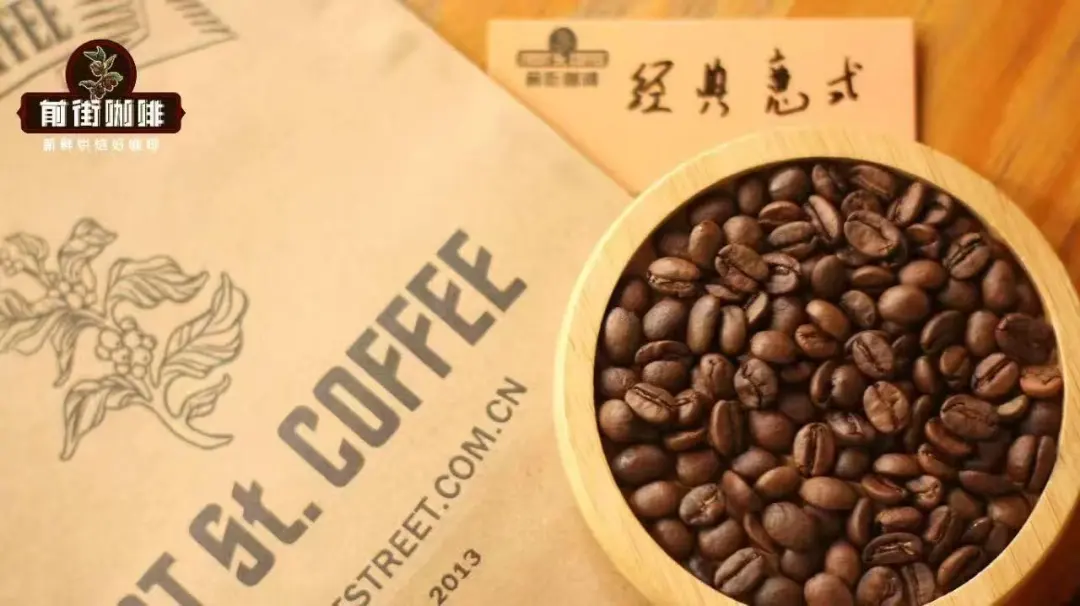
The coffee beans Front Street used this time are the Front Street Italian Classic Blend from our bean list. The coffee made with it carries flavors of chocolate, caramel, butter, and cream. The extraction parameters are as usual: 18 grams of grounds, a 1:2 coffee-to-liquid ratio, and an extraction time of about 30 seconds.
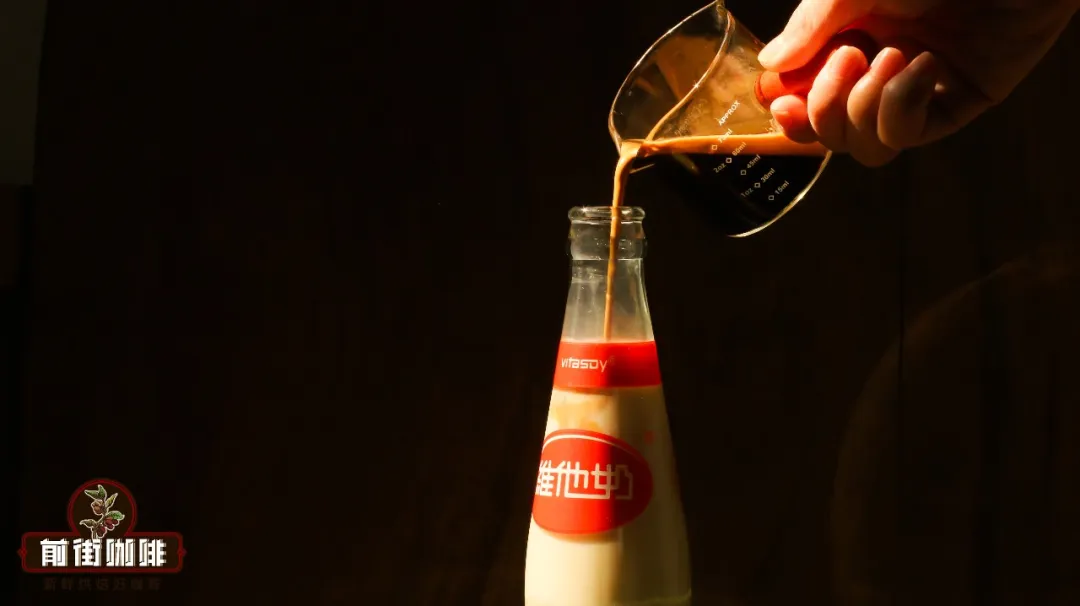
For the soy milk, Front Street chose the Cantonese classic, glass-bottled Vitasoy. After opening the cap, just pour the espresso directly in. (NO!!!!!!!!)
However, a reminder: since the bottle capacity is rather small at only 250 milliliters, and the Vitasoy itself already takes up 230 milliliters, if you plan to pour the entire espresso in, it's best to take a small sip of soy milk first to make room, so you don't end up in an awkward situation where the espresso won't all fit.
Of course, Front Street also recommends not pouring it all in. As mentioned earlier, soy milk's flavor is easily overpowered by coffee, so a smaller ratio is better. Based on Front Street's testing, the optimal ratio of espresso made with these coffee beans to soy milk is 1:7. After pouring, give it a stir and it's ready to taste.
The result is really quite good! The soy milk coffee made this way tastes very harmonious, with nothing jarring. After the coffee and soy milk blend, it evolves into a flavor similar to chocolate milk, which is delightful. The texture is smooth and clean, without the grainy feel of curds—a very good performance.
That's all for this Front Street sharing. Those interested might as well give it a try at home—it's really quite good. If you want to enjoy it on the go, you can also prepare an espresso in advance to bring out, buy a bottle of soy milk, pour it straight in, give it a simple stir, and a homemade soy milk coffee is done—very convenient.
- END -
The above content is compiled by CoffeeHunters, a coffee news website.


