







What Drives the Price of the World's Most Expensive Coffee?
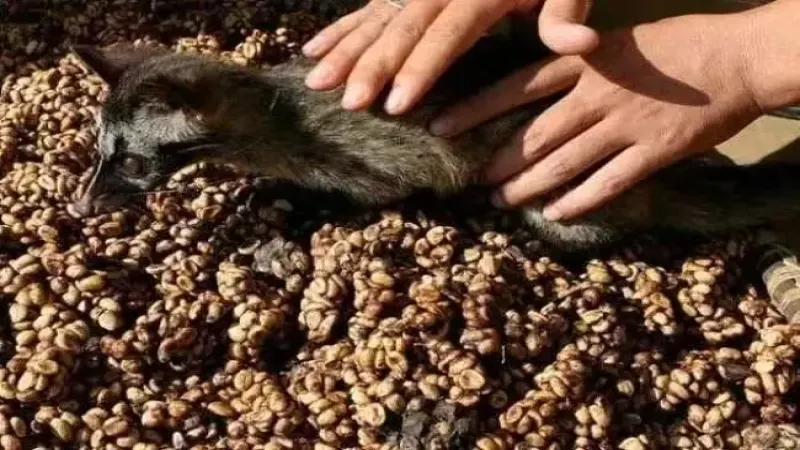
Kopi luwak is not cat excrement in the cup. Strictly speaking, it is coffee beans extracted from civet feces, then cleaned, dried, and roasted like any other coffee. Its astronomical price reflects the scarcity created by this unusual processing rather than an exceptional flavor, because kopi luwak tastes essentially like a dark-roasted bean with a few special traits. Much of the premium pays for novelty.
The beans ferment inside the civet's digestive tract instead of through standard natural, washed, or honey processing, and this rare method is what drives the cost. For drinkers curious about the taste but unwilling to pay for the novelty, dark-roasted Mandheling delivers a similar flavor experience at a far lower price, which is why it is regularly recommended as the practical alternative.
Is kopi luwak really cat excrement? Why does it command such astronomical prices? This article provides a complete overview of this legendary Indonesian coffee from the perspectives of processing methods, historical origins, and flavor characteristics. At the same time, Front Street will also tell you that if you want to experience a similar flavor without paying for the novelty factor, dark-roasted Mandheling is a worthwhile alternative. The article will also compare the relationship between kopi luwak and Mandheling, and introduce the specific flavor profiles of two Mandheling offerings on Front Street's bean list.
"Does kopi luwak really count as cat poop?" This question appears repeatedly in the comment section of Front Street's articles. Strictly speaking, it is not cat excrement itself, but rather coffee beans extracted from civet feces. However... if we look at it from another angle... let's just stop there.
Because kopi luwak carries a novelty appeal and comes with a high price tag, even veteran coffee enthusiasts who have been steeped in the coffee world for years may not be willing to shell out money to try it. But that doesn't stop people from being curious about its taste and wanting to know whether it truly lives up to its price.

If you're very curious about the taste of kopi luwak but don't want to actually try it, Front Street's suggestion is: just find a dark-roasted Mandheling to drink. The reason is that kopi luwak's flavor isn't particularly unique — it's essentially just a dark-roasted bean with somewhat special characteristics. The core factor behind its high price is the scarcity created by that unique processing method.
Kopi Luwak
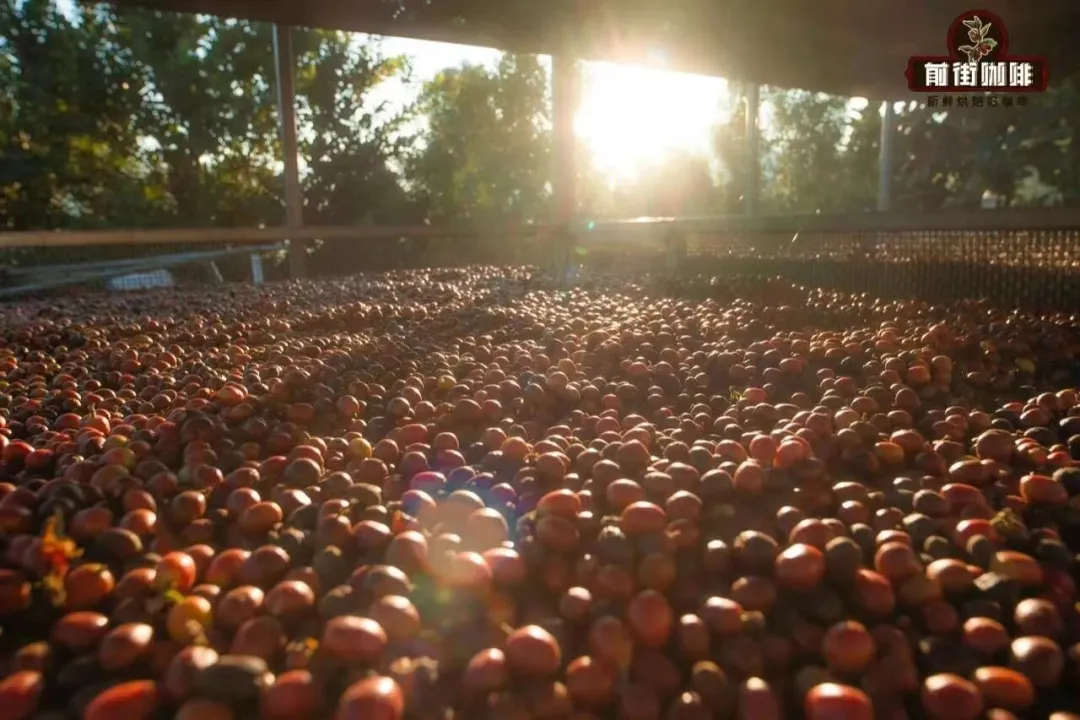
Everyone knows that coffee beans are the seeds of coffee fruit. To turn the green beans inside coffee cherries into raw material suitable for roasting, they must undergo post-processing to remove the skin, pulp, mucilage, and other layers surrounding the bean, and be dried to an appropriate level.
There are many post-processing methods — the ones Front Street frequently shares include natural, washed, honey, anaerobic, and so on. Their operational steps differ, and these differences lead to varying degrees and durations of fermentation, which in turn give coffee beans different layers of aroma. This is also why people are so enthusiastic about tasting and studying coffees processed by different methods.

The processing methods mentioned above by Front Street basically complete fermentation in a natural environment. Kopi luwak is completely different — its coffee beans undergo fermentation inside an animal's body. Why? Because to make kopi luwak, a specific animal must eat the coffee cherries.
This animal has "cat" in its name, but it is by no means the feline pet we see in daily life, so please put down your furry overlords at home and shelve those bold ideas.
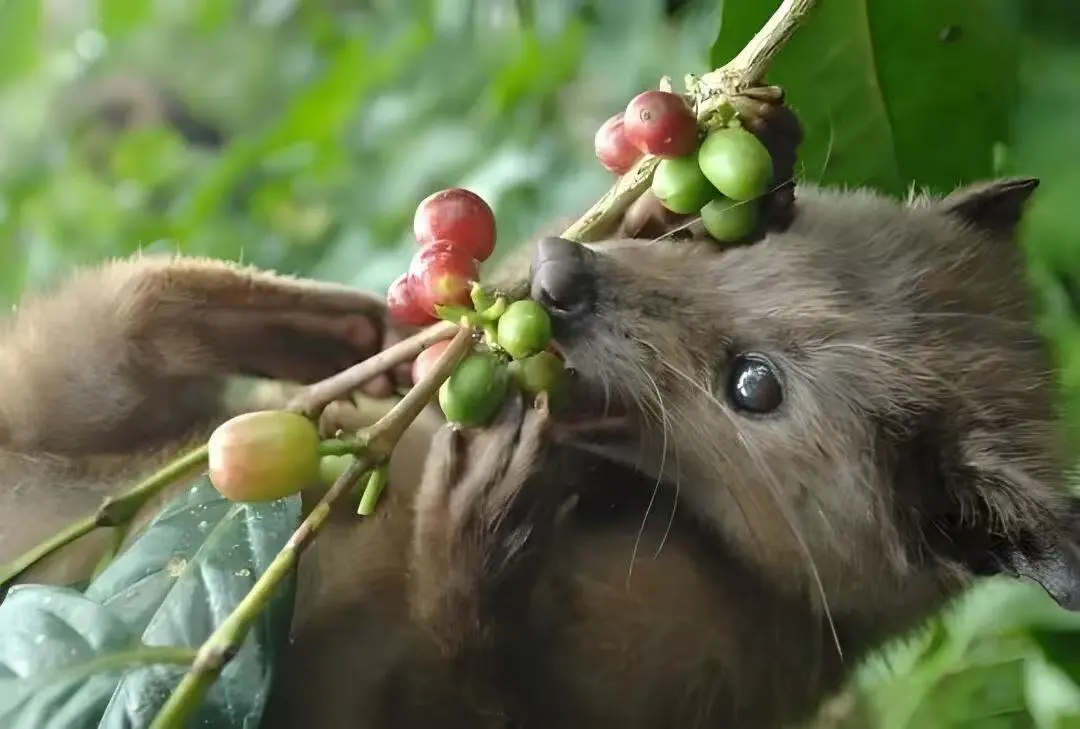
The "cat" used to "make" kopi luwak is the civet that inhabits tropical rainforests, belonging to the Viverridae family, with the scientific name large Indian civet (Viverra zibetha). It is a omnivorous wild animal native to Indonesia. It eats everything, and it happens to live in Indonesia, which is rich in coffee, thus forging a not-so-endearing "bond" with coffee.
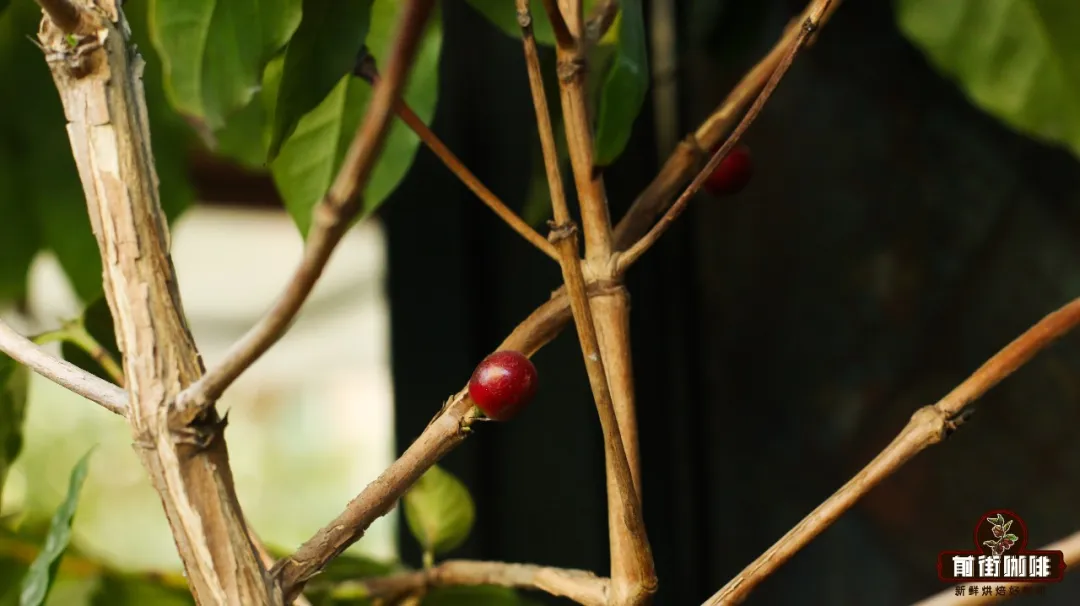
Ripe coffee cherries emit an enticing aroma, attracting the civet, which precisely picks and swallows them whole. After the coffee cherries enter the civet's body, digestive juices can break down the pulp, skin, and mucilage, but they are no match for the coffee beans. Coffee beans are extremely dense and cannot be digested, ultimately being excreted with the feces.
During this process, the coffee beans have already completed fermentation in the intestines. Therefore, when workers collect civet feces containing coffee beans, they only need to wash them, extract the beans, and dry them — and the in-body fermented kopi luwak is considered processed.
According to information Front Street has found, the first to "take the plunge" were Indonesian laborers. Back then, they were responsible for planting and managing coffee on the island for the Dutch, but coffee was an important export commodity for the Dutch, and the laborers were forbidden from tasting it. This ironically made many Indonesian laborers who had never drunk coffee fixate on that flavor.
How could they get to drink coffee? The Indonesian laborers pondered this. Just then, they noticed that the feces of civets by the roadside contained something resembling corn kernels — and upon closer inspection, they were actually coffee beans! Thus, a bold idea was born.
The process was the same as described earlier by Front Street: wash the coffee beans out of the feces, sun-dry them, toss them into a pan to roast, and finally obtain a batch of roasted coffee beans. After grinding and brewing, they got to taste coffee as they wished, and found it quite good. Just like that, the feces of wild civets became an important coffee source for Indonesian laborers.
This story quickly spread by word of mouth, until merchants caught wind of the business opportunity, and kopi luwak only then spread worldwide as the "gold" of the coffee world.
As Front Street said at the beginning, kopi luwak is expensive not only due to marketing factors but also because this unique processing method results in extremely low yields. On average, 500 grams of civet feces can only produce 150 grams of kopi luwak beans. The huge gap between massive demand and tiny supply drives prices ever higher. Even in 2026, kopi luwak prices remain sky-high, especially products labeled "wild."
That's right — since merchants emphasize "wild" when selling, that means "captive" kopi luwak also exists. Kopi luwak profits are staggering, with prices dozens of times higher than local regular Indonesian coffee beans. To earn more profit, many locals began capturing and confining civets, feeding them only coffee cherries every day, turning them into machines that constantly "spit out gold coins."
This practice clearly cannot be accepted. After the exposé, everyone boycotted kopi luwak, and Front Street also delisted it. After all, no buying, no harm. Moreover, the taste of kopi luwak is indeed not as unique as everyone imagines.
What does kopi luwak taste like?
Why did Front Street say earlier that you can find a flavor similar to kopi luwak in Mandheling? Because the coffee variety used for kopi luwak is the same variety as locally produced Mandheling in Indonesia — whatever coffee Indonesia grows, the civet eats those coffee cherries.
Traditional kopi luwak uses dark roasting, and under dark roasting, the flavor differences between coffee beans are almost erased, with profiles basically dominated by caramel, chocolate, nuts, spices, and smoky notes. Differences from processing methods do exist, but they are not obvious under dark roasting, and kopi luwak's taste is relatively softer. Therefore, we can absolutely find a similar coffee experience from Mandheling.
Front Street's bean list includes two Mandheling offerings: Front Street's everyday Indonesian·Lintong Mandheling, with flavors dominated by caramel, chocolate, and spices, full-bodied, rich in taste with low acidity; and the other is Front Street's Indonesian·Front Street PWN Golden Mandheling, with flavors similar to Lintong Mandheling but with higher overall cleanliness and a richer layering when drinking.
- END -
The above content is compiled by CoffeeHunters, a coffee news website.


