







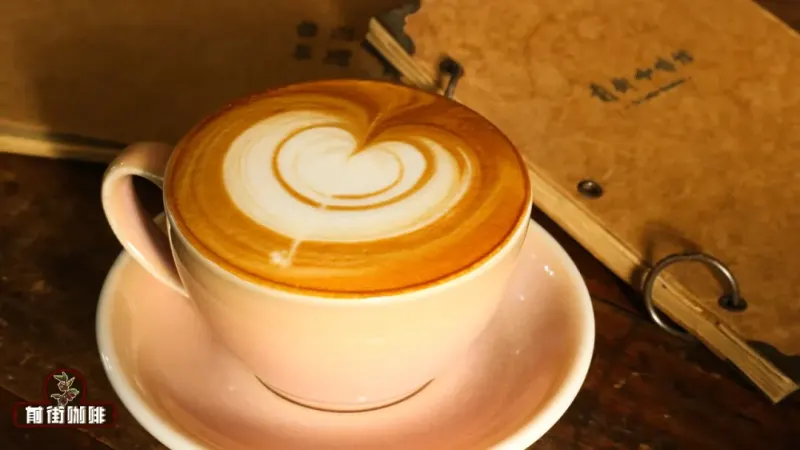
Where Do the Names of These Classic Coffees Come From?
The names of these classic coffees come from Italian words and everyday history. Cappuccino is a transliteration of Cappuccio, a hood or headscarf, linked to the dark brown robes and pointed hoods of 16th-century Capuchin monks. Latte simply means milk in Italy, so ordering one there can bring a glass of milk rather than a coffee drink.
Americano grew out of American soldiers' drinking habits in Italy, where espresso was diluted with hot water to resemble the drip coffee they knew. The three drinks also differ by ratio. A cappuccino uses espresso with a small amount of milk and foam over 2cm thick; a latte carries far more steamed milk, which softens the coffee's intensity.
Cappuccino, Latte, Americano—where exactly do these familiar Italian coffee names come from? And what are the essential differences between them? Starting from Front Street Coffee's actual brewing practice, this article walks through the recipe ratios, flavor profiles, and naming origins of these three classic coffees. You'll learn how Cappuccino got its name from monks' clothing, why ordering a Latte in Italy can cause a funny misunderstanding, and how Americano was born from American soldiers' drinking habits. The article also includes specific parameters and flavor outcomes for Front Street's Classic Blend and Huakui beans when making different coffees—perfect for coffee lovers who want to understand Italian coffee culture in depth.
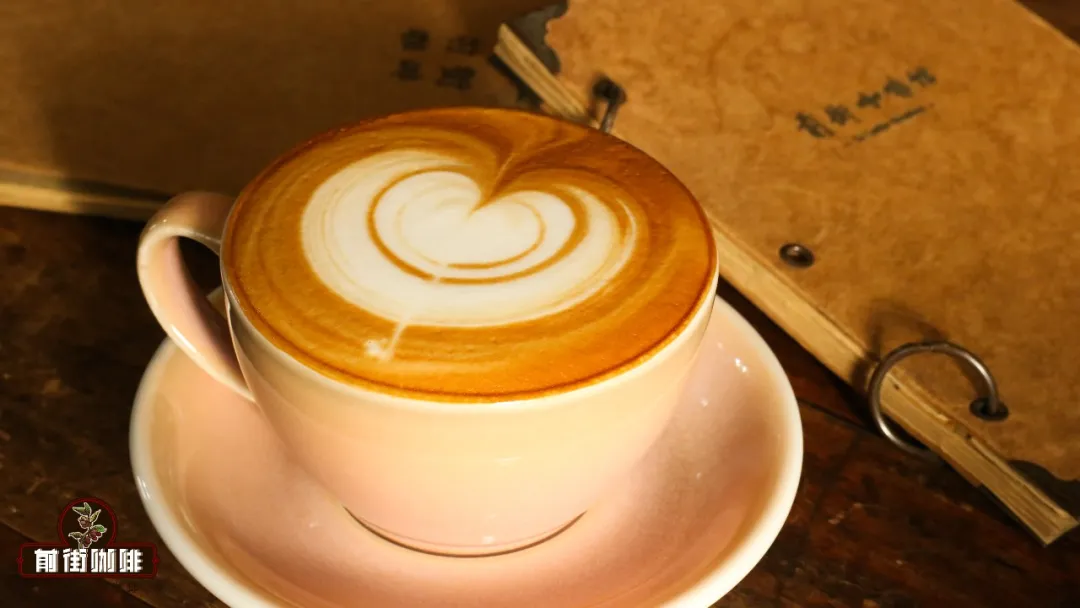
Today, Front Street Coffee is here to chat with you about how these classic Italian coffee names actually came to be!
How did the name Cappuccino come about?
Cappuccino is a classic Italian milk coffee, composed of espresso plus a small amount of milk, topped with a thick layer of milk foam that can expand to fill the cup to the brim. Taking Front Street Coffee as an example, when using the medium-dark roasted Front Street Italian Classic Blend from the bean list to make a Cappuccino, we dose 20g of coffee grounds, extract 40ml of coffee liquid in 30 seconds, then follow a coffee-to-milk ratio of 1:3.5, take 140ml of milk, heat and steam it to form a milk foam thicker than 2cm, and finally integrate and serve.
Because the amount of milk used isn't large, the coffee flavor in this milk coffee is quite prominent—we can clearly taste the chocolate, caramel, cream, and nutty notes of the Front Street Classic Blend. At the same time, the thick milk foam also brings a soft, light mouthfeel.
Like most names, Cappuccino is a transliteration, coming from the Italian word "Cappuccio." In Italian, Cappuccino refers to a "headscarf" or "hood." The reason this word was used to name a coffee is that it's closely associated with the clothing of 16th-century Catholic Capuchin monks.
The clothing of Catholic Capuchin monks is very distinctive—dark brown robes with a pointed hood on the head. At the time, when people saw this attire, they used "Cappuccino" to refer to them, meaning "little hooded person." (The word originates from the German "Kapuziner," meaning monk.)
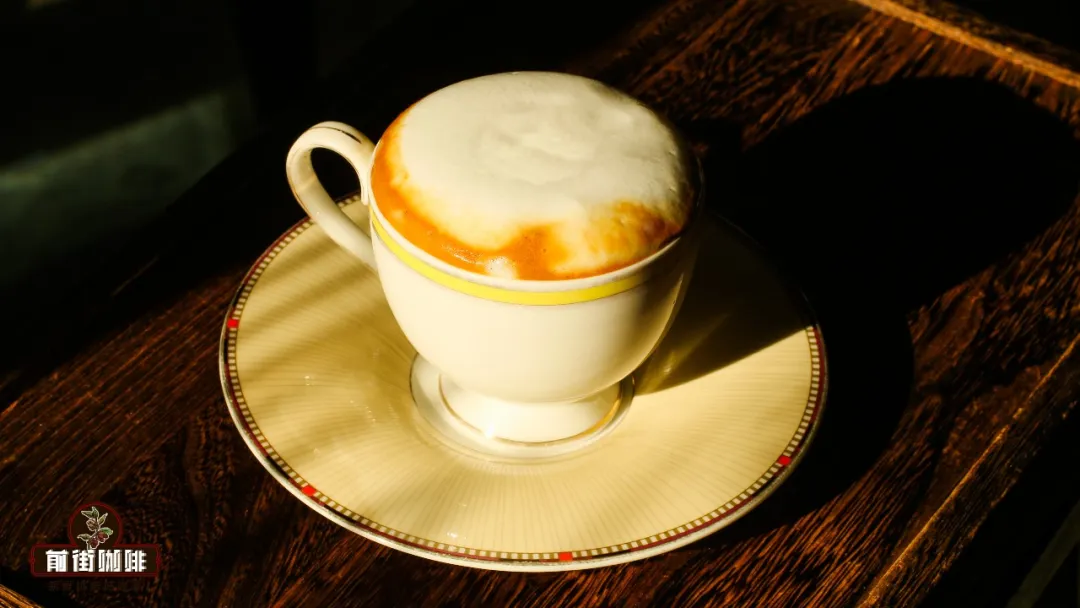
And the Cappuccino in Italian coffee, as Front Street Coffee introduced, is a milk coffee made of espresso, milk, and thick milk foam. Since not much milk is added, the liquid color of this coffee is mainly the brown of coffee; and because the thick milk foam has low fluidity and strong moldability, after being poured into the cup it easily forms a small pointed cone.
This shape and color immediately reminded people at the time of the pointed-hood robes of Catholic Capuchin monks, so everyone used Cappuccino to refer to this thick-milk-foam milk coffee.
How did the name Latte come about?
Similarly, Latte is also a very classic Italian milk coffee. Its difference from Cappuccino is that Latte uses more milk and thinner milk foam. Taking Front Street Coffee as an example, when Front Street Coffee uses the medium-dark roasted Front Street Italian Classic Blend to make a Latte, the espresso base is likewise 40ml of coffee liquid extracted from 20g of grounds, but the milk used is 180ml, and the milk foam thickness is about 1cm.
Because the proportion of milk is higher, the coffee's bitterness is balanced by the milk, so it doesn't taste as strongly of coffee when drunk, with more prominent sweetness, while the flavor still shows caramel, chocolate, nuts, and cream.

The same goes for the name—the "Latte" in Latte coffee is also a transliteration, from the Italian "Caffè Latte." In Italian, Latte means milk, so literally translated it's milk coffee.
Long before Italian coffee appeared, "Caffè" and "Latte" were already combined together to describe a drink mixing milk and coffee, except that at the time it referred more to the practice of adding milk to coffee rather than the name of a specific product. It wasn't until after Italian coffee appeared that, in order to differentiate between different products, "Caffè Latte" became the fixed name of a product.
As Front Street Coffee said, not everyone can accept the bitterness of coffee, especially Italian coffee, whose extremely high concentration makes it hard for people with lighter tastes to accept. Even Cappuccino with milk added is considered by many to have too strong a coffee taste and to be too bitter to drink.
Therefore, coffee shop owners at the time made improvements to Cappuccino. A relatively well-known account is that in 1959, Lino Meiorin, the owner of a café called Caffe Mediterraneum in Berkeley, California, USA, reduced the thickness of the Cappuccino's milk foam and added more milk, diluting the coffee's bitterness and making the coffee easier to drink.

To distinguish it from Cappuccino, Lino Meiorin named this coffee with a large amount of milk "Caffe Latte."
Interestingly, later everyone found the name too troublesome to say, so they simply dropped "Caffe" and shortened it to "Latte" when ordering. And because Latte means milk in Italian, there's this joke: when you walk into an Italian café and want a Latte but only say "Latte" to the waiter, there's a certain chance the waiter will bring you a glass of milk...
How did the name Americano come about?
Americano is a black coffee made only from espresso and water. Because water itself doesn't affect the coffee's taste—only its concentration—the coffee's flavor is still mainly based on the beans themselves.
Taking Front Street Coffee as an example, when Front Street Coffee makes an Americano, the coffee-to-water ratio is 1:4. If the beans used are medium-dark roasted, such as Front Street Coffee's Italian Front Street Classic Blend, then the Americano's flavor profile is chocolate, caramel, nuts, and cream, with a balanced taste and a full-bodied mouthfeel; if the coffee beans used are medium roasted, such as Front Street Coffee's Ethiopian Huakui, then the Americano's flavor profile is berries, citrus, floral notes, and yellow sugar, with a taste dominated by acidity and sweetness and a light mouthfeel.

The birth of Americano can be said to have a similar story to Latte! Because, as Front Street Coffee said earlier, not everyone can accept the concentration of espresso, especially the American soldiers who often dealt with Italian coffee shops at the time.
The extremely high concentration made the American soldiers, accustomed to low-concentration drip coffee, grimace—they said such coffee was hard to swallow, and asked the shop owner to add water to dilute the coffee, making the taste lighter and the concentration closer to American drip coffee.
Over time, this way of drinking became popular among American soldiers, so the shop owner launched it as a formal product and named it "Caffè Americano," shortened to "Americano."
The above are the origins of some of the more classic Italian coffee names. As for the names of other coffees like Flat White and Dirty, Front Street Coffee has done separate detailed shares, so those interested can search for them themselves~
- END -
The above content is compiled by CoffeeHunters, a coffee news website.


