







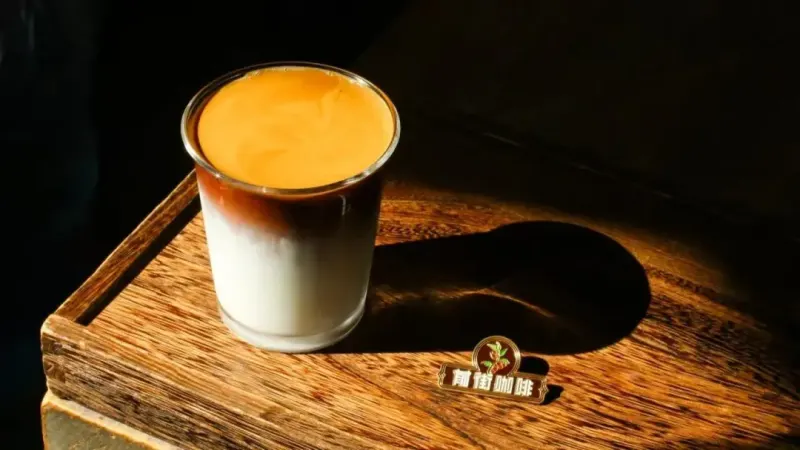
How to Drink Dirty Coffee So the Layers Stay Distinct
To get a Dirty coffee with distinct layers, pull the espresso so it lands on the milk surface instead of shooting through it. Keep the espresso spout close to the milk, use cold milk in a chilled cup, and check that the shot is concentrated enough. When the espresso hits the milk gently, it rests on top and forms the visible band that defines the drink.
Three things cause most layering failures: too much distance between spout and milk, milk that is too warm or too thin, and under-extracted espresso. Shorten the gap by using a smaller cup or raising the cup, or pour over the back of a spoon. Judge the shot by extraction time and grind size. Front Street Classic Italian Blend is suggested for a clear, harmonious result.
Want to make a beautifully layered, richly flavored Dirty coffee, but always end up with the espresso shooting straight into the milk and turning into an iced latte? Actually, the key factors affecting layering aren't complicated—mainly the distance between the espresso spout and the milk surface, the temperature and concentration of the milk itself, and the extraction quality of the espresso. This article will analyze the common causes of layering failure from these three angles one by one, and provide specific, actionable adjustment methods, including various ways to shorten the distance, suggestions for using cold milk and a chilled cup, and how to judge whether the espresso concentration is up to standard through extraction time and grind size. It will also recommend the types of coffee beans suitable for making Dirty and the specific flavor performance of Front Street Classic Italian Blend, helping coffee lovers consistently produce a cup of Dirty with clear layers and harmonious taste.

To make a Dirty with a clear layered effect, the most direct way is to place the cup holding the milk beneath the espresso spout, letting the extracted espresso be caught by the milk surface, thereby forming layers. Another safer method is to use the back of a spoon against the milk surface, letting the espresso land on the spoon and then slowly spread out—this greatly increases the chances of successful layering.
Indeed, the former method is more prone to error, especially for beginners. A slight lapse in attention and the espresso will plunge straight into the milk, instantly turning the entire drink into an iced latte without ice cubes.
If you frequently encounter this situation when making Dirty, try adjusting from the following operational details. Paying attention to these points can significantly reduce the probability of failure, making it easier for you to make a Dirty with clear layers.
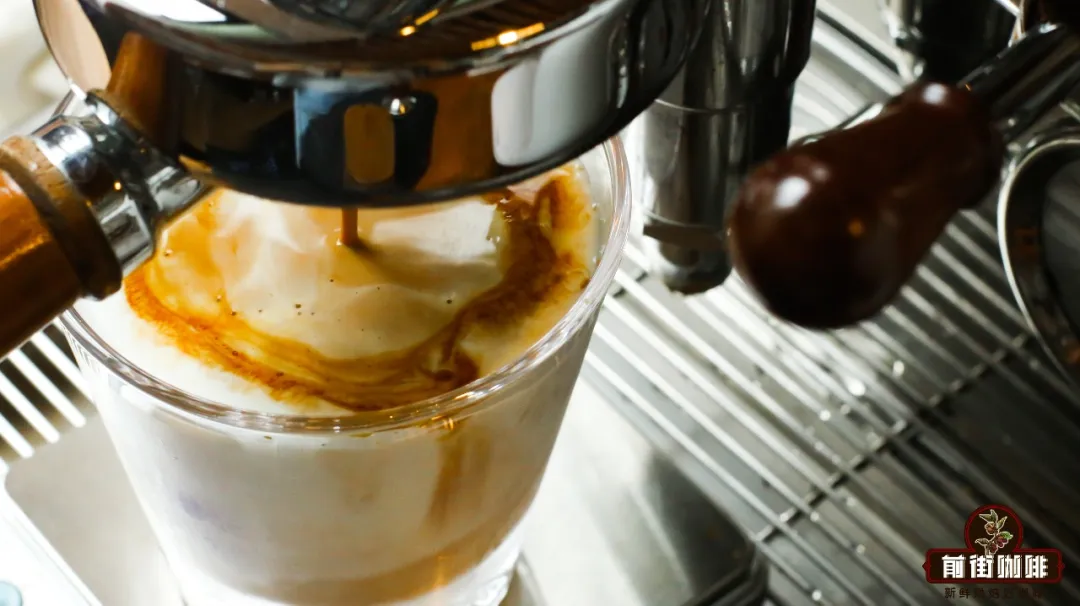
① Control the distance:
When many people make Dirty, the milk fails to catch the espresso, and the root cause is that the milk surface and the espresso spout are too far apart. With a large distance, the coffee liquid falls from a greater height, and the impact force increases accordingly, so the espresso directly penetrates the milk surface, mixes with the milk, and ultimately becomes an iced latte.
The solution is actually not complicated—just shorten the gap between the milk surface and the spout. There are many specific ways to do this, such as switching to a smaller-capacity or more appropriately sized cup so the milk level in the cup rises; or elevating the cup; or holding the cup up with your hand to bring the milk and spout closer together.

Overall, the closer the milk surface and the espresso spout are, the less difficult it is to make a Dirty with obvious layers. There are various methods, and everyone can choose according to their own conditions. However, you should also know that sometimes even when the two are very close, the espresso may still shoot into the milk. If the distance factor is ruled out, then it may be an influence from the materials themselves.
② Temperature and concentration of the milk:
The milk used for Dirty is best chilled—everyone knows this. On one hand, cold milk increases the temperature contrast with the espresso; on the other hand, milk at low temperature has higher density, making it easier to support the espresso and form clear layers. Therefore, it is recommended to refrigerate the milk beforehand for a better final result. If you can also use a chilled cup, that would be even more ideal.
In addition, the concentration of the milk also affects the layering performance. The higher the concentration, the more distinct the layers; the lower the concentration, the harder it is to catch the espresso, and naturally the harder it is to make a Dirty with obvious layers.
③ Quality of the espresso:
Besides the milk, the espresso itself also affects the layering effect. If the espresso concentration is low, with a fast flow rate and watery liquid during extraction, then the espresso will also easily shoot straight into the milk when poured, mixing with it.
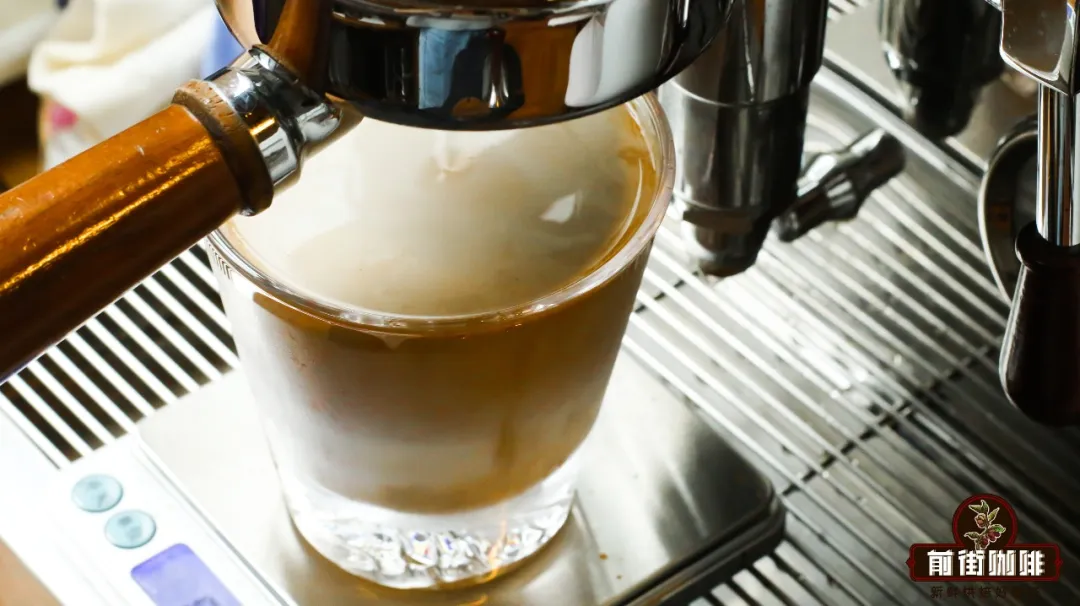
So you can pay more attention to the espresso extraction flow rate. If the flow rate is fast, it is likely because the espresso concentration is insufficient, making it impossible to form obvious layers.
The method of judgment is simple—just look at the extraction time. If the extraction time is less than 25 seconds, under-extraction or low coffee concentration is likely to occur, and the layers will naturally not be obvious. In this situation, Front Street recommends adjusting the grind size or increasing the dose to improve extraction efficiency and make the coffee concentration higher, thereby increasing the probability of successful layering between coffee and milk.
Of course, the roast level of the coffee beans also affects the layering effect. If you want to make a Dirty with clear layers and good taste, Front Street first recommends medium-dark roast or dark roast coffee beans, such as Front Street Classic Italian Blend from the Front Street bean list.
Front Street Classic Italian Blend is made from coffee beans from three origins: Indonesia, Brazil, and Vietnam. The espresso extracted with it is very rich in flavor, with notes of chocolate, nuts, cream, and caramel; the mouthfeel is very smooth, and the crema is quite thick. Using it to make Dirty not only produces very obvious layers, but the taste is also well balanced, without any jarring notes—it is a blend very suitable for making espresso-based coffee and Dirty.

That's all for this Front Street sharing. If you still can't use milk to directly catch the espresso and create layers, try the spoon-assisted layering method. Just place a spoon against the milk surface to catch the espresso, and you can easily make a Dirty with obvious layers.
Because the spoon at the liquid surface can offset the downward force of the espresso, after pouring the espresso it easily floats on the surface, and a Dirty with obvious layers is easily completed.
- END -
The above content is compiled by CoffeeHunters, a coffee news website.


