







Why Is Americano So Bitter When Served Hot?
Hot Americano often reads as bitter because of three factors: serving temperature, the coffee beans used, and the dilution ratio. Both hot and iced Americano start as espresso diluted with water, yet the hot version is perceived as more bitter. Warm liquids let taste buds register bitterness more strongly, while chilling mutes that perception, so the same shot tastes sharper in a hot cup.
Bean choice and ratio matter just as much. Darker roasts and over-extracted espresso add bitter compounds, and too little dilution water concentrates them. Brewing with a medium roast, a shorter extraction, and a higher water-to-espresso ratio can keep the drink aromatic without the harsh edge. Whether iced americano is bitter also depends on these same variables.
Many coffee lovers' first impression of hot Americano is "bitter," and some even joke that the only difference between it and Chinese herbal medicine is that you can't use medical insurance for it. In fact, iced Americano and hot Americano are essentially both black coffee made by diluting espresso, but hot Americano is often less popular; office workers rely on it to stay awake while mocking themselves as "bitter-fated people." What exactly causes this difference in bitterness? Starting from Front Street's coffee tasting experience, this article breaks down the three major factors of temperature, coffee beans, and ratio, and provides specific suggestions on how to make a hot Americano that is aromatic but not bitter, as well as which coffee beans to choose if you are afraid of bitterness and prefer sweetness.
Someone once said that when it comes to bitterness, hot Americano and Chinese herbal medicine are almost on par, and if one must find a difference, it is probably that Chinese herbal medicine can be reimbursed by medical insurance, while hot Americano has to be paid for out of pocket.
Essentially, both iced Americano and hot Americano are black coffee made by adding water to dilute espresso, yet public opinion of hot Americano has long been unfavorable, with endless jokes mocking it online. Many office workers rely on it to keep going while joking that they are "bitter-fated people." So what exactly has given hot Americano such a reputation?
Where exactly is the "bitterness" in hot Americano?
In Front Street's previous article "What Should a Good Americano Taste Like?", it was mentioned that factors such as coffee bean variety, espresso extraction state, coffee-to-liquid ratio, dilution water amount (proportion of ice water), water temperature, and water quality can all affect the final flavor of a cup of Americano.
Whether making it as a cold drink or a hot drink, an excellent Americano is premised on selecting coffee beans of solid quality, then extracting them reasonably according to the beans' characteristics, while also blending the appropriate ratio and temperature. On this basis, the main reasons hot Americano tastes more "bitter" than iced Americano are the following three:
1. The impact of temperature
In discussions of coffee tasting, Front Street has pointed out many times that taste buds differ in their sensitivity to acidity, sweetness, and bitterness under different temperature conditions.
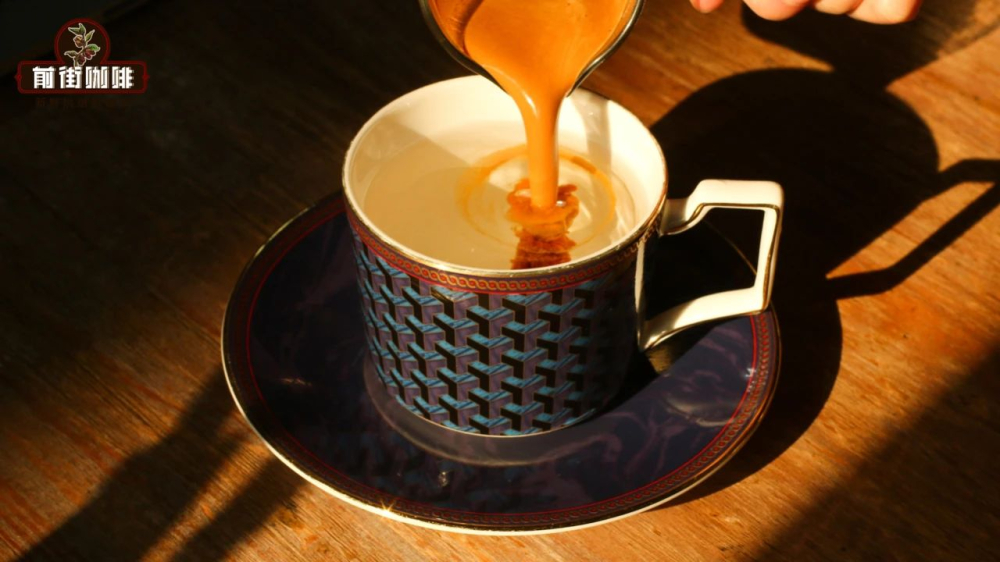
With the same coffee beans, iced Americano does not taste bitter, and the key is that the chilling effect of low temperature weakens our perception of bitterness; while hot Americano has a higher temperature, which not only makes taste buds more sensitive to bitterness, but hot water also further highlights the rich, mellow feeling of espresso, making the coffee as a whole present more obvious bittersweetness and heaviness.
2. The impact of coffee beans
In order to ensure stable output while allowing espresso to retain both aroma and crema, most cafes prioritize medium-dark roasted blend beans for making espresso. For example, Front Street Commercial Espresso Blend is a category launched specifically for store scenarios, with nuts, cocoa, and caramel as the main notes. It can easily extract thick crema and is a very classic dark-roast espresso recipe.
After extracting with this type of dark-roasted bean and making it into hot Americano, first, the espresso itself carries obvious roasting aroma, caramel aroma, and heavy bitterness; second, the crema also carries some very fine particles. So when drinking hot Americano, on the one hand you can feel the sweet aroma and bitter finish brought by the crema, and on the other hand there is the mellow mouthfeel created by the interweaving of caramel aroma and bitterness. Coupled with the further push from high-temperature volatilization, our impression of hot Americano as "bitter" is further amplified.
3. The impact of ratio
No matter which kind of coffee is made, the ratio parameter will more or less affect the final taste. For Americano, the ratio depends on the flavor characteristics of the beans used by each shop. In order to highlight the beans' characteristics, shops usually set different standards for iced Americano and hot Americano separately.
For example, when using Front Street Commercial Espresso Blend coffee beans to make iced Americano, a 350 ml glass is used, with 90 g ice cubes, 150 g drinking water, and a double shot of espresso; when making hot Americano, a 250 ml ceramic cup is used, with 160 g warm water and a double shot of espresso.
By comparison, hot Americano indeed uses more water than iced Americano, and in theory the concentration should be the same, but with the addition of ice cubes, the proportion of espresso in iced Americano is actually smaller, and the concentration will continue to decrease as the ice melts. Therefore, the coffee concentration of hot Americano is often higher than that of iced Americano, so the taste is naturally more concentrated, deeper, and thicker, and the bitterness is also stronger.
How do you make a cup of hot Americano that is aromatic but not bitter?
Although temperature does amplify the taste buds' perception of "bitterness," Front Street believes that high temperature does not equal bitterness. What truly adjusts the taste of coffee is the beans themselves and the ratio of espresso to water, so if you want to get rid of the "bitterness" of hot Americano, you have to start with the latter two.
Coffee beans used for espresso machines are mainly divided into two major categories: espresso blends and SOE.
For friends who like a balanced taste and also want to avoid bitterness, it is recommended to prioritize medium-roast types. For example, for SOE you can choose Front Street Queen's Estate (roasted peanuts, creamy chocolate), Front Street Bird of Paradise (nuts, balanced acidity, sweetness, and bitterness), and the recently launched Front Street Blackberry (grapes, floral notes, berries); for espresso blends, you can choose Front Street Strawberry Candy Espresso, which tastes of grapes, dried blueberries, and fruit gummies with a sweet-and-sour fresh aroma and almost no bitterness.
For espresso, we can also extract only the front and middle sections to avoid part of the bitterness. For example, use 20 g of Front Street Commercial Espresso Blend coffee grounds and extract 30–33 g of coffee liquid within 30 seconds, so that the Americano after dilution will have a softer mouthfeel; or place a circular filter paper at the bottom of the portafilter basket before extraction, which can also appropriately reduce very fine particles and thereby lower the bitterness of the coffee.
The above content is compiled by CoffeeHunters, a coffee news website.


