







Can an ordinary kettle make good hand brew coffee?
Yes, an ordinary home kettle can make good hand brew coffee. What decides the taste is not the equipment but the extraction parameters: grind size, water temperature, coffee-to-water ratio, and extraction time. A gooseneck kettle simply makes controlled pouring easier. Two tricks close the gap, filling the kettle nearly full so its center of gravity stays steady and the flow stays moderate, and pouring in small segments instead of one long continuous stream.
Front Street's Yirgacheffe Goting serves as the worked example, with dose, ratio, grind size, and water temperature all specified, followed by blooming, segmented pouring, and circular extraction. Price is what raises the question: a basic pouring kettle without heating sells for over two hundred yuan, and a temperature-controlled model for roughly double. With parameters under control, even the most ordinary equipment can produce a clean, solid single-origin cup.
A professional gooseneck kettle often costs two to three hundred yuan, which puts many coffee enthusiasts off. In fact, as long as you master the correct extraction parameters and pouring strategy, that ordinary kettle at home can also brew a delicious pour-over coffee. This article first analyzes the inherent shortcomings of ordinary kettles in terms of spout design and capacity, then offers two practical solutions—filling the kettle to full to stabilize the center of gravity and control the flow, or using segmented pouring to reduce difficulty. Then, using Front Street Yirgacheffe Goting as an example, it fully shares parameters such as coffee dose, ratio, grind size, and water temperature, and demonstrates step by step the entire process of blooming, segmented pouring, and circular extraction, helping you consistently produce a clean and solid single-origin coffee even with the most ordinary equipment.
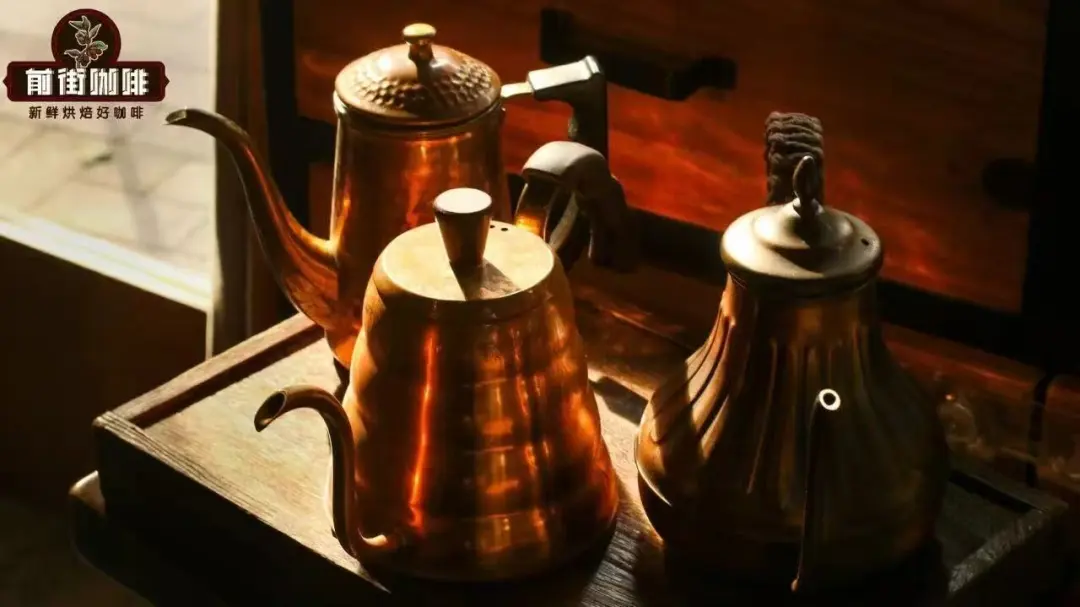
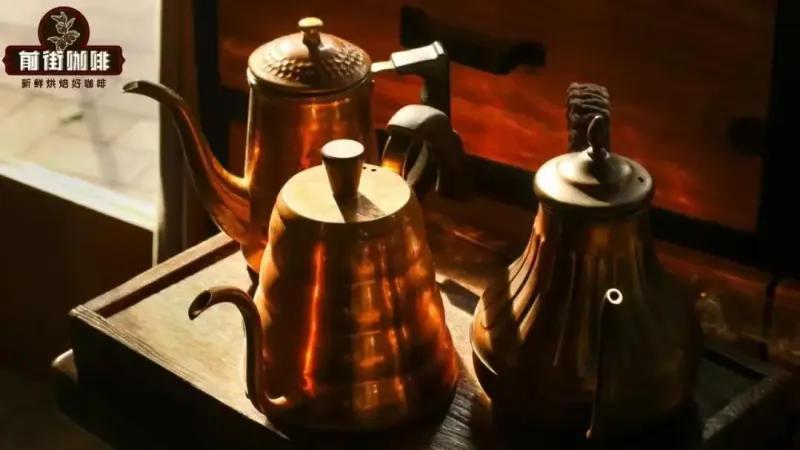
Compared with the ordinary hot water kettle found in every household, a pour-over dedicated pouring kettle often sells for much more. Take some common brands on the market: a regular pouring kettle without a heating function costs over two hundred yuan, and if it comes with a temperature-controlled heating base, the price doubles again. So many friends wonder: since both boil water and pour water, can’t the kettle at home be used directly to brew coffee?
The answer is, of course, yes. Whether a cup of coffee tastes good or not does not depend on how professional the equipment is, but on whether the extraction parameters are reasonable. As long as the grind size, water temperature, coffee-to-water ratio, and extraction time are all properly controlled, brewing a good cup of coffee is actually not difficult. The reason for controlling the water flow during brewing is, on the one hand, to agitate the coffee bed, and on the other hand, to allow the hot water to evenly saturate every coffee particle while keeping the extraction time within the ideal range. These requirements can be met by an ordinary kettle as well, so it is fully capable of brewing a delicious pour-over coffee.
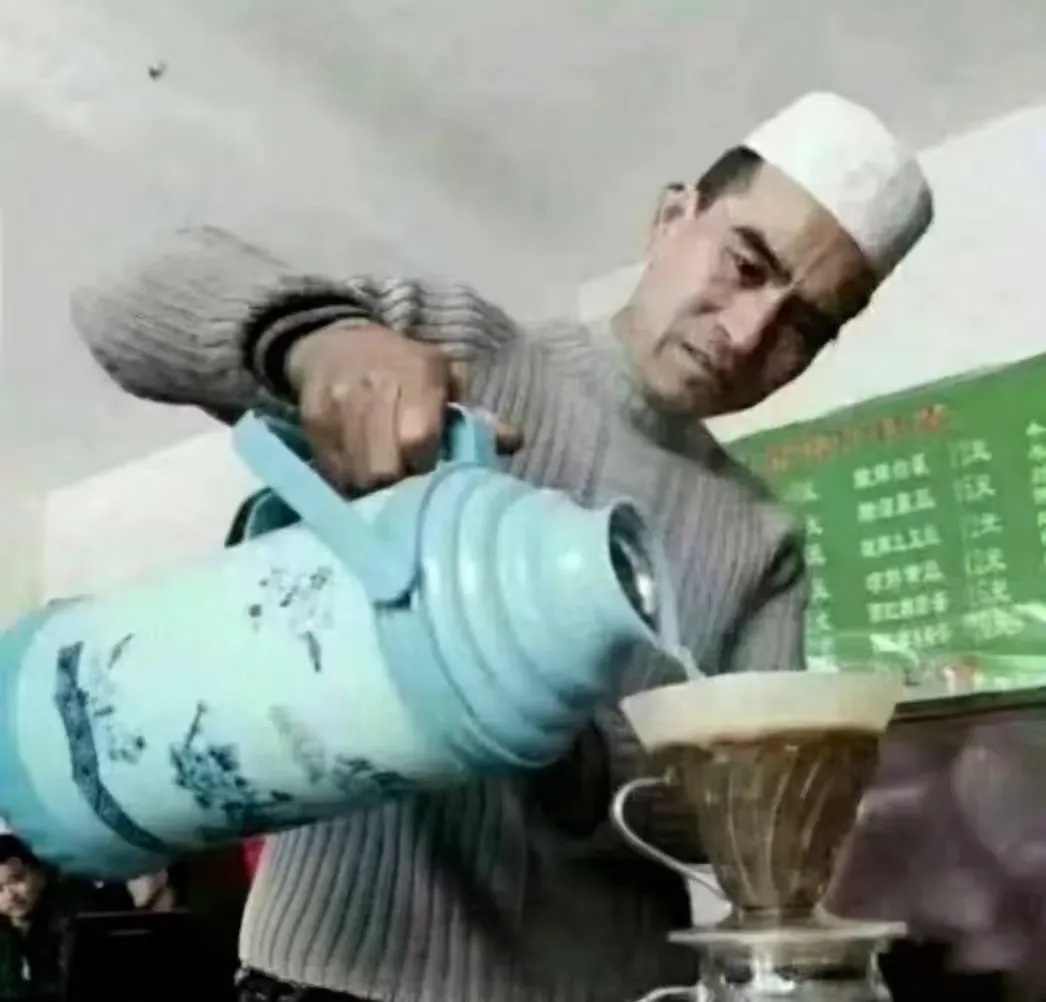
It is just that compared with a professional pouring kettle, an ordinary kettle is indeed a bit more cumbersome to operate. After all, its original design was not intended for precise pouring, so using it to pour steadily and brew a good cup of coffee still involves some difficulty. But it is not impossible to overcome.
How to brew a good cup of coffee with a household kettle?
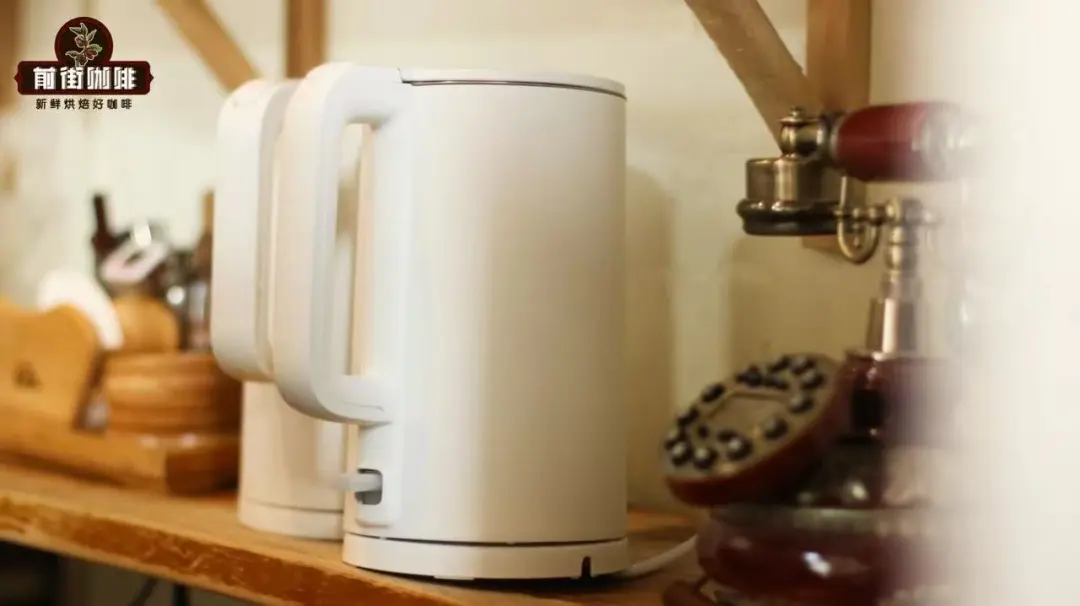
To brew good coffee with a kettle, the first step is to understand the characteristics of the kettle in your hand. Take Front Street as an example: Front Street uses a 1.5L straight-sided kettle with a short spout and a relatively wide opening. This kind of spout design makes it difficult to finely control the flow when pouring, and the hot water tends to come out in inconsistent, erratic bursts. In addition, because the body is large, if too little water is added, you have to tilt the kettle significantly when pouring, which makes the flow even more unstable and makes it hard to pour an even stream.
If you want to use this kind of kettle to brew coffee, there are two methods you can choose from. The first is to practice controlling the flow and then brew using the same pouring method as with a professional kettle. This method does not require adjusting the extraction parameters, but the prerequisite is that you can pour a relatively steady stream. The method is actually very simple—just fill the kettle to full.
As long as the kettle is filled to full, it does not need to be tilted much to pour hot water, and the center of gravity will not change drastically due to tilting, so you can naturally pour a relatively stable stream and greatly reduce the difficulty of flow control. The downside is... if your kettle is, like Front Street’s, a large 1.5L capacity one, after filling it with water you have to hold it up and brew for two minutes, which is indeed quite a test of arm strength.
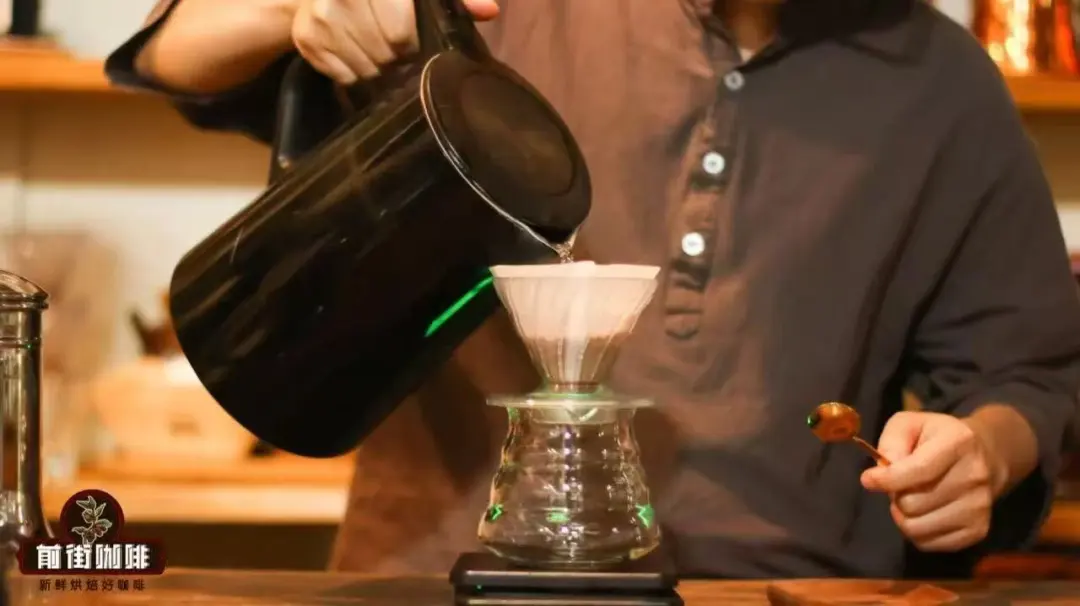
So, if your grip is strong enough, or if the kettle’s capacity is not large to begin with, you can stabilize the center of gravity by filling it to full and thus pour a steady stream of hot water to brew good coffee. If you do not have enough strength and the kettle is relatively large, then you might as well try the method Front Street previously shared in the article “How to Brew a Delicious Cup of Coffee with Water from an Office Water Dispenser”—pouring in multiple segments.
The method is very simple: just divide the total pouring amount into several segments. Because the amount poured in each segment is reduced, you neither need to hold the kettle for a long time nor pour a particularly stable stream; you only need to ensure that the hot water poured each time can fully pass through the coffee bed.
Brewing Sharing
For this brewing, Front Street chose Front Street Yirgacheffe Goting from the flagship store for the demonstration. This coffee is produced in the high-altitude growing region of Yirgacheffe, Ethiopia. Its long growth cycle allows it to accumulate abundant sugars and flavor compounds, and after a medium-light roast it displays a rich and fascinating aroma, making it very suitable for pour-over single-origin, Americano black coffee, and more. The extraction parameters are as follows:
Coffee dose used: 15g Coffee-to-water ratio: 1:15 Grind size: 75%~80% passing rate on a No. 20 sieve Brewing water temperature: 90°C
Compared with regular brewing, the water temperature here is slightly lower because there are more segments and the extraction time is longer, so it is necessary to slow the extraction efficiency by lowering the water temperature to avoid over-extraction. The first step, as usual, is to bloom for 30 seconds.
After the bloom is finished, divide the remaining hot water into multiple segments and pour. There is no strict limit on the amount poured in each segment; pour until the water level covers the coffee bed, then stop, wait until all the hot water has drained through, and then pour the next segment. Repeat this until the target total water amount has been poured.
During pouring, you can appropriately control the stream and pour in circles, which makes extraction more even and allows the coffee flavors to be released more fully. If you really cannot control the flow rate well, then just make sure the hot water is poured from the center.
After all the hot water has been poured, wait for dripping to finish, then remove the dripper, and extraction is complete.
This brewing method takes a little longer; Front Street used 2 minutes 35 seconds this time. Although the time is long, no negative flavors appeared. On the contrary, the coffee’s aroma was very prominent, with clearly noticeable fresh notes of white floral, lemon, and oolong tea. The mouthfeel was clean and solid—quite good.
That is all for this Front Street sharing. In short, whether you use a professional pour-over kettle or a household kettle, as long as the parameters are right, brewing a delicious pot of coffee is not difficult.
- END -
The above content is compiled by CoffeeHunters, a coffee news website.


