








What Does Typica Coffee Look Like in the Bean?
Typica coffee beans are oval and slender, with a center line that curves into an S shape and a relatively large particle size, which is why Typica has long been called the long bean. Its flavor is strong enough that producing regions keep growing it despite low yields. Bean shape alone can suggest a variety, but similar-looking varieties limit how far appearance-based judging can go.
The guide also covers Bourbon, Caturra, Catuai, SL28/SL34, and green geisha coffee beans, each with its own bean outline and pour-over or espresso direction. Use these shapes as a primer rather than proof, since many varieties resemble one another closely and a single glance rarely settles the question with certainty.
When faced with a vast array of coffee beans, many enthusiasts wonder whether they can identify the variety by appearance alone. Actually, this is not as far-fetched as it seems—as long as you grasp the unique bean shape characteristics of each variety, you have a chance of doing it. This article compiles the appearance features of common varieties such as Typica, Bourbon, Caturra, Catuai, SL28/SL34, and Geisha, and in conjunction with specific products from the Front Street coffee list, explains their respective flavor directions in pour-over and espresso extraction. Of course, it is not uncommon for varieties to look alike, so judging by appearance alone has certain limitations, and it is better suited as a variety primer.
"How much coffee do you have to drink to reach this level?"
But honestly, developing this skill is not as difficult as you might imagine. As Front Street explained earlier in "Teach You to Tell at a Glance Whether Coffee Is Natural or Washed," there is a method to identifying coffee beans. Coffee beans naturally vary greatly in appearance, and the reason varieties are distinguished is precisely because differences exist between beans in both flavor and appearance—though of course, it is not limited to just these two aspects. In short, as long as we can grasp the unique appearance feature of a certain coffee bean that is clearly different from other beans, it is possible to "identify its variety at a glance"!

So today Front Street will introduce the appearance of several common varieties. It should be noted in advance that there are simply too many coffee varieties, and many look alike, just like Jay Chou has countless "lookalikes"
. Therefore, judging varieties by appearance alone has rather significant limitations, but we might as well treat it as a variety primer and see what common coffee varieties look like. 1. Typica The first one Front Street will discuss is the representative figure of Arabica—Typica. Whenever you see an article online introducing Arabica coffee beans, the beans in the accompanying photo are most likely Typica. Typica has long been known as the "long bean," with an oval and slender shape, round and plump beans, a center line curved into an "S" shape, and a relatively large particle size—its overall form is quite standard.
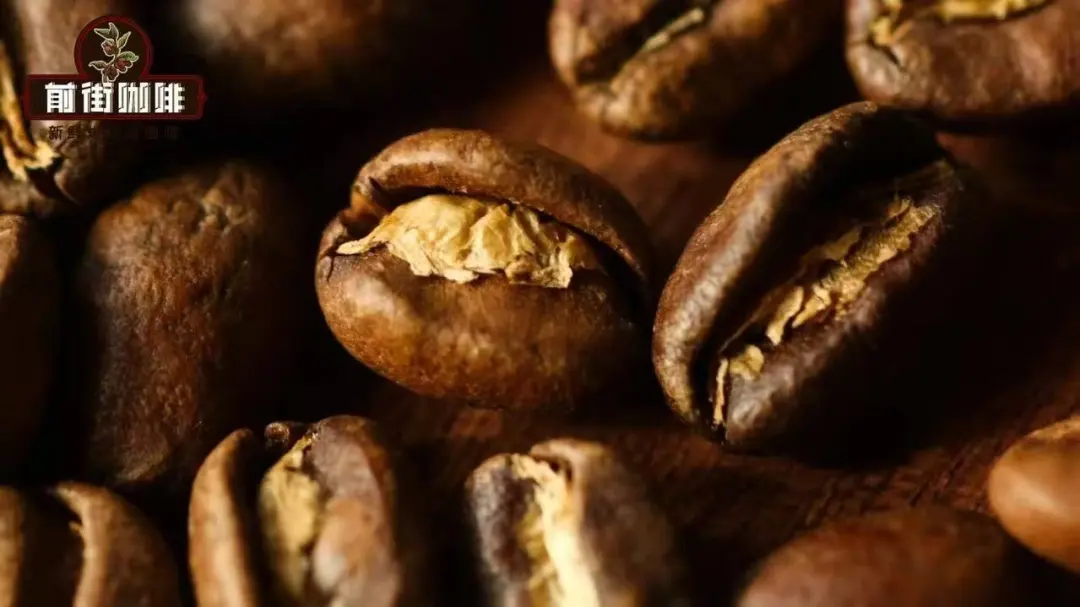
Its flavor performance is excellent, and even though its yield is low and cultivation is not easy, many producing regions are still willing to grow it. For example, in the Front Street coffee list, the Front Street Jamaica Blue Mountain No. 1 and Papua New Guinea Paradise Bird, suitable for both pour-over and espresso, as well as Front Street 2013, which Front Street grows itself on its Yunnan estate, are all Typica varieties. From these beans, we can taste both roasted aromas like chocolate and nuts, and also capture the distinctive delicate fragrance unique to Typica—quite pleasing.
2. Bourbon Typica is called the "long bean" largely because Bourbon exists—Bourbon's bean shape is almost the exact opposite of Typica's. Bourbon is a natural mutation of Typica. After the Typica coffee trees originally planted in Yemen mutated, the beans they produced became round, so Bourbon is also called "round coffee bean." In addition to its round bean shape, Bourbon is also slightly smaller in size, but overall plump and thick—it can be called the representative of short, chubby, and round.

The Front Street Rwanda coffee in the Front Street coffee list is a Bourbon variety. After brewing, the flavor is clean and traditional, presenting berry, citrus, and fresh green tea notes—a very good performance. 3. Caturra Caturra is a descendant of Bourbon. Because the plant is short, high-yielding, and able to withstand harsh sun exposure, it has become a main cultivated variety in many producing regions. Its bean shape is relatively close to Bourbon, also on the round side, but the body is slightly elongated—belonging to a small, plump oval shape.
The Front Street Costa Rica Blackberry variety in the Front Street coffee list, suitable for both pour-over and espresso, is Caturra. The brewed coffee has obvious dark berry, grape, floral notes, and a slight fermented flavor, with intertwined acidity and sweetness, a light body, and is well worth trying. 4. Catuai Catuai is a hybrid of Caturra and Mundo Novo. As a second-generation hybrid, it not only inherits Caturra's high yield and ease of cultivation, but also has stronger disease resistance. Therefore, after Catuai was introduced, it replaced many old varieties and became the main planting target in many places. Because Catuai is an artificially bred hybrid of Caturra and Mundo Novo, and Mundo Novo itself is a natural hybrid of Bourbon and Typica, Catuai's shape is more oval, and the tail end of the bean appears somewhat slender.
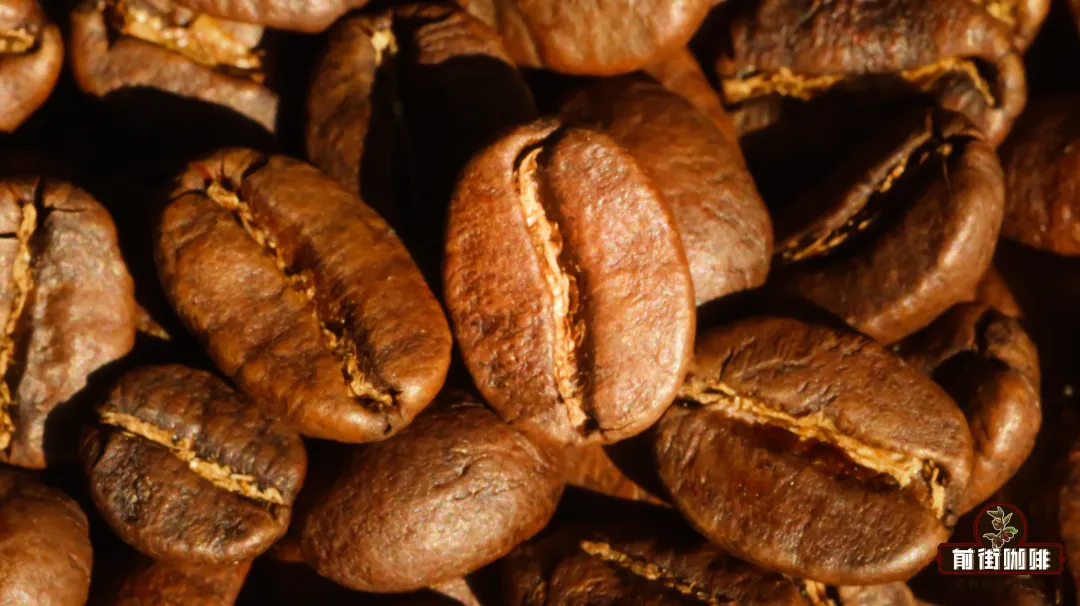
The Front Street Panama Natural Elida variety in the Front Street coffee list, suitable for both pour-over and espresso, is Catuai. The coffee brewed from it has the sweet fragrance of white peach and orange, with a finish of green tea and something like red wine—very good. 5. SL28/SL34 SL28 and SL34 are Kenya's star varieties, selected and bred by the Scott Laboratories. With outstanding flavor and relatively considerable yield, they have not only been widely planted in Kenya but also introduced as a pair in many other producing regions. Although they are often planted mixed together, their respective bean shape characteristics are so distinct that we can easily pick out SL28 and SL34 from a bag of mixed beans. It has been determined that SL28 belongs to Bourbon or its variants, while SL34 belongs to Typica or its variants—one on the round side, one on the long side—so they are not difficult to identify.
The Front Street Kenya Little Tomato in the Front Street coffee list is of the SL28&SL34 varieties. The brewed coffee has obvious little tomato and smoked plum acidity, a solid and full body, accompanied by caramel sweetness—very delicious. 6. Geisha Everyone should be quite familiar with Geisha, and its characteristics are also quite distinctive. In the traditional sense, Geisha—that is, what we commonly call Panama Geisha, the T2722 variety—has a slender body, with pointed ends and a plump, fat middle, looking a bit like a sausage roll.
Because its form is vastly different from the other varieties mentioned above, we can easily distinguish Geisha (T2722) from them. For example, the Front Street coffee list includes two blends using Panama Geisha, namely Front Street Panama Butterfly and Front Street Costa Rica Strawberry Candy Geisha Blend. Friends who have these beans on hand might as well pour them out and try, to see whether, as Front Street says, you can quickly find the Geisha hidden among them.
The flavor of traditional Panama Geisha is white floral, citrus fruit notes, with a honey-like texture. Everyone can taste these flavors in the Front Street Panama Boquete Geisha and Front Street Hacienda La Esmeralda Green Label/Red Label from the Front Street coffee list. That is all for this Front Street sharing. Friends who are interested can take out the beans they have on hand and record their morphological characteristics. But as Front Street said, there are thousands upon thousands of coffee bean varieties, and "lookalike" situations are very common, so the purpose of understanding these characteristics is best kept more for learning.
- END -
The above content is compiled by CoffeeHunters, a coffee news website.


