







How does Panama gesha compare with Gesha Village lots?
Gesha Village Estate in Ethiopia's Bench Maji region grades its coffee with labels such as Gold Label and Red Label, and the varieties behind those labels are not identical. Gold Label uses Gesha 1931, while Red Label uses Gori Gesha, a closely related selection. Both are distinct from the Panama gesha popularized by Hacienda La Esmeralda, which follows its own grading system.
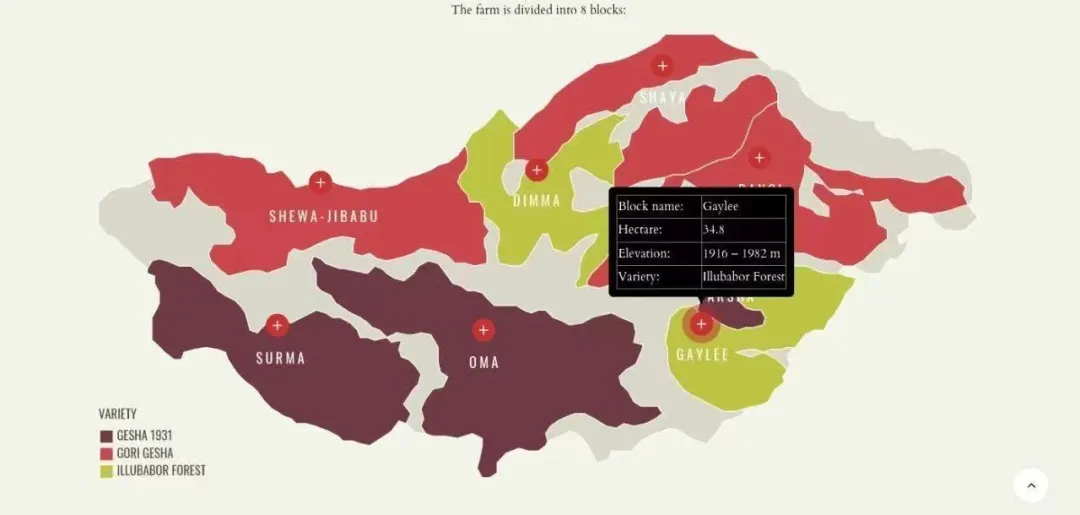
The 471-hectare estate divides roughly 320 hectares of coffee into eight blocks, planted at about 7,000 trees per hectare, with Auction, Green Label, and Chaka rounding out the lineup. Label names simply reflect the tag color, not the variety. In the cup, natural-process lots from these selections often show the bright acidity coffee drinkers associate with high-grown gesha.
The Gold Label and Red Label coffees produced by Gesha Village Estate are a focal point for many enthusiasts. What exactly are the differences between these two products in terms of variety, grading, and flavor? And do the Gesha 1931 used for the Gold Label and the Gori Gesha used for the Red Label truly belong to what we commonly call Gesha? In this article, Front Street will sort out Gesha Village's grading system, from geographical divisions and variety tracing to cupping performance, and bring a specific brewing comparison of two natural-process lots, helping you understand the differences between these two lots more clearly.
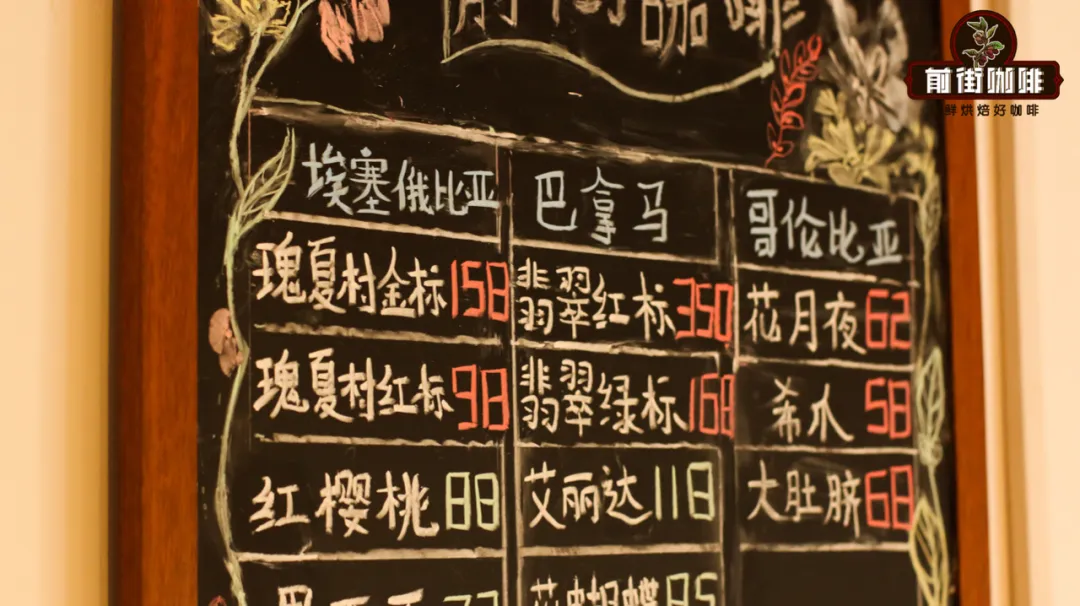
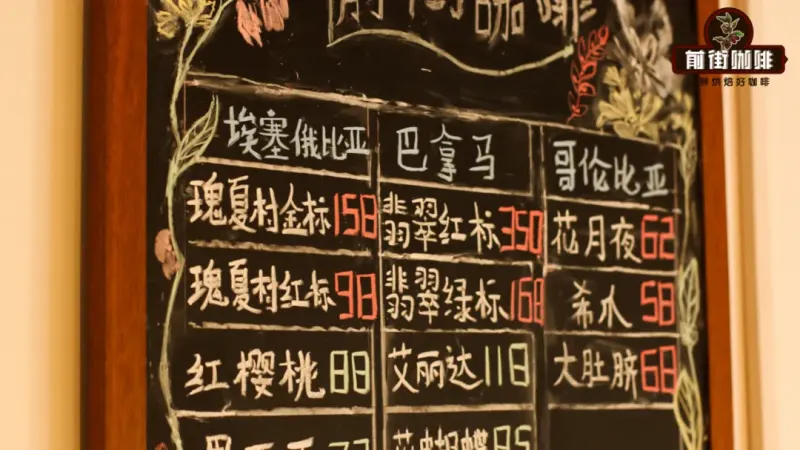
Front Street has previously introduced Hacienda La Esmeralda's grading system and also conducted a horizontal comparison of Gesha from two estates. However, there has never been much specific explanation about Gesha Village's Gold Label and Red Label, so guests often hesitate in front of Front Street's blackboard, wanting to figure out exactly how they differ.
Today, Front Street will specifically discuss what differences exist between the Gold Label and Red Label, the two best-selling products of Gesha Village.
Before diving in, there is one thing to understand first——
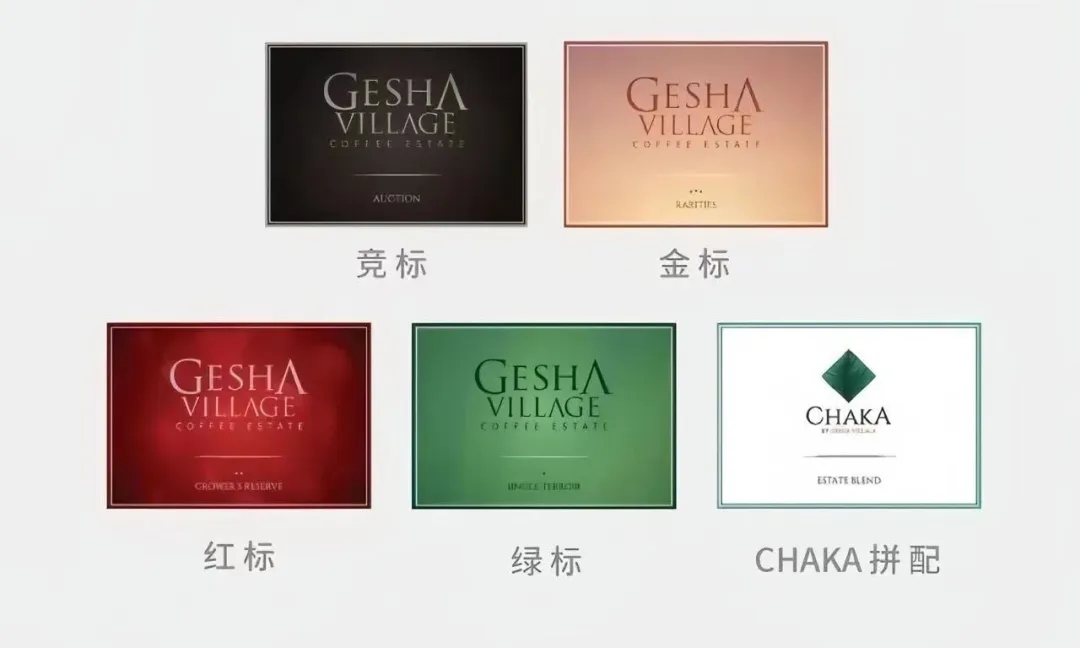
In addition to the Gold Label and Red Label, Gesha Village Estate's product line also includes different grades such as Auction, Green Label, and Chaka. This grading logic is similar to Hacienda La Esmeralda's system and is not difficult to understand.
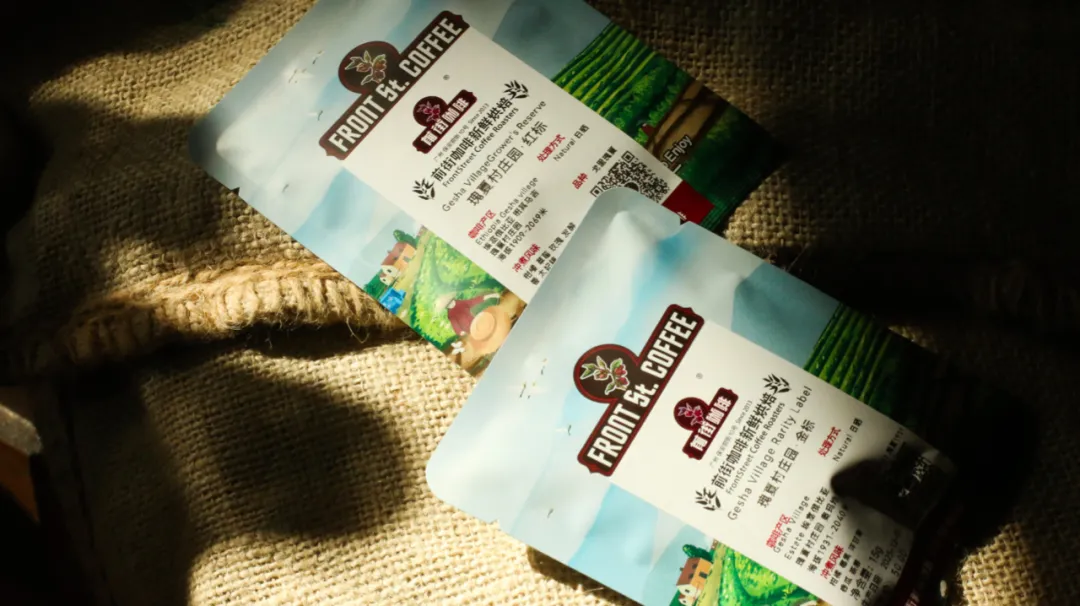
As Front Street has mentioned before, the so-called "labels" are not the products' original names. Because the original names are awkward to read, for the convenience of daily communication, domestic enthusiasts refer to them based on the color of the product label and the variety.
For example, Gold Label Gesha is called this because the product label's background color is gold, and the coffee variety sold is Gesha. Red Label and Green Label follow the same naming logic. But it is worth noting that the varieties corresponding to different labels at Gesha Village Estate are not necessarily all Gesha.
Next, let's look at Gesha Village Estate's location and plot distribution. The estate is located in a place called Gesha Village in the Bench Maji region of Ethiopia, with a total area of about 471 hectares, of which about 320 hectares are coffee-growing areas, and the planting density is maintained at 7,000 trees per hectare. The estate owner, Adam Overton, divided the area into eight blocks, and the coffee produced in each block carries different terroir characteristics.
Below, Front Street will specifically explain the respective characteristics of Gesha Village's Gold Label and Red Label.
Definition of Gold Label Gesha
The Gold Label is the highest grade of coffee at Gesha Village apart from the Auction lot, originally named "Rarities," meaning "rare treasures."
Its output accounts for only around 10% of Gesha Village Estate's annual total, making it relatively scarce, and it has complete traceability information. Because of its outstanding flavor and complex layers, many competition participants choose Gold Label Gesha as their competition bean.
It is worth mentioning that although it is called Gesha, the variety used for the Gold Label is not the well-known Panama Gesha (T2722), but rather "Gesha 1931."
(The variety in the picture is Panama Gesha T2722, and the variety on the right is Gesha 1931)
Gesha 1931 is a variety carefully selected by the estate owner from the very forest where Gesha was discovered back then. Whether in bean appearance or flavor performance, it is very close to what we call Panama Gesha (T2722), so the estate owner named it "Gesha 1931" (1931 being the year Gesha was collected from the forest and brought back by expedition members).
Definition of Gesha Village Red Label
The official name of Gesha Village Red Label is "Growers Reserve."
Red Label lots account for about 15% of Gesha Village Estate's annual output, slightly higher than the Gold Label, and also have complete traceability information.
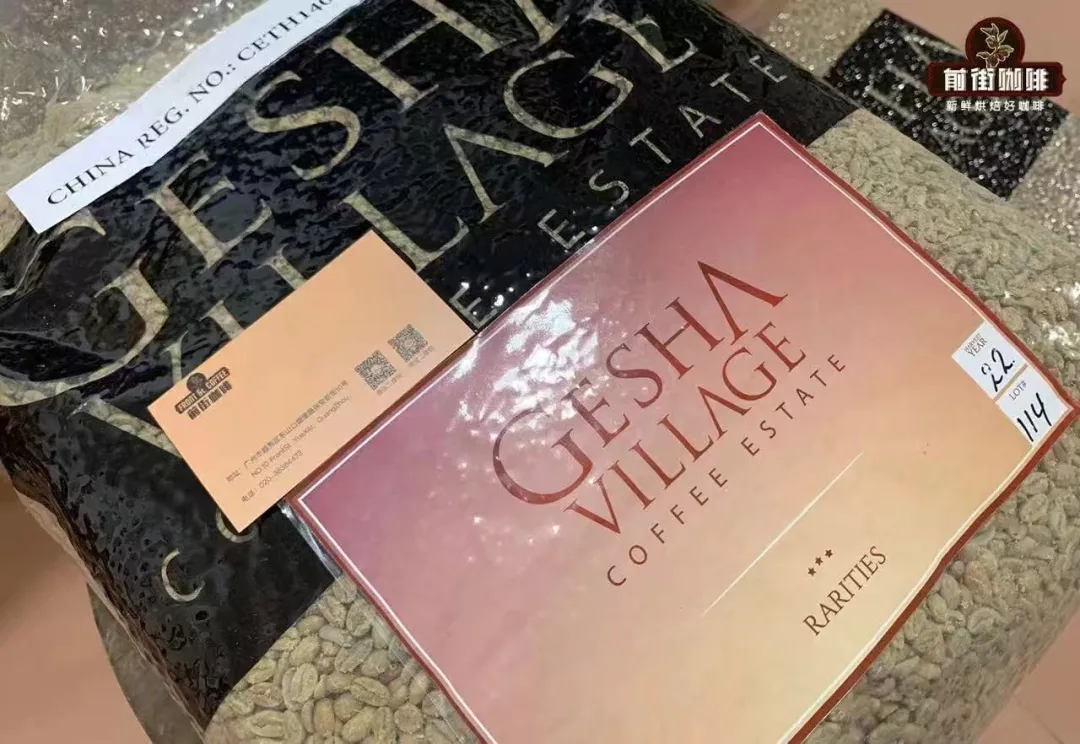
Gesha Village Estate's requirement for the Red Label is a cupping score above 88 points. Regardless of variety, as long as the score meets the standard, it can be exported and sold as a Red Label lot. Compared with the Gold Label, which is closer to Panama Gesha in all aspects, Gesha Village Red Label's flavor leans more toward Ethiopia's local characteristics.
The Red Label lot selected by Front Street is the Gori Gesha variety, which is also a variety the estate owner found locally. Although it has Gesha in its name, neither its appearance nor its flavor has much connection to what we recognize as Gesha.
Coincidentally, the Gesha Village Gold Label and Red Label currently sold by Front Street on Taobao Tmall both use natural processing, which allows a more intuitive comparison of the differences between them. Next, Front Street will explain how Gesha Village Gold Label and Red Label differ in taste.
Brewing Sharing
Since the Front Street Gesha Village Gold Label and Front Street Gesha Village Red Label on Front Street's bean list have the same roast level and processing method, the brewing parameters used are also the same, as follows: Dose: 15g Coffee-to-water ratio: 1:15 Grind size: Ek43 setting 10, 75%~80% passing through a No. 20 sieve, fine granulated sugar texture Brewing water temperature: 92°C Brewing time: about 2 minutes 10 seconds
Dry aroma:
The dry aroma of Gesha Village Red Label presents very bright citrus fruit notes, fresh and appealing; the dry aroma of Gesha Village Gold Label, on top of citrus, adds a honeysuckle-like scent and also carries some sweet apricot-peach fragrance. By comparison, the Gold Label's aroma is softer and has more layers.
Flavor:
The freshly brewed Gesha Village Red Label shows classic Ethiopian coffee aromas such as citrus, strawberry, mango, and pineapple. The overall acidity is bright, the mouthfeel is clean and smooth, and the finish carries a feeling like green mandarin tea;
The flavor of Gesha Village Gold Label presents blueberry, honeydew, sweet cherry, and elegant white floral notes. The overall acidity is soft, clean, and refined, and on careful reflection you can perceive fruit flavors such as citrus and mango, as well as an oolong tea finish, which is very pleasant.
- END -
The above content is compiled by CoffeeHunters, a coffee news website.


