







Why Coffee Prices Vary: Variety, Grade, and Yield
Coffee prices reflect several factors, starting with variety. Arabica and Robusta differ greatly in cultivation needs and yield. Arabica, including Typica and Bourbon, grows at high elevations, offers complex flavors, but is delicate and low-yielding, raising its cost. In contrast, Robusta thrives in lowlands, is hardier, and produces more, making it cheaper. Understanding these differences helps explain why a bag of coffee can cost so much more than another.
Beyond variety, green bean grade and yield play key roles. Producing countries grade beans by size, altitude, or defect rate, with higher grades often commanding higher prices. Rarity also drives cost, as seen with Jamaica Blue Mountain or Panama Geisha. However, price does not guarantee personal taste satisfaction; a customer might find an expensive Geisha too sour. completely, a reliable coffee is the one that suits your palate, not the one with the highest price tag.
It is often said that you get what you pay for, but in the world of coffee, can a higher price really be directly equated with better quality? At Front Street Coffee's shop, we once encountered a customer who, looking at the 75-yuan Emerald Red Label, asked: Is it necessarily tastier than an ordinary pour-over at 30 yuan? To answer this question, we first need to understand the underlying logic of coffee pricing. The core factors affecting coffee bean prices mainly fall into three aspects: first, variety—Arabica and Robusta differ significantly in cultivation difficulty and yield; second, green bean grade—each producing country grades beans by size, altitude, or defect rate; third, yield—take Jamaica Blue Mountain and Panama Geisha as examples, rarity can greatly drive up prices. But a price tag cannot decide for consumers whether a cup of coffee suits their taste, as evidenced by a regular at Front Street Coffee who, after trying Gold Label Geisha, exclaimed that it was too sour. This article will break down these factors one by one to help enthusiasts find the cup of good coffee that truly belongs to them.
Everyone says you get what you pay for, and in many everyday consumption scenarios, this saying indeed holds true; over time, it has also become an instinct for judging the value of goods.
Not long ago, a customer visited Front Street Coffee's shop, looked through the menu, and couldn't help asking: "That cup of Emerald Red Label costs 75 yuan—why is it so expensive? It must taste much better than an ordinary pour-over (30 yuan), right?" Clearly, this friend had directly equated "high price" with "good quality," subconsciously assuming that the more expensive the coffee, the better it tastes. But is that really the case?
What factors actually determine the price of a cup of coffee?
1. Variety differences
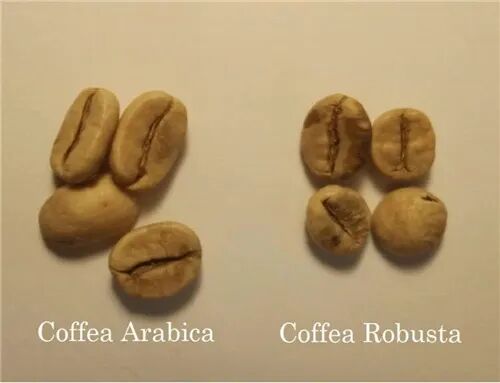
As everyone probably knows, coffee beans currently circulating in the market can be broadly divided into two major categories: Arabica and Robusta.
Arabica has spawned many varieties, such as Typica, Bourbon, Caturra, and others. They are usually grown at elevations above 800 meters, have a mild flavor, and display a rich range of high-quality characteristics depending on different terroirs. However, Arabica is inherently delicate, has demanding growing environment requirements, limited yields, poor resistance to pests and diseases, and may even wither at any time. This forces growers to invest more effort in care, so its price is naturally higher.
Robusta, on the other hand, is mostly distributed in lowlands below 800 meters. During growth, it is neither afraid of pests nor scorching sun, and can be planted at high density, yielding considerably at harvest. Therefore, Robusta beans can be popularized in more countries and are widely used at lower prices as raw material for dark-roast espresso blends or instant coffee.
2. Green bean grade
No matter how much coffee ultimately sells for or what extraction method is used, coffee beans are essentially agricultural products. Since they are agricultural products, each country will establish corresponding grading standards, and the higher the green bean grade, the more expensive the price. At present, global green coffee bean grading mainly revolves around three dimensions: bean size, altitude (hardness), and defect rate.
For example, Front Street Kenya Little Tomato and Front Street Colombia Huila are graded by size according to specific screen sizes. These countries believe that larger beans have better maturity, thus bringing superior flavor and roasting more evenly.
Central American countries such as Panama, Costa Rica, and Guatemala adopt altitude-based grading systems. The higher the altitude at which coffee grows, the harder and denser the bean, the more fully it absorbs nutrients, and the more prominent the flavor, so the selling price is higher.
Countries such as Ethiopia and Indonesia, however, classify green bean grades by defect rate: the fewer the defects, the higher the market value. For example, Front Street PWN Golden Mandheling and Front Street Lintong Mandheling both belong to the G1 grade, but the former undergoes one machine sorting plus three hand sortings, reducing the defect rate to an extremely low level and making the beans more uniform, so it is more expensive than ordinary Mandheling.
In addition to producing countries' grading standards, some large estates also have their own grading systems. The most famous is undoubtedly Hacienda La Esmeralda in Panama, where all Geisha green beans are divided into Red Label and Green Label, as well as the auction lot separately selected by the estate owner from the Red Label. Red Label, which can be traced to a specific plot, is priced higher than Green Label, and the auction lot, due to its auction nature, is even more expensive than "ordinary Red Label," with scarcity as its main selling point.
3. Yield factors
As the saying goes, things are precious when they are rare, and coffee is no exception. Take Jamaica Blue Mountain, once hailed as the "Hermès of the coffee world," as an example. In order to standardize the quality of Blue Mountain coffee, the Jamaica Coffee Board designated a specific area in the Blue Mountain range and strictly stipulated that only Typica coffee produced in that area could bear the name "Blue Mountain Coffee." The certified planting area is only about 6,000 hectares, one-third of the entire Blue Mountain region.
Typica itself has low yields, and combined with the high-altitude growing environment, the yield is even scarcer. Add to that the difficulty of harvesting, high labor management costs, and later the boost from the Japanese market, and the price of Jamaica Blue Mountain climbed all the way up. In an era when coffee shops were not yet widespread, a cup could even sell for over a thousand yuan. Of course, today our country already has independent Blue Mountain green bean lots imported directly, and the price is relatively much more "affordable." For example, at Front Street Coffee, you only need 60 yuan to enjoy a cup of classic Blue Mountain pour-over.
A high or low price does not equal a cup of coffee being "good" or "bad"
From the above analysis by Front Street Coffee, it is not hard to see that industry-recognized standards do indeed create price differences among coffee beans. But for consumers, whether a cup of coffee is "good" or "bad" is not determined by price, but by whether it suits your taste.
A regular customer at Front Street Coffee usually preferred dark-roast coffee. One day she suddenly said she wanted to splurge and try the Gold Label Geisha on the blackboard. But not long after Front Street Coffee served the coffee, she said with a troubled expression: "So sour, I won't order it next time."
Different producing regions, estates, varieties, processing methods, grades, and roast levels all affect the flavor description printed on the packaging. When selecting coffee beans or ordering, we should first choose according to our own preferences. Whether light roast or dark roast, every style has representatives at different price points: among acidic coffees, there is the affordable Yirgacheffe and the astonishingly expensive auction Geisha; among bitter coffees, there is an expensive synonym like Blue Mountain, and also economical and affordable Brazilian beans. Therefore, Front Street Coffee believes that there is no need to equate expensive coffee with good coffee. As long as you choose according to the type you like, you can find the cup of "good coffee" that suits you.
The above content is compiled by CoffeeHunters, a coffee news website.


