








Which Types of Sugar for Coffee Balance Bitter Espresso?
Straight espresso can taste harsh because it is a concentrated shot, but the bitterness can be balanced without diluting it much. Adding white, yellow or brown sugar, cream, a splash of milk, lemon with granulated sugar, or even a pinch of salt offsets the harsh edge while keeping the coffee's intensity. Shot parameters stay unchanged, so the richness of the concentrated coffee still comes through.
The method behind each option matters. Con Panna tops the shot with cream; a Macchiato adds only a small amount of milk; Spanish candy coffee pairs espresso with condensed milk, one of the Spanish coffee types built on sweetened milk. Roman espresso uses citric acid and granulated sugar. All shots in the guide were pulled at 20g, 30s, 40ml with chocolate, nut, cream and cookie notes.
Espresso is extremely concentrated with intense flavor, but not everyone can accept its strong bitterness when drunk straight. Without changing the concentration of the espresso, balancing the bitterness by adding sugar, dairy products, lemon, salt and other seasonings allows people to enjoy the richness of highly concentrated coffee while avoiding the unpleasant bitterness. This article compiles a variety of fancy ways to drink espresso: the sweetness of white sugar, yellow sugar and brown sugar to neutralize; Con Panna's cream topping; Macchiato's small amount of milk garnish; the Spanish candy coffee's condensed milk pairing; and Roman espresso's citric acid balanced with granulated sugar; plus the little trick of adding salt to reduce bitterness. All espressos in this article are extracted using Front Street Classic Blend, with parameters of 20g, 30s, 40ml, and flavor notes of chocolate, nuts, cream and cookies.

But this doesn't mean espresso can't be drunk straight. As Front Street often mentions, many coffee lovers overseas make espresso their daily first choice; they are obsessed with the intense impact brought by its ultra-high concentration, and the lingering aftertaste that stays long after swallowing. In the article "How to Drink Espresso?", Front Street has already discussed espresso drinking methods in detail, and interested friends can look it up themselves. But even among those who treat espresso as a daily drink, quite a few still can't drink it straight—after all, that heavy bitterness is not something everyone can accept. It is precisely for this reason that espresso has given rise to a whole array of "fancy drinking methods."
These methods differ from widely known Italian-style fancy coffees such as lattes and Americanos. Their approach is to neutralize the bitterness with various seasonings while diluting the espresso's concentration as little as possible. In this way, drinkers can enjoy highly concentrated coffee without having to endure that unpleasant intense bitterness. So today Front Street will take stock of the fancy ways to drink espresso. It should be noted that the espressos appearing in this article are consistent in both parameters and coffee beans used—all come from Front Street Italian Front Street Classic Blend in the Front Street bean list, with extraction parameters of 20g, 30s, 40ml, and flavor notes of chocolate, nuts, cream and cookies.
1. Adding sugar to coffee
When it comes to neutralizing bitterness, Front Street believes most people first think of adding sugar. The sweetness brought by sugar can balance or even overpower the bitterness of coffee, so many friends make coffee easier to drink by adding sugar. For espresso, adding sugar is an even more common practice. But do you know that there are actually many types of sugar? Different types of sugar have their own characteristics, and the changes they bring to the coffee's taste after being added are also different.
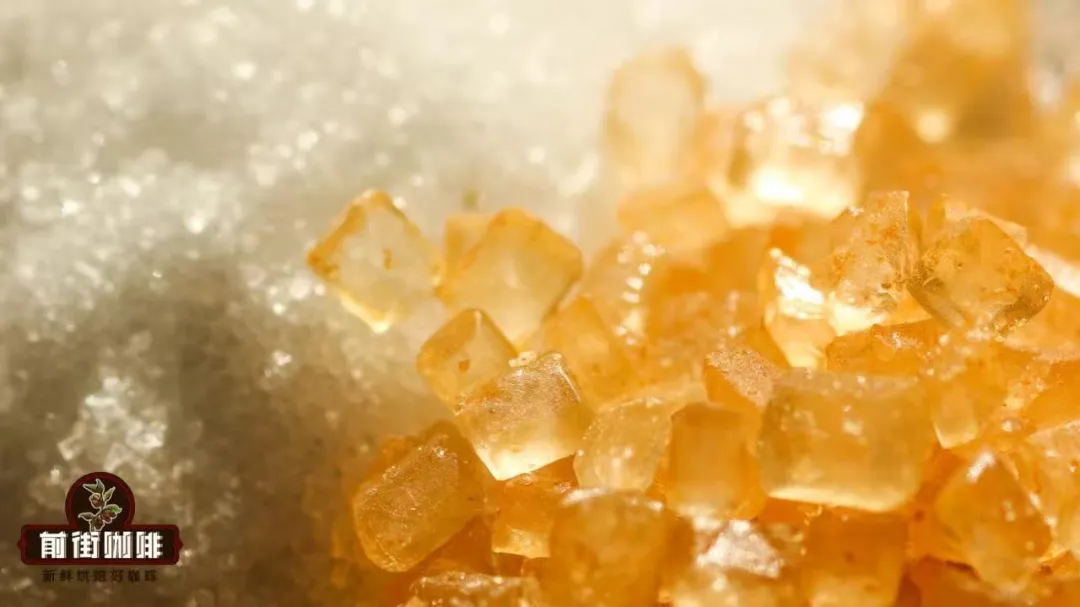
The most common is white granulated sugar. After multiple refinements, its crystals are white, pure and free of impurities, and precisely because of this, white granulated sugar plays the role of a pure sweetener. If you just want to make espresso taste less bitter, white granulated sugar is a very suitable choice; adding just 5g can easily balance the coffee's bitterness. If you want the espresso to have more layers, you might as well replace the white granulated sugar with yellow sugar. Yellow sugar has not been over-refined and retains more substances than white granulated sugar, which can bring a richer experience to the coffee. Likewise, adding just 5g to the espresso lets you clearly feel the change brought by yellow sugar—very unique.

Cuban espresso: In Cuba, locals also add brown sugar to coffee. However, the way the brown sugar is added is not conventional. The specific operation is just as Front Street previously shared: first split the espresso in two, take one portion and mix it with 10g brown sugar, stir until viscous, then pour in all the remaining espresso, and a cup of Cuban espresso is complete.
Espresso made this way is one of a kind; the bitterness disappears, replaced by the aroma and sweetness of brown sugar, and the mouthfeel becomes thicker as well—quite good.
2. Adding dairy products to coffee
Besides adding sugar, adding dairy products is another common way to neutralize bitterness. Milk, cream, condensed milk and the like are all high-frequency seasonings in coffee, and many local specialty espressos are made precisely by adding these ingredients, such as the more familiar Con Panna.
Con Panna: Con Panna is simply espresso with cream added. The method is very simple: after the espresso is extracted, cover the surface with a layer of whipped cream, and Con Panna is done. The cream can both dilute the coffee's bitterness and provide a dense mouthfeel, making the drinking experience richer. But as Front Street often emphasizes, when drinking Con Panna, do not stir; take a big sip directly, so that the cream and coffee are drunk together. Because the proportion in each sip is different, the coffee's taste will gradually change as you drink more—very interesting.
Macchiato: Next is Macchiato, a coffee Front Street often shares. Macchiato is espresso with a small amount of milk added, and the surface is then garnished with a little milk foam, in order to distinguish it from regular espresso.

The addition of a small amount of milk can moderately neutralize the bitterness, but not too much, thereby preserving the coffee's body while keeping it from being too bitter, and the mouthfeel also becomes smoother because of the small amount of milk.
Café Bombón / Candy Coffee: In Spain, there is a specialty espresso with condensed milk added, called Café Bombón, translated as candy coffee. Its ingredients are only condensed milk and espresso, in a 1:1 ratio. That is to say, if using 40ml espresso, you need to add 40ml condensed milk.
It is not hard to imagine that such a large amount of condensed milk gives the coffee a candy-like sweetness, which is also how the coffee got its name. But the problem is that there is really too much condensed milk; even for friends with a sweet tooth, Front Street believes it would be hard to accept such a high level of sweetness. So Front Street suggests that when making Café Bombón, appropriately lower the ratio and use a coffee-to-condensed-milk ratio of about 1:0.5. Taking Front Street as an example, when making candy coffee, Front Street uses 40ml espresso with 30ml condensed milk. The candy coffee made with this ratio has just the right sweetness, and you can still taste the rich texture brought by the condensed milk.

3. Adding other seasonings
Besides sugar and milk, there are many other seasonings people add to coffee, such as lemon, which provides acidity, or salt, which provides saltiness.
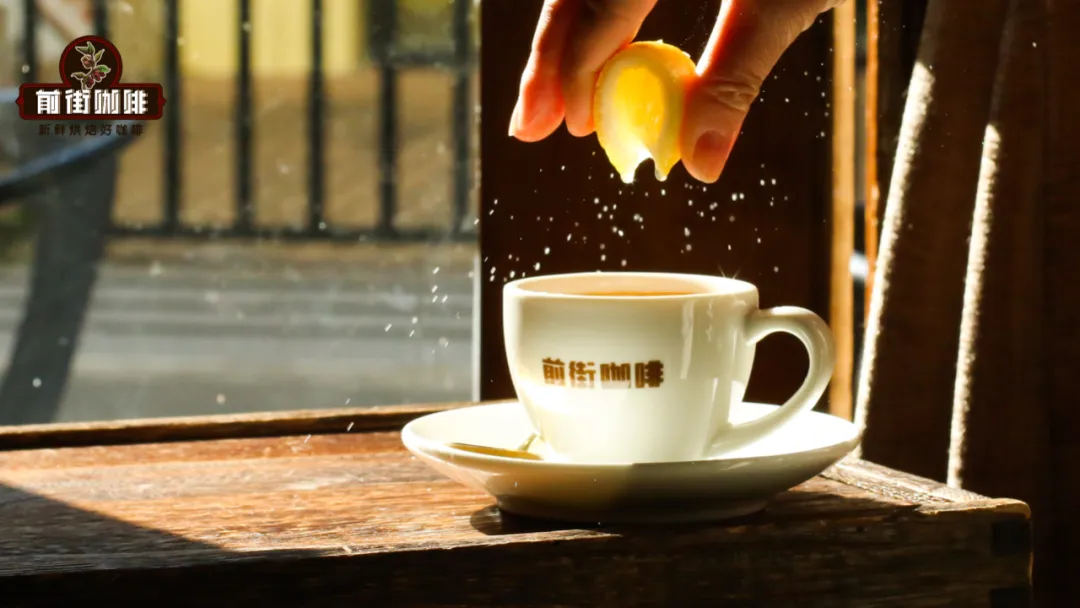
Roman espresso: Although the name contains Rome, it is rumored that it was not born in Rome. Roman espresso is a very special drink. It uses the acidity of lemon to neutralize the coffee's bitterness, then adds granulated sugar to suppress the lemon's acidity; overall, it drinks like a sweet-and-sour cup of espresso. The method is very simple: you can either directly soak a whole piece of lemon in the espresso, or squeeze lemon juice into the espresso. Front Street recommends the latter more: squeeze 4ml of yellow lemon juice into 40ml espresso, then add 10g white granulated sugar, stir evenly, and a delicious cup of Roman espresso is complete.

Just note that this ratio is only suitable for espresso made with the Front Street Classic Blend used by Front Street. It is a medium-dark roasted coffee bean, so it does not need much lemon juice and granulated sugar to neutralize the bitterness. If the coffee beans you use are roasted lighter or darker, it is best to appropriately increase or decrease the lemon juice and granulated sugar.
Espresso with salt: Not only sour and sweet, but salty can also neutralize the bitterness of coffee. In the article "Sharing a Little Trick to Improve Coffee's Quality and Flavor," Front Street mentioned that adding a small amount of salt to coffee can not only effectively reduce bitterness, but also improve the coffee's smoothness.
So adding a small amount of salt to espresso is also a good trick to reduce bitterness, but be sure to note that the salt must be very little; otherwise, you can easily end up with a cup of espresso so salty it's hard to swallow.
That is all for this sharing from Front Street. Besides the methods above, espresso also has many, many fancy ways to drink. You can explore them yourself and see which one is your favorite.
- END -
The above content is compiled by CoffeeHunters, a coffee news website.


