








How Do You Adjust the Latte Milk Coffee Ratio?
A balanced latte depends on the ratio of coffee to milk, not on how much milk is poured in. Front Street Coffee uses a 300ml cup as its baseline: 20g of grounds extracted into 40ml of espresso, plus 200ml of milk and about 1cm of foam, giving a coffee-to-milk ratio near 1:5.
Changing cup size without adjusting the recipe throws that balance off. Two approaches work. The first keeps the ratio fixed and scales the dose and grind size with the cup. The second swaps the milk type or the number of espresso shots instead. Any coffee enthusiast can follow either method; what matters is rebalancing coffee strength and milk volume together rather than only adding or cutting milk.
When recreating a café-style latte at home, many people find that the taste is either too weak or too strong, and the problem often lies in the ratio of coffee to milk. This article uses Front Street Coffee's 300ml latte as a baseline and shares two approaches for adjusting cup size: one is to keep the ratio unchanged while adjusting the dose and grind size accordingly; the other is to change the type of milk or the number of espresso shots to suit different volumes. Whether you want a small cup or a large cup, the key is to rebalance the coffee strength and the amount of milk, rather than simply adding or reducing milk.

Many coffee enthusiasts want to make a latte at home that exactly matches the cup size of a certain café, but only after actually trying it do they realize the result isn't as smooth as expected. Either the coffee flavor is too diluted, or it's so strong it tastes bitter—in short, no matter how you drink it, something feels off. So friends have been asking Front Street Coffee how to adjust lattes of different volumes so they taste good.
Logically speaking, whether the coffee flavor is too strong or too weak, it ultimately comes down to a problem with the ratio between coffee and milk. Many people, when making lattes of different volumes, don't make much change to the recipe itself—they simply increase or decrease the amount of milk. Want a bigger one? Add more milk. Want a smaller one? Pour less milk. This naturally changes the coffee's strength and ends up throwing the taste off balance.
Of course, this approach isn't necessarily wrong—if that happens to suit your taste, then it's perfectly fine. But if you want your latte to both match a café's cup size and have a balanced, harmonious flavor, then you can't just change the milk amount; the coffee extraction recipe has to be adjusted along with it.
Take Front Street Coffee as an example. The latte cup size at Front Street Coffee locations is 300ml. So when making a latte, Front Street Coffee typically uses 20g of coffee grounds to extract 40ml of espresso, then adds 200ml of milk and about 1cm of milk foam, giving a coffee-to-milk ratio of 1:5.
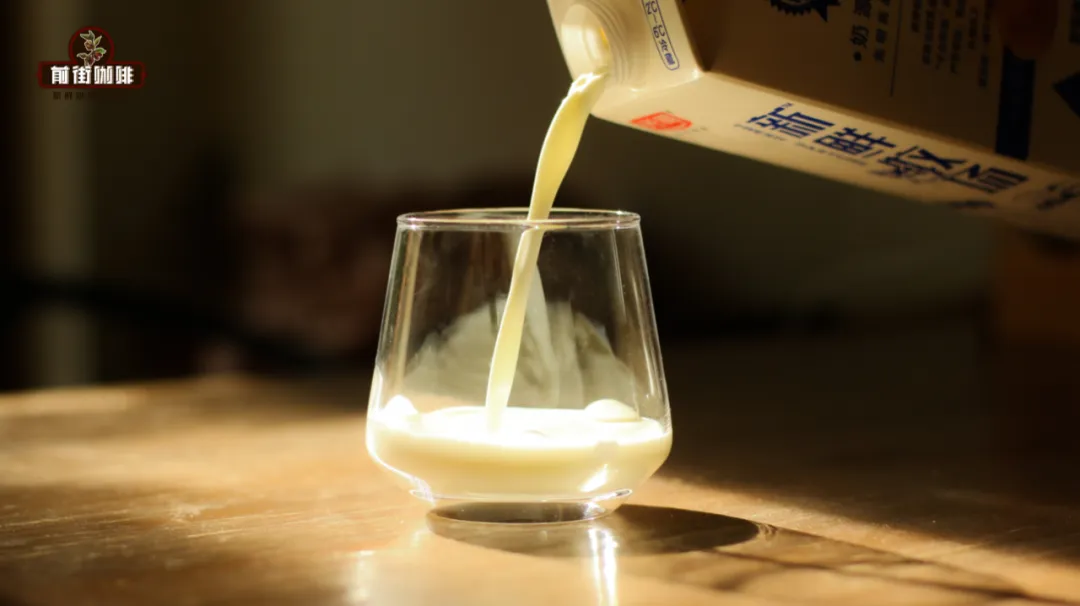
Since the beans chosen are mostly medium-to-dark roasted espresso blends, such as Front Street Coffee's Classic Espresso Blend, with flavors of chocolate, caramel, nuts, and cream and a relatively heavy body, more milk is needed to balance the coffee's intensity. A latte made this way fills a 300ml cup exactly (the milk foam also takes up some space), with the coffee and milk flavors in harmony and a pronounced sweetness. It drinks with flavors of chocolate, butter cookies, and caramel—a rather impressive result.
So if you want to use the same beans to make lattes of different volumes—say, switching to a slightly larger or smaller cup—while keeping the taste change as subtle as possible, we have two approaches to choose from.
Approach One:
The first method is to keep the overall ratio unchanged and achieve this by adjusting the coffee dose and grind size. Specifically, the espresso extraction ratio stays at 1:2, the coffee-to-milk ratio remains at 1:5, and then you change the dose to affect the volume of espresso, which in turn determines how much milk to add, ultimately achieving a consistent taste with a different cup volume.

For example, suppose we switch to a 240ml cup to make a latte. Then the dose can be reduced from the original 20g to 18g, and extracted at a 1:2 coffee-to-liquid ratio to get 36ml of espresso. Then, following the 1:5 coffee-to-milk ratio, add 180ml of milk with 1cm of milk foam, and you'll get a latte that tastes the same as the earlier 300ml version.
Although the cup volume is smaller, because the strength and extraction yield are nearly the same as before, there won't be much difference in taste—just less total liquid. Making a larger latte follows the same logic, and it isn't complicated to do.
Earlier, Front Street Coffee also mentioned that the grind size of the coffee grounds needs to be adjusted as well, and the reason is actually quite simple. If you only change the dose, then as the dose increases or decreases, the extraction time will change along with it, since the dose adjustment is usually not a small one.
And this directly affects the coffee's extraction yield—too little coffee easily leads to under-extraction, while too much easily leads to over-extraction. Simply put, the coffee can develop negative flavors like sharp acidity or bitterness. If you don't want this to happen, you need to coarsen or fine-tune the grind accordingly as the dose increases or decreases.

Approach Two:
Of course, besides adjusting extraction parameters, we can also make good lattes of different volumes in other ways. For example, by changing the ingredients.
When we want to make a small-volume latte, without changing the coffee extraction parameters (dose, liquid weight, grind), we can choose to switch to a different milk. For example, use a higher-concentration purified milk or concentrated milk. These kinds of milk are inherently more concentrated and richer in flavor, so even if the milk amount is reduced, the coffee won't overpower the milk, and you can still make a delicious small latte.
If you want to make a large-volume latte and don't mind a bigger cup, we can also choose to extract 2 shots of espresso, or extract 2 shots and then reduce a portion of the espresso to make it. This way, without changing the parameters, you can make an equally delicious large latte.
In short, there are many approaches, and which one to choose ultimately depends on personal preference. Even if you simply add or reduce milk, that's fine too—Front Street Coffee is just sharing some preparation ideas here; as long as the final coffee suits your taste preferences, that's all that matters.
- END -
The above content is compiled by CoffeeHunters, a coffee news website.


