







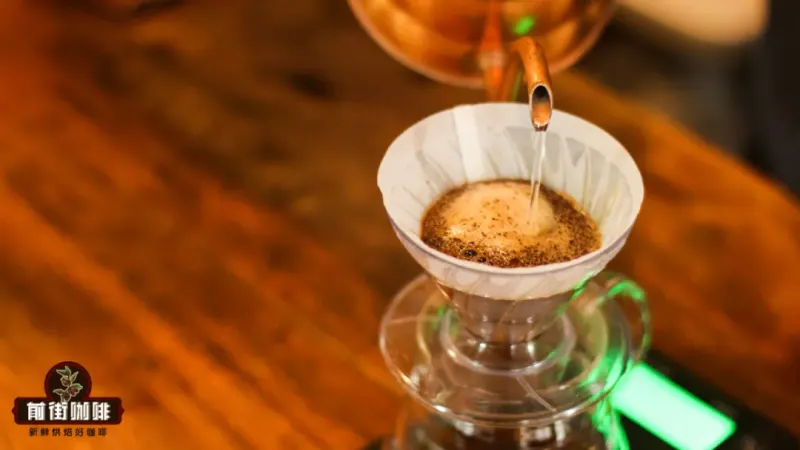
Does pour direction really affect coffee extraction?
Pour direction has almost no effect on coffee extraction or flavor. A comparative test at Front Street Coffee brewed two pots of Huakui coffee with identical beans, equipment, and parameters, changing only the circling direction. Concentration and taste came out nearly the same. What actually decides the cup are water temperature, grind size, ratio, brew time, and the agitation created by the water flow.
The belief that clockwise and counterclockwise pours differ is common among any coffee enthusiast, and it is reinforced by the V60 dripper, whose inner wall has spiral ribs running clockwise from top to bottom. That design encourages a clockwise pour but does not change flavor. The practical rule is to keep one direction consistent throughout a single pour, then focus on the variables that matter.
When brewing pour-over coffee, the direction of the circular pouring motion is a question almost every enthusiast encounters. Most people habitually pour clockwise, but does pouring counterclockwise change the taste of the coffee? This article uses a comparative experiment at Front Street Coffee, employing the same beans, equipment, and parameters, changing only the pouring direction, brewing two pots of Huakui coffee separately, and comparing their concentration and flavor. The experimental results show that the circling direction has almost no effect on the extraction result; what truly determines the coffee's taste are parameters such as water temperature, grind size, ratio, time, and the agitation from the water flow. Whether you choose clockwise or counterclockwise, as long as you maintain the same direction throughout a single pour, it's fine.
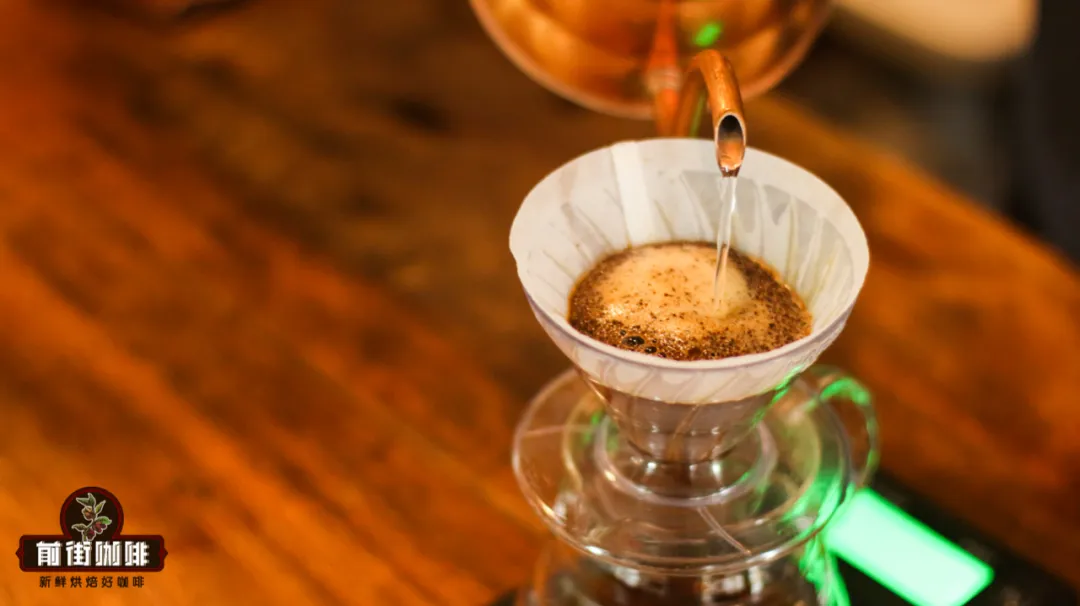
Although there is no hard-and-fast rule, the vast majority of people naturally choose to pour in a clockwise circle when making pour-over coffee. Precisely because of this, quite a few coffee enthusiasts have begun to wonder: if they switch to counterclockwise pouring, will the coffee's flavor be different? Recently, Front Street Coffee has frequently received this type of inquiry.
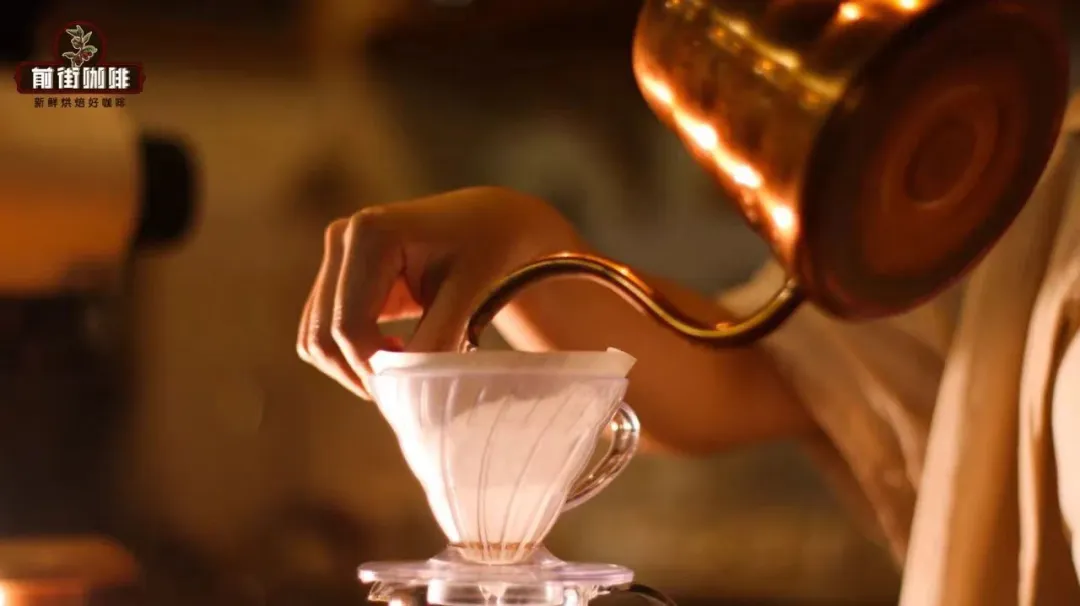
The emergence of this doubt is, to a large extent, related to the V60 dripper. The inner wall of the V60 is covered with spiral-shaped guiding ribs, which usually spiral from top to bottom in a clockwise direction. Therefore, when using this dripper, people often unconsciously follow the direction of the lines and pour clockwise. After all, seeing such a rib structure, it's easy for everyone to make this association: if the pouring direction is made to match the direction of the ribs, the vortex formed during the circling can guide the water flow along the designed path to converge toward the center of the dripper, thereby making the extraction of every coffee particle more even, and ultimately making the mouthfeel softer.

But if counterclockwise pouring is used, convection impact may occur between the water flow and the ribs, causing the coffee grounds to be agitated more strongly, greatly improving extraction efficiency, and the extraction result (coffee) may therefore become less stable. So, is that really the case? Let's take a look at the experiment below from Front Street Coffee. Brewing Experiment The experimental design is very simple: use the same equipment, the same beans, and the same parameters to brew two pots of coffee separately, with the only variable being the direction of the circular pouring. One pot uses the conventional clockwise pouring, and the other uses counterclockwise pouring, then compare whether there is any difference in concentration and flavor between the two.
The coffee beans selected for this experiment are the Front Street Ethiopia Huakui from Front Street Coffee's bean list. This is a medium-light roast Ethiopian bean, and its prominent flavor and distinct texture help us capture the subtle differences between the two. The specific parameters are as follows: Dose: 15g Coffee-to-water ratio: 1:15 Grind size: 75%~80% passing through a No. 20 sieve Water temperature: 92°C Dripper: V60 Pour rate: 4ml/s First, pour in water at twice the coffee dose for a 30-second bloom. After the bloom is complete, pour the second stage of 120ml hot water in a moderate stream, circling from the center outward.
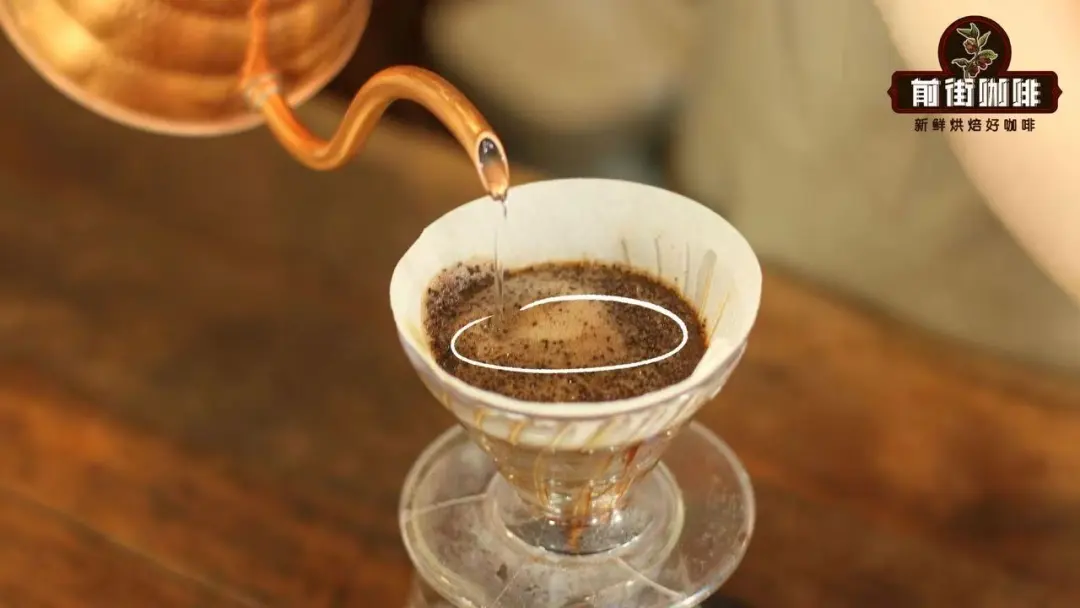
When the second stage of hot water has drained down enough that the coffee bed at the bottom is visible, similarly pour the third stage of hot water in a moderate stream, circling at the center, for a total of 75ml.
After pouring is finished, simply wait for the hot water to finish dripping, then remove the dripper to end the extraction.
After extraction was completed, the extraction time of both pots of Huakui was exactly the same, both 2 minutes 20 seconds. Their various performances were also just as Front Street Coffee has shared in previous conclusions, with almost no difference at all. In terms of flavor, both were mainly sweet and sour, presenting notes of strawberry, berries, cream, and citrus, accompanied by a faint floral aroma, with a rounded mouthfeel, a long finish, and an overall very clean cup. Front Street Coffee then also measured the extraction yield and concentration, and the two were almost identical as well.
In summary, the circling direction does not have a significant effect on coffee extraction, even when using a V60 dripper with counterclockwise circular pouring. The reason is simple: the ribs do not protrude enough to affect extraction, especially after we have built up a thick coffee bed. What truly affects coffee extraction is mainly the extraction parameters, such as water temperature, grind size, coffee-to-water ratio, time, and the number and intensity of water-flow agitation. These are directly related to extraction efficiency, so any slight change will alter the coffee's taste.
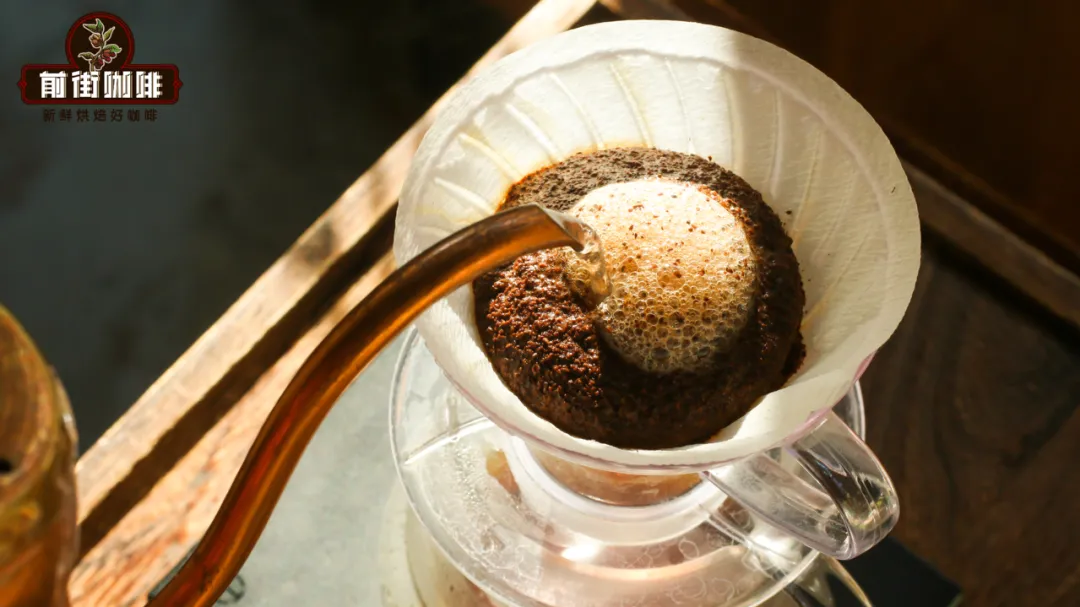
As for whether to choose clockwise or counterclockwise circular pouring, it depends entirely on personal habit. Just be careful to always keep circling in the same direction throughout a single pour. - END -
The above content is compiled by CoffeeHunters, a coffee news website.


