







Can a Robotic Pour-Over Match Hand Brew Coffee?
Automatic pour-over machines and manual brewing can both produce good coffee, but they differ in quality control, efficiency and flexibility. Pour-over relies on a barista managing water temperature, grind size, coffee-to-water ratio and pouring pace by hand. So-called fake pour-over uses a smart or semi-automatic machine to simulate that pouring.
What determines the cup is the bean quality and extraction parameters, not the brewing method alone. Manual brewing brings out a bean's flavor personality and suits single-origin service in shops, while machines offer consistency and higher output. Businesses choose between them based on volume, standardization needs and customer experience.
In recent years, a coffee production method known as "fake pour-over" has quietly emerged among chain brands, sparking discussion among many coffee enthusiasts: can coffee made by a machine that simulates pouring water really compare to the taste of coffee brewed entirely by hand by a barista? From Front Street's perspective, this article first clarifies the basic concepts of pour-over coffee and "fake pour-over," then takes a deeper look at the pros and cons of automatic coffee machines versus manual brewing in terms of quality, efficiency, and flexibility. The article points out that what ultimately determines whether a cup of coffee is good is always the quality of the beans and the extraction parameters, not the brewing method itself. At the same time, machines and manual brewing each have irreplaceable advantages, and businesses will make different choices based on factors such as output volume, standardization needs, and customer experience.
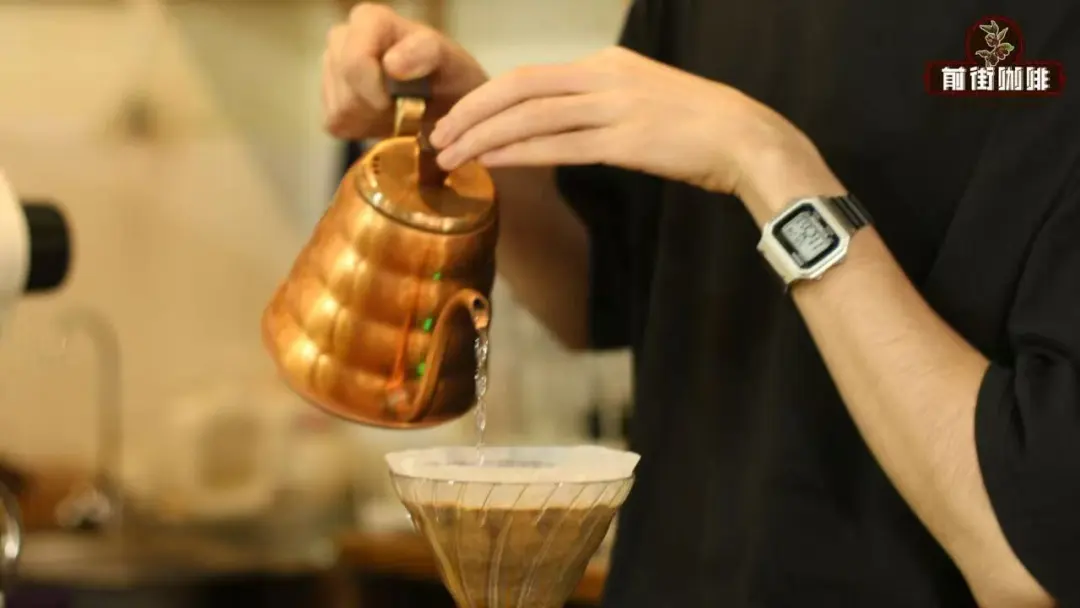
Today Front Street is here to answer these questions for everyone—can "fake pour-over coffee" really be mentioned in the same breath as the "real pour-over coffee" made by hand by a barista?
What is pour-over coffee? And what does fake pour-over coffee refer to?
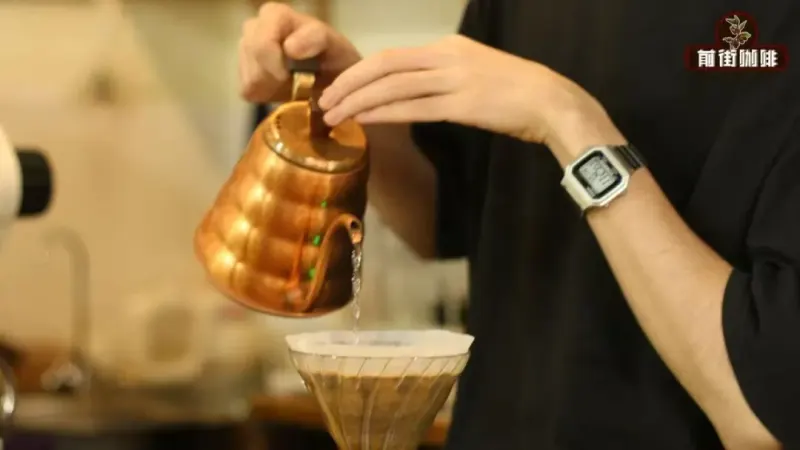
As usual, Front Street will first briefly explain the concepts of pour-over coffee and "fake pour-over coffee." Pour-over coffee is a drip extraction method that requires full manual involvement throughout the process. During the entire process, the barista not only has to control extraction variables such as water temperature, grind size, and coffee-to-water ratio, but also has to manage the pace of pouring, because the water flow is poured manually to complete the brewing. That is why it is called "pour-over coffee."
Pour-over coffee can fairly fully bring out the flavor personality of a bean, and because the preparation time is short and the barrier to operation is relatively low, it has become the first choice for many coffee shops when serving single-origin coffee among the many ways of making it.
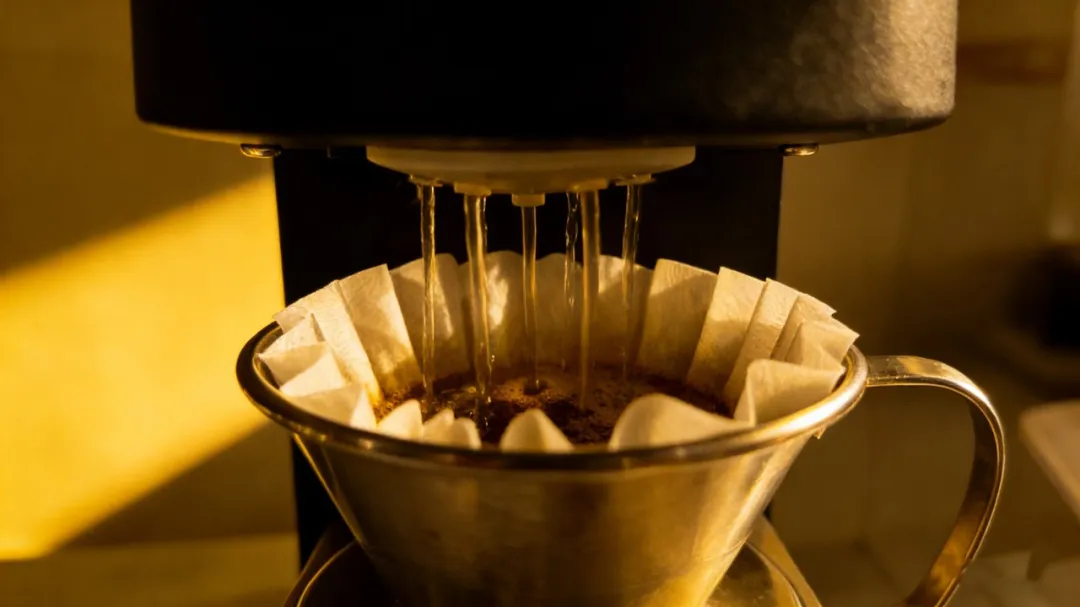
"Fake pour-over" is neither a professional term nor a brand-new extraction technique. It is actually a marketing concept proposed by a certain chain brand, referring to coffee made by using a smart coffee machine or semi-automatic pour-over coffee machine to simulate manual pouring.
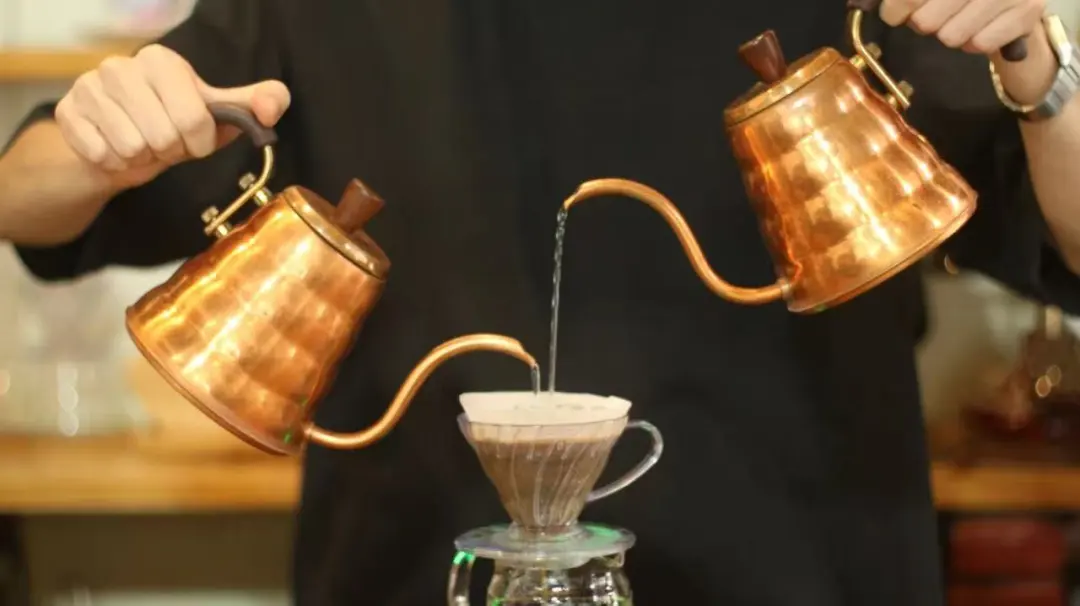
If coffee brewed by manually pouring water is called pour-over coffee, then it is not hard to understand why coffee made by a machine imitating manual pouring is called "fake pour-over."
Will machine-brewed coffee taste better than manually brewed coffee?
This is a question many friends have asked Front Street. To be honest, although the term "fake pour-over" has only appeared recently, automatic pour-over coffee machines have actually existed for a long time, and Front Street has introduced related topics before.
So can machine-brewed coffee reach the level of manual brewing? The answer is very clear: yes. Because the taste of a cup of coffee mainly depends on the quality of the coffee beans and the parameters used during extraction.
Although an automatic coffee machine completes the brewing by machine, the water temperature, grind, ratio, and time before brewing all need to be set in advance by the barista. On the premise that bean quality remains unchanged, as long as the extraction parameters used by the machine during brewing, such as water temperature, grind, ratio, and time, can fully bring out the coffee's flavor, then the coffee made by the machine can naturally taste as good as manually brewed coffee. After all, during brewing, parameters are the factor that has the greatest influence on coffee.
This is also why Front Street often mentions in brewing-related sharing that instead of agonizing over how to brew, it is better to pay more attention to the parameters used during extraction. As long as the parameters are set properly, brewing a delicious cup of coffee is an easy matter.
That said, this does not mean automatic brewing machines will replace baristas. The reason is simple: both have their own irreplaceable strengths, and businesses will choose different production methods according to different scenarios and needs.
The advantage of automatic coffee machine brewing, as Front Street said earlier, lies in stability, and it saves manpower and effort. Although pour-over coffee is considered a relatively convenient extraction method among various methods, it is actually not simple. From grinding the beans to finishing the brew, a barista needs to spend about 5 minutes making it with full concentration, and during that time cannot attend to other work.
For coffee shops with large output volume, this is not an appealing product. Therefore, we can see that many chain coffee shops with huge output volume either do not offer pour-over coffee or use automatic brewing machines to produce it. Of course, some coffee shops pursuing standardization and stability will also choose machine brewing.
The advantage of manual brewing lies in greater flexibility. During brewing, the barista can make timely adjustments according to the real-time condition of the beans, allowing the coffee to present a better flavor. At the same time, manual brewing can also deepen interaction between people. Many people want a cup of pour-over coffee not only to taste high-quality flavor, but also for the chance to communicate face to face with a barista about coffee insights.
So both have their advantages and do not form an opposing relationship. Businesses will choose different production methods according to different needs. Businesses pursuing efficiency and stability will choose automatic coffee machines for brewing, while businesses hoping to provide customers with a unique experience or deep interaction will choose manual brewing.
- END -
The above content is compiled by CoffeeHunters, a coffee news website.


