







What does bypass water mean in coffee brewing?
Bypass water is the water that does not pass through the coffee grounds and goes straight into the cup, mixing with the extracted coffee. In coffee brewing it shows up when an Americano is diluted with hot or cold water, when ice melts into an iced pour-over, and when baristas adjust concentration. It can occur passively through equipment design or actively by adding water after extraction.
Water acts as the solvent that dissolves flavor compounds from the grounds. When part of the water skips the coffee bed and lands directly in the cup, that portion never takes part in extraction, so it dilutes strength rather than adding flavor. Brewers use bypass water deliberately to lower concentration without changing the extraction yield, or as a remedial step when a brew turns out too strong. Understanding the split between main-path and bypass water makes the technique easier to apply.
In the coffee world, there are always some terms that leave people scratching their heads, and By pass is one of them. Literally translated as "bypass" or "detour," but what exactly does it refer to? Simply put, it describes the water that does not pass through the coffee grounds and goes directly into the cup, as well as the corresponding operational behavior. From the dilution of Americano with water, to the melting of ice cubes in iced pour-over, to the concentration adjustments made by competition baristas and in everyday brewing, By pass is everywhere. Front Street Coffee will take you through multiple examples to gain a comprehensive understanding of the active and passive generation of bypass water, its role in extraction, and the prerequisites for its use as a remedial measure, helping you apply this technique more accurately.
However, most technical terms are not so self-explanatory, so outsiders or beginners often cannot understand their meaning directly from the literal wording. Take the term "By pass," for example.
Literally translated, By pass means "bypass" or "detour." Just looking at the literal meaning, it is indeed hard to understand what it refers to in the coffee context. Front Street Coffee actually mentions this term quite often. In the industry, it mainly refers to the water that enters the coffee via a "bypass" route, as well as the corresponding operation. So, what is a bypass?
First, we need to be clear that water is the solvent used to extract coffee. When water comes into contact with coffee, it can dissolve the flavor substances in the coffee, which ultimately become the coffee in your cup. However, sometimes the water we use to make coffee does not all pass through the coffee grounds—it "bypasses" the coffee bed and flows directly into the cup to mix with the coffee.
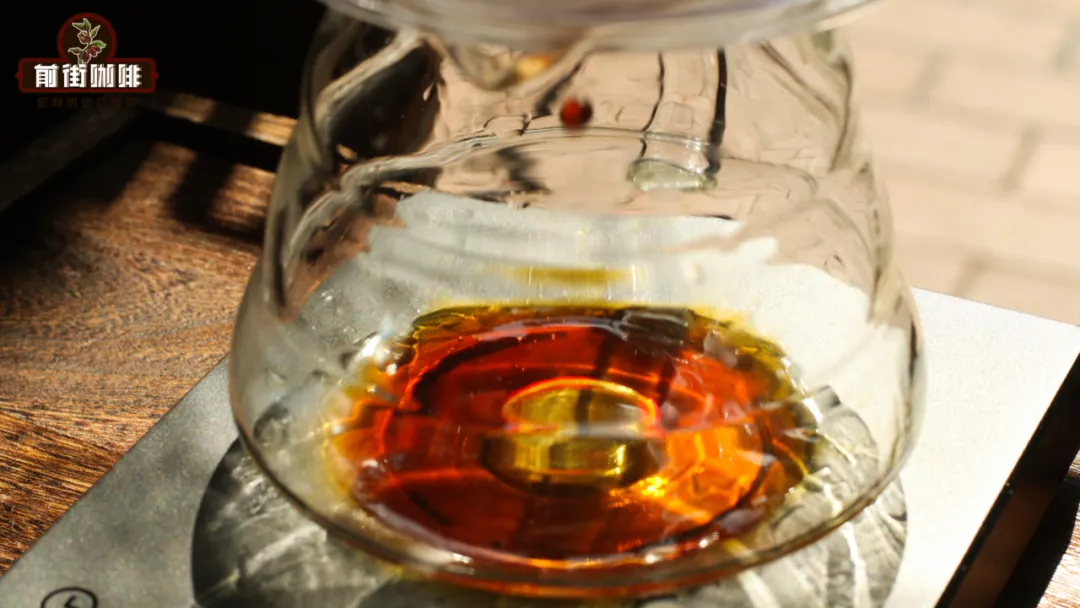
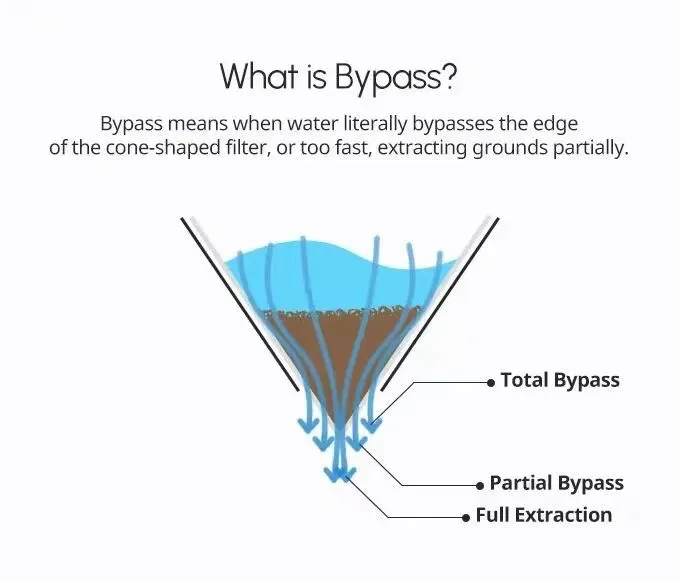
If we call the path where water passes through the coffee grounds and then falls into the cup the "main path," then the water that enters the cup directly without passing through the coffee grounds takes the "bypass." This water that has taken the "bypass" and has not participated in extraction is called bypass water.
The generation of bypass water can be either active or passive. Examples of passive generation are often mentioned by Front Street Coffee when sharing brewing techniques. For instance, when brewing with a dripper like the V60.
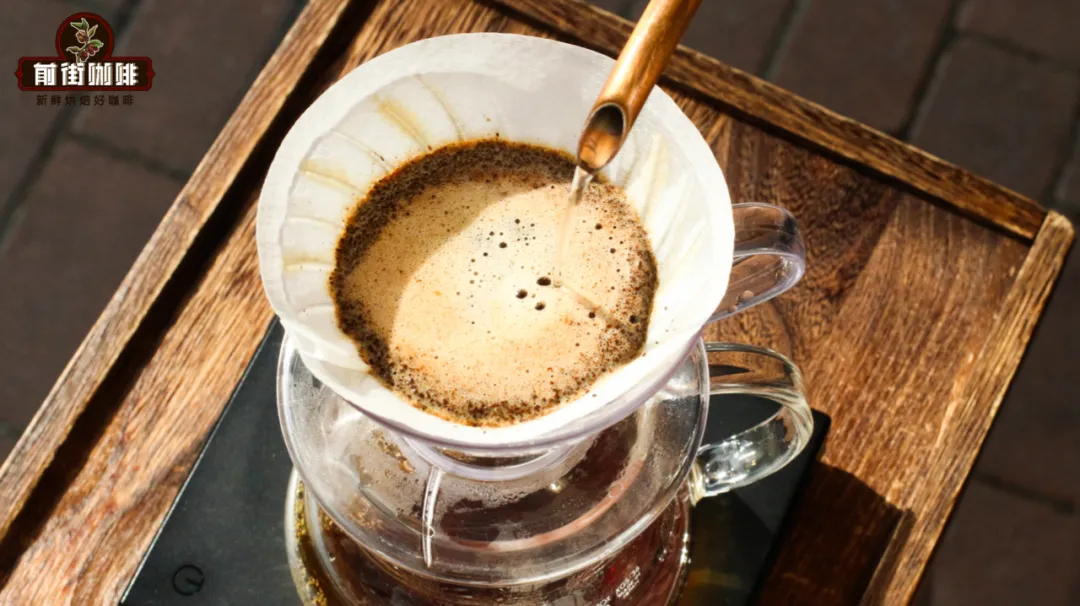
When brewing coffee with a dripper like the V60, which has many diversion ribs, you should try to prevent the water level from rising above the coffee bed. This is because the protruding ribs leave space for air to escape, forming more water flow channels. Once hot water floods over the coffee bed or directly rinses the filter paper, this hot water may flow straight through these channels into the cup without contacting the coffee grounds and without participating in extraction—this is passively generated bypass water.
Its appearance not only lowers the coffee's extraction yield but also affects the coffee liquid already obtained, diluting its concentration and weakening the coffee's flavor and mouthfeel performance.
As for bypass water generated through our active control, there are many examples, and the most classic representative is undoubtedly "Americano." The method for making Americano is simply adding a certain amount of water to the extracted espresso. This water added afterward to the coffee is bypass water.
The purpose of actively creating bypass water is simple: to "dilute" the coffee's concentration. Americano came about because Americans back then were not accustomed to the high concentration of espresso, so they added water to dilute it and make it easier to drink. This operation of intervening in coffee's taste by adding water is what we can call By pass.
Besides espresso, By pass is also used in other coffee-making methods, such as pour-over coffee. In some professional coffee competitions, we often see contestants using By pass to adjust their brewing framework. To reduce the coffee's bitterness, they adopt a high-concentration, low-extraction approach, brewing a pot of coffee with higher concentration and less bitterness.
However, because the concentration is too high, it is not pleasant to drink, so they use By pass to dilute it down to a suitable drinking concentration before presenting it to the judges.
In daily life, we also often use By pass to make coffee—we just may not realize it! Because what we add during By pass is not water, but ice cubes. That's right! Front Street Coffee is talking about iced pour-over.
When making iced pour-over, we need to add ice cubes to lower the coffee's temperature. During the process of cooling the coffee, the ice cubes melt into water, diluting the coffee. So this is also a form of By pass behavior, because water that did not participate in extraction needs to be added to the coffee.
Of course, sometimes By pass can also serve as a remedial measure. For example, Front Street Coffee once used the wrong coffee-to-water ratio when brewing Front Street Coffee's Finca La Frontera · Sidra, and the resulting Sidra tasted extremely intense, with the flavors too concentrated to express themselves.
At times like this, we can properly dilute the coffee through By pass. Simply add 15~30ml of hot water to the coffee, and the coffee's concentration will decrease, giving the flavors more room to shine, and allowing us to better taste its flavor performance.
Or, when brewing an unfamiliar coffee bean, fine particles may clog the filter paper, preventing hot water from draining through for a long time. If this continues, you may end up with a cup of over-extracted coffee full of bitterness.
At times like this, we can use the cut-off method to discard the coffee liquid that has not yet drained out and is still in the dripper. The coffee obtained this way may not be particularly delicious, but at least it will not be so bitter as to be undrinkable. However, cutting off the brew will leave the coffee with a relatively high concentration, so at this point you need to dilute the coffee through By pass until it reaches a concentration that is pleasant to drink.
In summary, we can understand that By pass mainly refers to the water added to coffee without participating in extraction, as well as the corresponding behavior.
But everyone should note that By pass is not an all-purpose coffee improvement solution. The cases shared above by Front Street Coffee all require certain prerequisites before using By pass to optimize coffee! If used when the coffee has no problems, it will easily produce a cup of coffee whose flavor and mouthfeel are both less outstanding. So this is something worth noting~
- END -
The above content is compiled by CoffeeHunters, a coffee news website.


