







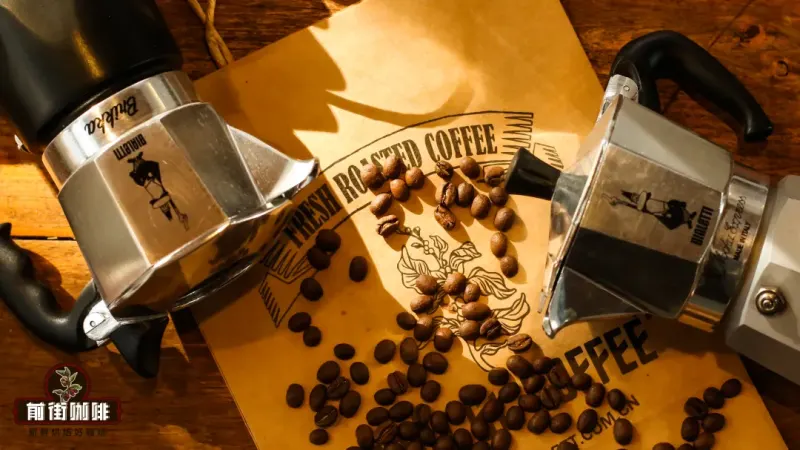
Which coffee beans for moka pot suit milk drinks and black coffee?
For a moka pot, bean choice follows what ends up in the cup. For milk drinks, pick a medium-dark or dark roasted espresso blend: the fuller body, caramelized sweetness and low acidity hold up against milk. For black coffee, a single-origin works, either a heavy-bodied one or a floral, fruity one. Grind finer for milk drinks, coarser for black.
Dose and ratio change with the goal. Milk coffee brewed in a moka pot is typically kept concentrated at about a 1:4 coffee-to-water ratio, so the coffee still reads through the milk. Black coffee can run around 1:6 with a coarser moka pot coffee grind, which leaves more room to adjust. Darker roasts also bring more crema and roasted aroma that milk will not easily cover.
What coffee beans should a moka pot be paired with? How fine should the grind be, and how much coffee grounds should be used? If you want to make milk coffee, what parameters and ratios should you use? This article addresses different drinking needs and offers bean selection directions and extraction suggestions for each. For milk coffee, prioritize medium-dark roasted espresso blends—they have a rich, caramelized flavor and abundant crema. Front Street Classic Blend and Front Street Commercial Blend are both great choices for beginners. For black coffee, you can choose either a full-bodied single-origin or a floral/fruity one, depending on your preference. As for grinding, milk coffee requires an extremely fine grind and a coffee-to-water ratio of about 1:4 to boost concentration; black coffee can use a 1:6 ratio with a coarser grind, giving you more flexibility.
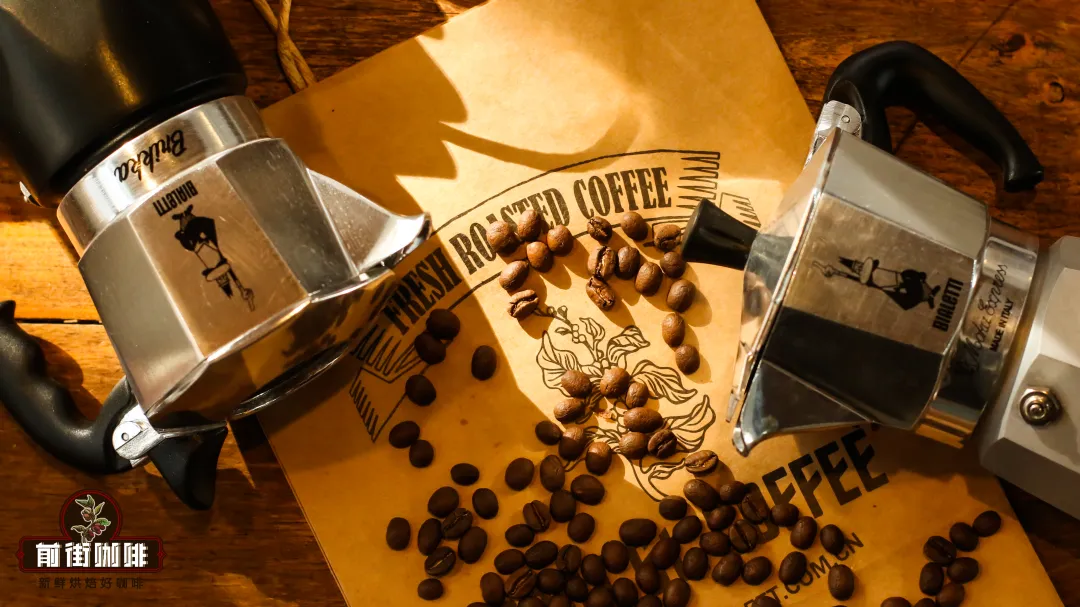
Many people new to coffee struggle when choosing beans, and Front Street was no different at first. Usually, people decide which brewer they'll use, then ask the shop for suitable bean recommendations. For example, recently customers often ask Front Street's Taobao store: I bought a moka pot—which beans go well with it?
Actually, no matter what brewer you use, the core logic of choosing beans is the same—first figure out what kind of coffee you want to drink. If you plan to make milk coffee, the focus is completely different from drinking straight black coffee, and the suitable beans will naturally differ too.
Next, Front Street will address different drinking needs and explain what coffee beans to pair with a moka pot, how fine the grind should be, and how much coffee to use, so you can brew a delicious moka pot coffee.
If you plan to make milk coffee…
If you're going to use coffee brewed from a moka pot to make milk drinks, it's best to choose beans with a darker roast level. There are two main reasons. First, a darker roast makes the coffee taste fuller and richer.
The darker the roast, the more complete the caramelization, and the heavier the flavor becomes. At the same time, dark roasting grinds away most of the acidity, so when you add milk, there won't be any jarring sourness. Plus, the roasted aroma is strong enough that it won't easily be overpowered by the milk.
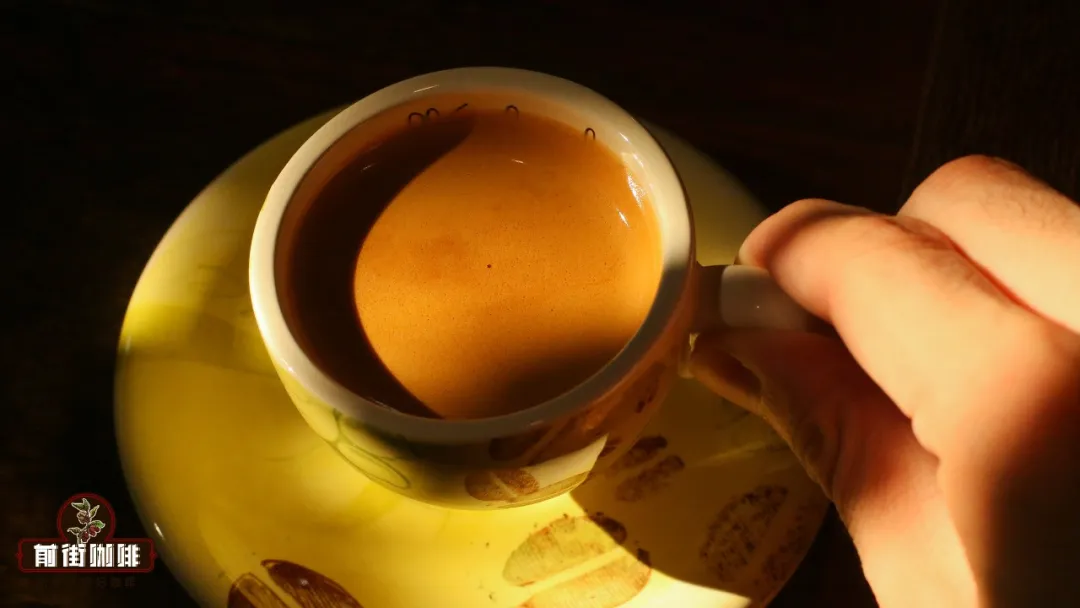
The second reason is richer crema. Although the amount of crema doesn't directly indicate whether a coffee is good or bad, and it has no necessary connection to taste or quality, many people do enjoy that golden, glossy foam. If you care about that too, dark-roasted beans are the way to go—the darker the roast, the more carbon dioxide inside the beans, and the thicker the crema extracted.
If what you want is exactly the effect Front Street described above—rich roasted aroma, no acidity, abundant crema, and suitable for mixing with milk—then medium-dark roasted coffee beans are just perfect.
Front Street suggests picking directly from the espresso blend category. Espresso blends mostly have these characteristics by nature (they're designed for espresso, after all), and they're very cost-effective—about 50 to 80 yuan per pound (454g), more economical than medium-dark single-origin beans. Beginners can prioritize Front Street Classic Blend, Front Street Commercial Blend, Front Street Specialty Blend, and Front Street Black Cocoa Base Blend.
If you plan to make black coffee…
If you just want to drink pure coffee with nothing added, the range of beans to choose from is much wider. For example, if you prefer a full-bodied, richly aromatic taste, you can either use the espresso blends mentioned above or choose high-grade pour-over single-origins like Front Street Queen's Estate or Indonesia·Front Street PWN Golden Mandheling.
If what you want is a cup with rich floral and fruity aromas, bright acidity, and a light body, a medium-light roast will suit you better. A light roast preserves more floral and fruity notes, and these aromas won't be masked by roasted flavors.
Beans from different regions and processing methods have different flavors. For example, Front Street Sun-Dried Huakui from Front Street's bean list features tropical fruit notes; brewed in a moka pot, it delivers the sweet-and-sour taste of citrus, berries, and apricot. Another example is Front Street Kenya·Little Tomato—the coffee has higher acidity but is bright and easy to drink, with a distinctive sour aroma like smoked plum and cherry tomatoes. Also, Front Street Xizhua and Front Street Strawberry Candy are all good options worth trying.
How fine should the grind be and how much coffee should a moka pot use?
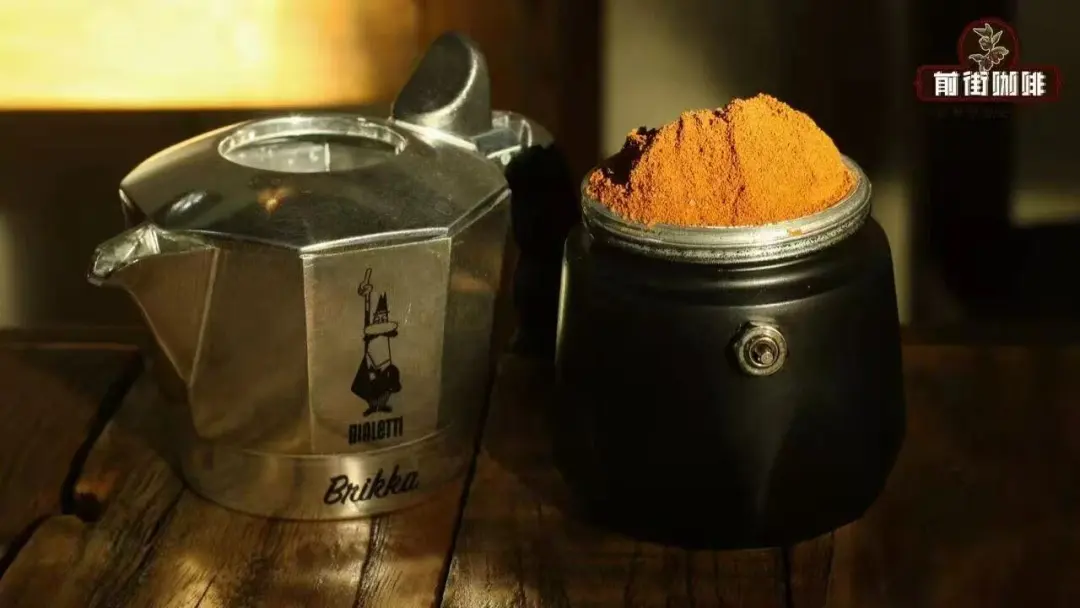
When making moka pot coffee, don't overthink the amount of coffee—just fill the basket level, or follow the manufacturer's recommended amount. The grind size, however, needs more attention, especially if you're making milk coffee.
In the article "How to Make a Delicious 'Latte' with Moka Pot Coffee," Front Street mentioned that when using moka pot coffee to make a latte, the coffee liquid itself must be strong enough and the water amount shouldn't be too much; otherwise, the resulting milk coffee will be weak and tasteless.
To get a highly concentrated coffee liquid, you need to extract the most substances with the least water. Front Street typically uses 4 times the coffee weight in water—for example, for a single-serving moka pot with 20g of coffee, add about 80ml of water to the lower chamber. By controlling the water amount in the lower chamber, you can effectively boost coffee concentration.
As for grinding, you need an extremely fine grind, the same as for espresso—grind the coffee until it's close to flour consistency. The reason: with very little water needing to extract a large amount of flavor in a short time, you must tighten the grind to increase the resistance of the coffee puck. This slows down how fast hot water passes through the coffee bed, allowing more substances to be extracted.
Front Street shared more detailed operational tips in the blue-linked article above. Interested friends can click in to read it; we won't go into more detail here.
If you're making pure black coffee, the requirements are much simpler. Since black coffee doesn't require considering concentration, you can either follow the method above to make a strong moka pot coffee and then dilute it with water, or use more water (1:6 coffee-to-water ratio) with a coarser grind to brew a lower-concentration pot of coffee directly. If it tastes too strong when drinking, just add a little more water to adjust.
The above content is compiled by CoffeeHunters, a coffee news website.


