








How do you make coffee with a pot for a tangyuan dessert?
Coffee tangyuan works like a Chinese-style affogato: pour a strong shot of espresso over freshly boiled tangyuan and eat it right away. The bitter roast notes cut through the sweet, chewy rice dumplings. The key is brewing a concentrated coffee, since tangyuan has a heavy flavour that a weak brew cannot balance.
A moka pot or an espresso machine gives the high-strength coffee this dessert needs. Boil the tangyuan until they float without splitting the skin, drain them, then pour the hot coffee over the top. Dark-roasted beans bring a deeper roast aroma, while medium roasts give a lighter, fruitier contrast against the sweet filling.
Eating tangyuan on the winter solstice is a southern tradition, but coffee lovers have come up with a new twist—pouring espresso over tangyuan to make a Chinese-style coffee dessert similar to affogato. Is this creation really a "dark cuisine" disaster? After testing it personally, Front Street discovered that the roasted aroma of coffee and the sweet chewiness of tangyuan can actually form a wonderful contrast. This article will explain in detail the complete steps for making coffee tangyuan, including how to boil tangyuan without breaking the skin, the extraction parameters for espresso, and the different flavor experiences brought by dark-roasted and medium-roasted coffee beans, helping you easily recreate this special holiday dessert at home.

It is widely known that the winter solstice is not only one of the 24 solar terms but also a traditional festival that people place great importance on. Whenever an important seasonal occasion arrives, the dining table is always filled with distinctive foods that carry symbolic meaning. Take the South, where Front Street is located—on the winter solstice, every household boils a pot of round, soft, and chewy tangyuan, taking the auspicious meaning of reunion and completeness. And when it comes to tangyuan, coffee lovers who can even turn tea eggs into something creative certainly would not miss this chance to show their creativity—coffee tangyuan, have you ever tried it?
The so-called coffee tangyuan is made in a way very similar to affogato: simply pour espresso over cooked tangyuan to make a dessert with coffee elements. Because the two are similar in form, coffee tangyuan is often jokingly called "Chinese-style affogato." Around every Lantern Festival or winter solstice, as soon as tangyuan starts appearing in view, shares about coffee tangyuan can easily be seen on major social platforms. Is it really as tasty as everyone says? Today, Front Street will taste this bowl of coffee tangyuan for everyone and see how it really tastes. How do you make coffee tangyuan? The steps for making coffee tangyuan are actually quite simple. As Front Street said earlier, you only need to pour coffee over the tangyuan. However, one thing to note is that the coffee is best made as high-concentration espresso using a moka pot or an espresso machine. The reason is that tangyuan itself has a relatively heavy taste, and if the coffee is not concentrated enough, it will be difficult for the coffee to make its presence felt in this dessert.
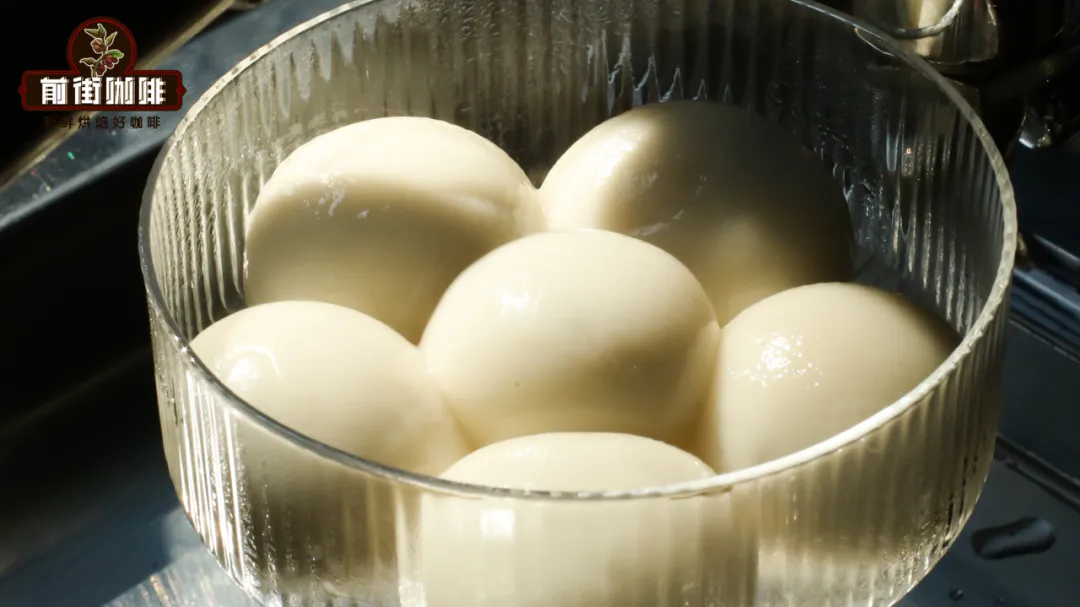
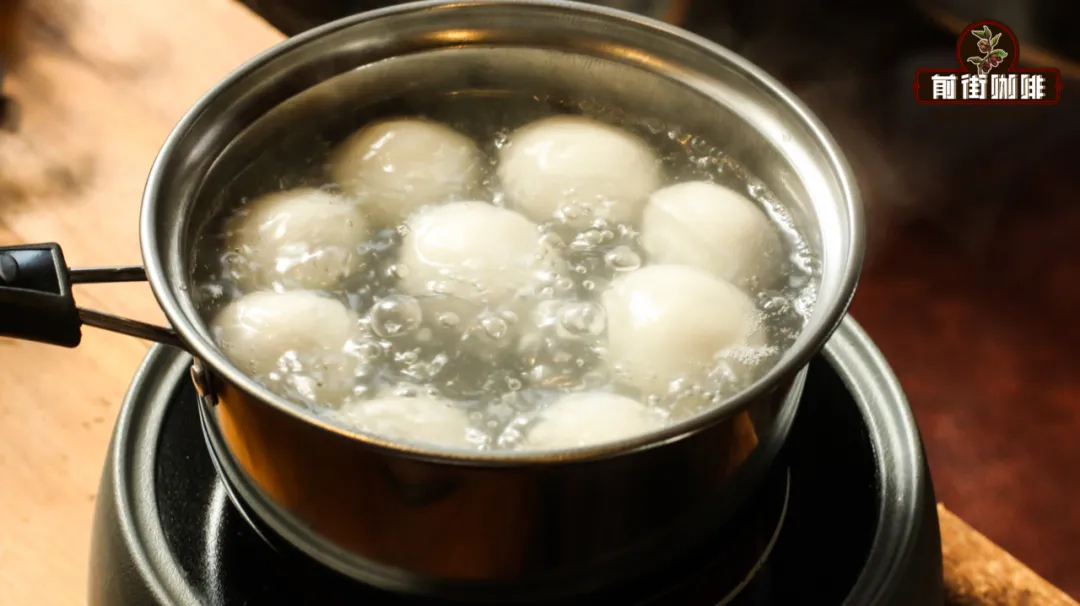
So the first step is to cook a portion of tangyuan. This time, Front Street chose, of course, the most classic style—traditional glutinous rice outer skin, with sesame and peanut filling. Here, by the way, let's discuss an extra topic: how to cook tangyuan without breaking the skin. Because Front Street believes that if any friends plan to try making it, this little tangyuan-cooking tip is absolutely essential.
The method is not complicated: first bring the water to a boil, then add the tangyuan, and then pour in a small amount of room-temperature clear water. The purpose of doing this is to keep the water in the pot at a high temperature without being in a vigorous boiling state, thereby effectively reducing the "agitation" of the tangyuan and lowering the chance of the skin breaking. After that, whenever the water in the pot comes to a boil again, continue adding a small amount of room-temperature water to cool it down, repeating this until all the tangyuan float to the surface, then you can turn off the heat. At this point, you will have a portion of tangyuan that is intact, unbroken, and perfectly cooked.
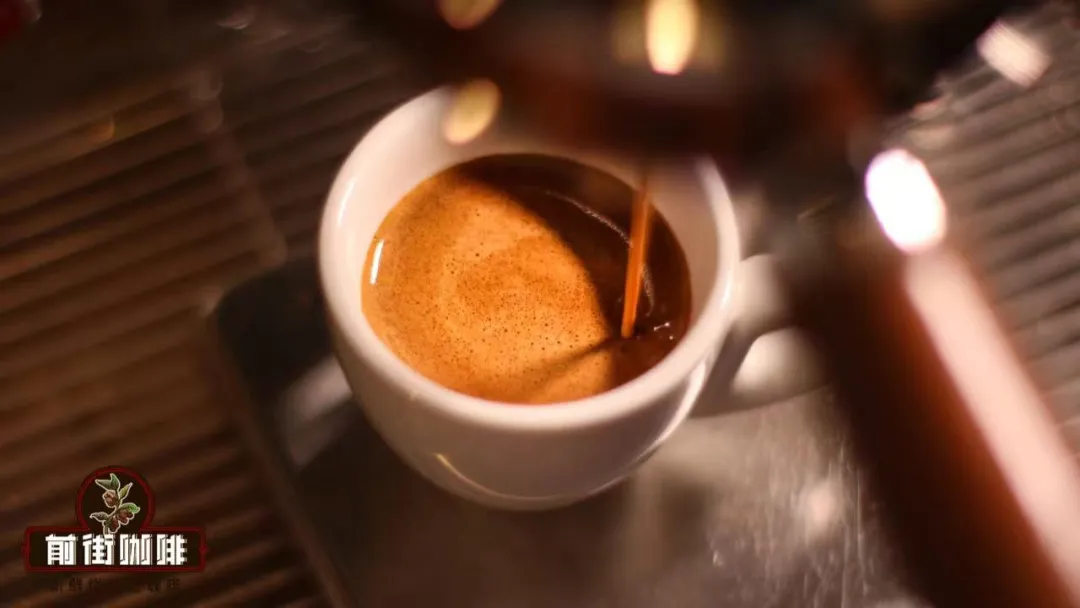
After the tangyuan are cooked, the next thing to do is extract a shot of espresso. If it is your first time trying this, Front Street would recommend using dark-roasted coffee beans to make the espresso. This is because dark-roasted beans usually have a more prominent roasted aroma, which can form a sharp contrast with the sweetness of the tangyuan. So the beans chosen by Front Street here are Front Street Classic Espresso Blend, sold by Front Street on Taobao and Tmall. The espresso extracted with these beans not only has rich aromas of chocolate, caramel, and nuts, but also has quite a thick crema, making it a very good match with tangyuan. The extraction parameters are as follows: 20g dose, 1:2 brew ratio, 30 seconds.
You can choose to extract the espresso separately and then pour it into the tangyuan bowl, or you can place the tangyuan directly under the espresso outlet and let the coffee liquid pour directly onto the tangyuan. The effect of both methods is almost the same. Front Street used the latter method here.
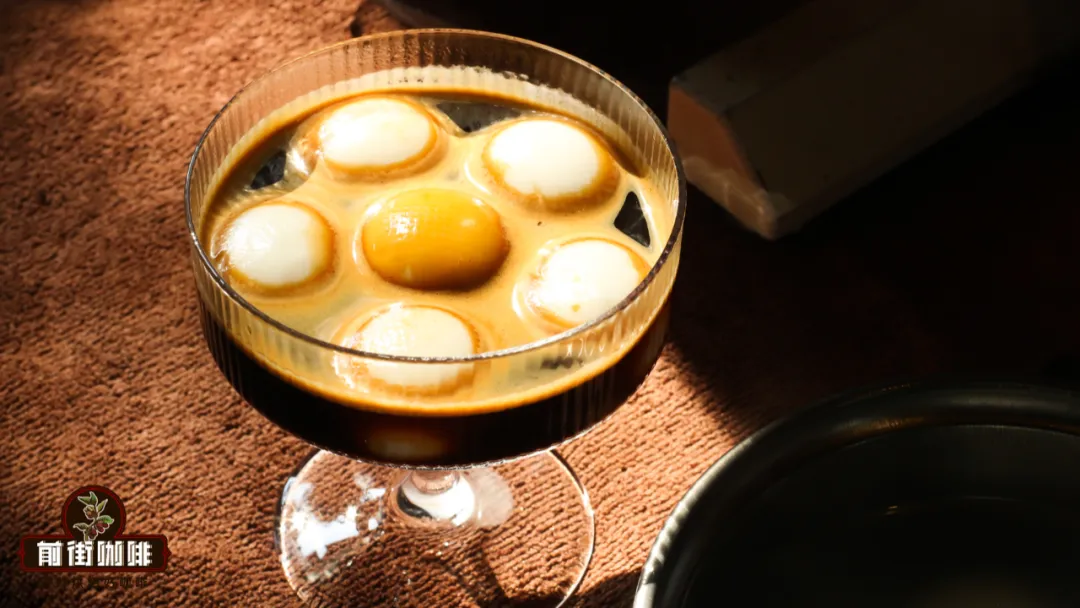
After the espresso extraction is complete, gently stir it a few times with a spoon, and you can start enjoying this coffee tangyuan! (To be honest, the finished product looks a bit like tea eggs.)
And would you believe it, it really is not a "dark cuisine" disaster! As Front Street expected, a strong contrast is formed between the roasted aroma of the coffee and the sweetness of the tangyuan. With one bite, you can feel both the bitterness of the coffee and the sweetness brought by the tangyuan's sesame filling. Then the chocolate, caramel, and nut flavors in the coffee, along with the aromas of the tangyuan skin and sesame filling, quickly spread through the mouth. The more you chew, the richer this aroma becomes. It can be said to combine softness, chewiness, fragrance, and sweetness in one, and it is quite outstanding!
After that, Front Street switched to medium-roasted Front Street Strawberry Candy·Geisha Blend and used it to make another portion of coffee tangyuan. Because the roast level of these beans is not as dark as the previous one, the espresso extracted has a certain degree of acidity.
The coffee tangyuan made with this kind of espresso tastes different. Although the acidity is a bit higher at first sip, as the mouth gradually adapts, you can catch the aromas of strawberry, citrus, and berries in the coffee. The experience in other respects is not much different from before: the coffee flavor still contrasts with the sweetness of the tangyuan, the texture is soft and chewy, and the finish is long-lasting. Overall, coffee tangyuan performs quite satisfactorily. If you are not satisfied with the usual way of eating it, you might as well try this distinctive combination; it really can bring an excellent and special experience. But if you usually cannot accept sourness well, then it is best to choose dark-roasted coffee beans, such as Front Street Classic Espresso Blend from the Front Street bean list.
~Happy Winter Solstice~~ - END -
The above content is compiled by CoffeeHunters, a coffee news website.


