








How Does Coffee Bean Density Shape the Pour-Over Bed?
A deep, uniform crater in the pour-over bed comes down to three conditions: lower-density coffee beans, a large volume of hot water poured in a short time, and even pouring across the grounds. Meeting all three makes a bowl-shaped bed easy to achieve, while light-roasted, high-density beans tend to resist forming that deep pit.
The final bed shape does not determine whether a cup tastes good, but it does reflect brewing details such as pour speed and uniformity. Front Street Coffee notes that beans like Front Street Yirgacheffe Gorodine behave differently from denser lots, so the crater is a useful diagnostic signal rather than a quality verdict.
Many enthusiasts, after finishing their brew, will see a uniform and deep bowl-shaped coffee bed left in the dripper, and wonder how such a state is formed. Front Street Coffee also frequently encounters similar questions in daily brewing. In fact, the final shape of the coffee bed cannot directly determine whether a cup of coffee tastes good, but it can indeed reflect some operational details during the brewing process. This article will explain how to brew a deep-pit coffee bed from three aspects: coffee bean density, pouring method, and pouring uniformity, while also explaining why light-roasted high-density beans often struggle to form a deep pit. If you also want to understand the principles behind the coffee bed, as well as brewing suggestions for beans like Front Street Ethiopia·ALO and Front Street Yirgacheffe·Gorodine, please continue reading.

It's no exaggeration to say (of course, maybe just a little bit
), after Front Street finishes brewing coffee, similar exclamations can often be heard from friends. In most cases, the coffee bed left in the dripper after Front Street completes brewing will present a bowl shape, with a pit that is both deep and uniform, just as everyone sees.

Although Front Street has always emphasized that the final shape of the coffee bed cannot represent whether a cup of coffee tastes good, perhaps due to some obsessive-compulsive tendency, quite a few friends, including Front Street, develop an inexplicable sense of "admiration" for this uniform and deep coffee bed when they first start exploring pour-over. People want to know: how exactly is such a coffee bed brewed? Why can others achieve it, while the coffee bed they brew always ends up so flat?
So today Front Street will share again how to brew a uniform bowl-shaped coffee bed. After reading this, Front Street believes everyone will understand why Front Street often says that the coffee bed structure has little to do with whether the coffee tastes good.
How to brew a deep pit?
To brew a deep pit, no advanced technique is needed. As long as the following three conditions are met, a bowl-shaped coffee bed can be easily achieved:
① Use lower-density coffee beans ② Pour a large amount of hot water in a short time ③ Pour water evenly
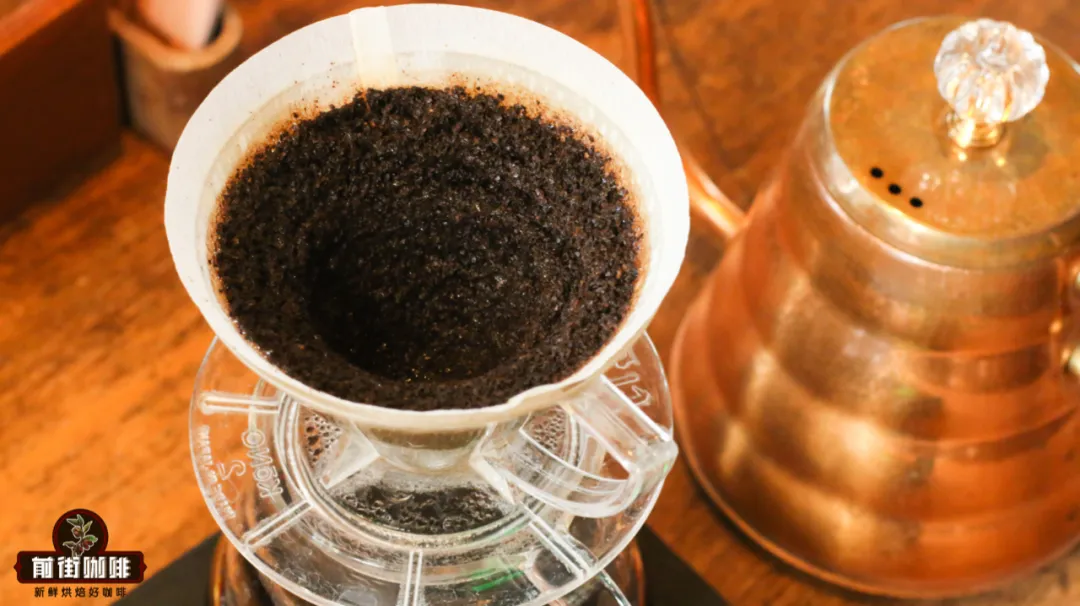
Friends who brew coffee often should find it easy to notice that even when using the same brewing method, the coffee bed state will change depending on the coffee beans. When the coffee beans we use are darker-roasted and lower in density, it is easier to brew a pit or deep pit; while if the coffee beans used are lighter-roasted or higher in density, then the pit brewed will either be shallower or simply flat.
This is because the lower the density of the coffee grounds, the better they can float on the liquid surface. During brewing, these coffee grounds will rise along with the water level. The formation of the coffee pit is because hot water disperses the coffee grounds that were originally gathered together, and then they adhere to the wall of the dripper. The more coffee grounds adhere to the dripper wall, the deeper the final coffee pit becomes, because the originally concentrated coffee grounds have all been dispersed to the periphery.

Seeing this, Front Street believes many friends have already noticed that besides the coffee grounds density not being too high, another condition for forming a coffee pit is—raising the coffee bed.
Only by fully raising the coffee bed do the coffee grounds have the chance to adhere to more of the dripper wall. To achieve this, it is necessary to increase the amount of water poured in a short time. By increasing the pouring rate so that it exceeds the drainage rate, more and more water will accumulate in the dripper, the water level will rise accordingly, and the coffee grounds will rise along with it. This is what we often call raising the coffee bed.
The more the coffee bed is raised, the higher the coffee wall the coffee grounds can build. Of course, we cannot arbitrarily increase the pouring amount, because as Front Street mentioned earlier, some light-roasted, high-density beans are not very easy to "raise."
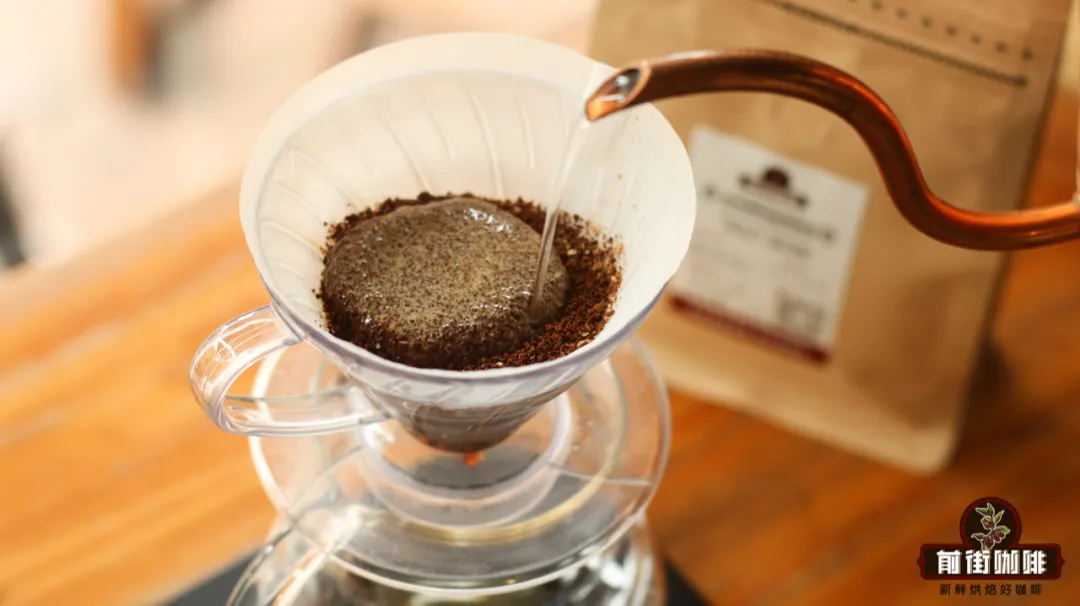
As everyone knows, the walls of most coffee drippers are designed with flow-guiding ribs. The function of these ribs is to support the filter paper and create an exhaust channel so that it does not completely fit against the dripper. If, when brewing with these drippers, the water level rises above the coffee bed, then the hot water above the coffee grounds has a chance to directly "slip" out through the gaps without coffee grounds, forming bypass water, which then affects extraction.
So when we encounter this type of coffee grounds, the water flow during brewing cannot be too strong. Only in this way can we avoid the appearance of bypass water, and the taste and texture of the coffee will not be affected. However, for this type of coffee, their coffee bed is naturally very difficult to form a distinctive "bowl shape" after brewing is completed.
For example, Front Street Ethiopia·ALO and Front Street Yirgacheffe·Gorodine in Front Street's bean list are light-roasted beans with relatively high density. During brewing, we should try to use a small or moderate water flow. Besides avoiding the situation where the water level rises above the coffee grounds, doing so can also reduce the phenomenon of clogging the filter paper. It is okay if it takes a bit longer, because the beans are relatively resistant to extraction, and in the end we can still obtain a delicious pot of coffee with full floral and fruity aromas!
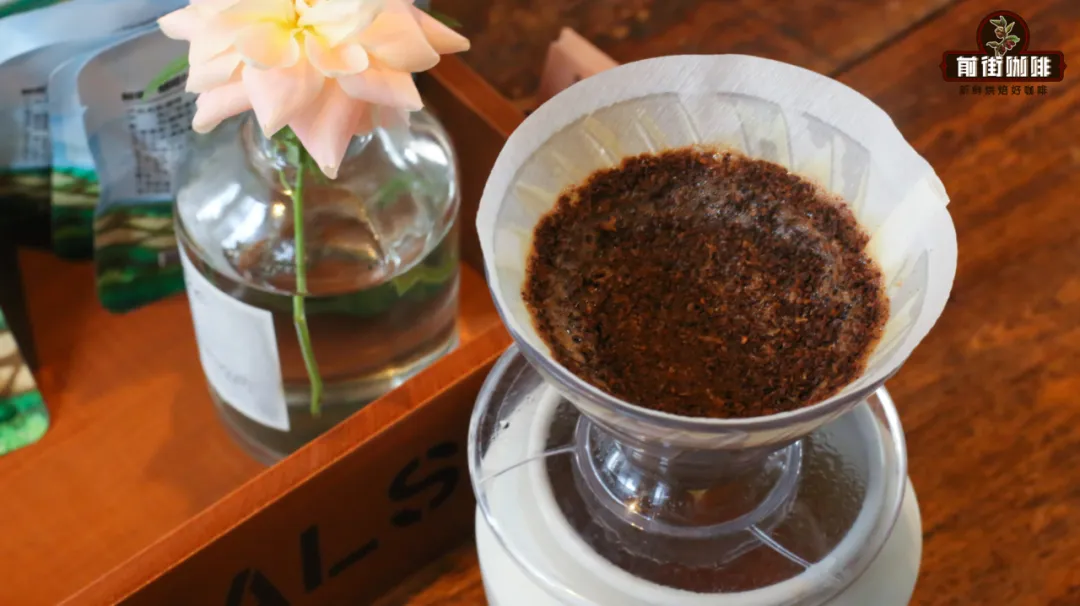
Finally, there is the uniformity of pouring! Although many friends can brew a deep pit, the depth of the pit on the left and right sides is not the same. One side is high and the other is low, or in some places there are simply no coffee grounds at all, and the dripper wall can be seen directly.
In this kind of situation, the hot water was poured too concentratedly in one position during pouring, which made the depression at that position deeper, forming a sharp contrast with the coffee grounds in other positions.
So this is why Front Street often says that although the coffee bed after brewing cannot be used to define whether the coffee tastes good, we can see from it whether the pouring was uniform.
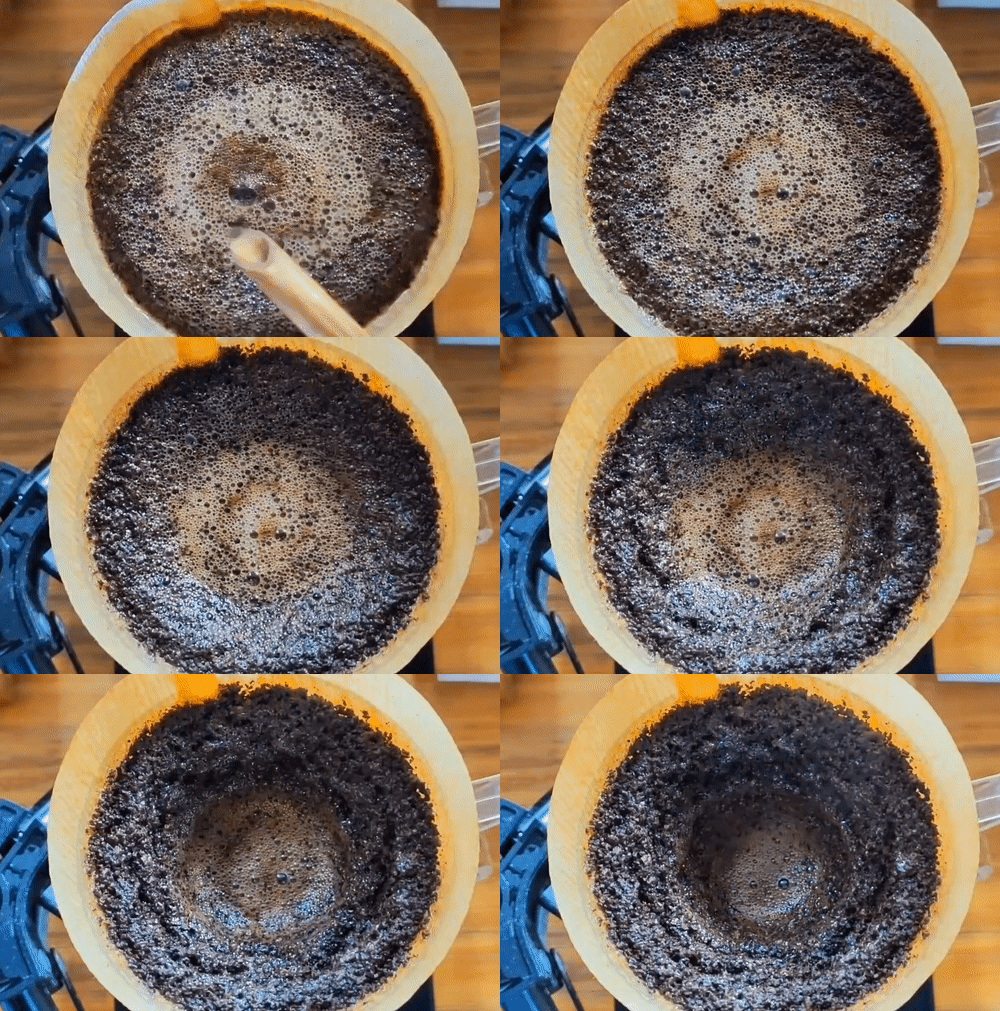
In summary, we can learn that as long as the coffee grounds used are not too high in density, the amount poured is slightly larger, and the water flow is kept even, then in the end we can obtain a uniform and deep coffee pit.
- END -
The above content is compiled by CoffeeHunters, a coffee news website.


