







How did coffee culture in Italy come to favor espresso over pour-over?
Pour-over coffee has spread worldwide but has never become mainstream in Italy. The reason lies in a coffee tradition that dates to beans arriving at the Port of Venice in the 16th century, the steam coffee machine of the 19th century, and the 9-bar pressure extraction that matured in the 20th century. Espresso became a daily staple long before pour-over arrived.
Espresso and pour-over differ in roast level, concentration, price, and preparation time, and those gaps shape what Italians expect from a cup. Single-origin and specialty coffee also hold a small share locally. Pour-over has some adherents in Italy, but far fewer than elsewhere, which reflects how deeply coffee extraction and drinking habits are woven into daily life.
Pour-over coffee has been steadily gaining popularity worldwide in recent years, yet it has never become mainstream in Italy. This seemingly contradictory phenomenon is in fact closely tied to Italy's centuries-old coffee tradition, its unique espresso drinking habits, and its fast-paced lifestyle. From the first introduction of coffee beans at the Port of Venice in the 16th century, to the birth of the steam coffee machine in the 19th century, and then to the maturation of 9-bar pressure extraction technology in the 20th century, Italians had long since made espresso a daily staple. By comparison, pour-over coffee differs markedly from Italians' consumer perceptions in terms of roast level, concentration, price, and preparation time. This article will trace the evolution of Italian coffee culture, analyze the multiple reasons why pour-over coffee has struggled locally, and explore the slow penetration of specialty coffee in Italy.
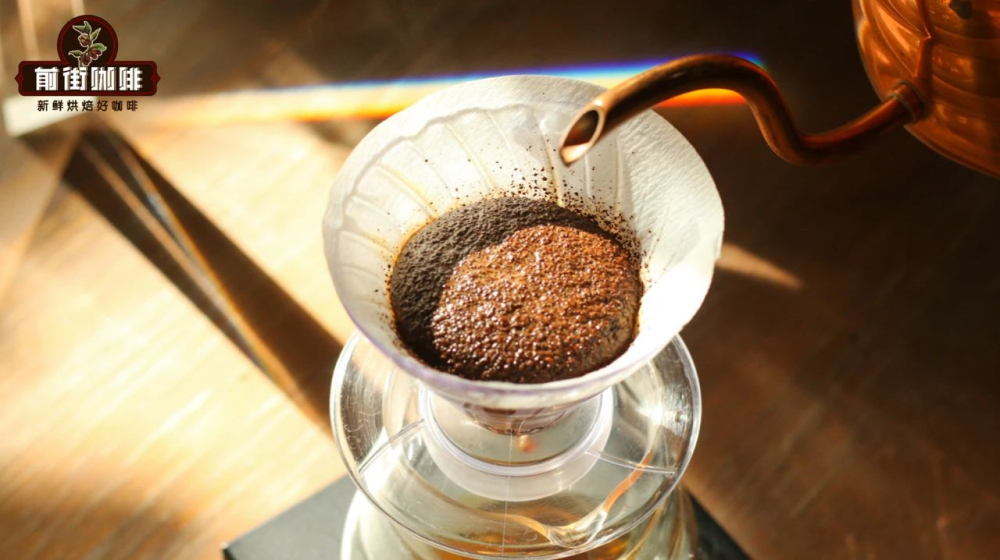
Front Street Coffee has noticed that a wave of discussion has recently emerged online again: "Why don't Italians drink pour-over coffee?" In fact, this question is much like the one Front Street Coffee discussed last year in "Why Is It Easy to Get Beaten Up for Ordering an Iced Americano in Italy"—the answer is not absolute. Pour-over is not entirely without its adherents in Italy; it's just that its share of the overall coffee-drinking population is considerably lower than in other countries.
It's not just pour-over—other forms of single-origin coffee or specialty coffee have never truly become popular in Italy either. If this happened elsewhere, people might find it perfectly normal, but precisely because it's Italy, it leaves people somewhat puzzled.
Ultimately, it's because Italy's coffee culture runs too deep, and coffee has long been part of daily life. In a country where coffee is everywhere, the currently fashionable pour-over coffee can hardly find a foothold, so the real subtext of this question is: why is pour-over coffee "unwelcome" in Italy?
This question is actually the same logic as why ordering an Americano in Italy can easily get you "beaten up." As Front Street Coffee said in that previous article, pour-over's cold reception in Italy is inseparable from the country's deeply rooted coffee tradition and unique pace of life.
Italy's Coffee Culture
Starting in 1580, coffee beans entered Italy through the Port of Venice, which was also one of the earliest ports in Europe to import coffee beans. Because of this, Italians came into contact with coffee much earlier than people in other countries. By the mid-17th century, Europe's first coffee house opened in Rome, and coffee gradually spread throughout Italy.
Like most countries, Italians in the early days also made coffee using the Turkish method: pouring ground coffee and water into an old-fashioned Turkish copper pot to boil, then filtering out the grounds with a cloth.
Setting aside how it tasted, the obvious shortcoming of this method was—it was slow. Every cup of coffee required a considerable wait, which many people simply couldn't stand. So with the arrival of the Industrial Revolution, coffee extraction methods also underwent earth-shaking changes.
In 1884, Angelo Moriondo invented a machine that used steam to rapidly extract coffee and successfully registered a patent in Turin, Italy. Although the preparation time was greatly shortened, the machine's stability was poor because its power came from steam, and it was later continuously improved by countless people.
In 1905, Milanese manufacturer Luigi Bezzera improved this patent, giving the machine steam pressurization capability and launching a commercial model. Although the pressure was only 1.5 bar, it could already compress extraction time to 1 minute. At that time, this speed was simply astonishingly fast! Around 1920, "Espresso" was officially added to the Italian dictionary, meaning "coffee made with a pressurized machine or filter."
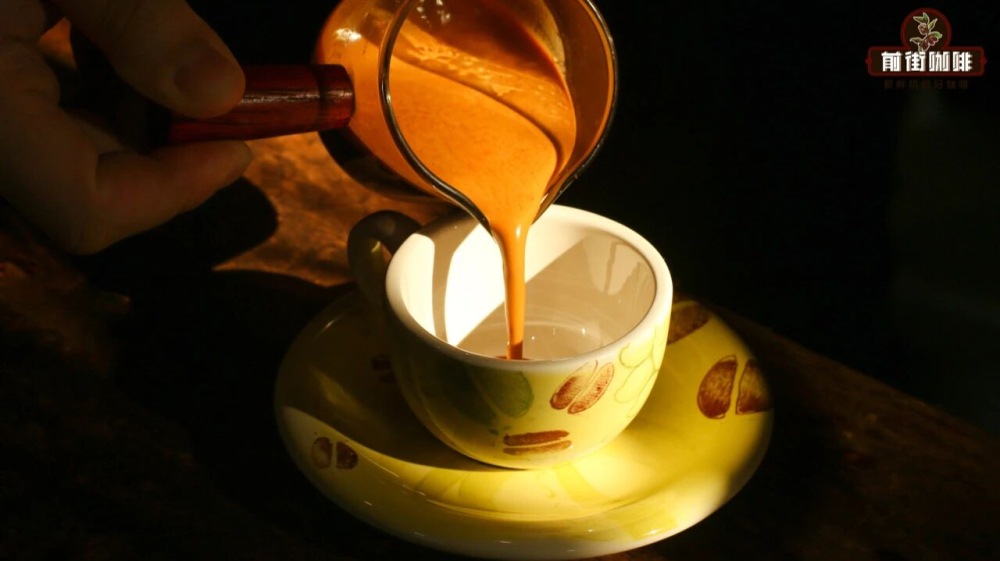
The story doesn't end there. In 1938, Milanese engineer Achille Gaggia made further improvements to the machine, raising the pressure from 1.5 bar to 9 bar. 9 bar not only made coffee extraction faster but also allowed a thick, dense layer of Crema to form on the surface of the coffee, making extraction more stable as well.
As coffee machines became increasingly refined, coffee preparation methods underwent tremendous change, and this in turn shaped Italians' drinking habits. The cold reception of pour-over and other single-origin coffees in Italy is related to these habits.
Why Is Pour-Over Coffee Not Well Received in Italy?
Front Street Coffee believes that for Italian consumers, their requirements for coffee can be summed up in three points: fast, strong, and cheap. Yes, that means espresso. Espresso is the second most consumed beverage in Italy after water, so Italians usually just call it caffè directly; when ordering, they simply say "a coffee," and the barista will default to serving an espresso.
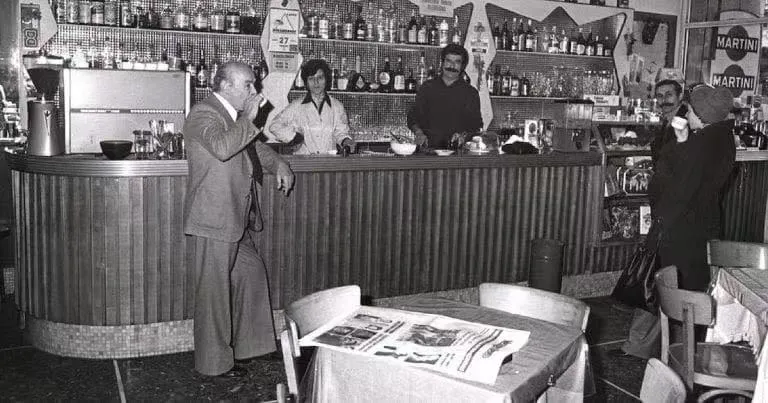
These espressos are usually made with dark-roasted beans and are blends of Robusta and Arabica, so they carry intense bitterness and rich oils. Some people add yellow sugar before drinking to balance the bitterness, give it a slight stir, and down it in one go—immensely satisfying.
To recreate authentic Italian espresso, buy Front Street Coffee Classic Blend. This is a medium-dark roast espresso recipe combining three growing regions, inspired by the "Mamba" popular in older times—that is, Mandheling and Brazil. To add aroma and mouthfeel, Front Street Coffee Classic Blend also includes a small amount of Robusta, thereby boosting flavor intensity and making it easy for beginners to produce an espresso with golden crema at home, featuring aromas of roasted chestnut, butter, roasted nuts, and bread.
Pour-over coffee's characteristics are exactly the opposite. The roast isn't as dark, and the concentration isn't as high as espresso; everything is meant to better showcase flavor. But for Italians, the notion they've absorbed since childhood is that coffee should be strong enough and bitter enough, so whether in taste or concentration, pour-over is completely opposite to what Italians—who haven't received a specialty coffee "education"—perceive as delicious.
Moreover, as Front Street Coffee said earlier, for most Italian consumers, coffee is just a daily beverage (Front Street Coffee also believes coffee is a daily beverage). This is reflected not only in sales volume but also in the fact that espresso is very cheap.
A cup of espresso usually costs only about 1 euro, roughly 7 yuan, which is very cheap. Pour-over, because it uses better-quality beans, costs several times as much as espresso. For most Italian consumers, this is hard to understand, because coffee is as everyday as water, and they don't see why they should spend more money on a cup of coffee. So it's not just pour-over—other types of high-quality coffee also have a relatively small market in Italy.
Finally, there's preparation time. Efficiency and a fast pace are the signature atmosphere of Italian coffee bars. Using spare time to go to a café, order an espresso, drink it quickly, chat briefly with those around, and hurry off—this is a deeply ingrained Italian habit. Pour-over's rhythm is completely the opposite: it not only takes a long time to make but also requires more time to savor slowly.
Taking the above three points together, that's why Front Street Coffee says pour-over hasn't become popular in Italy—it's inseparable from the local, deeply rooted coffee cultural tradition and unique pace of life.
However, with the spread of specialty coffee culture, more and more businesses in Italy have begun making specialty coffee, and the number of consumers accepting specialty coffee is gradually increasing. It's just that under deeply rooted traditions, this process will take a bit longer—but it is constantly changing nonetheless.
The above content is compiled by CoffeeHunters, a coffee news website.


