







Can coffee brew color really tell you about coffee quality
Coffee brew color cannot be used to judge coffee quality. Color and clarity in the cup are shaped by extraction method, filtration gear, roast level, and concentration, not by how good the beans are. A cloudy pour-over and a bright one can come from the same quality level, so a muddy look alone does not prove the coffee is poor.
Roast level is the main driver of color: deep roast coffee beans brew darker, while lighter roasts stay brownish-red. Filtration also matters, since paper filters hold back more fines than metal ones. Front Street Coffee walks through color, cleanliness, and filter performance to show why some brews look clear and others look heavy.
"Liquor color" is originally a professional term in tea evaluation, used to describe the color and visual characteristics of brewed tea, and it is also one of the criteria for judging tea quality. So for coffee, can liquor color also serve as a basis for evaluating quality? In fact, coffee's liquor color is influenced by multiple factors such as the extraction method, filtration equipment, roast level, and concentration, none of which have much to do with coffee quality. Cloudy coffee easily makes people associate it with poor quality, but what is the truth? Front Street Coffee will analyze one by one, from the perspectives of coffee color, cleanliness, and the performance of filtration tools, how these factors affect coffee's liquor color, and explain why some coffees are clear and bright while others are cloudy and heavy.
The term "liquor color" originates from the field of tea evaluation and is a professional term referring to the color and visual appearance presented by tea after brewing. People often use it as a basis for judging the quality of tea leaves. So when applied to coffee, can liquor color also be used to measure quality?
The answer is obviously no. Coffee liquor color is affected by many conditions, including extraction method, filtration equipment, the roast level of the coffee beans, and the concentration of the coffee liquid. These factors are not directly related to the quality of the coffee itself, so liquor color cannot become a standard for defining coffee quality. But it is undeniable that cloudy coffee liquid always easily makes people associate it with poor quality. So today Front Street Coffee will talk about how the factors mentioned above actually affect coffee's liquor color.

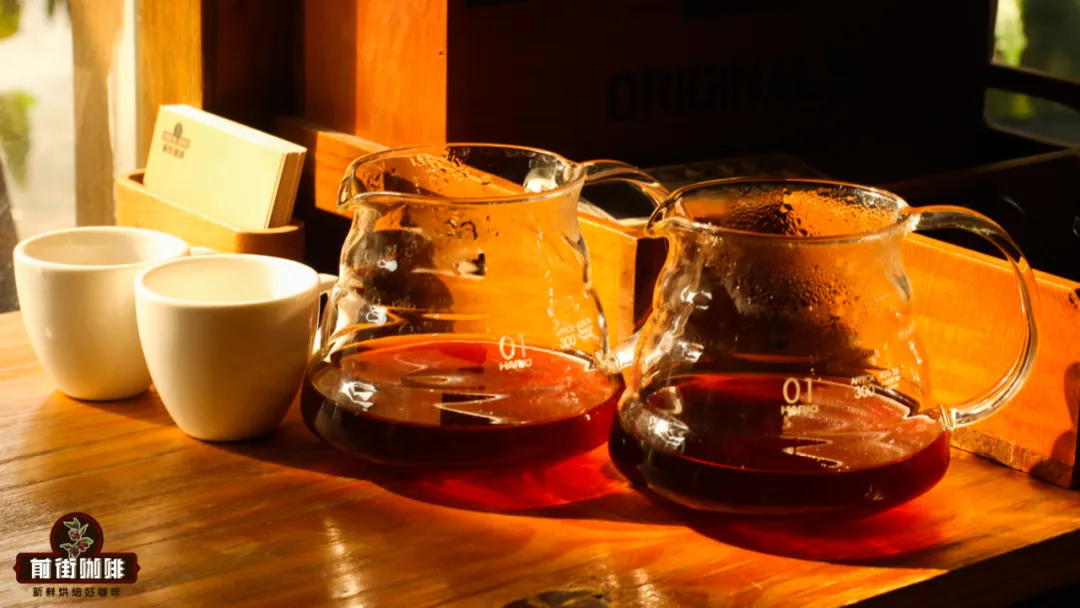
Dark and Light , Black and Red /The Color of Coffee Front Street Coffee will first talk about the color of coffee! I believe everyone can easily find that even when using the same parameters to brew different coffee beans, the resulting coffee color is not uniform! For example, some appear brownish-red, while others tend toward black. The key factor determining coffee color is the roast level. The darker the coffee beans are roasted, the darker the brewed color; the lighter the roast, the lighter the brewed color. The picture below shows two pots of pour-over brewed by Front Street Coffee using the light-roast coffee bean Front Street Ethiopia·Huakui (left) from the bean list, and the dark-roast coffee bean Front Street Sumatra·Golden Mandheling (right) . You can compare the differences between them.
In addition, the concentration of coffee also affects the color performance. The higher the concentration, the deeper the saturation of the coffee color; the lower the concentration, the lighter the color. This can be clearly seen from the comparison between espresso and americano.
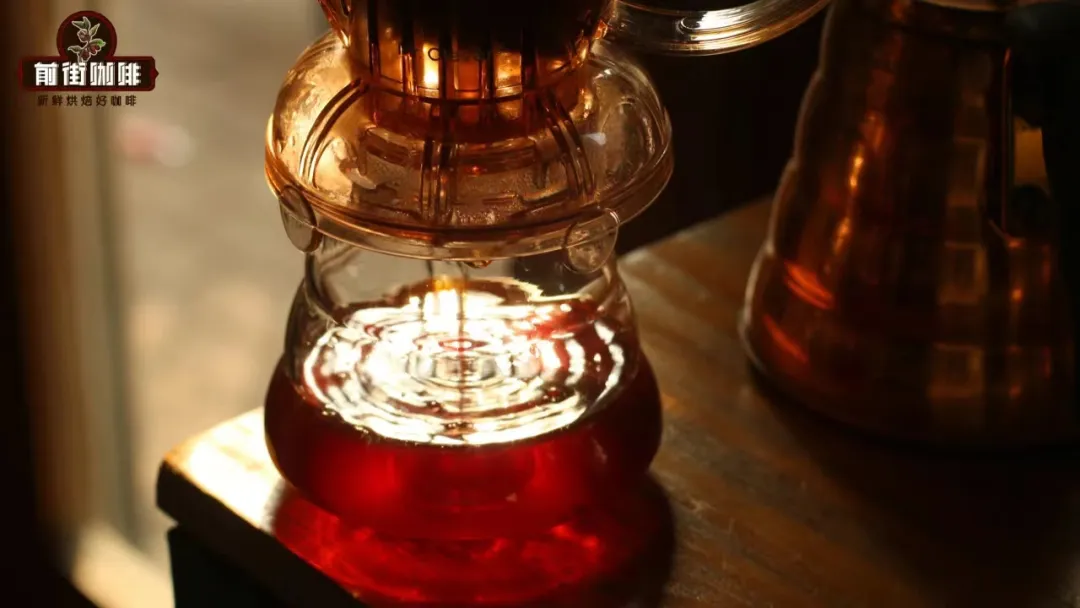
Coffee's "Cleanliness" Next, let's talk about coffee's cleanliness (here referring to the visual characteristics of the coffee liquid) ! Many friends still have a misunderstanding: they think that the darker the coffee color, the more cloudy it is, and the lighter the color, the cleaner it is. But in fact, coffee's cleanliness is not determined by the depth of color, but by the degree to which the extracted substances dissolve in water. Taking pour-over coffee as an example, when we brew with filter paper, the resulting coffee is usually bright and clean, looking very clear. But if we switch to a metal filter or flannel cloth for brewing, the resulting coffee will be somewhat cloudy by comparison and not transparent enough. The reason for this difference lies in the different filtration performance of the filtering tools.
Front Street Coffee introduced in a previous article about non-woven filter paper that filter paper has quite excellent filtration performance and can intercept most substances other than coffee, such as coffee grounds and oils, so the coffee brewed with it is very clean. Tools such as metal filters and non-woven filter paper, however, because their gaps are larger, cannot filter out some extremely fine coffee grounds and oils, so the brewed coffee appears cloudy due to the presence of these substances. Espresso, moka pot coffee, and French press coffee appear cloudy for the same reason.
However, this does not mean these tools are inferior to filter paper. The presence of some fine particles can enhance coffee's body, while oils can give coffee a richer aroma. Although they are not as clean as coffee brewed with filter paper, they will have better body and aroma (a tiny bit) . In summary, we can understand why coffee's liquor color cannot be used as a quality evaluation standard. What it can reflect is only the coffee's roast level, concentration, and the filtration performance of the filtering tool used. Do not make sweeping generalizations~ - END -
The above content is compiled by CoffeeHunters, a coffee news website.


