







How Does AeroPress Coffee Extraction Actually Work?
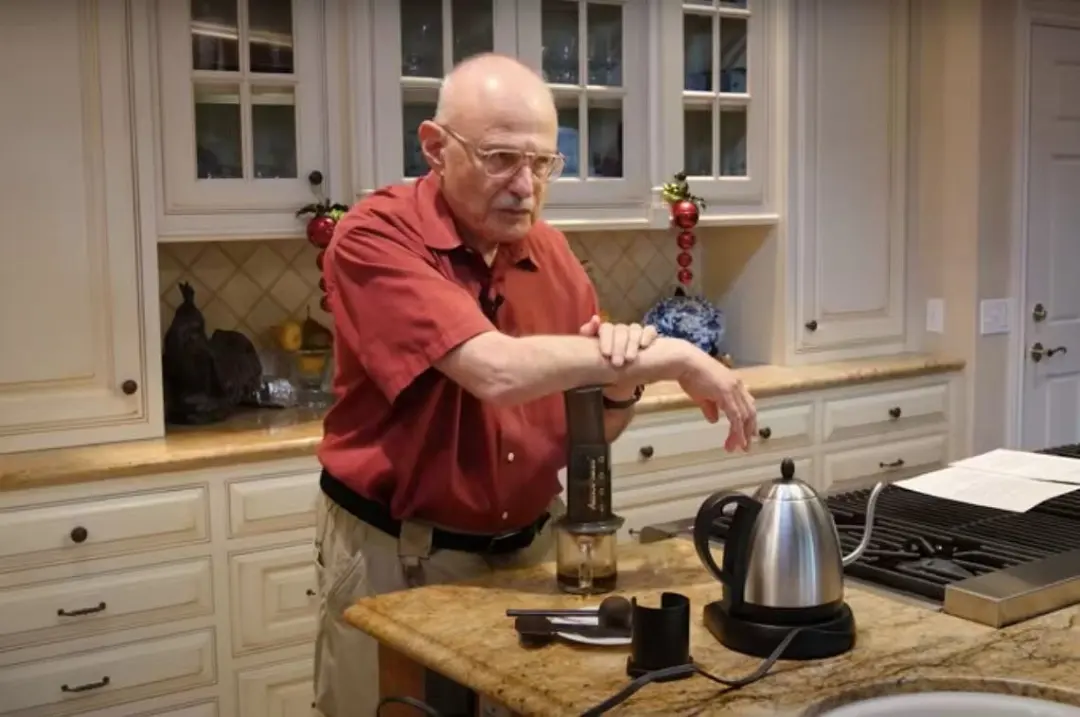
The AeroPress was invented by Alan Adler, a mechanical engineering lecturer at Stanford, Caltech and Princeton who held more than forty patents and also created the Aerobie flying ring. He built the syringe-shaped brewer because existing coffee tools were inconvenient. Its method combines full immersion of the grounds with manual pressure, which is why it produces a dense, low-sediment cup that differs from pour-over.
That immersion-plus-pressure mechanism sits at the center of AeroPress coffee extraction. Grounds steep in water, then a plunger forces the liquid through a paper filter, shortening contact time compared with a drip cone. The result is a rounder body and softer acidity, while pour-over typically reads brighter and cleaner. Adler's device also allows inverted brewing, giving a coffee roaster or home brewer room to adjust ratio, grind and steep time.
With its high playability and unique extraction method, the AeroPress has become recognized in the coffee community as the "most fun brewing device." Who actually invented this syringe-shaped coffee tool? How does it differ from pour-over coffee in flavor and mouthfeel? And where does its extraction principle lie? From Front Street's perspective, this article first introduces you to the legendary experience of inventor Alan Adler and the story of the AeroPress's birth, then takes a deeper look at its immersion-plus-pressure working mechanism, and finally includes a complete inverted brewing recipe, tested with Front Street Frontera Estate · Sidra beans, to experience the juicy feel woven from grape, passion fruit, and apricot. Whether you are a beginner just getting to know the AeroPress or an enthusiast looking to refine your skills, you will find practical references here.
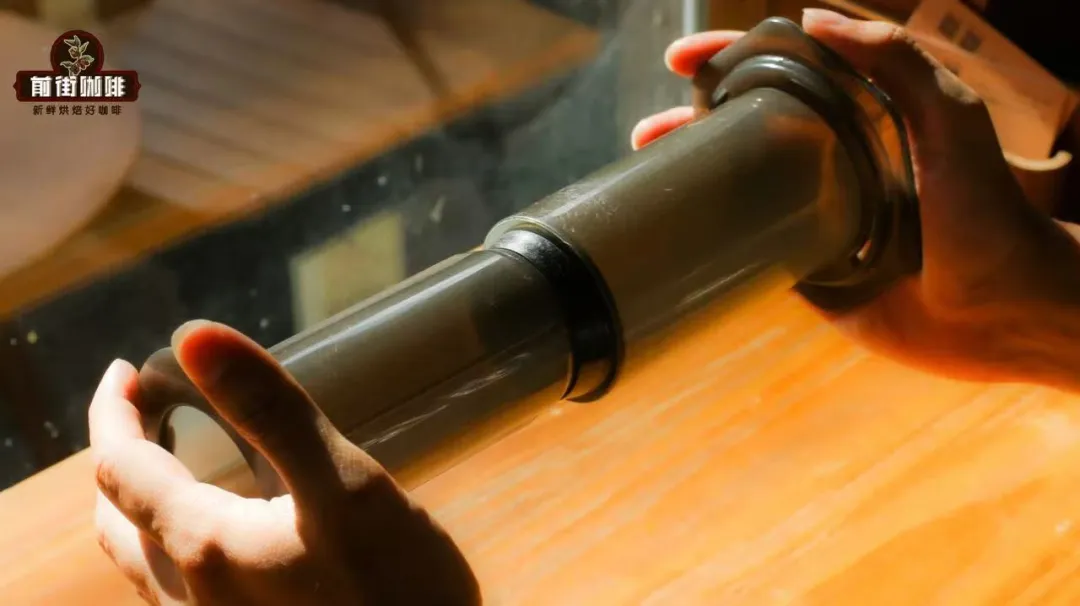
Front Street calls it a "toy," not because it cannot make consistent coffee, but because its ways of playing are simply too rich. Not only can you adjust parameters to change the extraction result, but you can also switch between different operating forms to brew coffee, which adds a lot of fun to the entire process. For this reason, in the annual AeroPress Championship, contestants always bring out all kinds of creative brewing methods.
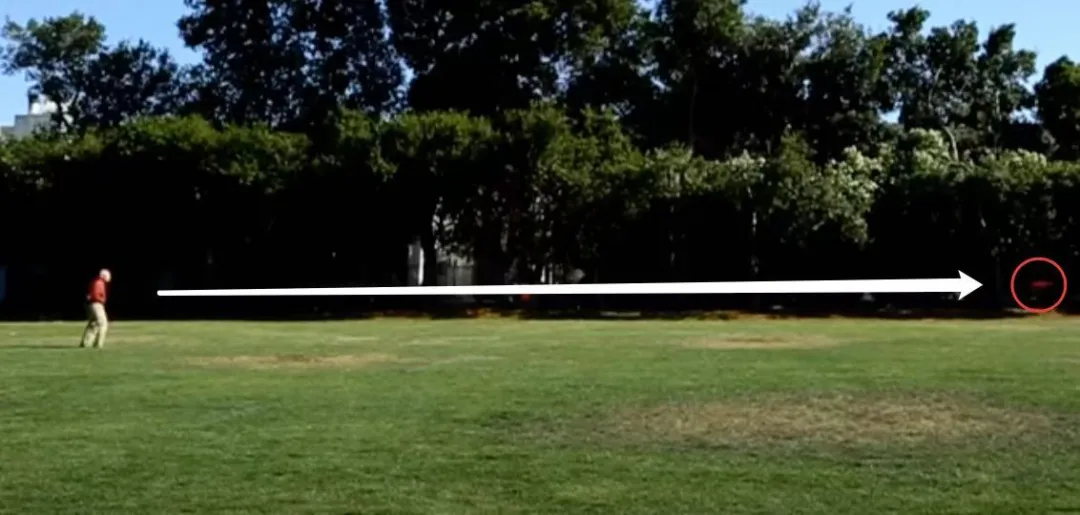
The AeroPress is so special that one has to mention its inventor—Alan Adler. This gentleman was a mechanical engineering lecturer at universities such as Stanford, Caltech, and Princeton. Beyond teaching, he was also a prolific inventor who participated in the design of submarine and nuclear reactor control systems, military aircraft instrument systems, and optical systems, and held more than forty patents in his name. In addition, he often developed new products for Aerobie, the sports equipment company he founded. In particular, the Aerobie flying ring and Aerobie Pro that he launched in 1984 achieved a flight distance of 406 meters, setting a world record for throwing a flying disc.

From this brief introduction above, it is not hard to see that Alan Adler had almost no connection with coffee in his early years. So how did he suddenly have the idea to tinker with an AeroPress?
In fact, like most inventors, his reason for taking action was very simple: if something was not easy to use or inconvenient, then make a more handy and better alternative yourself. Before the AeroPress came out, the mainstream extraction methods were basically pour-over and espresso. Although both could make delicious coffee, they demanded a fairly good understanding of extraction from the maker, and the process was tedious and complicated. So Alan Adler decided to make a device that could easily produce good coffee. Starting in 2003, he began studying coffee extraction theory, and by 2005, the AeroPress was officially born.
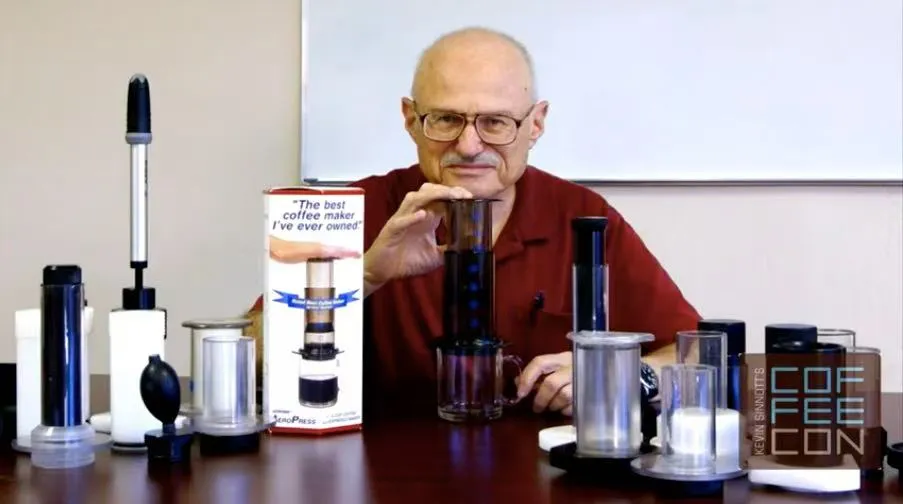
In appearance, the AeroPress is completely different from traditional coffee equipment. Not to mention back then, even now it still has a rather unconventional look, but this is exactly Alan's style. This appearance, plus the fact that the company's original main business was sports equipment, meant that many people at the time were not optimistic about the AeroPress. At the 2005 Seattle coffee exhibition, the AeroPress did not become popular because of Alan's fame and ended in a hurried, low-key way.
But the old gentleman was not discouraged by this. At the time, he said this to his team: "It will make history and outsell all the products we have ever sold."
After the exhibition ended, he began sharing introductory posts and videos about the AeroPress online, and the response was hugely popular! Everyone became deeply interested in this distinctive coffee device. Before long, the AeroPress introduction video surpassed 7 million views. Riding this momentum, the AeroPress gradually became a rising star in the coffee world.
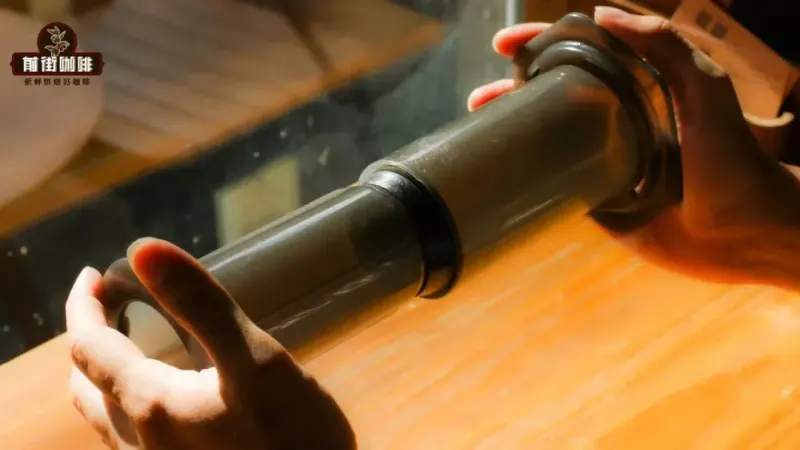
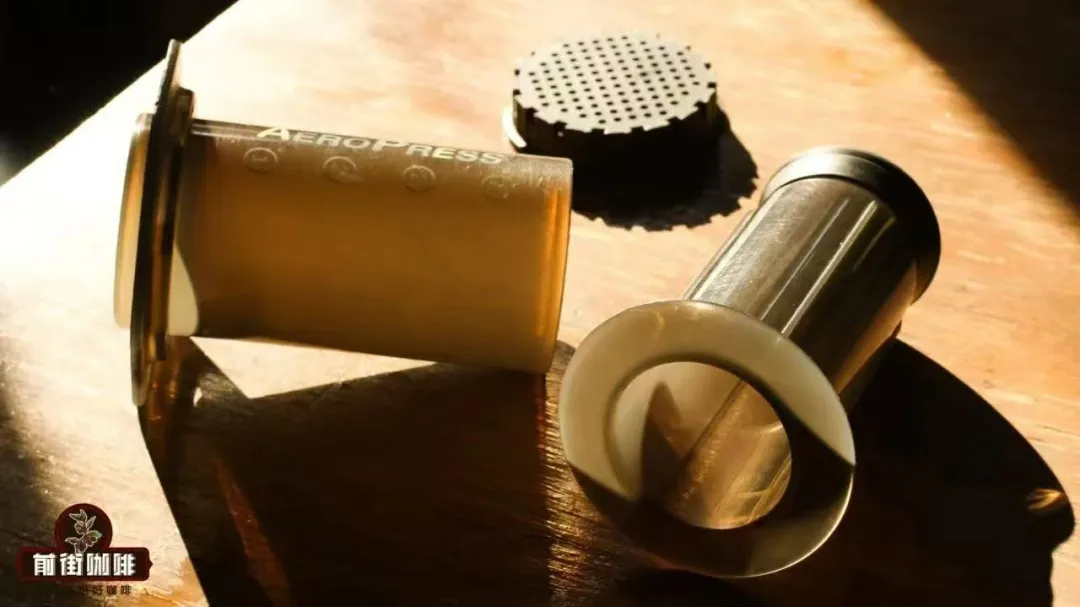
Although it took only two years for the AeroPress to go from idea to reality, during that time it went through more than forty versions before finally settling on its syringe-like appearance. Its working principle is hidden in its name—AeroPress means Aero + Press, meaning "through air pressure." The AeroPress is a coffee extraction tool that combines immersion and pressure. Its structure is mainly divided into three parts: the filter cap, the chamber, and the plunger. During brewing, the coffee is first infused by immersion, and then pressure is applied by pressing down the plunger, allowing the flavor substances in the coffee and the coffee liquid to be released more quickly.

As Front Street said at the beginning, the AeroPress has very diverse ways to be used. Besides adjusting parameters to change extraction, there are also different ways of playing by changing its form. For example, "standard" and "inverted" are two extraction forms that people love to talk about in AeroPress brewing. Because this has already been explained in detail in Front Street's article "The Standard and Inverted Methods of the AeroPress," we will not repeat it here.
By 2008, the AeroPress had already become quite popular. Because its ways of playing were so rich, it was often jokingly called the most fun coffee device in the world. Many people also wanted to know the best brewing recipe for the AeroPress, including Tim Wendelboe, a well-known Nordic coffee roaster and deep AeroPress enthusiast. So Tim Wendelboe and several local AeroPress enthusiasts gathered in a small room and held the first AeroPress competition. At the time, there were only three contestants, and Tim Wendelboe served as a judge. Although it was small in scale, this competition brought the AeroPress a great deal of exposure. Gradually, the event grew larger and larger, and what was originally a contest among three people has now evolved into a world-class competition. And the AeroPress, exactly as Mr. Alan said back then, successfully made history and became the best-selling product of their company.
All right, without further ado, next Front Street will share how to make a delicious cup of coffee with the AeroPress! AeroPress Brewing
This Front Street AeroPress extraction recipe takes a relatively short time, so the grind can be finer and the water temperature can be higher. Like all coffee devices, it is suitable for brewing all kinds of coffee beans. If you want coffee that is more acidic with floral and fruity notes, choose light-roast beans; if you want coffee that is more bitter, rich, and full-bodied, choose dark-roast beans.
Here, Front Street wants to drink a cup of coffee that is sweet and sour, delicious, and full of juicy fruitiness, so the bean chosen is Front Street Frontera Estate · Sidra from the Front Street bean list. The extraction parameters are as follows: Dose: 15g Coffee-to-water ratio: 1:14 Brewing water temperature: 94°C Grind size: 8 on an Ek43, 85% passing a No. 20 sieve Method: inverted
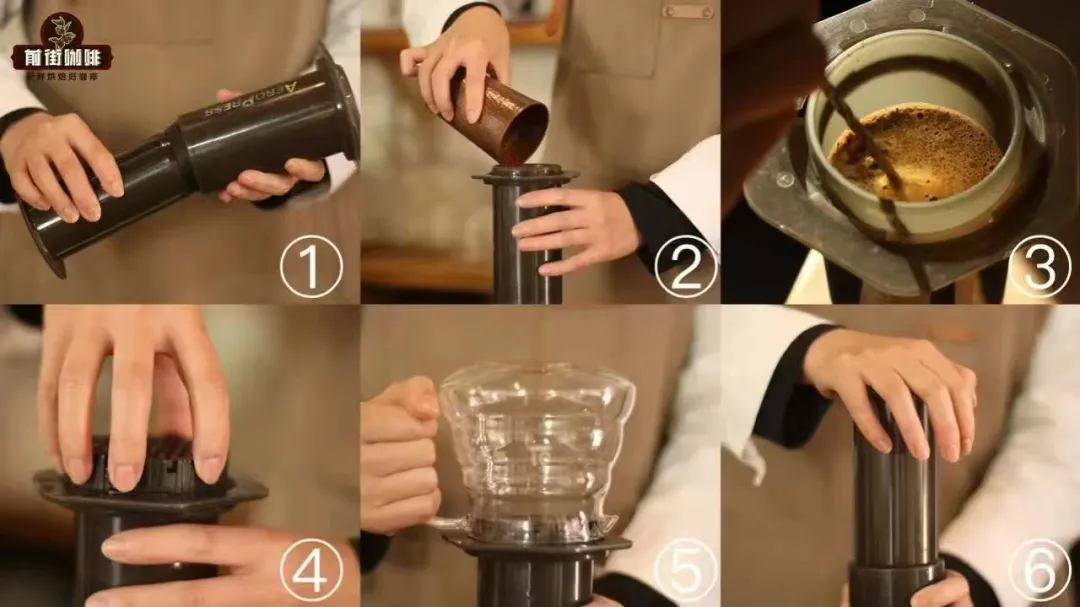
First, assemble the AeroPress plunger and chamber, and place it upside down.
Add the coffee grounds and hot water in sequence.
Take out a stirring tool and stir! Stir for 30 seconds, then start timing.
When the time reaches one minute, attach the filter cap to the chamber, place the cup on top, press gently upward to release excess air from the AeroPress, and then flip the entire AeroPress over in one go!
Next, apply pressure to extract the coffee liquid. There are two things to note here! First, when applying pressure, there is no need to rush; just apply force evenly and press down slowly. Second, be sure to use a sturdy cup and a stable table. Because the force applied will be relatively strong, if the cup and table are not reliable, they may fail to support it and lead to some undesirable situations.
Once we have pressed all the way to the bottom, the making of AeroPress coffee is officially complete!
On tasting, you can feel obvious fruit flavors such as grape, passion fruit, and apricot, with a faint fermented note. The aftertaste is of dried fruit and citrus, and the overall cup is very balanced.
Compared with the Sidra made by pour-over, the Sidra made with the AeroPress has a fuller mouthfeel. This is because the AeroPress's filtration performance is not as high as that of pour-over filter paper, so the coffee oils and some fine particles fall into the cup as well, improving the coffee's body and aroma. For this same reason, the overall clarity is slightly inferior, but it is still very delicious. Fun! Delicious!
- END -
The above content is compiled by CoffeeHunters, a coffee news website.


